
Did You Know?
An inscription inside the fort names it Samargarh and credits its 1834 reconstruction to Raja Bikramajit under Maharaja Ranjit Singh’s reign
34°00'47.5"N 71°34'12.2"E
An inscription inside the fort names it Samargarh and credits its 1834 reconstruction to Raja Bikramajit under Maharaja Ranjit Singh’s reign
The Best Time to Visit mountain regions of Khyberpakhtunkhwa is Summers. Preferably from April to September. Winters are Extremely Cold and Snowfall blocks most of access. Hence Winters are not recommended.

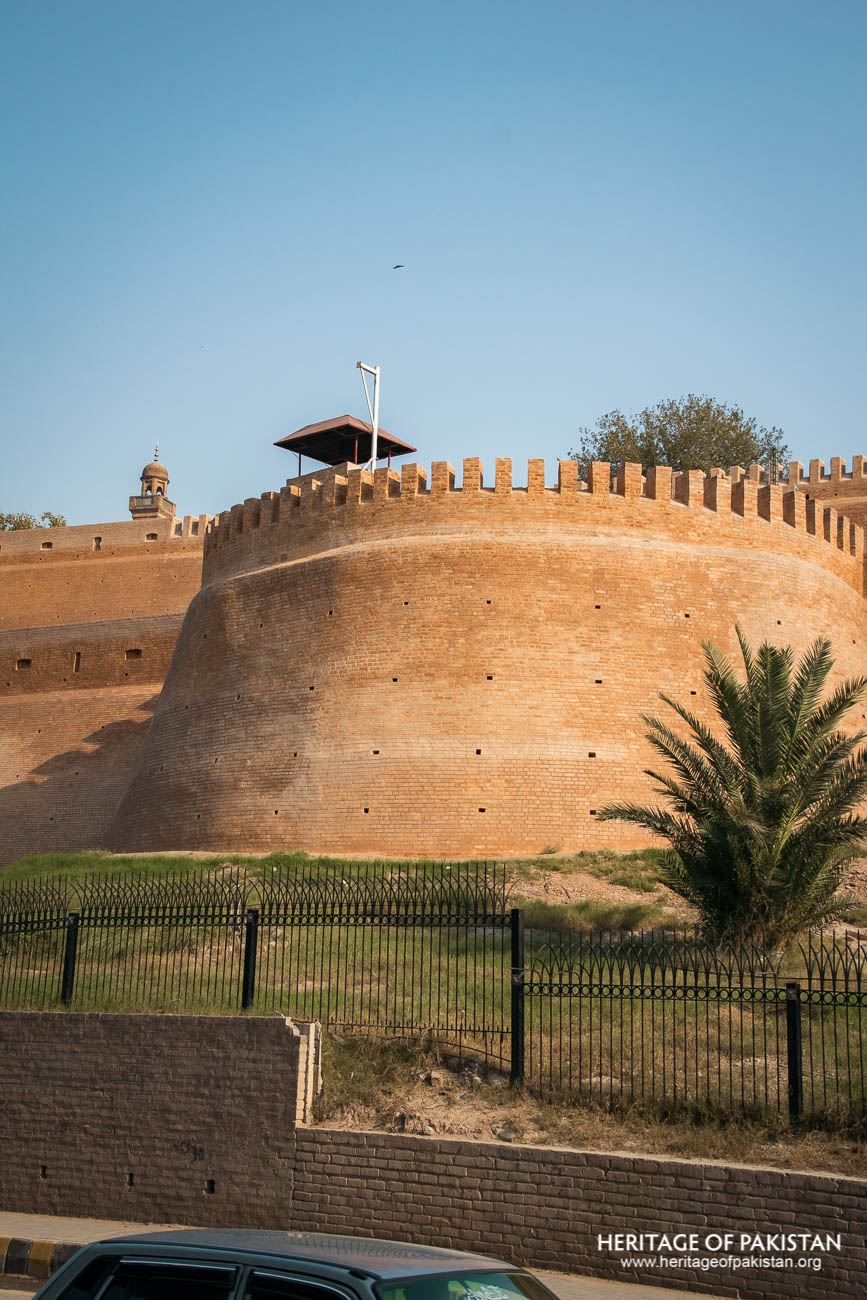
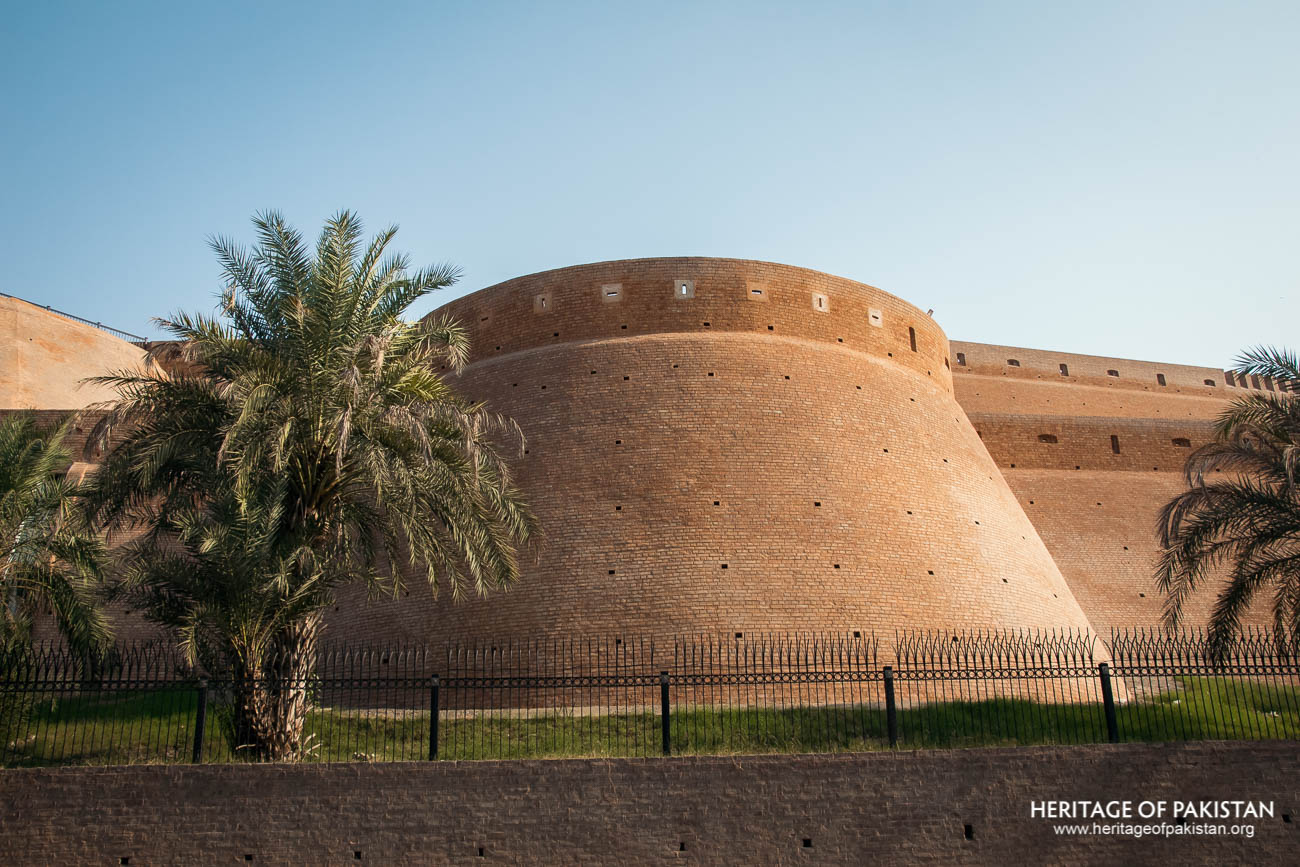
Bala Hisar Fort, located on a prominent hill near the Old Walled City of Peshawar, is one of the most historically significant landmarks in the region. Its name, literally translating to “High Stronghold,” aptly describes its elevated and strategically advantageous position. The fort lies on the northwestern corner of the old city and has, over centuries, witnessed the rise and fall of empires. The term “Bala Hisar” is not exclusive to Peshawar; similar forts bearing the name exist in Charsadda and Kabul, all situated on elevated ground, reflecting the importance of commanding high positions in military architecture. The fort is mentioned by the Chinese pilgrim Hiuen Tsang, who referred to a fortified part of the city housing the “Royal Palace,” which many scholars infer to be the current location of Bala Hisar. This suggests that some form of a fortified complex existed here long before the advent of the Mughal Empire.
The fort has played a prominent role throughout various historical periods. It was here that the Hindu Shahi king Raja Jaipal commanded his forces against Mahmud Ghaznavi. Following the retreat of his army, Jaipal attempted to flee toward Hund but was captured and subsequently defeated by Mahmud. Later, in 1526, the Mughal emperor Babar captured the Peshawar region and strengthened the pre-existing fort structure. According to the Tuzuk-e-Babri, Babar did not found the fort but only reinforced it. Ahmad Hassan Dani corroborates this by stating that no evidence supports Babar’s founding of the fort. The structure was further decimated during the military campaigns of Afghan King Sher Shah Suri, who forced Emperor Humayun to flee to Iran. Upon his return, Humayun found the fort in ruins and restored it in 1552, also installing a governor to oversee its administration.
Following the decline of the Mughal Empire, the fort came under the control of the Durranis of Afghanistan. In 1809, Elphinstone visited Shah Shuja at the fort and later wrote a detailed account of the visit and the royal court, which is preserved in Sheikh Khurshid’s Historical Forts of Pakistan. The fort was significantly damaged during the power struggles of the 19th century, particularly during the battles between the Sikhs and Afghans. In 1834, after the Battle of Nowshera, the Sikh general Hari Singh Nalwa reconstructed the fort and named it Samargarh. Other historical sources attribute this reconstruction to Sardar Khurruk Singh or to Sher Singh, the son of Maharaja Ranjit Singh. The Sikh-era reconstruction was carried out using unburnt bricks, which were later replaced with burnt bricks by the British colonial administration. An inscription found inside the inner gate of the fort reads: “Victory to Porakh. Through the grace of Sri Akal. Under the liberal government of Maharaja Ranjit Singh Bahadur over the region of Peshawar in year 1891 (Vikram Samvati) (1834 AD), this was built by Raja Bikramajit and was named Samargarh.”
The British assumed control of Peshawar in 1849 and subsequently fortified the fort by building external walls. The Imperial Gazetteer of the North-West Frontier Province (1908) describes Bala Hisar in the following words: “On the northwestern side, a quadrilateral fort, the Bala Hisar, crowns a small eminence completely dominating the city. Its walls of sun-dried brick rise to height of 92 feet above the ground with a fausse-braye of 30 feet; bastions stand at each corner and on three of the faces, while an armament of guns and mortars is mounted above.” The fort continued to serve military purposes throughout the colonial period and post-independence.
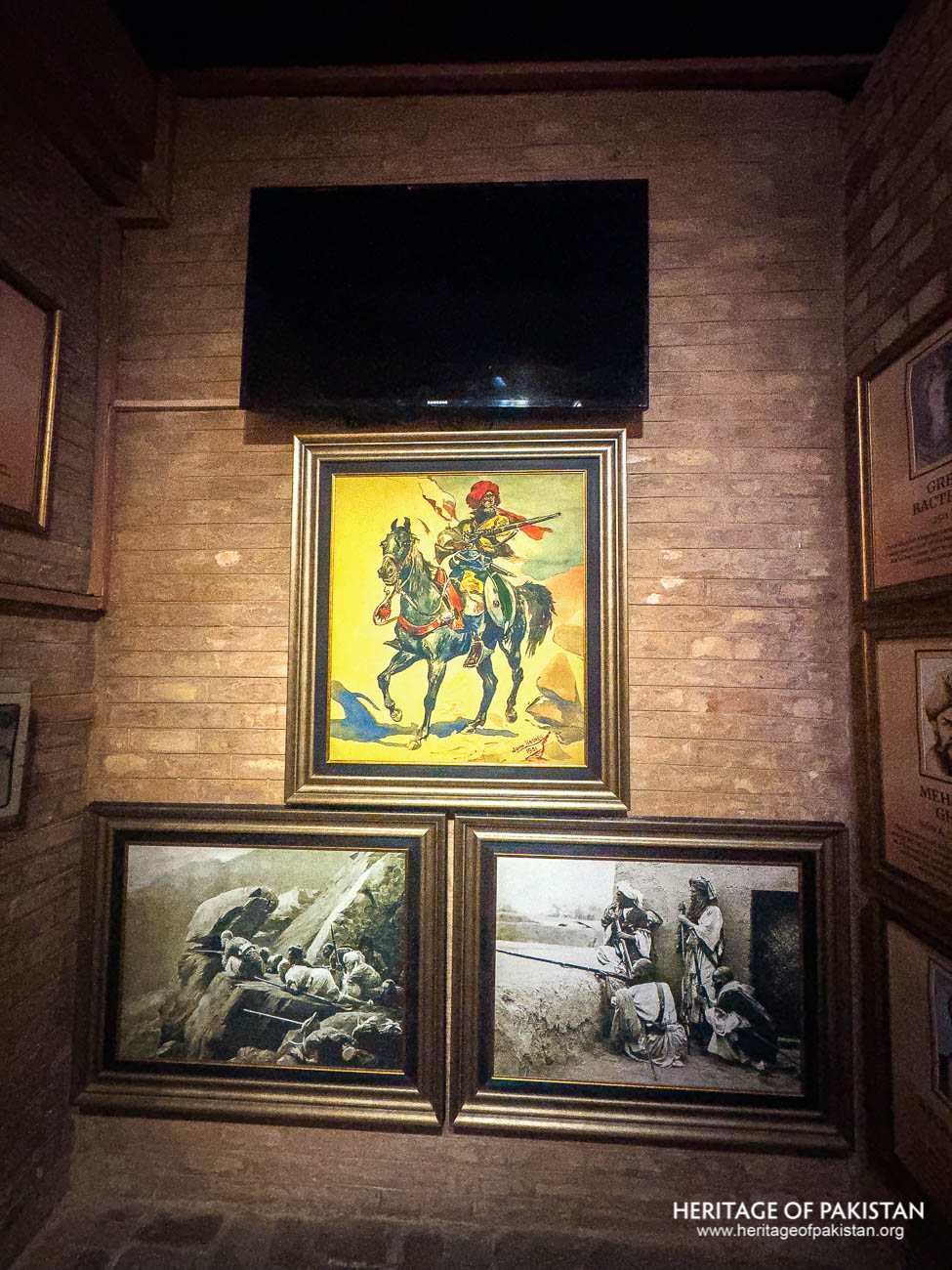
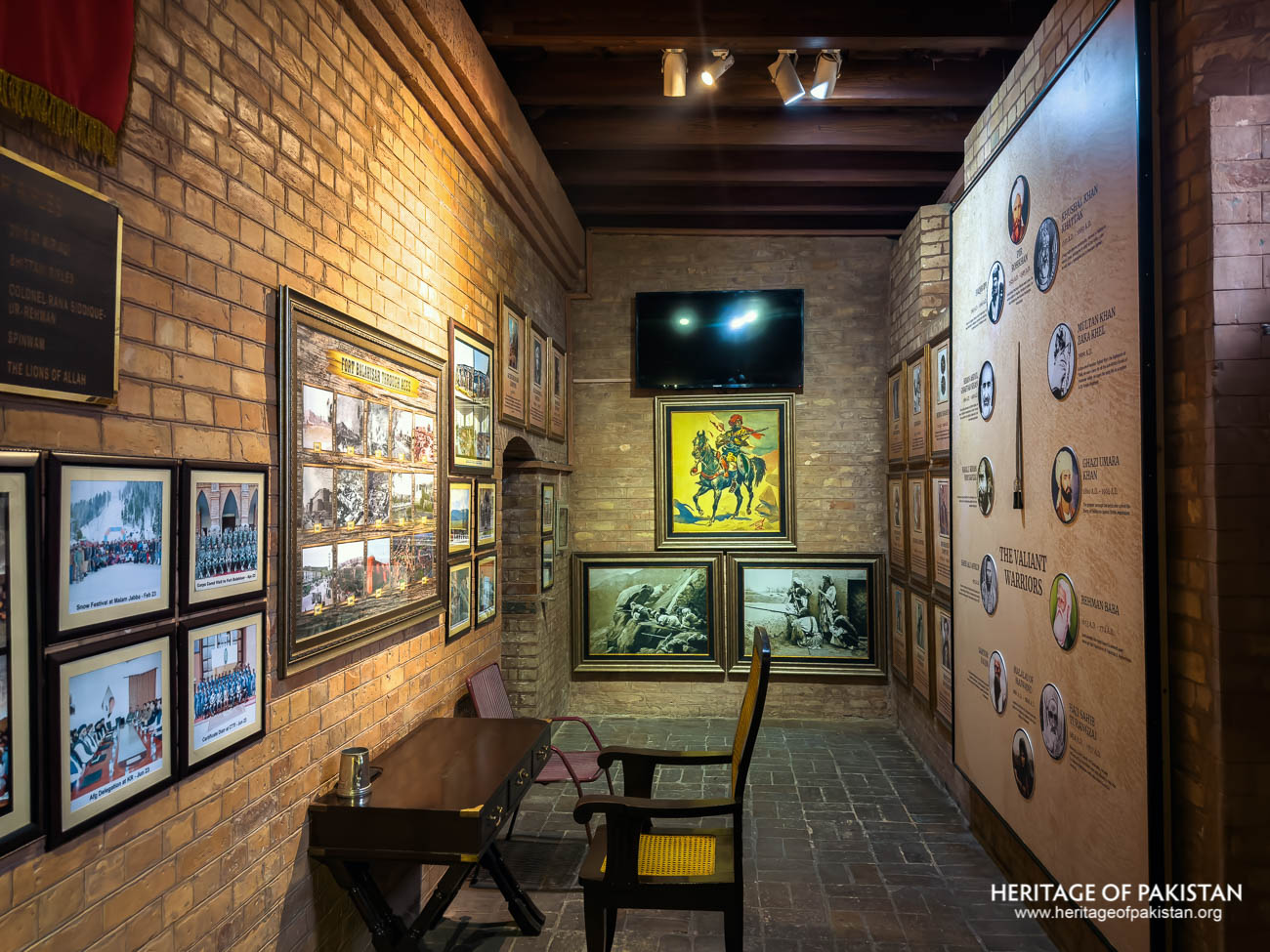
After the creation of Pakistan in 1947, the fort was designated as the headquarters of the Frontier Corps. The Frontier Corps traces its origins to 1878 during the Anglo-Afghan Wars, and today, it continues to function from Bala Hisar. A museum dedicated to the history of the Corps, called the Bala Hisar Museum, has been established within the fort. This museum highlights the legacy and evolution of the paramilitary force. It houses a collection of artifacts including weapons, photographs, models, and historical scenes. The museum is a tribute to the servicemen of the Frontier Corps and offers visitors a comprehensive understanding of the fort’s continued relevance in both military and historical contexts.
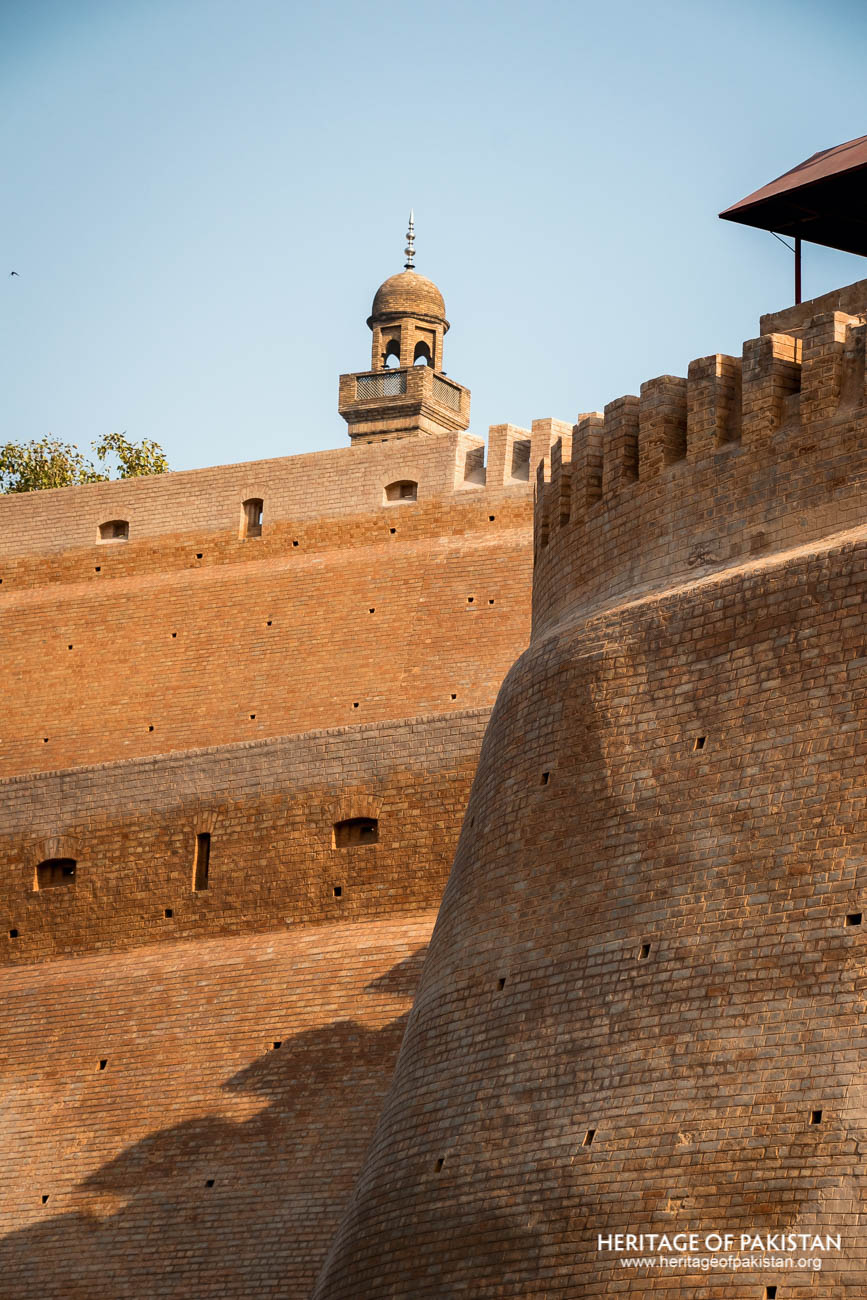
The Balahisar Fort is situated on the northwestern side of the Old Walled City of Peshawar. Positioned atop a prominent hillock, the fort occupies a commanding and strategic location, elevated above the surrounding urban landscape. This elevated terrain lends the fort both defensive strength and visual dominance over the city. The current entrance to the fort is from the north, accessed by a steep ascending road.
The fortress is roughly quadrilateral in shape and is enclosed by a double line of fortification. The overall structure measures approximately 220 feet by 220 feet and is constructed using baked bricks. The double wall system creates both an outer and an inner perimeter, designed to enhance the fort’s defensive capabilities. Each wall features bastions at regular intervals, although the configuration varies between the two. The outer wall includes a greater number of bastions, which are generally smaller in size. In contrast, the inner wall contains fewer bastions, but those at the four corners are notably larger. The inner perimeter wall is also constructed at a higher elevation than the outer wall, contributing to layered defense. One of the surviving bastions still retains the characteristic “kanguras,” or battlements, preserved in the old architectural style. The bastions themselves vary in form, comprising both semi-circular and octagonal shapes.
In total, the fort’s fortified quarters extend across an area of approximately 40,000 square meters, subdivided into ten sections. Standing some 28 meters above the ground level, the Balahisar Fort was clearly designed and constructed with defense as its primary objective. Its architectural elements and structural planning reflect the strategic concerns of its builders, combining elevation, layered walls, and heavily bastioned enclosures to secure the site from external threats.
All Photographs by Syed Noor Hussain and Sania Azhar.
All Rights Reserved. Photos may be used for Non-Commercial, Educational, Artistic, Research, Non-Profit & Academic purposes.
Commercial uses require licensing agreement.

Syed Noor Hussain
July 23, 2025 at 4:06 amBest