
Did You Know?
Baltit Fort originally had high square towers, lost in battles likely during the British campaign, as seen in an 1887 photograph
36°19'32.6"N 74°40'11.3"E
Baltit Fort originally had high square towers, lost in battles likely during the British campaign, as seen in an 1887 photograph
The Best Time to Visit Gilgit Baltistan Region is Summers. Preferably from April to September. Winters are Extremely Cold and Snowfall blocks most of access. Hence Winters are not recommended.

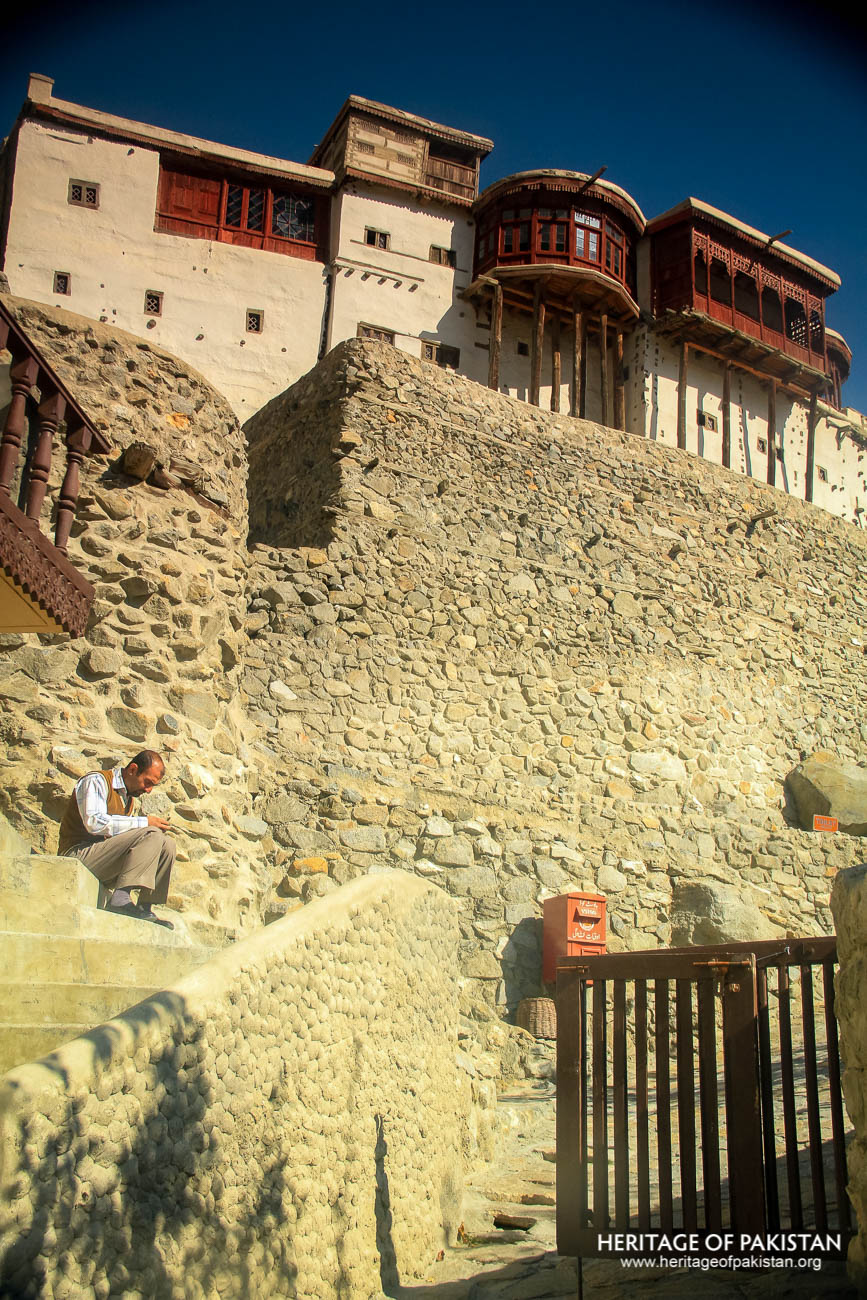
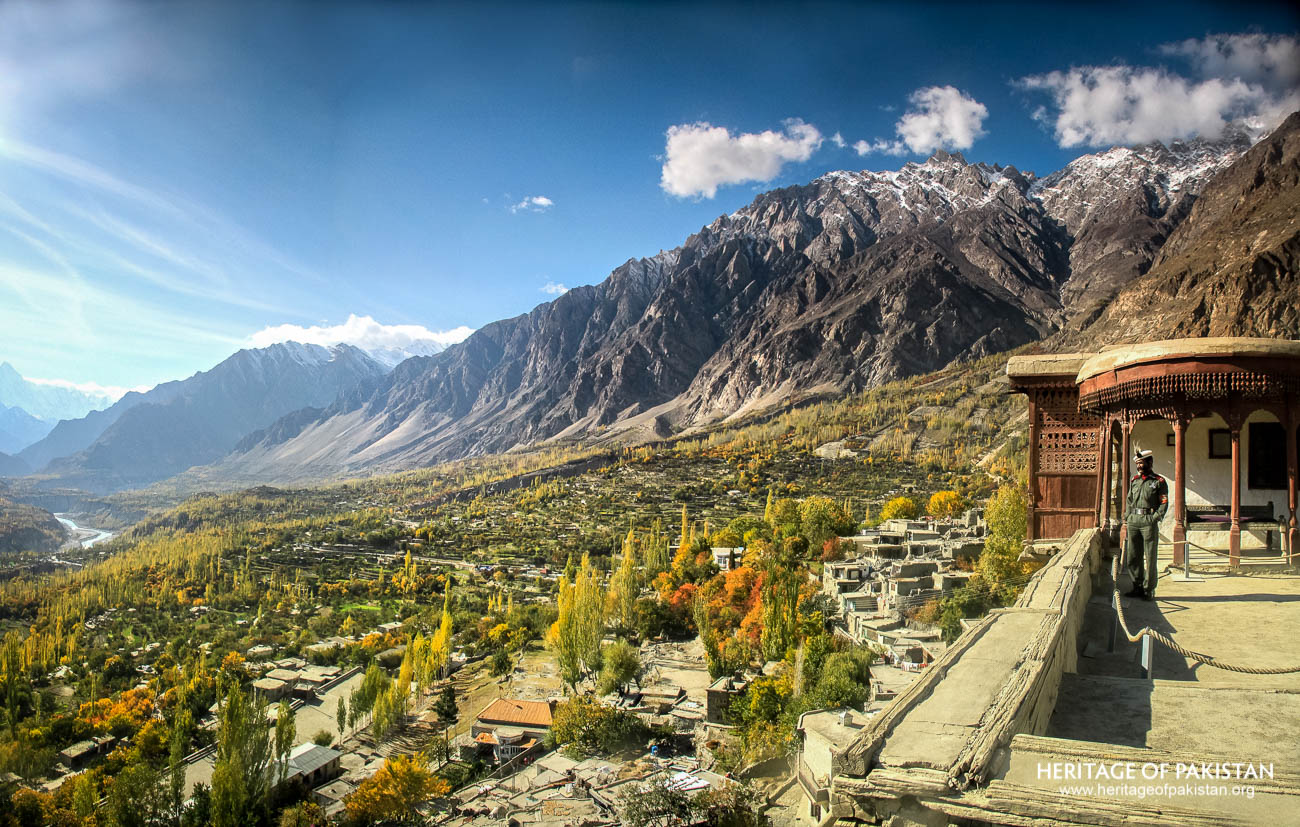
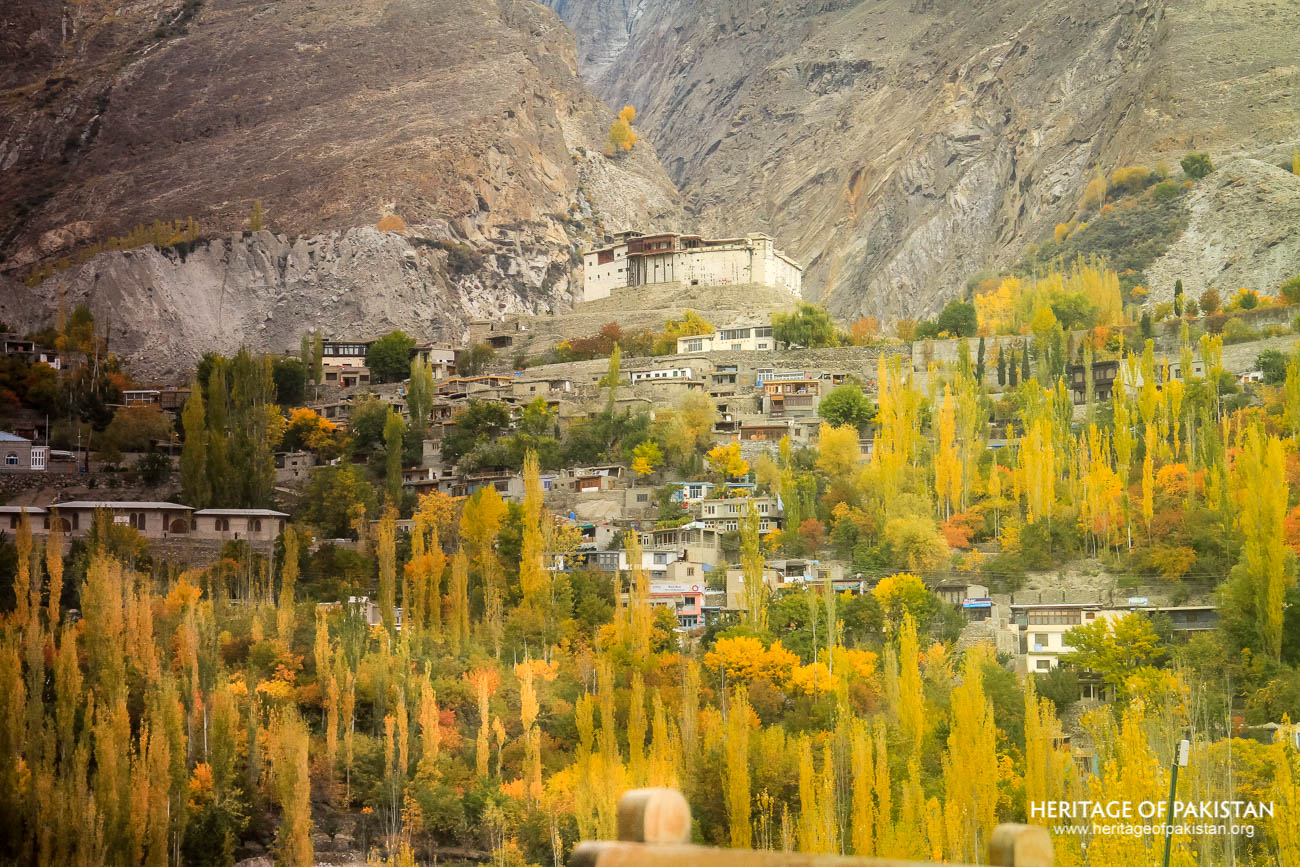
Baltit Fort is a historic fort and palace located in Karimabad, Hunza Valley, Gilgit-Baltistan. It was originally built on a hilltop above the settlement once known as Baltit, which was later renamed Karimabad in honor of Prince Karim Aga Khan, the spiritual leader of the Ismaili community. The fort served as the seat of the Mirs of Hunza and remains a prominent cultural and architectural landmark in the region. To the north of the fort lies the Ultar Sar Peak, which rises to an altitude of 7,388 meters above sea level, along with its glacier and the adjacent Lady Finger Peak, another notable summit in the area.
Local tradition holds that Baltit Fort was constructed approximately 700 years ago. Oral accounts state that it was during the reign of Ayasho II and his wife Shah Khatoon, a princess from Baltistan, that the foundations for both Baltit and Altit Forts were laid. Shah Khatoon brought with her a group of skilled artisans and craftsmen from Baltistan as part of her dowry when she married into the royal Ayasho dynasty of Hunza in the 15th century AD. These craftsmen, under the direction of Abdaal Khan, the ruler of Baltistan, first worked on repairing and renovating Altit Fort. Later, they undertook similar work on Baltit Fort, incorporating building techniques and decorative styles from their native region.
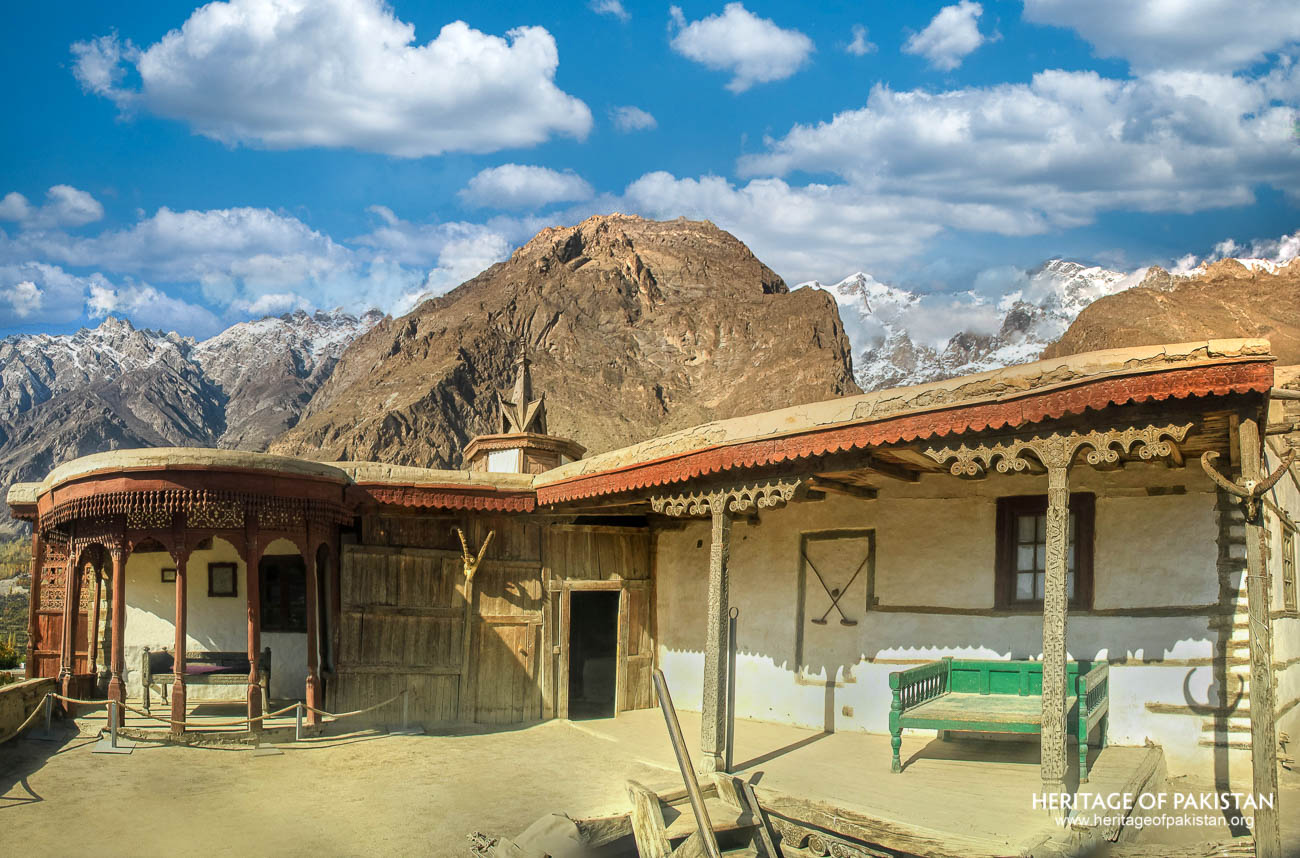
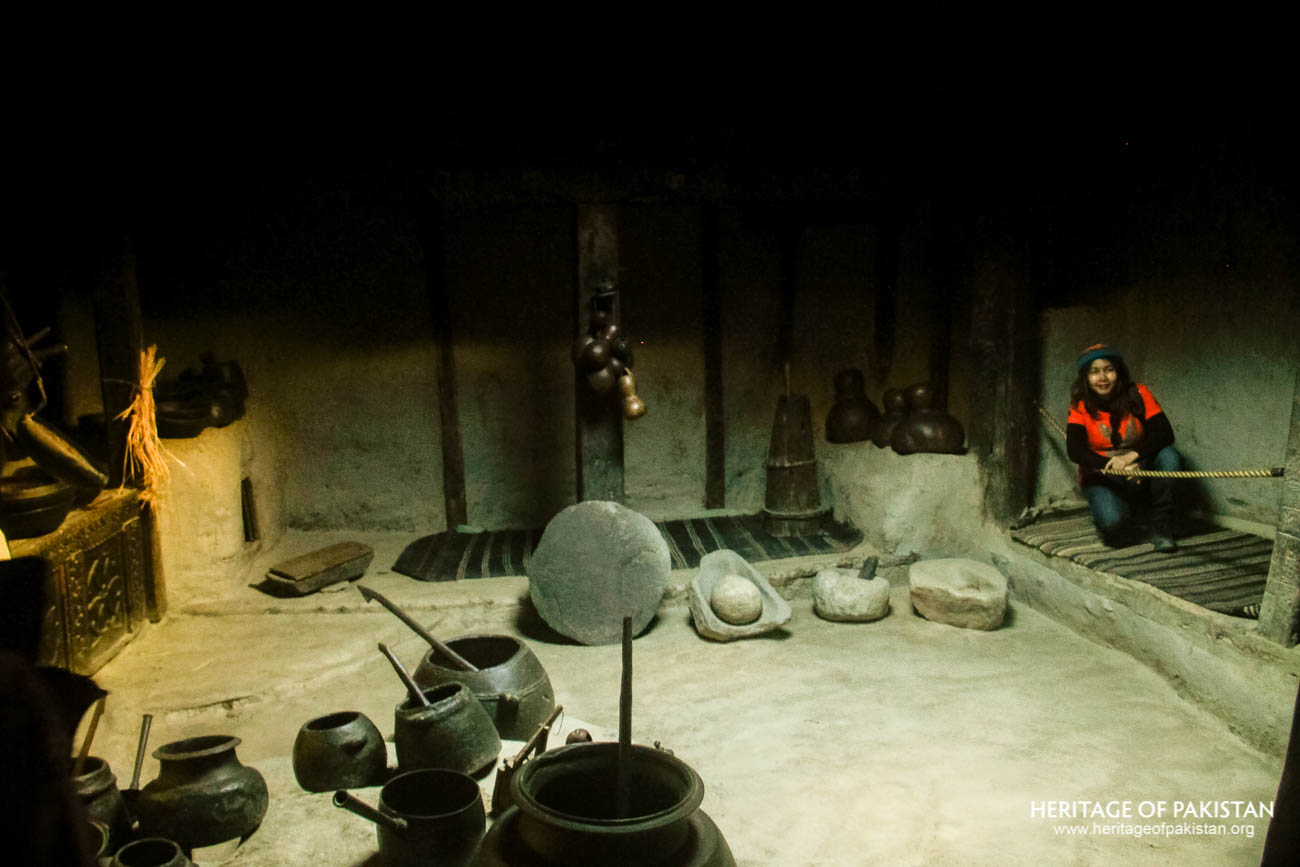
The artisans from Baltistan were influenced by Tibetan culture and tradition, which is reflected in the architectural features of both Altit and Baltit Forts. This shared stylistic heritage is also evident in Shigar Fort and Khaplu Fort, indicating a common architectural vocabulary across these sites. Baltit Fort is an amalgamation of various structures added over centuries. Initially a private royal residence, it expanded gradually to include additional house-like structures. Each of these had a main hall for dining and sitting, with separate sections designated for men, women, storage, cooking, and even livestock and their fodder. Central fireplaces were built directly under ceiling outlets that served as both chimneys and skylights.
The fort houses several distinct spaces including a Throne Hall, a Diwan-e-Aam (public audience hall), a mosque, and numerous residential quarters. During the 19th century, modifications were made to enhance the military appearance of the fort, including the addition of outer defensive layers and guard rooms. In the 20th century, further adaptations were made for more modern usage, such as the addition of verandahs. The fort continued to serve as a royal residence until 1945 when the last Mir of Hunza, Mir Muhammad Jamal Khan, moved to a new palace. He passed away in 1975.
The political landscape of the region shifted during British colonial rule. In 1891, Mir Safdar Khan of Hunza fled to Kashgar. In 1892, the British installed Nazeem Khan as the new Mir of Hunza. In 1985, Mir Ghazanfar Ali Khan handed over Baltit Fort to the Aga Khan Historic Cities Support Programme for restoration. He formally donated the fort to a public foundation named the Baltit Heritage Trust.
Restoration of the fort began in 1991 and was completed in 1996 at a total cost of $200,000. The project employed archaeological survey techniques which revealed more than 70 distinct phases of construction. Radiocarbon dating confirmed that some of Baltit Fort's earliest structural elements are over 700 years old. Following restoration, a museum was established inside the fort to display various historical objects associated with its past. Additionally, the old village of Baltit still houses many historic wooden structures, including ancient mosques that reflect the region's rich architectural legacy.
In recognition of its cultural significance and historical value, Baltit Fort was placed on UNESCO’s tentative list of World Heritage Sites in 2004. Today, it stands not only as a restored architectural monument but also as a center for cultural preservation and public education in the Hunza Valley.
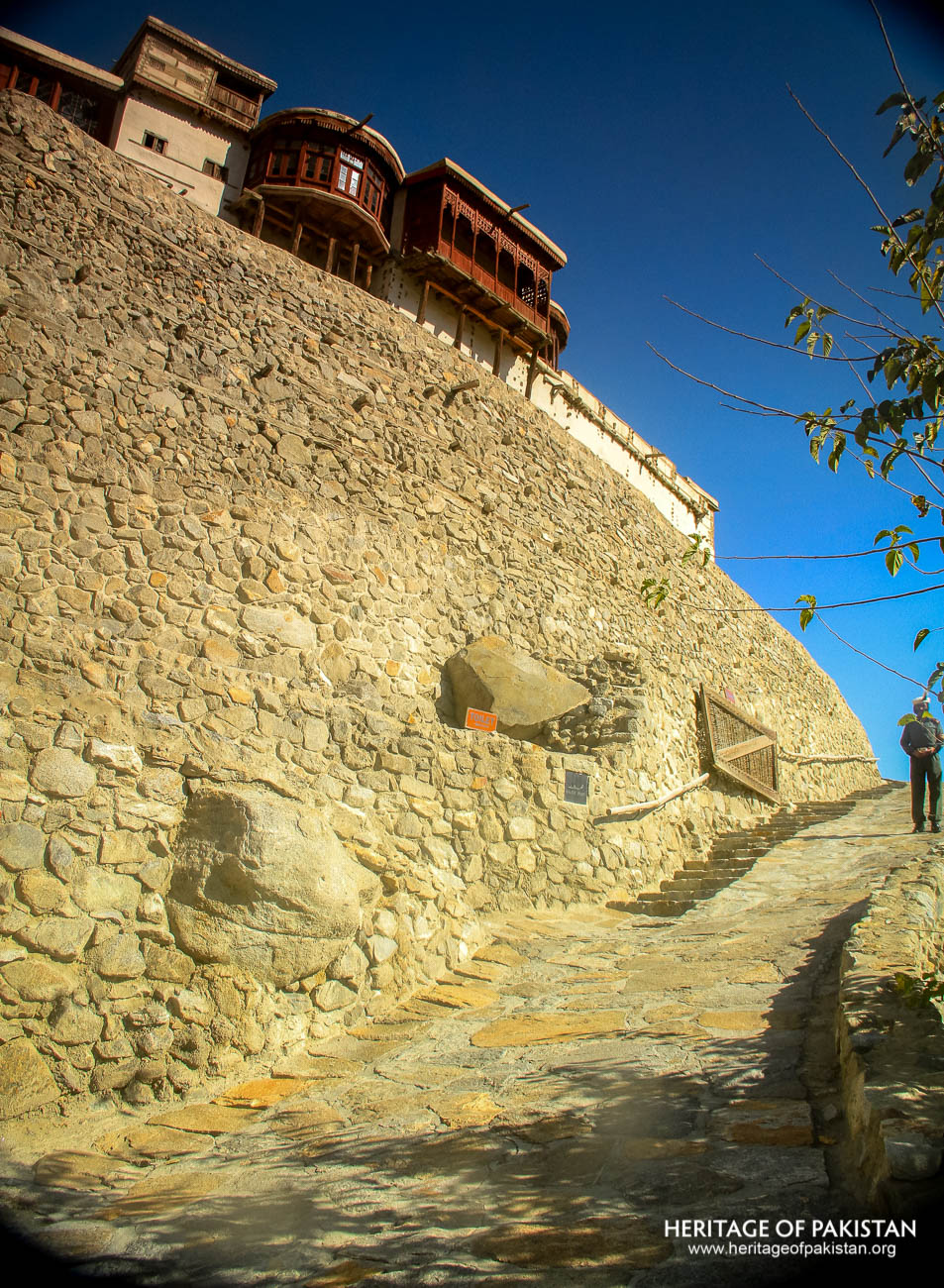
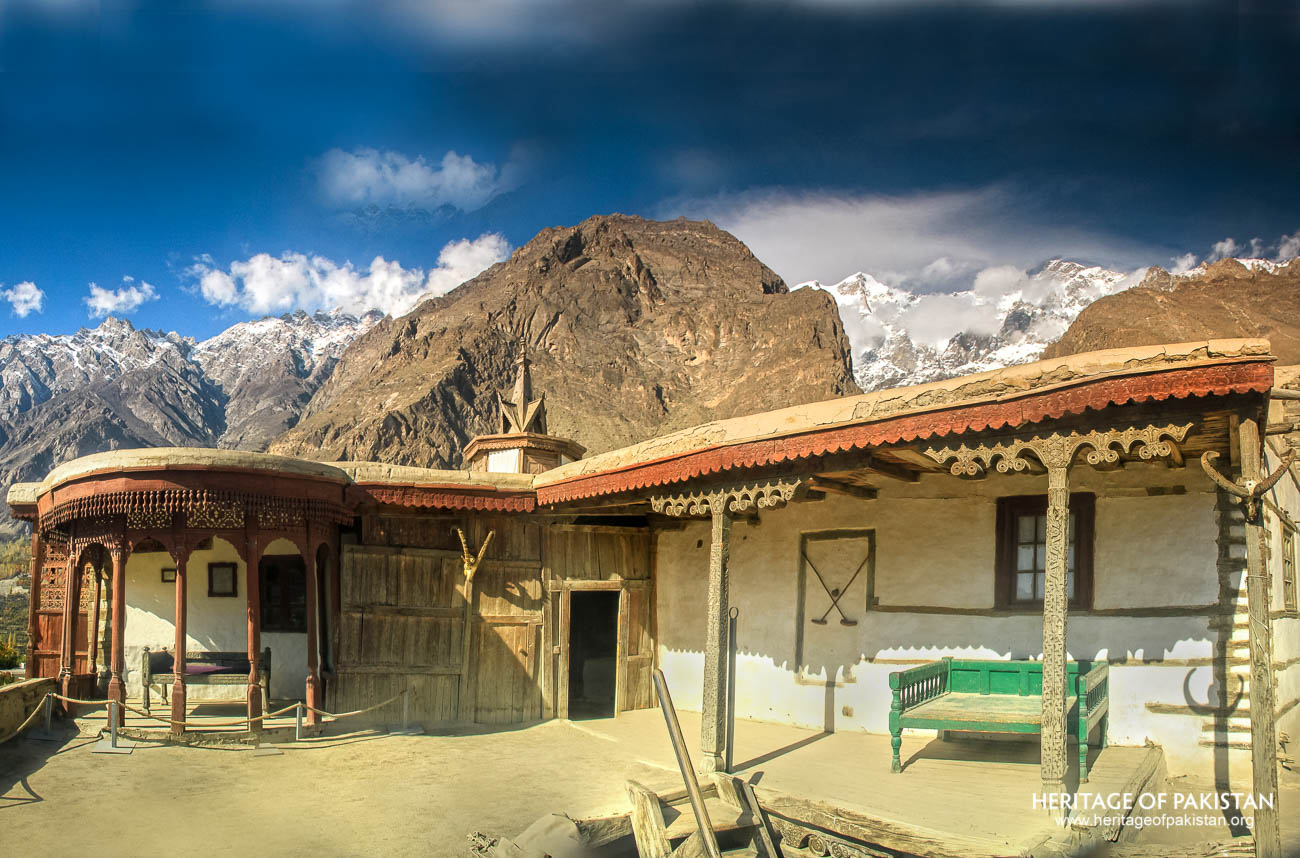
Baltit Fort, situated above the old Baltit village in Hunza Valley, is a historic structure that represents a convergence of northern vernacular and Tibetan architectural styles. The fort is built on a leveled hilltop and accessed by a passage through Baltit village that ascends toward the elevated plinth of the structure. A flight of steps leads visitors to the main gate, which features a carved wooden frame. This main entrance door was added in the 20th century, while behind it stands an older doorway, reflecting layers of construction and modification. The fort was originally constructed as a defensive structure and was designed to protect the local population and their livestock during sieges. According to Sheikh Khurshid Hassan, several towers were constructed to enhance its defensive capabilities.
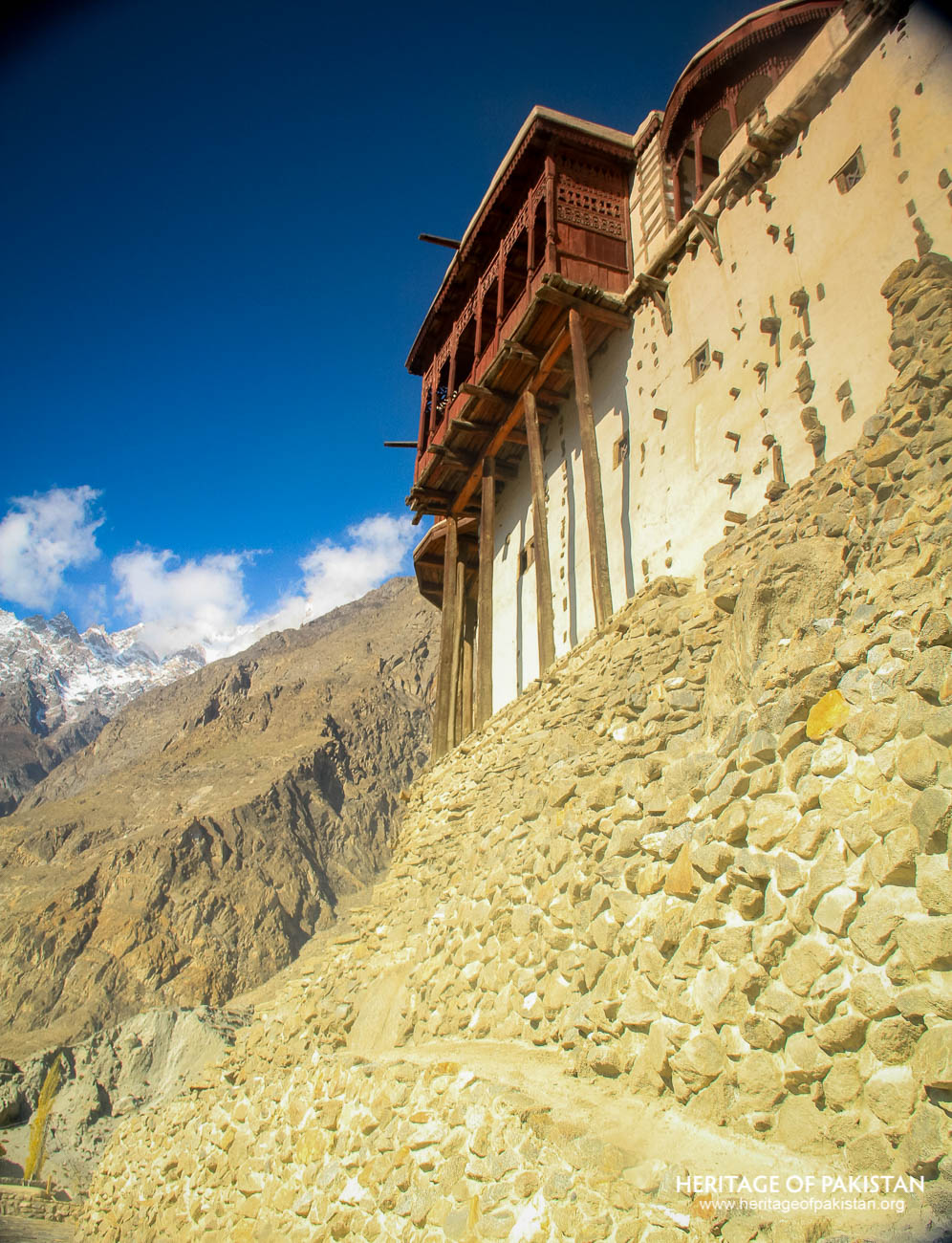
The craftsmanship in the fort is attributed to Balti artisans, who brought with them the influence of Tibetan culture and construction techniques. As a result, architectural features typical of Tibetan style—such as intricately carved wooden balconies or jharokas—are visible throughout the structure. Similar stylistic elements can also be found in other regional forts, including Altit Fort in Hunza, Shigar Fort in Shigar Valley, and Khaplu Fort in Khaplu Valley, all of which share this hybrid architectural vocabulary.
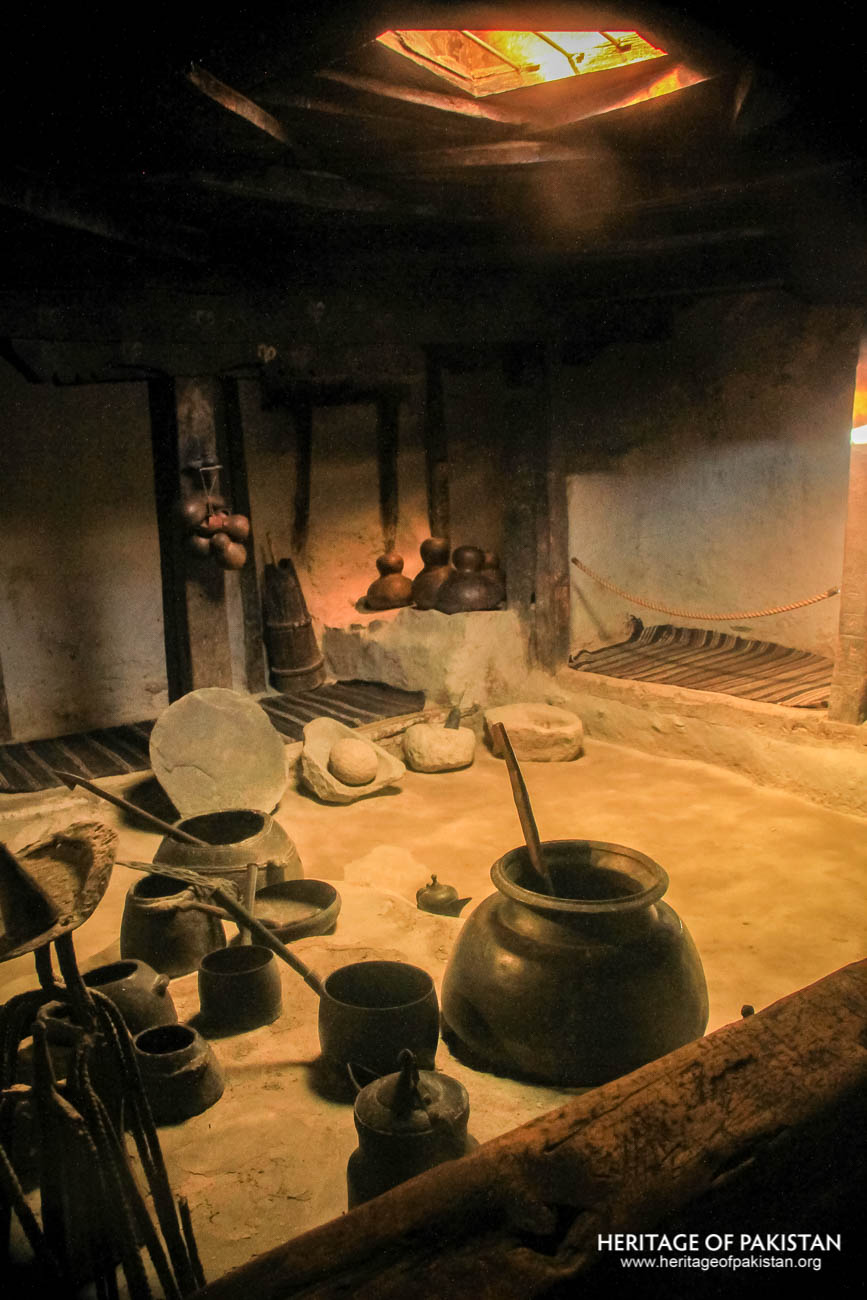
The fort comprises multiple levels, each designed for specific purposes. The lowest floor, located at the plinth level, is used for storage and is accessed via a ladder from the first floor. The ground floor includes some of the fort’s oldest rooms, including a kitchen, prison, and additional storage spaces. During winters, these lower rooms, being naturally warmer, were used more frequently. In contrast, the upper stories provided better lighting and ventilation and were thus used primarily in summer months.
The first floor serves as the initial level of living quarters. A central rectangular open space is surrounded by rooms, supported by wooden columns, and includes a fireplace. This floor features a winter audience hall, a prison room, and a guest room. The guest room was later decorated in a European style, indicative of changes made during the fort’s later occupation. A ladder in the open space of the first floor connects to the second floor, while another ladder leads downward to the storage level below.
The second floor is architecturally significant, containing Hunza-style and Balti-influenced reception halls and servant quarters. On this level is a large darbar-style hall on the western side, as well as a semi-circular wooden jharoka on the same facade—one of the most striking Tibetan-style elements of the fort. The floor retains the four-column central space layout seen on lower floors. From the servant court on the second floor, another ladder ascends to the third floor.
The third floor, or uppermost level, contains additional rooms constructed for guards. A mosque has also been built here, consisting of a small square prayer hall with verandahs on its eastern and southern sides. This level reflects the continued evolution of the fort into a more residential complex, including both religious and practical features. During the early 20th century, the Mir of Hunza redeveloped much of the top floor into a palace, integrating features influenced by British colonial architecture from Punjab. Despite these changes, parts of the floor and premium rooms, including the Mir’s bedroom and women’s quarters, were preserved in their traditional 19th-century form with only minor structural modifications.
The fort originally featured tall square towers, similar to those still present in Altit Fort. An 1887 photograph by Thistleton Dyer documents these towers, which, according to Ahmad Hasan Dani, were likely lost during regional battles, possibly during the British campaign in the area. This further affirms the fort’s original function as a practical military and defensive structure.
In addition to its structural features, Baltit Fort exhibits a predominance of geometric designs throughout its decorative program. The stylistic and structural evolution of the fort, from a defensive stronghold to a residential palace, illustrates both its adaptive function and its central role in the historical and architectural landscape of Hunza Valley.
All Photographs by Syed Noor Hussain and Sania Azhar.
All Rights Reserved. Photos may be used for Non-Commercial, Educational, Artistic, Research, Non-Profit & Academic purposes.
Commercial uses require licensing agreement.

Add a review