
Protected Under
Antiquities Act 1975
36°09'44.2"N 74°10'59.2"E
Antiquities Act 1975
Naltar is home to Pakistan’s oldest ski resort and hosted the 2025 National Ice Sports Championship
The Best Time to Visit Gilgit Baltistan Region is Summers. Preferably from April to September. Winters are Extremely Cold and Snowfall blocks most of access. Hence Winters are not recommended.

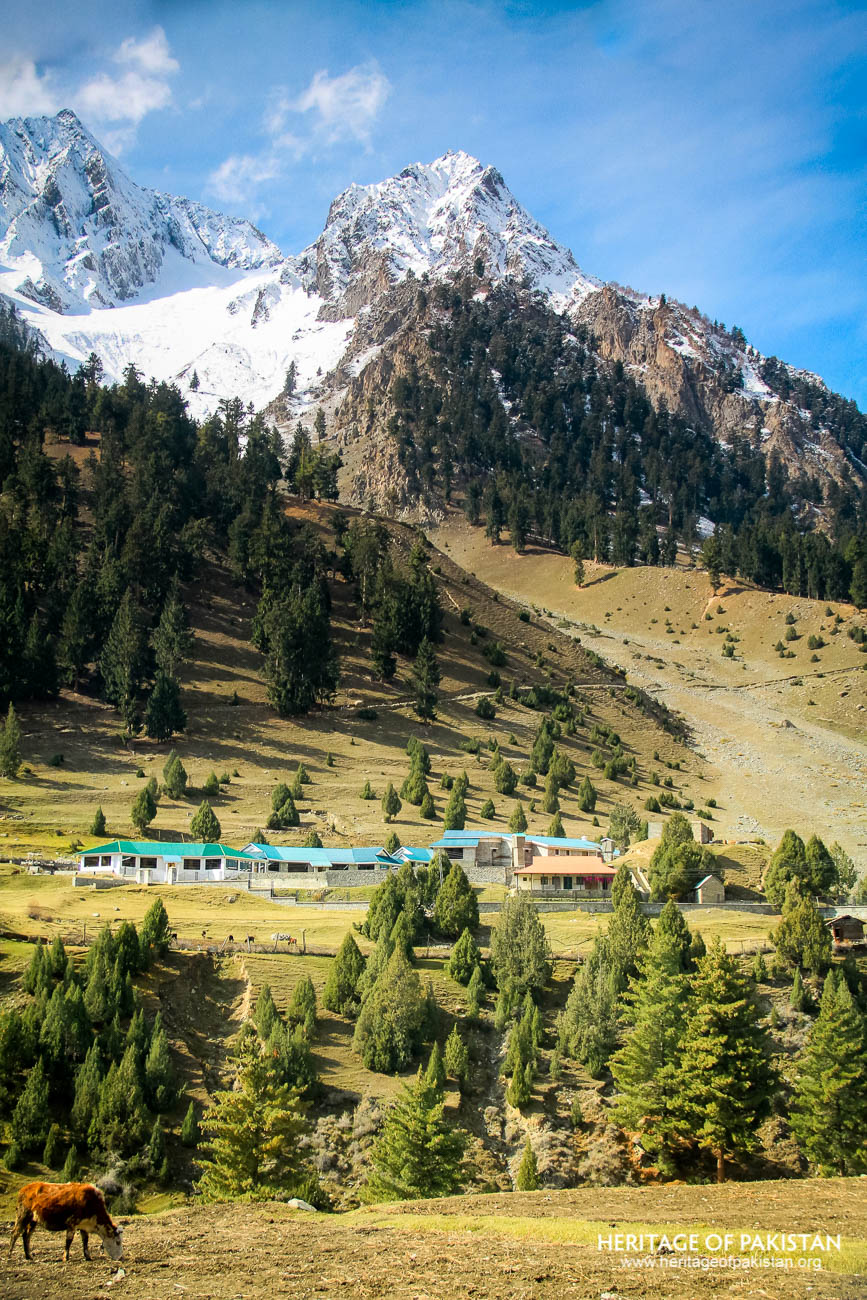

Naltar Valley, located in the Gilgit-Baltistan region of Pakistan, is one of the most stunning and geographically diverse valleys in the country. Situated 44 kilometers northwest of Gilgit at an elevation of 2,898 meters above sea level, it lies within the Karakoram mountain range. The valley spans an area of 27,206 hectares, with altitudes ranging between 1,700 and 5,000 meters. Renowned for its picturesque landscapes, vibrant lakes, and winter sports facilities, Naltar holds both natural beauty and strategic significance.
The valley comprises two main regions based on altitude: Naltar Payeen (Lower Naltar) and Naltar Bala (Upper Naltar). Naltar Payeen is the entry point into the valley and lies near Nomal village. It includes settlements such as Mominabad and Mehdiabad. Naltar Bala lies further ahead, where the valley opens up and hosts most of the settlements, including Nagar, Gumat, Jagot, Khayot, Chhoti, Dalan, Chimarso, Bishagri, and Bidlo. Further north of Naltar Bala are located the Naltar Lakes, Shani Peak, and associated glaciers. Naltar Bala is home to 455 households, while Naltar Payeen consists of 295, together comprising a population of about 6,000 residents across 750 households.
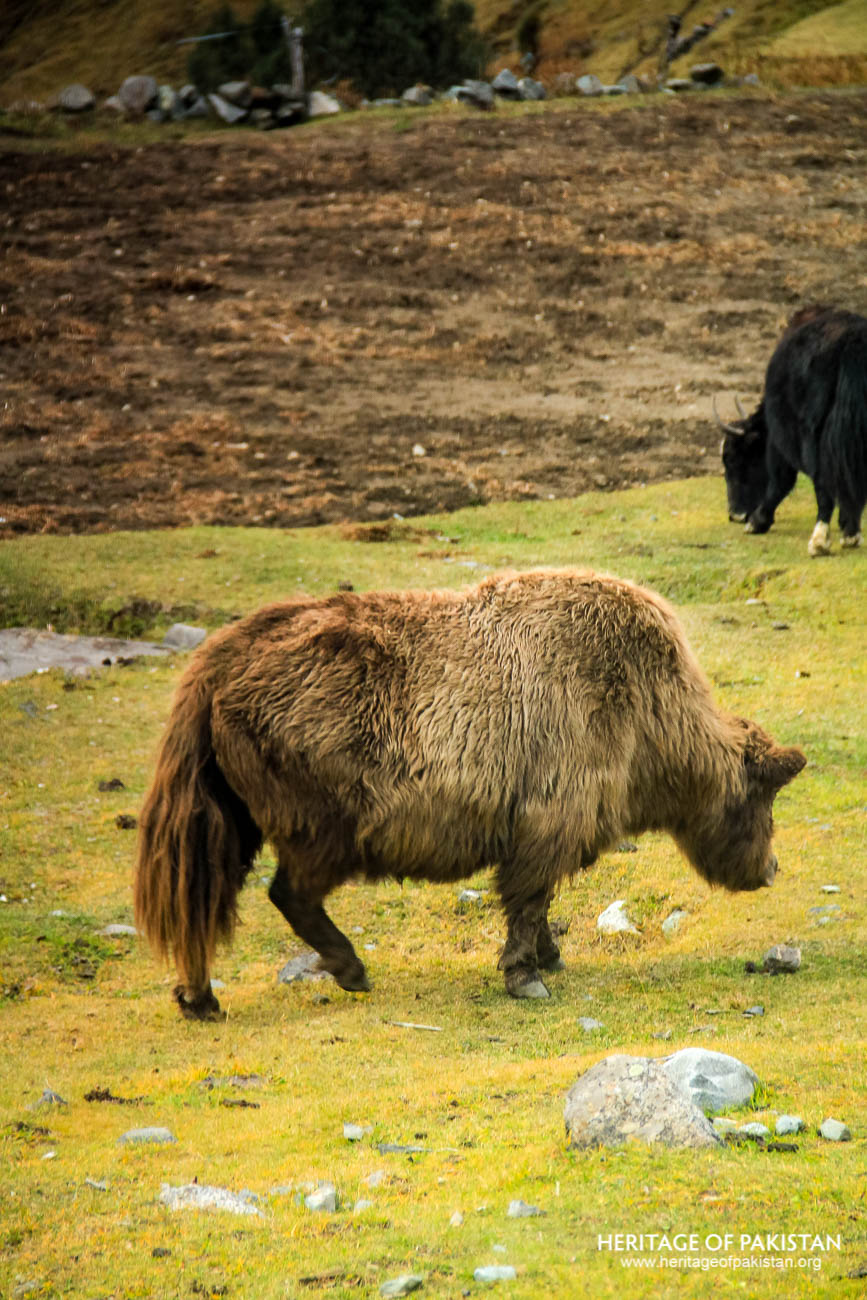
The inhabitants of Naltar Valley are from distinct tribal backgrounds. Naltar Payeen is inhabited primarily by early settlers from the Yashkun and Sheen tribes. In contrast, Naltar Bala is mostly populated by the Gujjar community, which includes tribes such as Kolocko, Dandu (Bijad), Chukuri, Paswad, Siyali, Abijad, and Aduth. Villages in Naltar Payeen include Waldan (now Mominabad), Galin (now Jaffarabad), Kot, Harchin, Hodin, and Humre. A notable local tradition among the Gujjars of Naltar Bala is the carving of ornate wooden coffins, locally referred to as “Jhangla”, decorated with floral and geometric motifs.
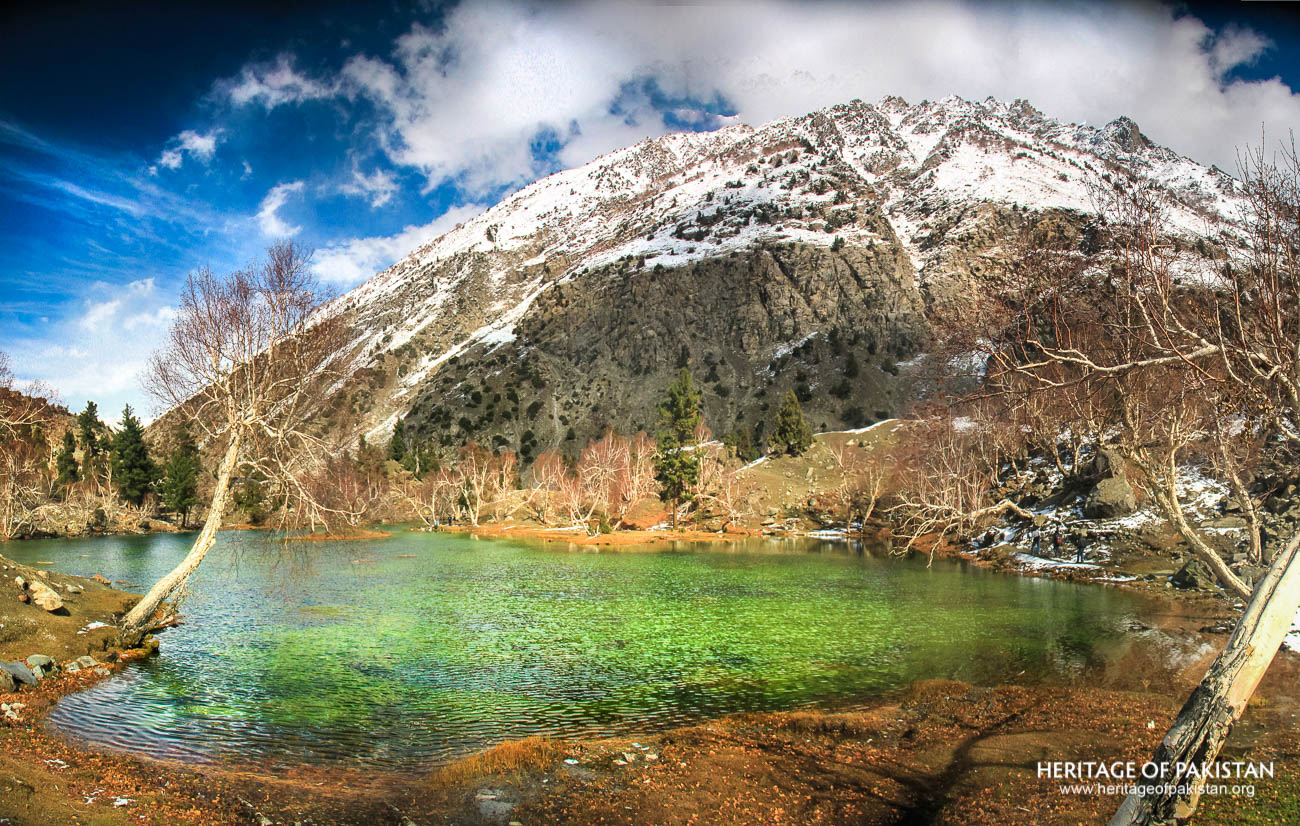
Naltar is famous for its natural beauty and is home to some of the most captivating alpine lakes in Pakistan, collectively known as the Naltar or Bishkiri Lakes. These include Satrangi Lake (Bishkiri Lake I), Blue Lake (Bishkiri Lake II), Feroza Lake (Bishkiri Lake III), and Bodlok Lake. The lakes are known for their vibrant hues—Satrangi Lake is named for its seven colors due to moss and underwater vegetation. A rest house maintained by the Gilgit-Baltistan Public Works Department is situated beside it. This lake covers 21,000 square meters and lies approximately 12 km from Naltar Bala, accessible via 4x4 jeep.
One kilometer from Satrangi Lake lies the Blue Lake, notable for its deep bluish tint. It spans 36,163 square meters and may be accompanied by seasonal lakes formed due to glacial melt. Another kilometer upstream is the Feroza Lake, located on the western bank of the Naltar River. It is accessible by trekking from Blue Lake and derives its name from its turquoise (Ferozi) color. Feroza Lake covers an area of about 5,000 square meters. Further west of the three main lakes lies Bodlok Lake, also known as Murky Lake or Milky Lake. It is the largest of the Naltar lakes, with a surface area of 243,053 square meters. Its name reflects its desaturated, murky appearance. The lake is located 1.3 kilometers west of Blue Lake and is also accessible by trekking.
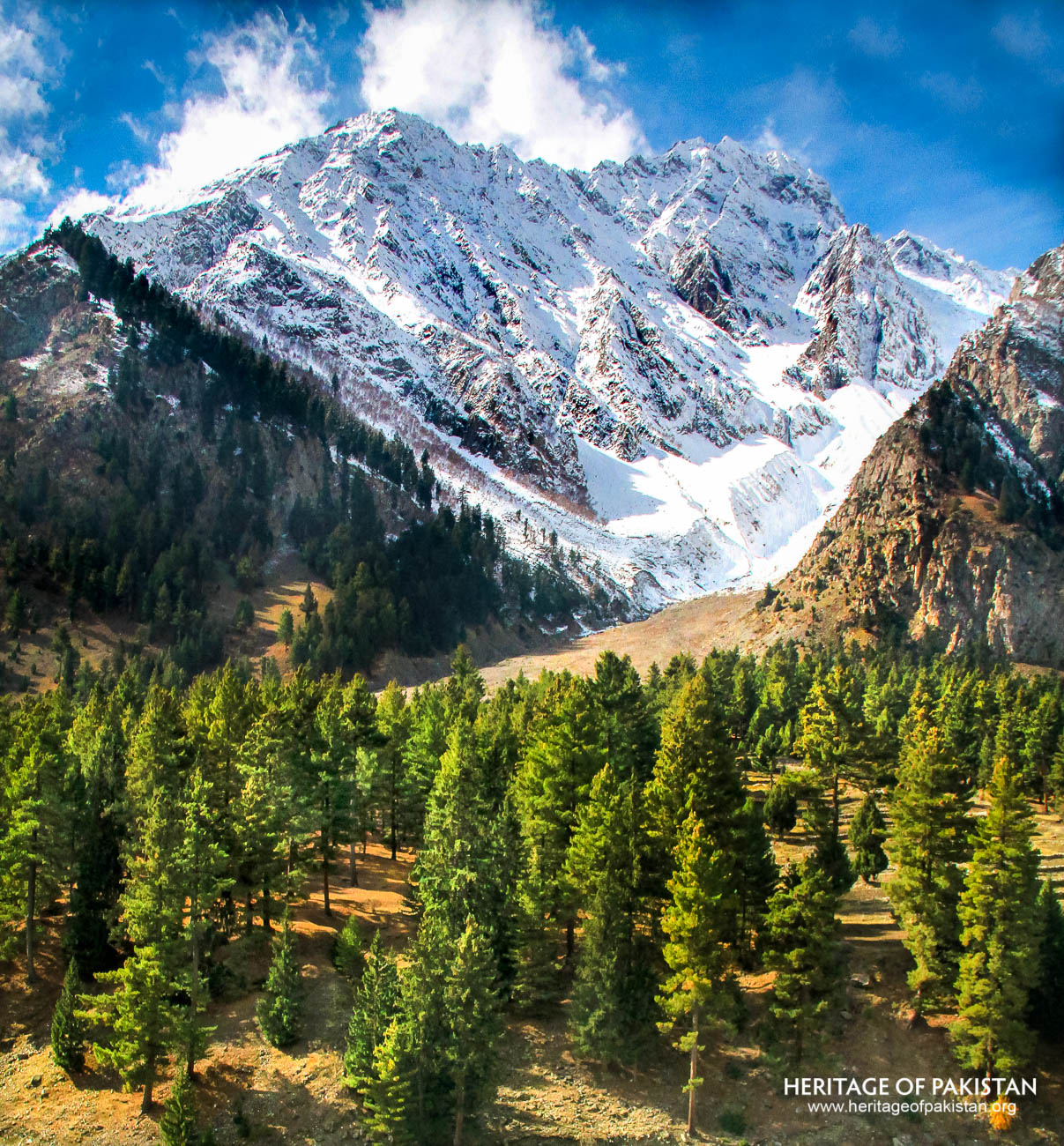
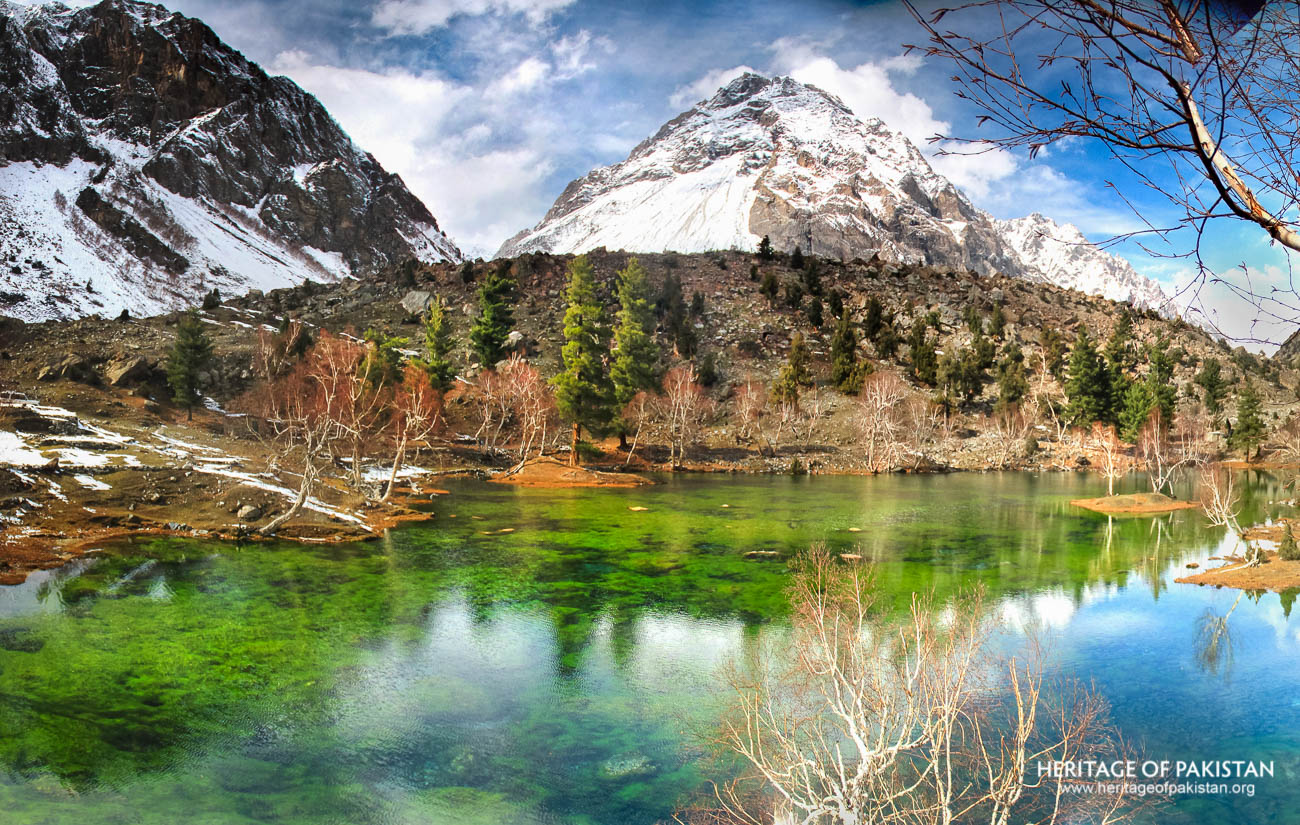
These lakes are glacier-fed, particularly from the Shani Peak and its surrounding glacier. The Naltar River originates from these lakes and flows through the valley, ultimately merging with the Hunza River approximately 4 kilometers downstream of Nomal Town. The valley itself culminates at the northwestern end at Naltar Pass, where the Shani Peak, standing at 5,907 meters, dominates the skyline. Other surrounding peaks include Snow Dome (5,929 m), Chari-Khand (5,886 m), and Meharbani Peak (5,639 m).
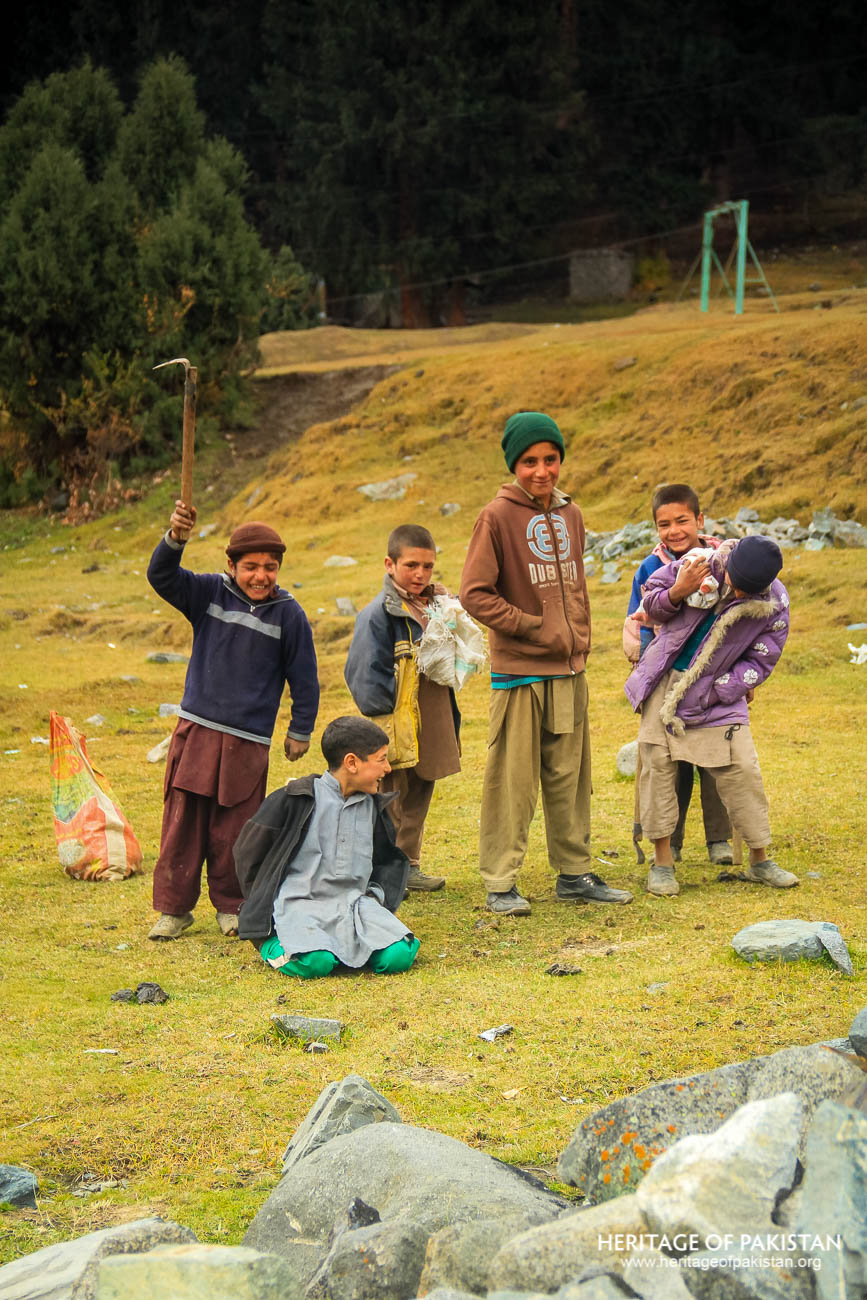

The land cover of Naltar Valley is diverse, including permanent snowfields, glaciers, conifer forests, peatlands, grass meadows, rocky outcrops, wetlands, and cultivated agricultural zones around the settlements. The valley is particularly known for its potato cultivation, which is produced in large quantities. Other agricultural products include walnuts, cherries, apricots, and apples. Winter in Naltar is notably severe, with temperatures dropping as low as -18°C.
The route to Naltar from Gilgit takes approximately two hours. The road passes through Nomal village, from where a rugged jeep track branches eastwards along the Naltar River, leading to Naltar Bala. This track, while scenic, is rough and typically requires 4x4 vehicles.
Naltar Valley is one of only two ski resorts in Pakistan, the other being Malam Jabba in Swat. The ski resort in Naltar is the oldest in the country and plays a pivotal role in promoting winter sports. The Pakistan Air Force (PAF) was the first organization to introduce skiing in Pakistan and continues to play a central role in its management through the Skiing Federation. PAF also maintains a mess and a small unit in Naltar for conducting snow survival training for its personnel.
Winter sports events are regularly held in the valley, including ice hockey, figure skating, curling, speed skating, and relay races. The National Ice Sports Championship was held in January 2025, with participation from twelve teams across Pakistan, including teams from Sindh, Punjab, Khyber Pakhtunkhwa, Islamabad, Gilgit-Baltistan, GB Scouts, and the Pakistan Air Force. Gilgit-Baltistan secured the overall championship with 12 medals. These competitions are organized in collaboration with the National Winter Sports Association and the Gilgit-Baltistan Winter Sports Association, among other stakeholders.
In addition to its sporting and scenic significance, Naltar also hosts ecological diversity. The valley is home to varied flora and fauna and contains a snow leopard sanctuary, further contributing to its ecological and conservation importance. Towards the southern part of the valley near Nomal, a run-of-the-river hydroelectric project has been developed, contributing to local power generation and infrastructure development in the region. Altogether, Naltar Valley represents a convergence of natural splendor, cultural richness, recreational significance, and ecological value, making it one of the most distinctive destinations in Pakistan's northern highlands.
All Photographs by Syed Noor Hussain and Sania Azhar.
All Rights Reserved. Photos may be used for Non-Commercial, Educational, Artistic, Research, Non-Profit & Academic purposes.
Commercial uses require licensing agreement.

Add a review