
Did You Know?
Bab-e-Khyber is featured on the 10 rupee currency note of Pakistan.
34°00'09.6"N 71°22'48.6"E
Bab-e-Khyber is featured on the 10 rupee currency note of Pakistan.
The Best Time to Visit mountain regions of Khyberpakhtunkhwa is Summers. Preferably from April to September. Winters are Extremely Cold and Snowfall blocks most of access. Hence Winters are not recommended.

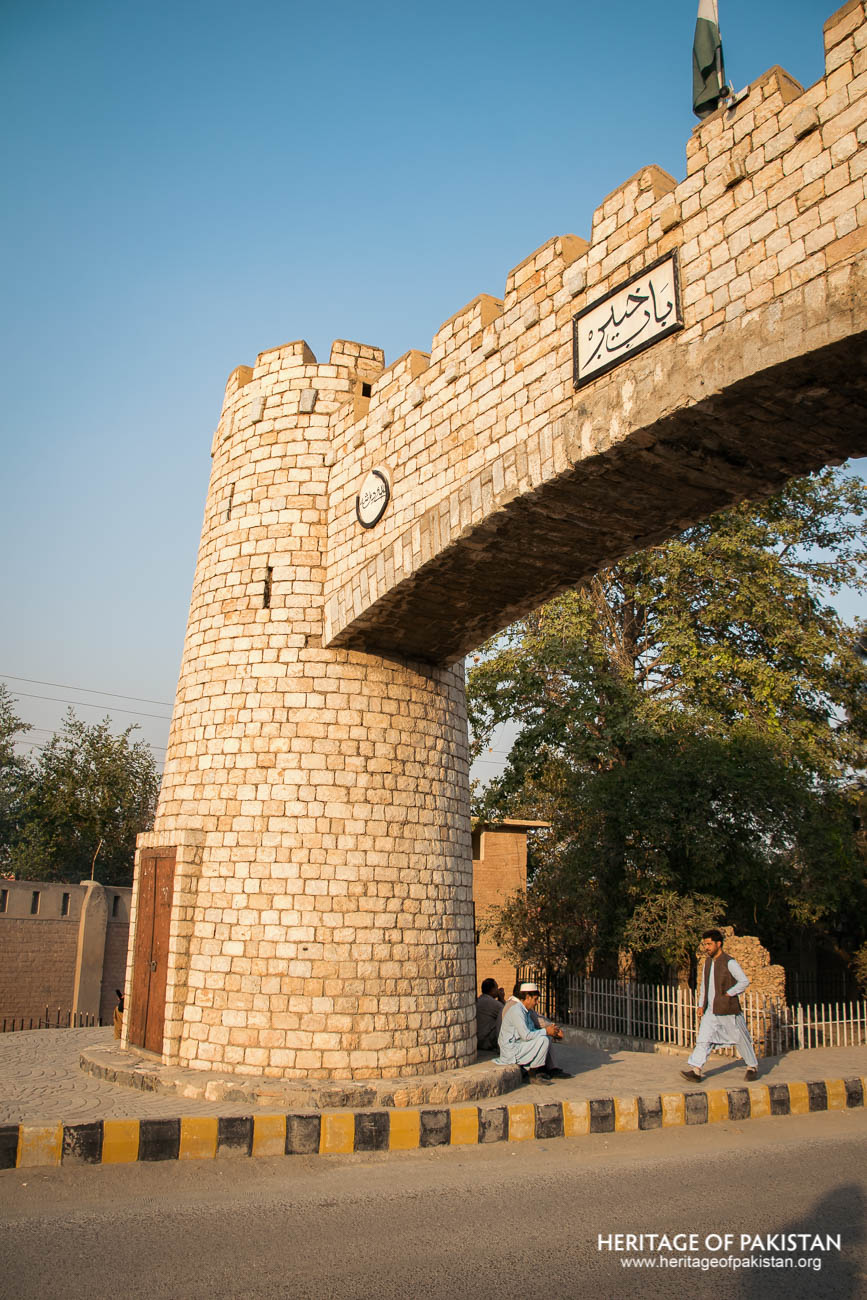
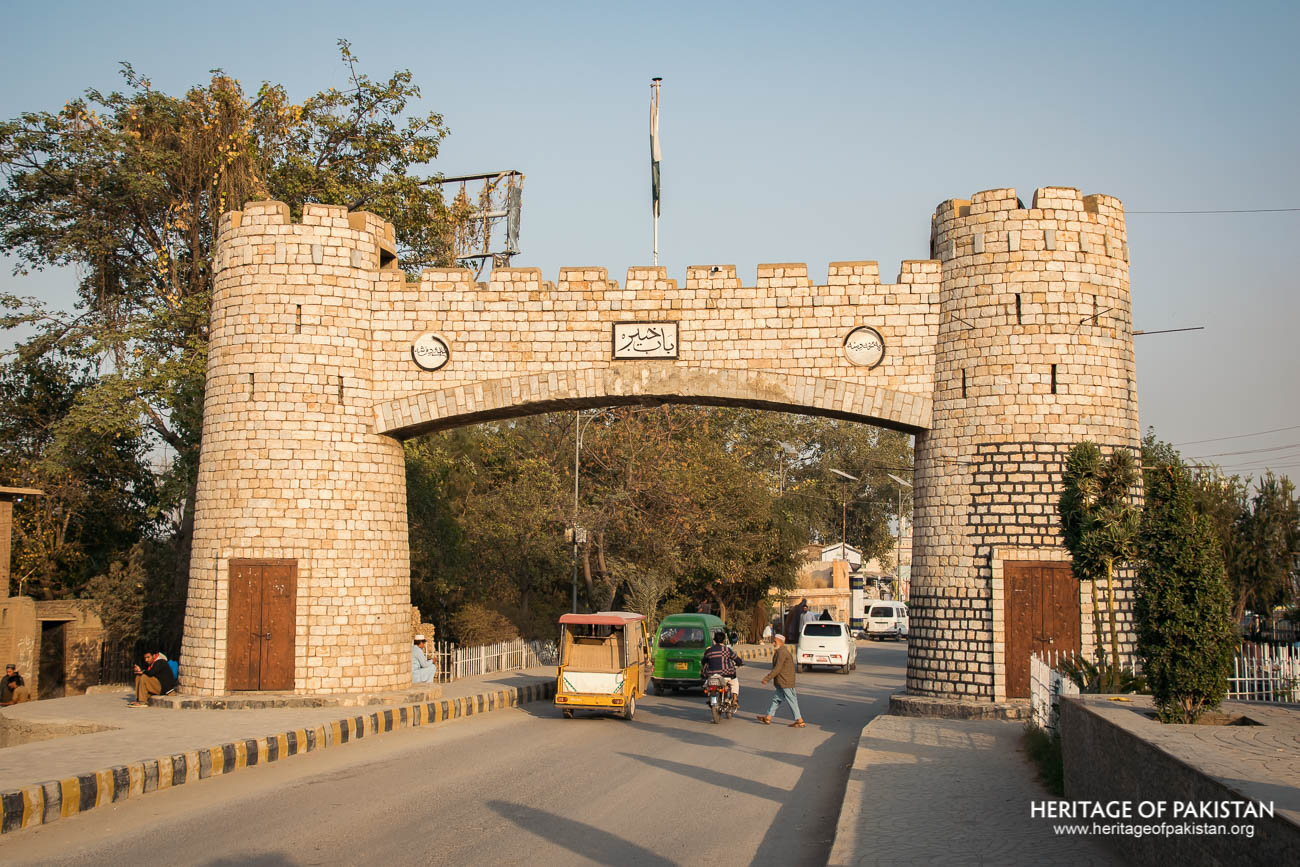
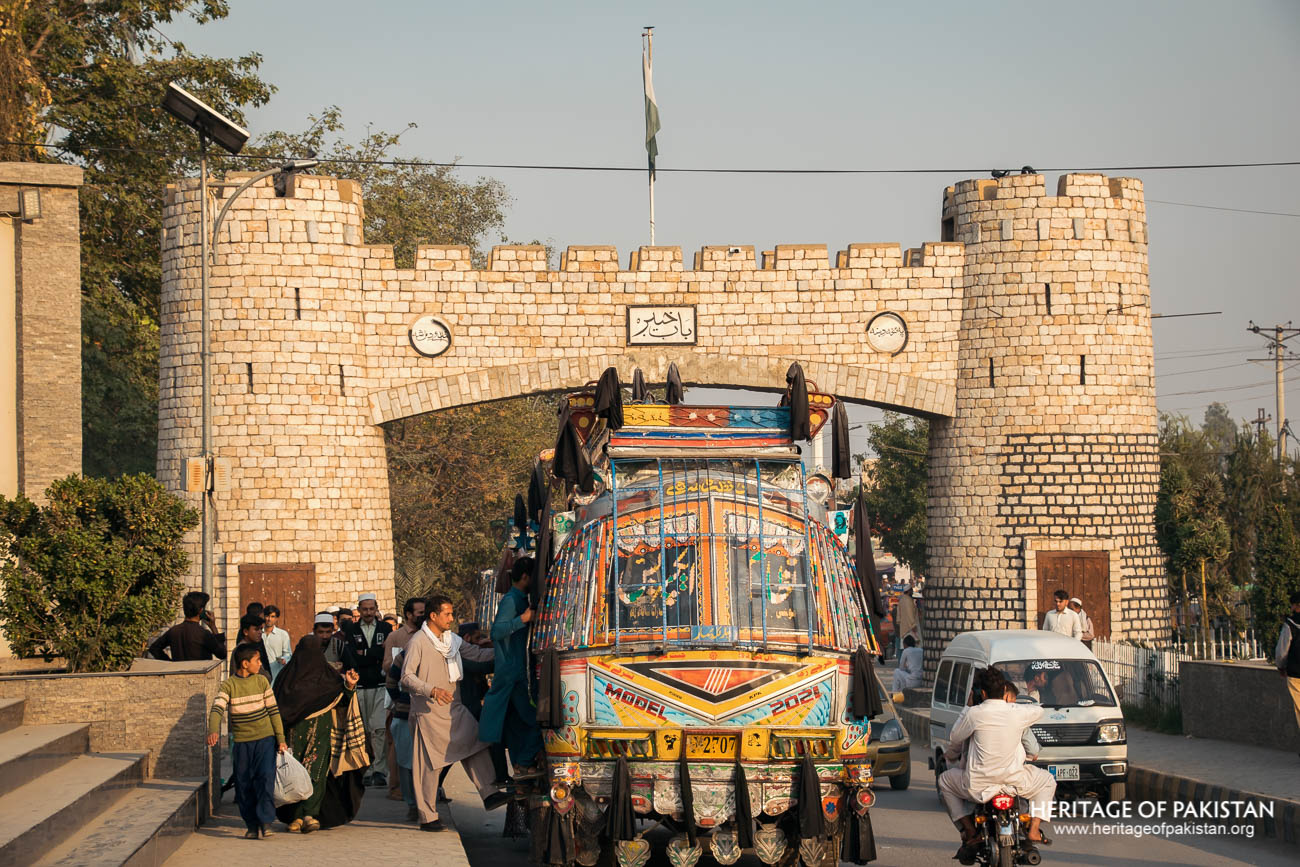
Bab-e-Khyber is a monumental gateway located on Jamrud Road at the eastern entrance of the historic Khyber Pass in Khyber District, Khyber Pakhtunkhwa, Pakistan. This iconic structure marks the beginning of the ancient route that winds through the Khyber Mountains toward the Torkham border. The road from the gateway leads directly to the Khyber Pass, reaching its highest point at Landi Kotal. Near this point, the ancient Buddhist Sphola Stupa is situated across from the modern village of Zarai. The monument stands near Jamrud Fort, a structure originally built by the Sikhs in 1836 to control the strategic entrance of the pass. The Bab-e-Khyber has since become one of the most recognized symbols of the Khyber region and the North West Frontier, and it is also featured on the ten-rupee currency note of Pakistan.
The Khyber Pass has played a pivotal role in the history of the Indian subcontinent. Throughout the centuries, it served as a critical corridor for countless invaders, traders, and travelers who crossed into the plains of the subcontinent from Central Asia. In 1526, the Mughal emperor Babur traversed the Khyber Pass on his way from Kabul to confront the Lodhis at the Battle of Panipat. During Emperor Akbar's reign, a road was constructed through the pass in 1586 under the supervision of engineer Qasim Khan, marking the first formal attempt to ease passage through the mountainous terrain. In 1836, the Sikh Empire sought to close the route by erecting the Jamrud Fort; however, they suffered the loss of General Hari Singh Nalwa in the ensuing Battle of Jamrud in 1837. Under British rule, the road was further improved and a permanent motorable route was developed. Subsequently, the British also laid down a railway line that passed through multiple tunnels and extended to Landi Kotal, enhancing accessibility through the treacherous terrain. The full stretch of the Khyber Pass extends from Jamrud to Torkham, underscoring its long-standing strategic importance.
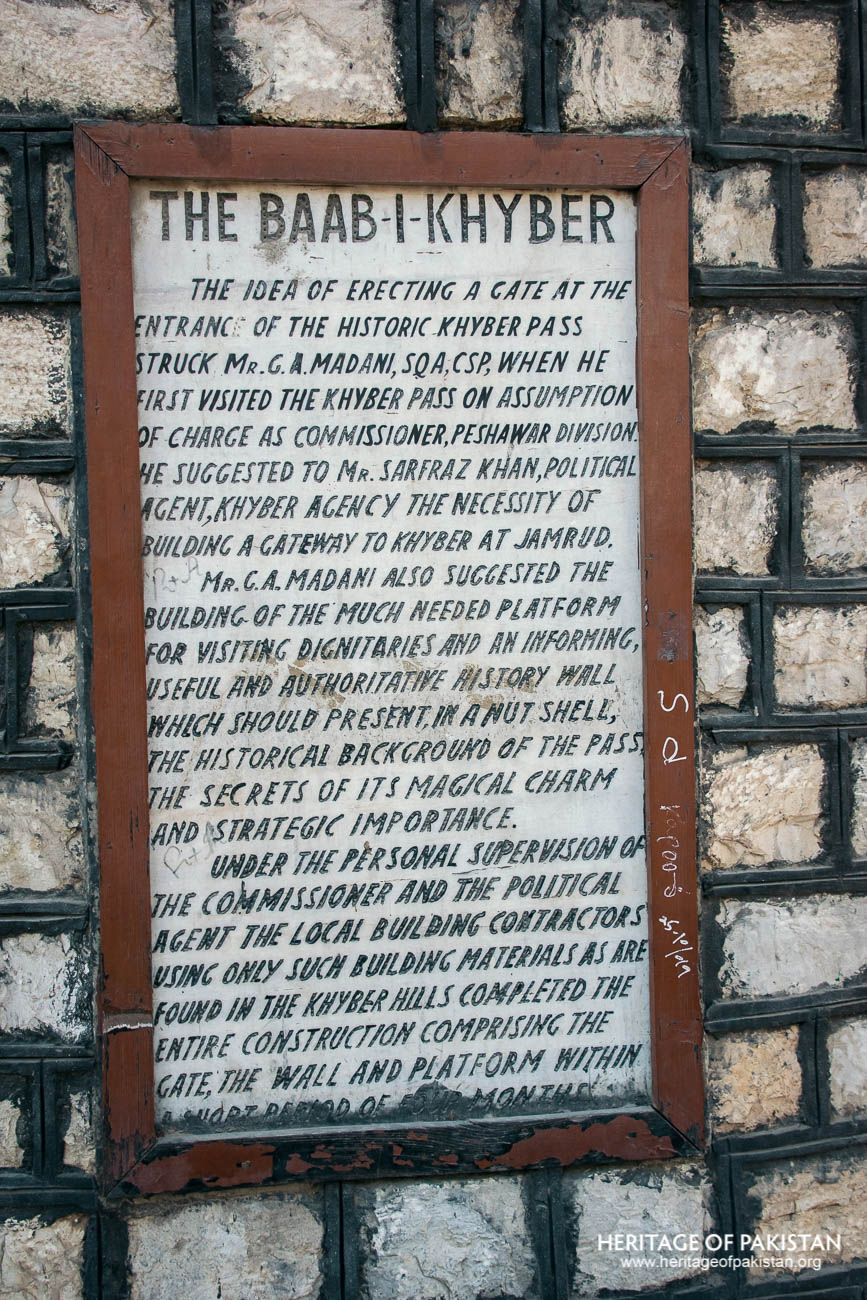
The concept for constructing Bab-e-Khyber emerged when G.A. Madani, CSP, assumed charge as Commissioner of the Peshawar Division and first visited the area. He envisioned a formal gateway at the entrance to the Khyber Pass and proposed the idea to Mr. Sarfaraz Khan, the Political Agent of the then Khyber Agency. Alongside the gateway, Commissioner Madani also suggested building a “history wall” to visually narrate the past of the Khyber Pass for visitors. To accommodate official ceremonies and visiting dignitaries, a platform was built opposite the wall. The construction of the gateway was overseen personally by the Commissioner and Political Agent, and locally sourced materials from the Khyber Hills were used for the project. It took approximately four months to complete the gateway. A plaque on the structure commemorates its inauguration, stating: “The opening ceremony of Bab-e-Khyber was performed by Field Marshal Mohammad Ayub Khan, President of Pakistan, on 11 June 1963.”
The monument’s significance was further highlighted during the Afghan War from 1979 to 1988, when thousands of Afghan refugees crossed the Khyber Pass into Pakistan through this route. The symbolic value of Bab-e-Khyber was amplified not only by its historical location but also due to the enduring presence of Jamrud Fort adjacent to it. The foundation of Jamrud Fort had been laid by Sikh General Hari Singh Nalwa on 6th Poh 1893 Vikram Samvat (1836) and named “Fattehgarh.” The fort was conceived as a strategic stronghold to guard against invasions through the pass. The construction of Bab-e-Khyber thus complemented this legacy, reinforcing the geopolitical and cultural importance of the gateway as both a historical marker and a contemporary monument.
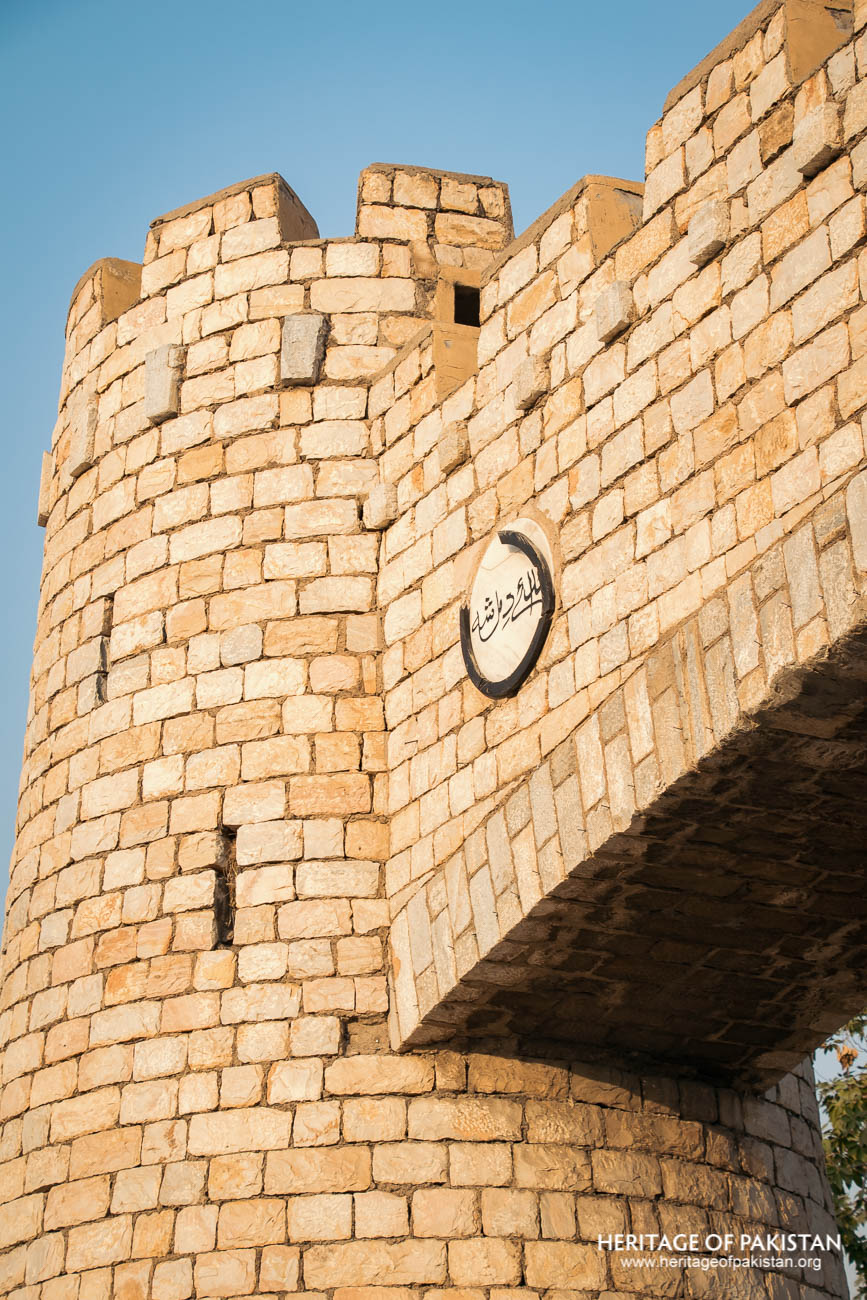
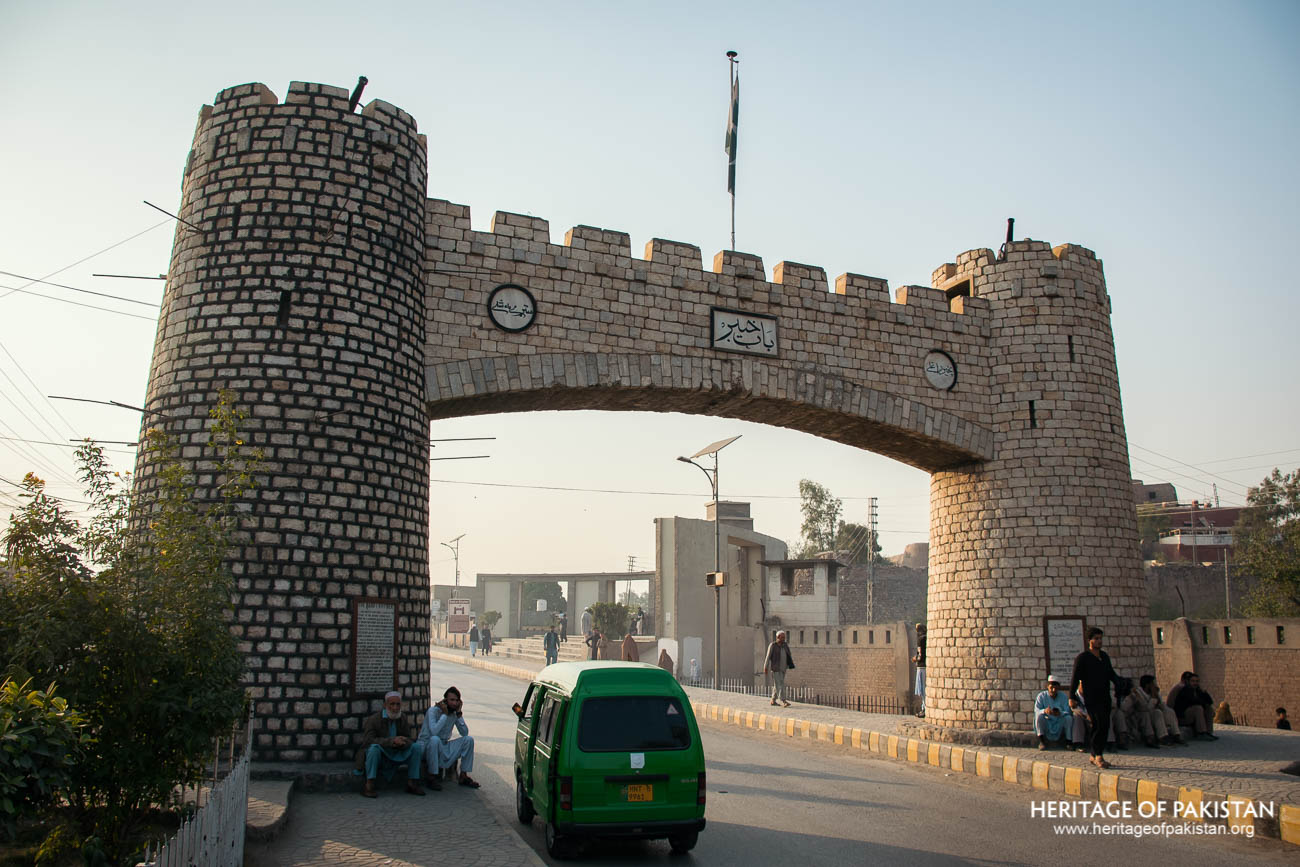
Bab-e-Khyber serves as a monumental ceremonial gateway situated at the entrance to the historic Khyber Pass. While not constructed for defensive purposes, its form draws heavily upon the vocabulary of fort architecture. Designed to emulate the features of a fortified gateway, the structure combines symbolic references to military architecture with commemorative and civic functions. Its architecture embodies a deliberate stylistic homage to the region’s martial legacy, creating a visual narrative that links it to the historical significance of the Khyber region.
The main composition of the gateway consists of two cylindrical bastions flanking a central archway. These circular bastions are broader at the base and gradually taper as they rise, lending them an imposing vertical profile. At their summit, a parapet composed of merlons and crenels enhances the appearance of fortification, mimicking traditional fortress architecture. Each bastion features an entry door, which likely provides internal access to the upper levels via staircases. These elevated sections may offer views from the top, reinforcing the impression of a watchtower or fort.
Between the bastions, the central archway forms the focal point of the gateway. The lower part of the arch is segmental in shape, while the upper portion is capped with a straight parapet, also adorned with crenellations. The inscription “Bab-e-Khyber” appears prominently in Urdu in the center of the arch, with the national flag of Pakistan hoisted above. The overall arrangement is symmetrical and monumental, underscored by the twin cylindrical towers that anchor the gateway on either side. Although these towers include architectural features commonly associated with defense—such as machicolations and crenellated parapets—their function here is largely symbolic.
In addition to the main gateway, adjacent commemorative elements were constructed as part of the broader architectural ensemble. One side of the gateway features a “history wall,” a visual narrative installation that traces the history of the Khyber region from antiquity through the advent of Islam, the British colonial era, and the independence movement. On the opposite side, a five-step platform was built to accommodate official visits and public ceremonies, reinforcing the civic function of the site.
It is noted that only locally sourced materials were used in the construction of the Bab-e-Khyber, anchoring the monument in the physical and cultural landscape of the region.
All Photographs by Syed Noor Hussain and Sania Azhar.
All Rights Reserved. Photos may be used for Non-Commercial, Educational, Artistic, Research, Non-Profit & Academic purposes.
Commercial uses require licensing agreement.

Syed Noor Hussain
July 23, 2025 at 4:06 amBest