
Did You Know?
Chowk Yadgar once featured inscriptions in English, Persian, and Pashto, memorializing Colonel Hastings
34°00'36.3"N 71°34'27.9"E
Chowk Yadgar once featured inscriptions in English, Persian, and Pashto, memorializing Colonel Hastings
The Best Time to Visit mountain regions of Khyberpakhtunkhwa is Summers. Preferably from April to September. Winters are Extremely Cold and Snowfall blocks most of access. Hence Winters are not recommended.

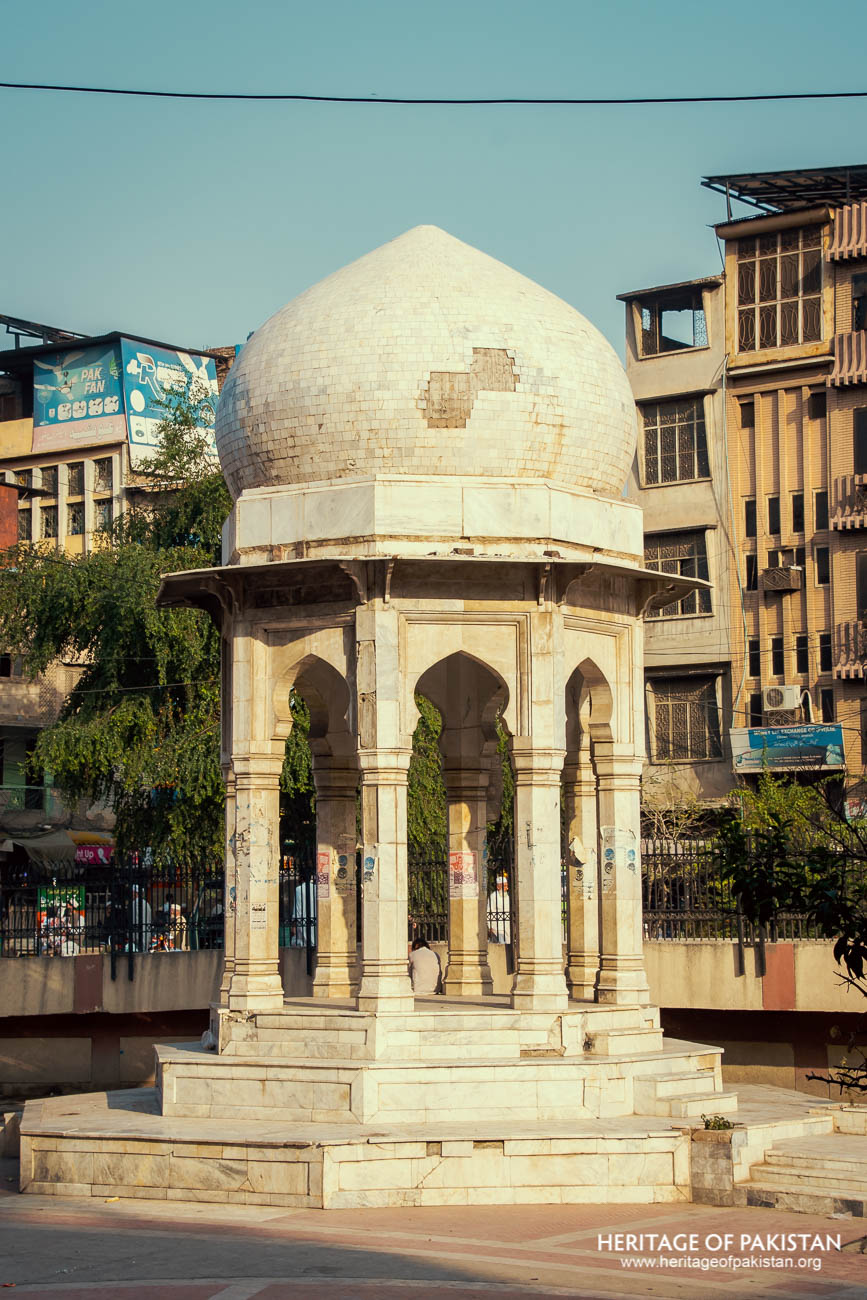
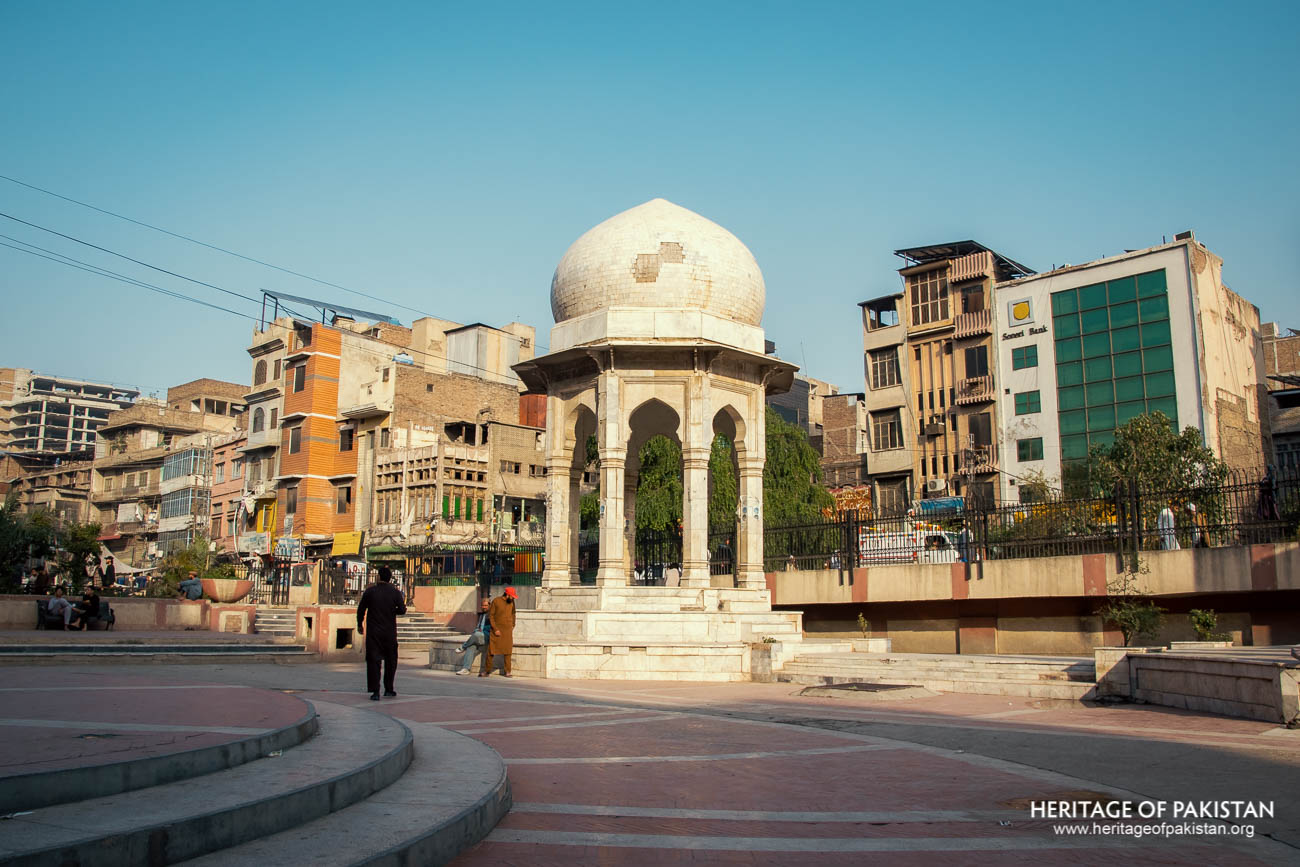
Chowk Yadgar, located in the heart of the Walled City of Peshawar, stands as one of the most prominent memorials and public spaces within the densely populated urban fabric of old Peshawar. Strategically positioned, it lies in proximity to several significant landmarks including the Mahabat Khan Mosque, Cunningham Clock Tower, and the historic Sethi Muhalla. Its central location makes it a key point along the heritage trail of Androon Peshawar, with Mahabat Khan Mosque to its west and another street leading eastward toward the Sir Cunningham Tower, Sethi Muhalla, and Gor Khatri Archaeological Complex.
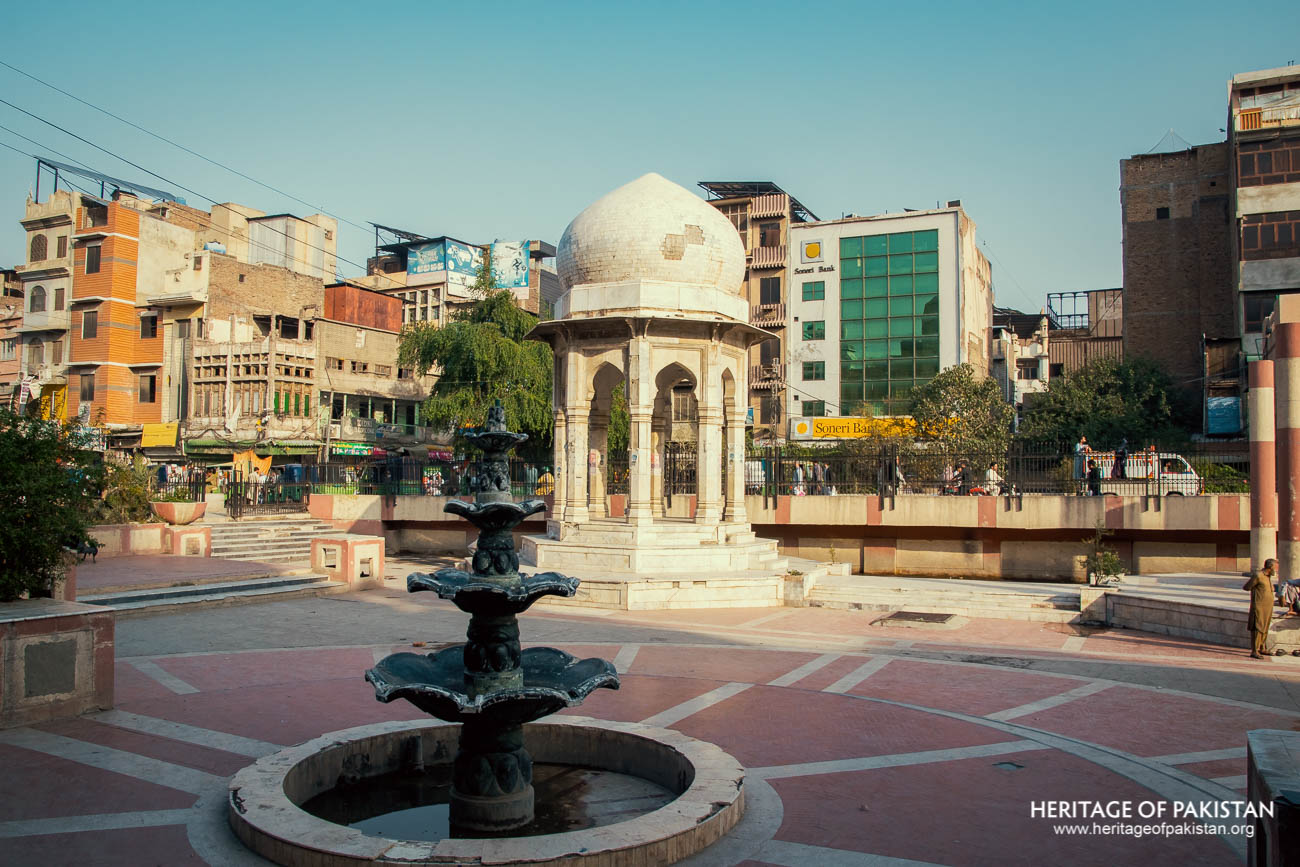
Originally constructed in 1892, the memorial was established in memory of Colonel E.C. Hastings of the British Army by his friends and admirers. Colonel Hastings died on 2nd December 1884, and the memorial was built to honor his legacy, as stated in an inscription that read, “Erected to the memory of Colonel EC Hastings C.B. died on 2nd December 1884 by one thousand friends and admirers of whom eight hundred are residents of the Peshawar District.” The initial monument was a domed pavilion elevated on a raised platform, accessed by a flight of steps and accompanied by a fountain. The monument featured inscriptions in three languages: English, Persian, and Pashto.
Historically, the square was known as the “Hastings Memorial,” but it later became known as “Chowk Yadgar,” which translates to “Commemoration Square.” Over time, it evolved from a colonial-era memorial into a vital civic space, often used by political activists for public gatherings, demonstrations, and commemorative events. In 1969, the original structure was demolished and replaced by a new concrete arch standing approximately 100 feet tall, clad in white marble. This replacement was dedicated to the heroes of the Indo-Pakistan War of 1965. However, this arch was again demolished in the 1990s and subsequently replaced by a dome-shaped structure that stands on the site today.
The layered history of Chowk Yadgar—from colonial commemoration to post-independence nationalism and civic activism—reflects the evolving identity and memory of Peshawar’s urban core. It remains a symbolic and functional crossroad in the cultural and historical landscape of the old city.
Chowk Yadgar serves as a central point in the heart of Peshawar’s Walled City and offers convenient access to several historically significant sites nearby. To its west lies the iconic Mahabat Khan Mosque, a 17th-century Mughal-era structure known for its white marble façade and intricate frescoes. Just a short walk east leads to the Cunningham Clock Tower, an Indo-Saracenic monument commemorating Queen Victoria’s Diamond Jubilee, followed by the ornately crafted havelis of Sethi Muhalla, showcasing Central Asian and Kashmiri architectural influences. Further east, the Gor Khatri archaeological complex houses remnants from ancient Peshawar and a small site museum. These landmarks are all part of the city’s heritage trail and can be explored on foot, offering visitors a dense concentration of cultural and architectural treasures within walking distance from Chowk Yadgar.
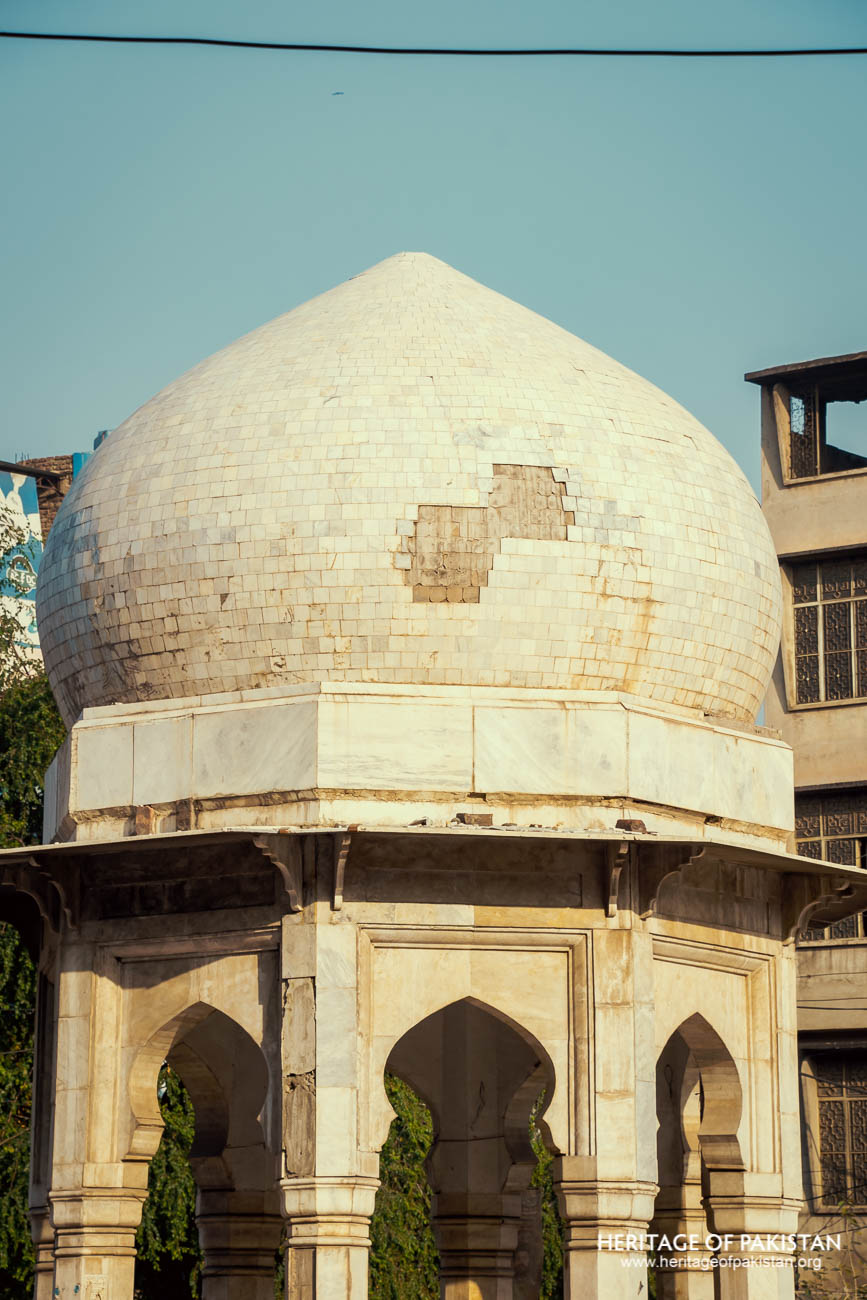
Chowk Yadgar, a prominent landmark in the Walled City of Peshawar, has undergone several transformations since its original inception. At its center now stands a dome-shaped monument constructed in the 1990s, placed within a large open space or chowk that functions both as a public plaza and as a location for rest and gatherings. Originally, a similar dome-shaped structure had been installed, and later the area around it was developed into a designed public space, creating the broad, open square that exists today. Historically, this space has also served as a venue for political gatherings and civic assemblies.
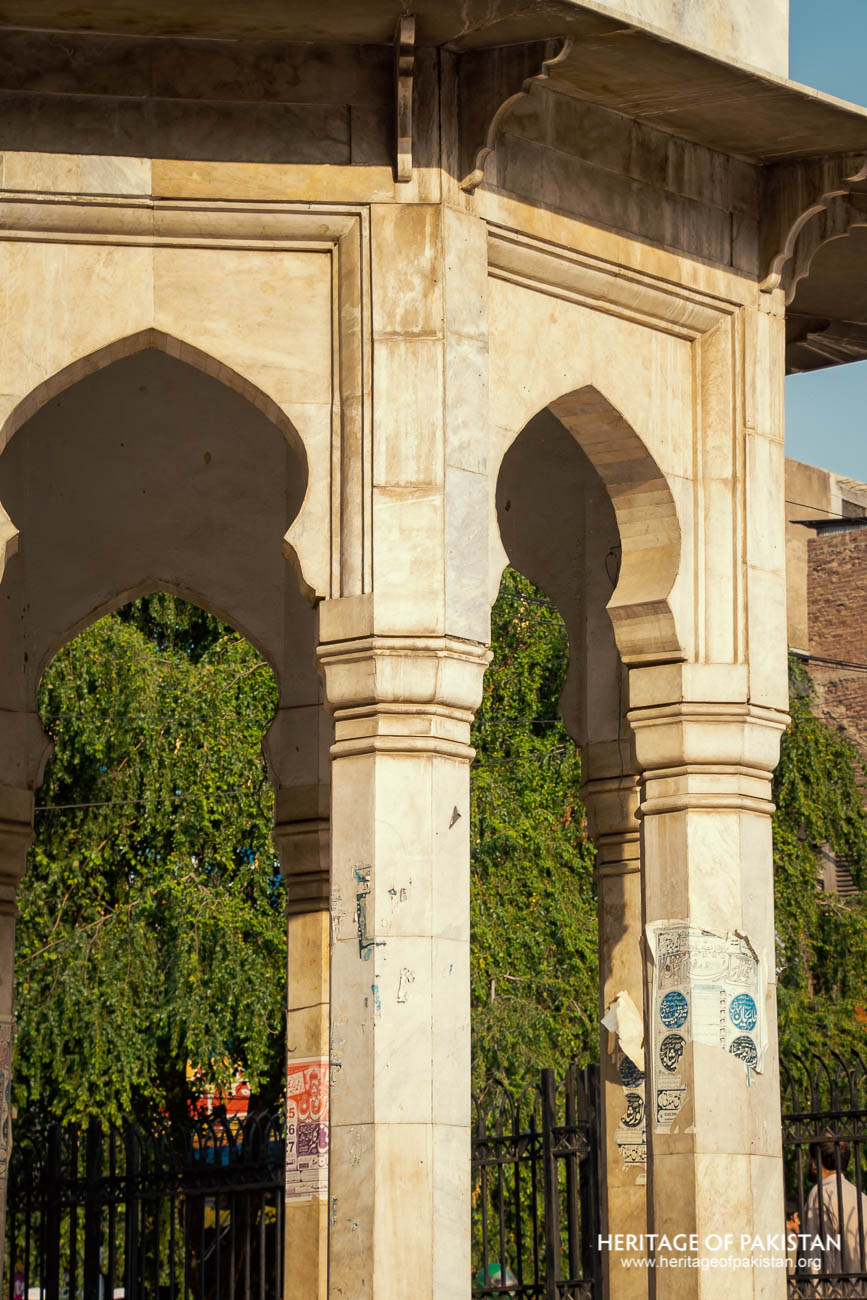
The present structure at the chowk is a marble pavilion inspired by Mughal architectural elements. Octagonal in layout, it is composed of eight arches framed by white marble columns, giving the structure both symmetry and elegance. The pavilion is entirely clad in white marble and visually recalls the architectural motifs of the Shah Jahani era. A prominent chajja, supported by marble brackets, runs below the dome and divides the upper portion of the structure from the lower pavilion. The dome itself is bulbous, with a narrow base widening at the center—another clear reference to classical Mughal dome construction.
Surrounding the square, many old houses and havelis continue to display traditional architectural features, particularly the use of wooden jharokas and intricately carved wooden doors. These facades have, in some instances, been preserved, contributing to the historical character of the area. Nearby lies Muhalla Sethian, a historic quarter closely associated with merchant architecture, further enriching the cultural context of the chowk. From Chowk Yadgar, one road leads toward Cunningham Clocktower and subsequently to the famed Sethi Muhalla, forming a cohesive sequence of heritage sites within the old city.
All Photographs by Syed Noor Hussain and Sania Azhar.
All Rights Reserved. Photos may be used for Non-Commercial, Educational, Artistic, Research, Non-Profit & Academic purposes.
Commercial uses require licensing agreement.

Syed Noor Hussain
July 23, 2025 at 4:08 amBest