
Textarea
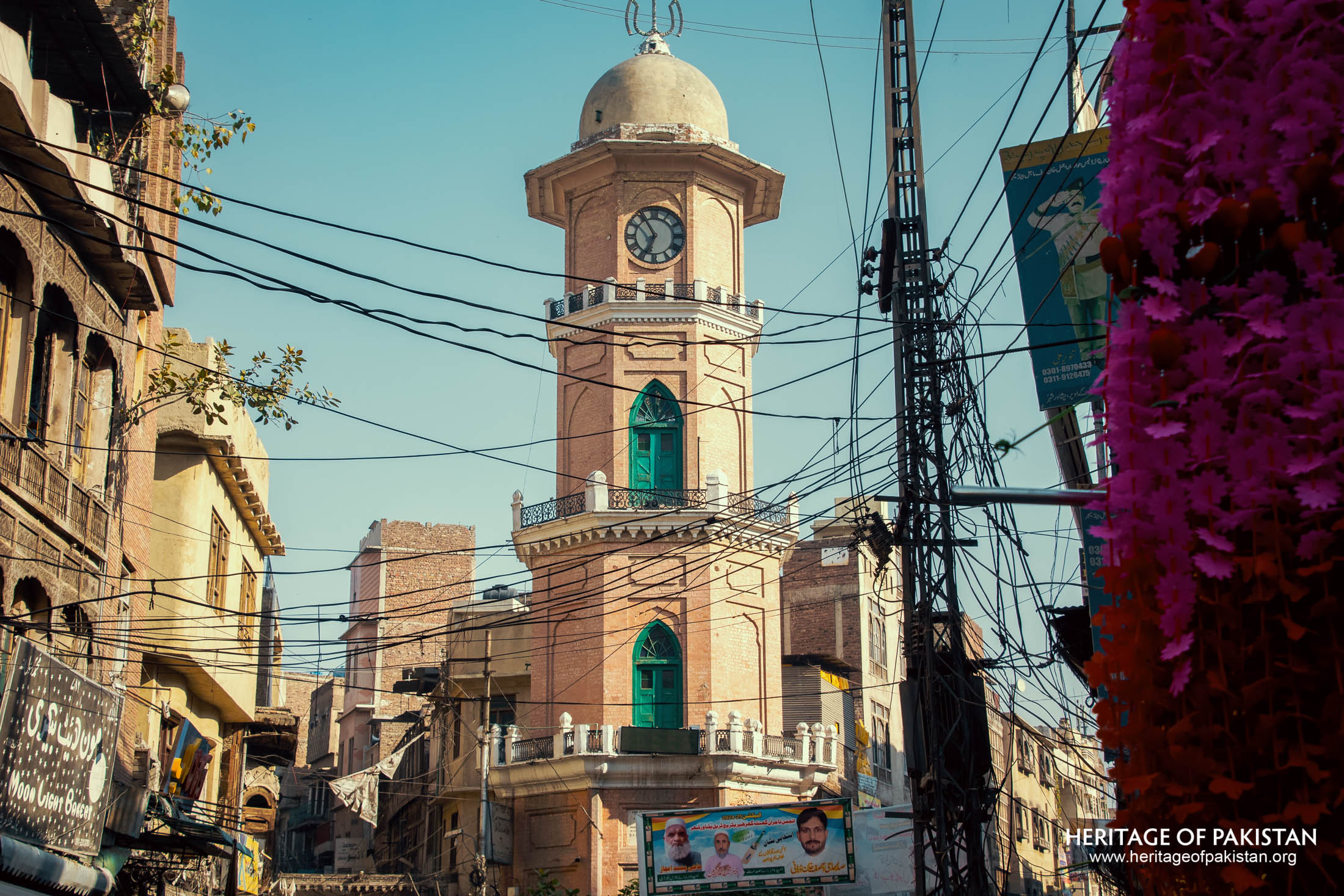
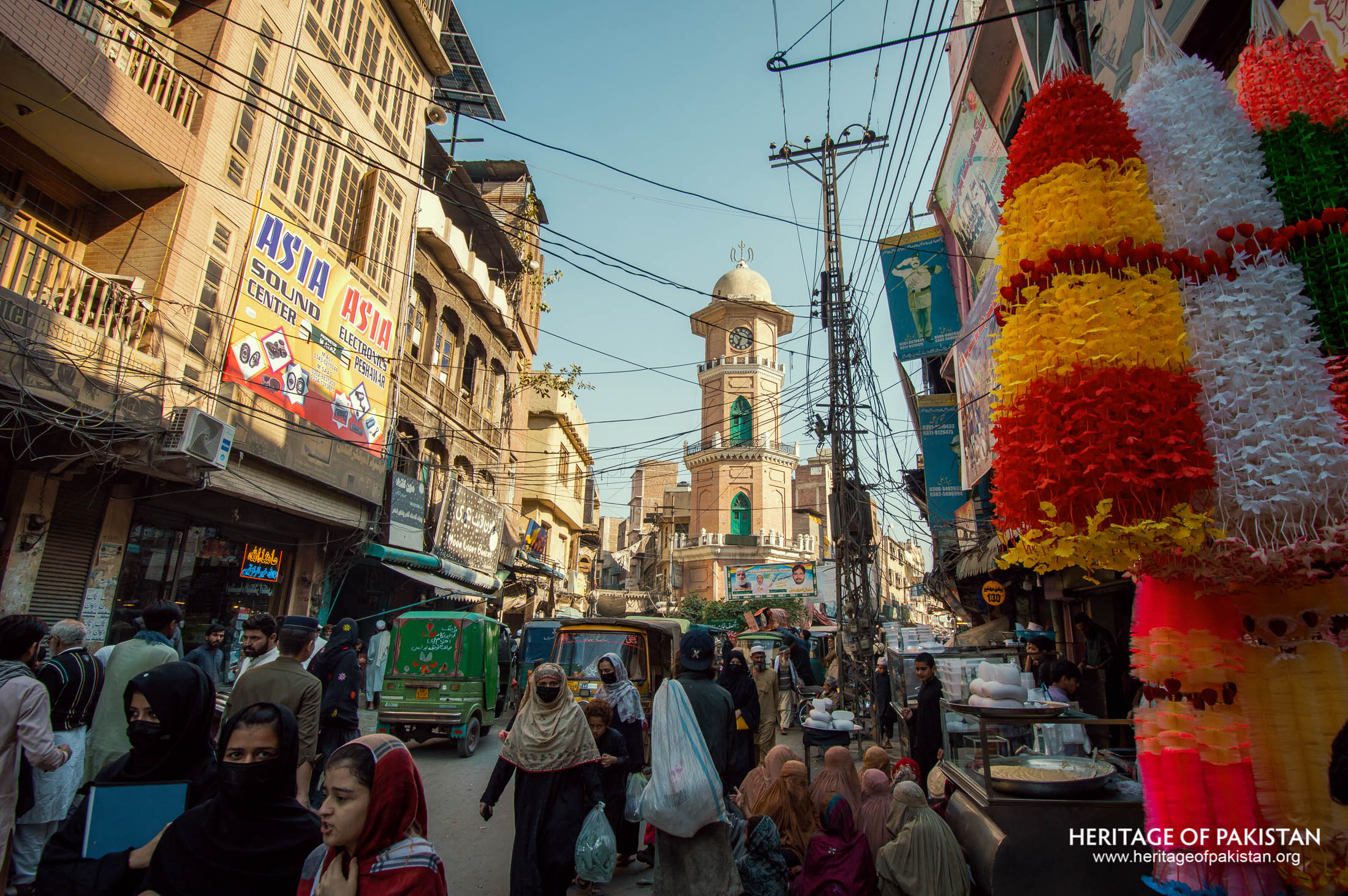
The Cunningham Clock Tower, also known as Ghanta Ghar, is a colonial-era monument located in the old city of Peshawar near Chowk Yadgar and Sethi Muhalla.
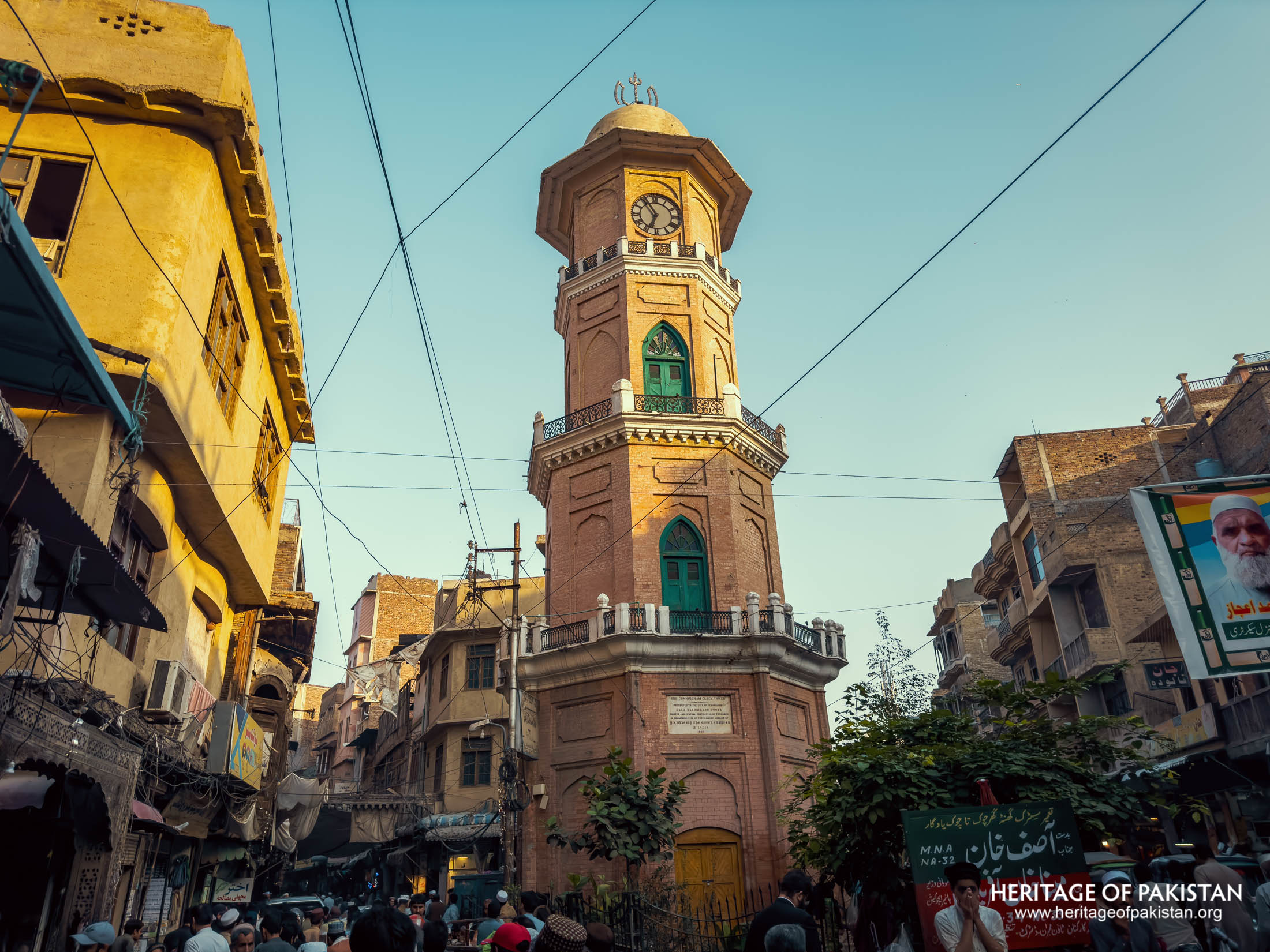
It was constructed in 1900 to commemorate the Diamond Jubilee of Queen Empress Victoria.
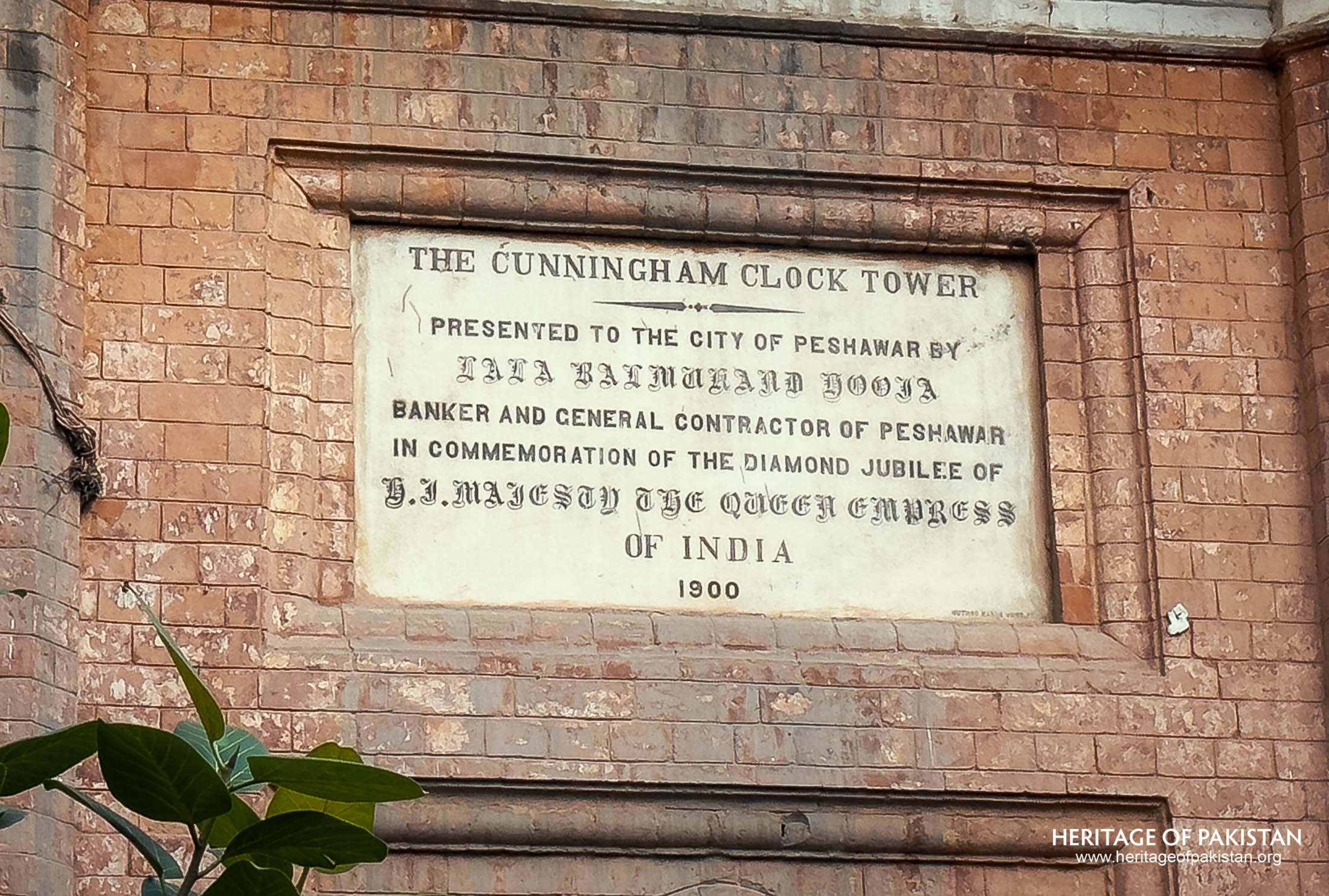
The tower was funded by Lala Balmukand Dooja, a local banker and contractor, as confirmed by a commemorative plaque installed at its base.
Although originally built for the Jubilee, it was later named after Sir George Cunningham, a British civil servant stationed in Peshawar.
The structure was designed by James Strachan, who served as the municipal engineer at the time.
Architecturally, the tower follows an Indo-Saracenic style, blending Mughal and European elements into its octagonal, four-tiered form.
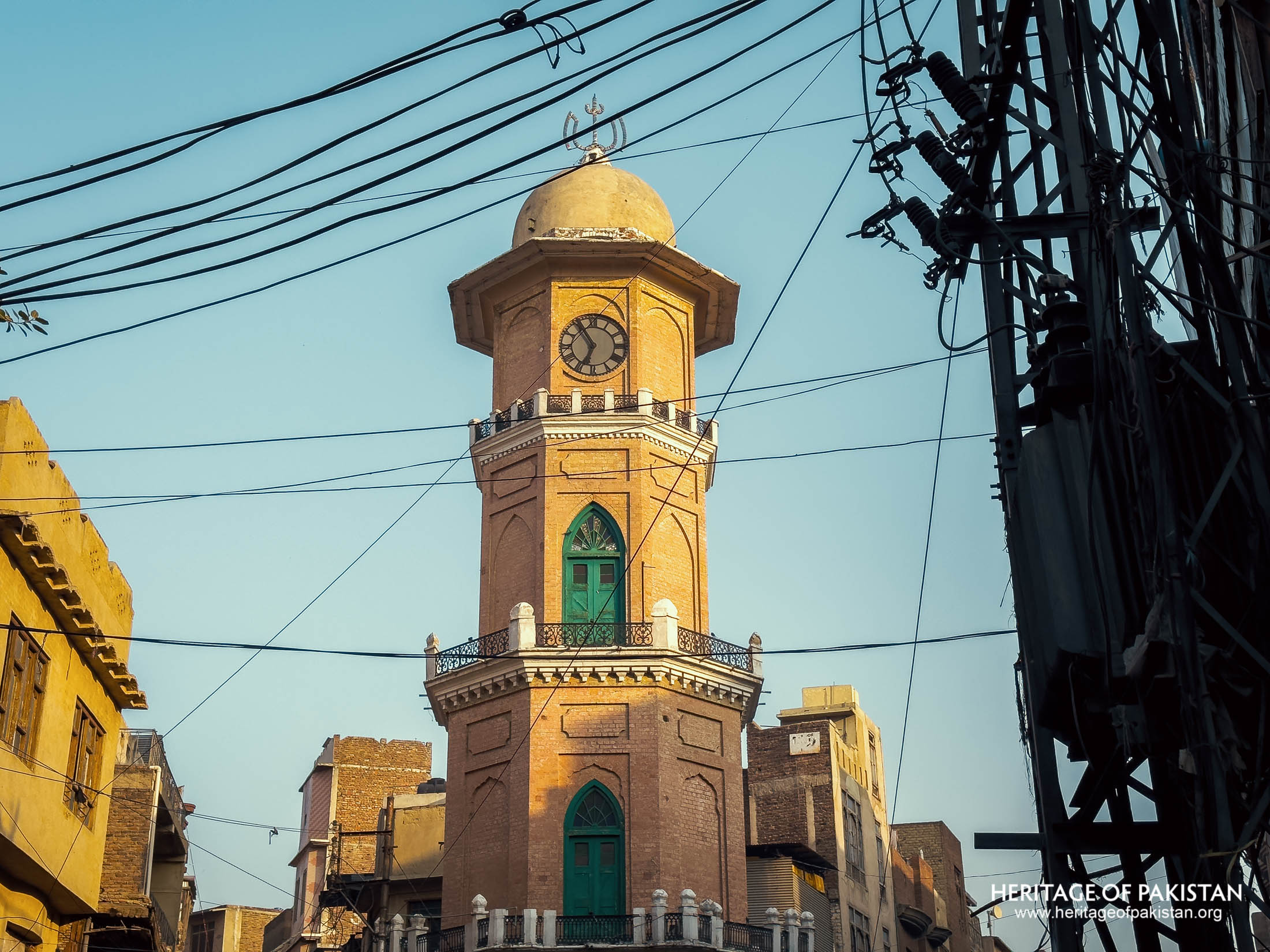
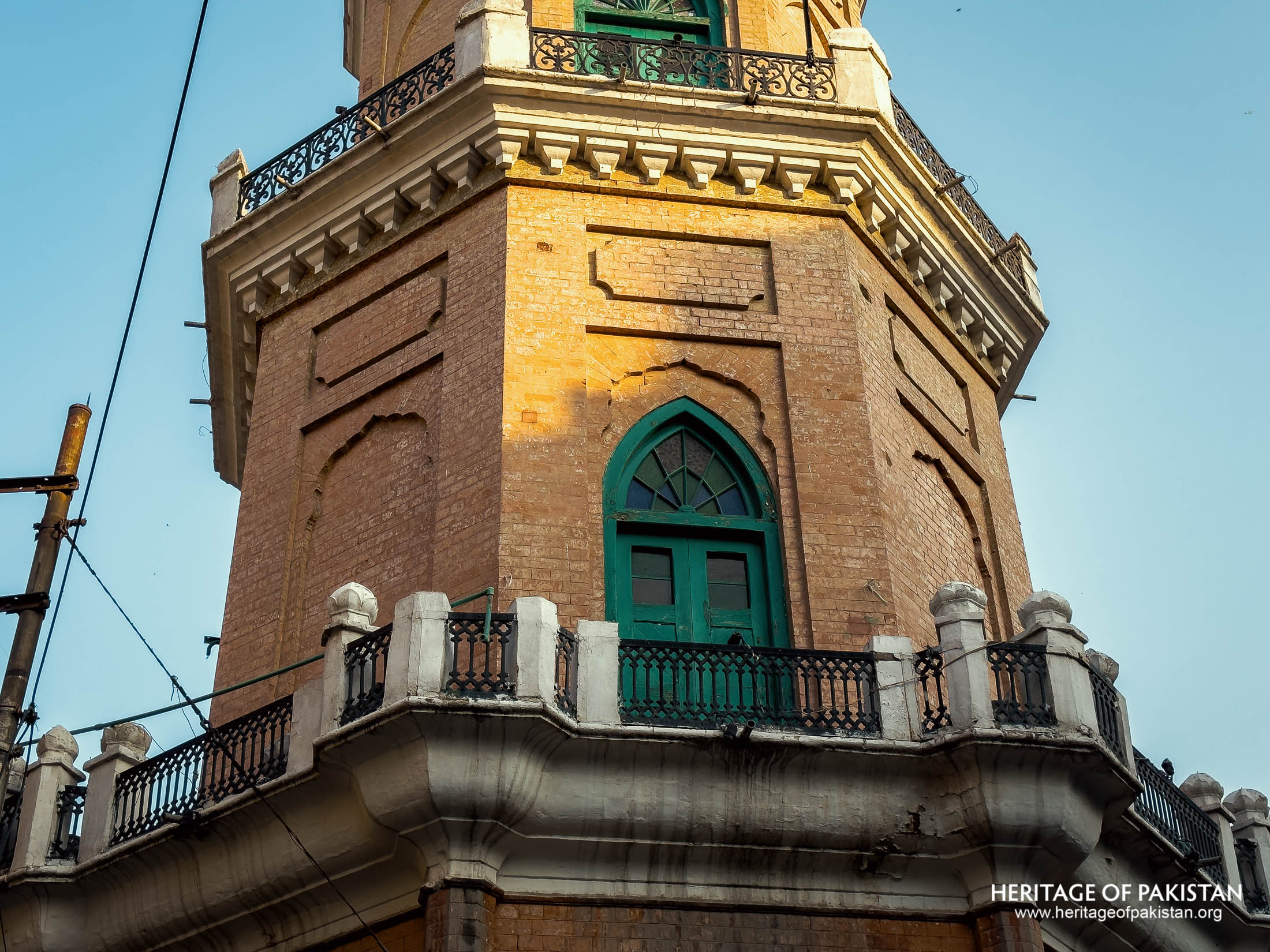
Each level becomes narrower as it rises and is separated by balconies with cornices and decorative grills.
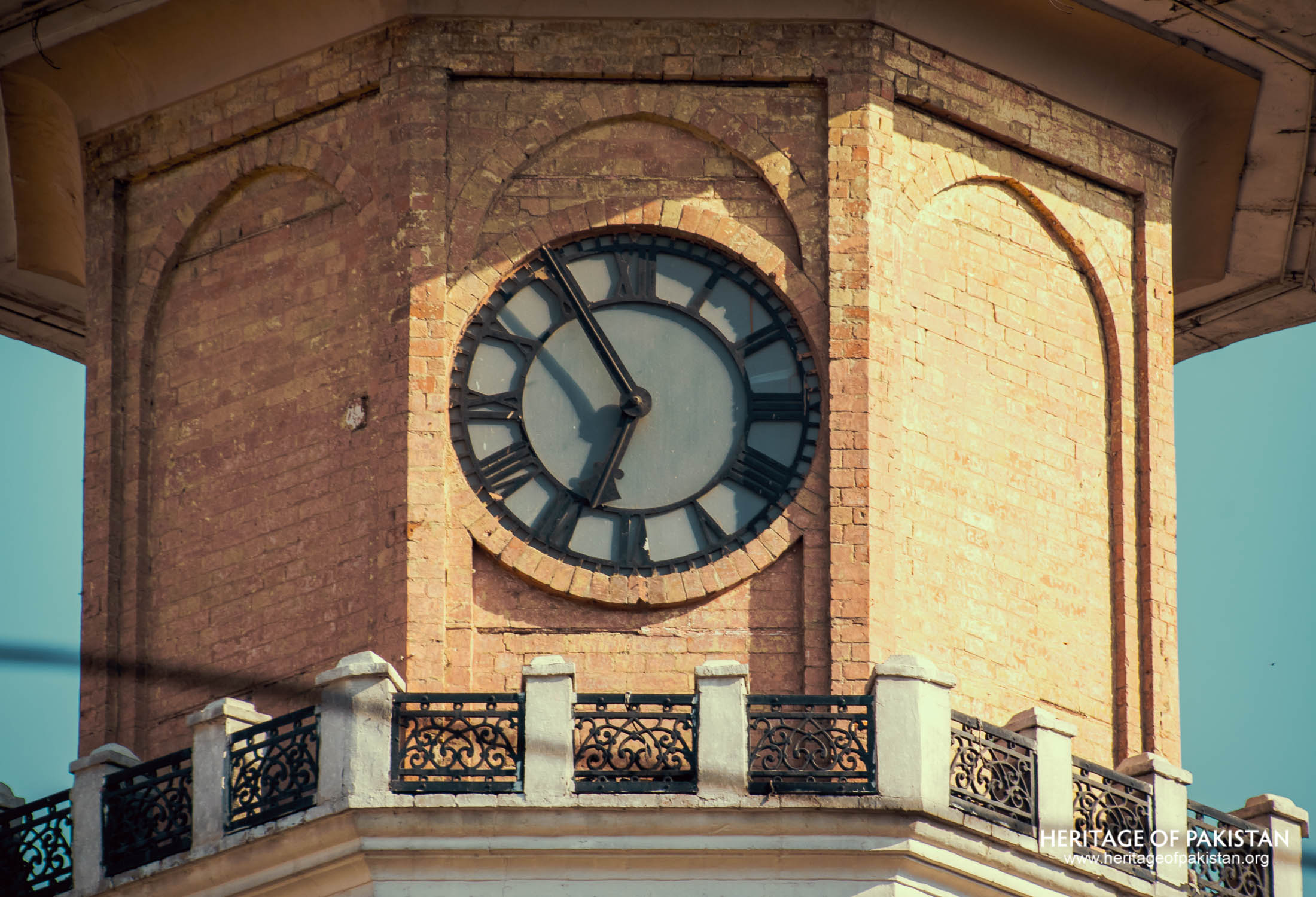
The clock is installed on the uppermost fourth level, while the base features arched doorways and rectangular recesses reminiscent of Mughal architecture.
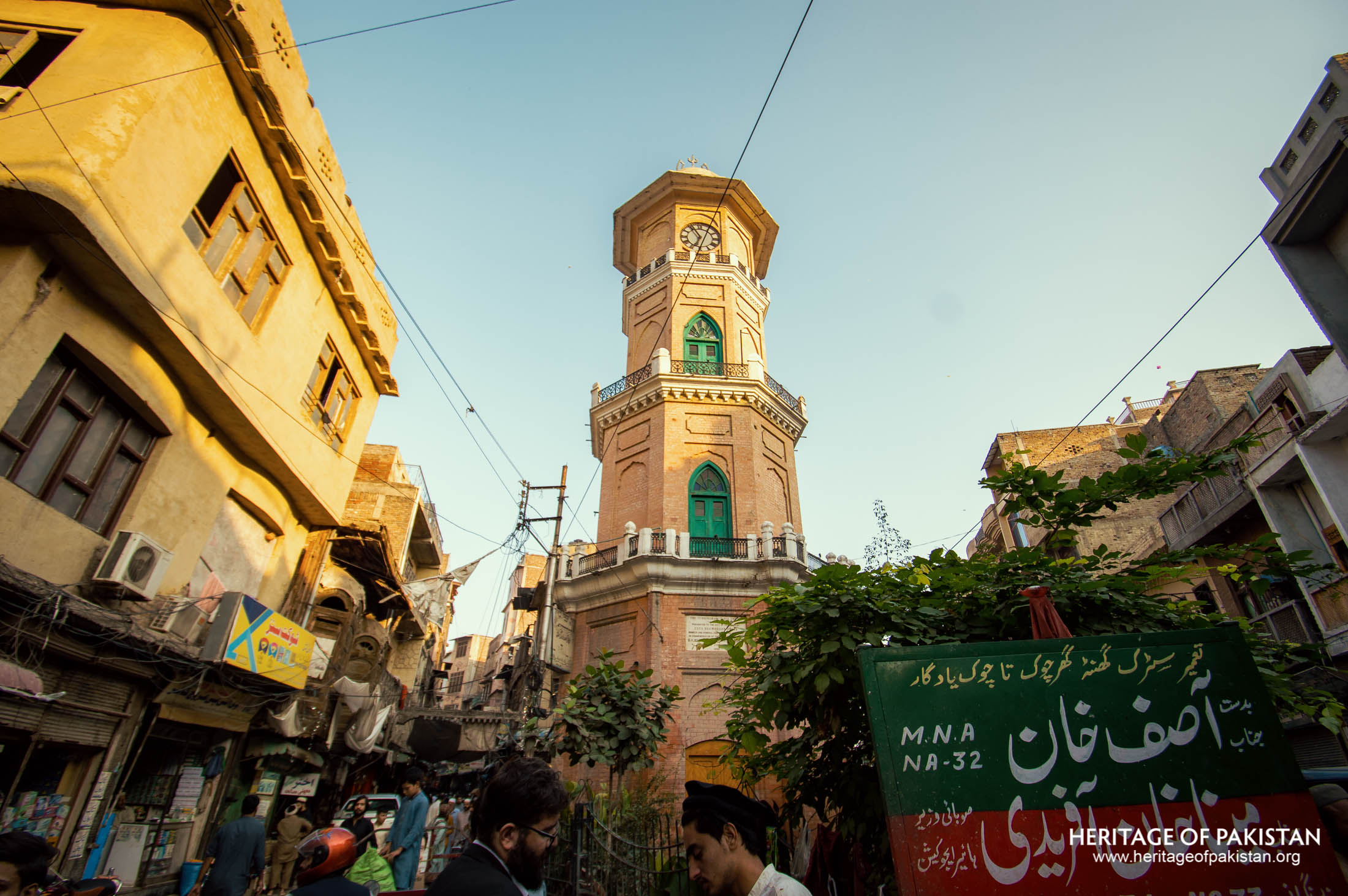
The tower is topped with a domed chhatri, and its arcade includes fluted domes and square columns, reflecting both Sikh and colonial influence.
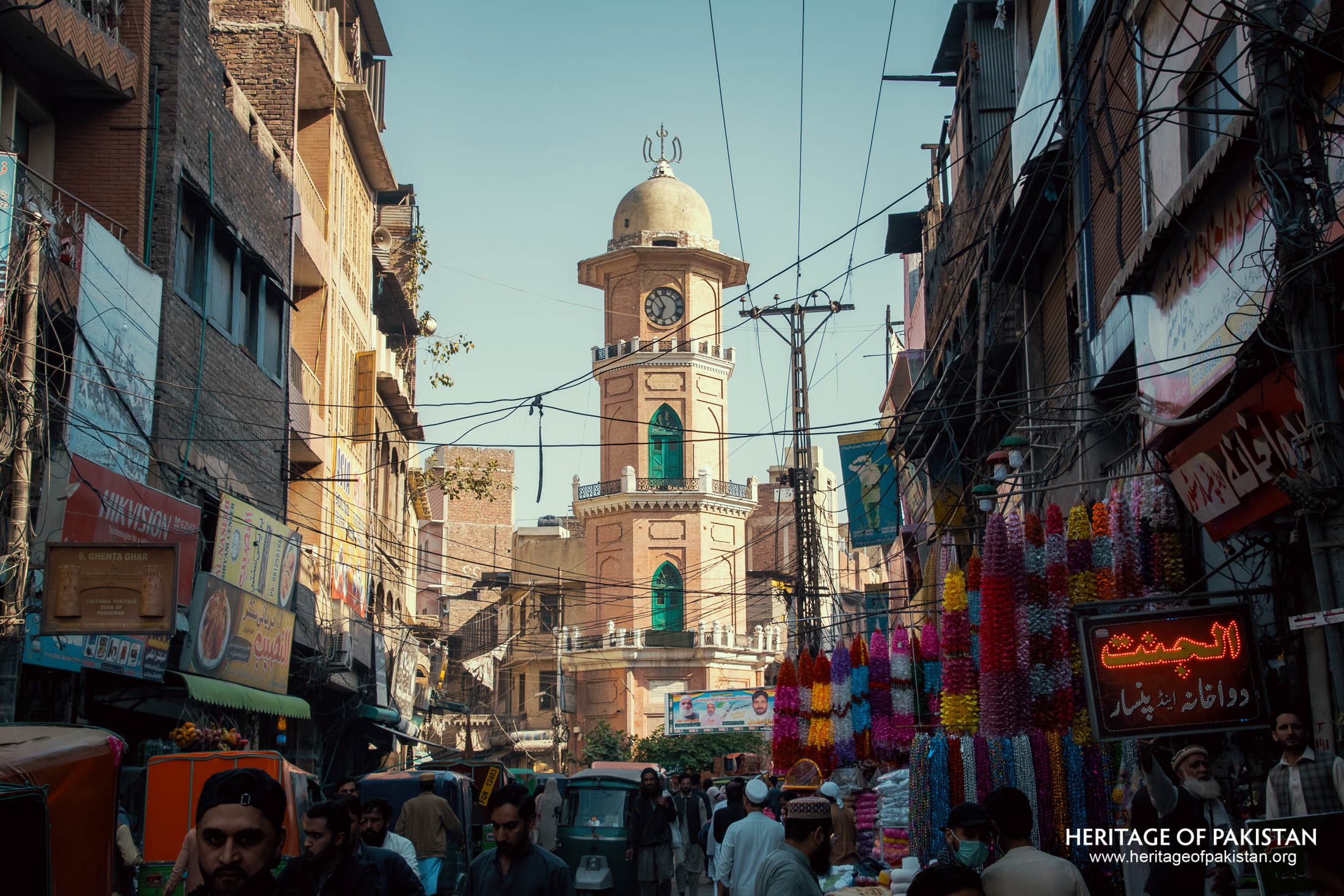
Today, the Cunningham Clock Tower stands as a prominent heritage landmark and architectural remnant of Peshawar’s colonial past.
