
Did You Know?
Gor Khatri is believed by some historians to be the legendary site that once housed the sacred begging bowl of Gautama Buddha, attracting pilgrims from across ancient Asia
34°00'32.1"N 71°34'52.9"E
Gor Khatri is believed by some historians to be the legendary site that once housed the sacred begging bowl of Gautama Buddha, attracting pilgrims from across ancient Asia
The Best Time to Visit mountain regions of Khyberpakhtunkhwa is Summers. Preferably from April to September. Winters are Extremely Cold and Snowfall blocks most of access. Hence Winters are not recommended.

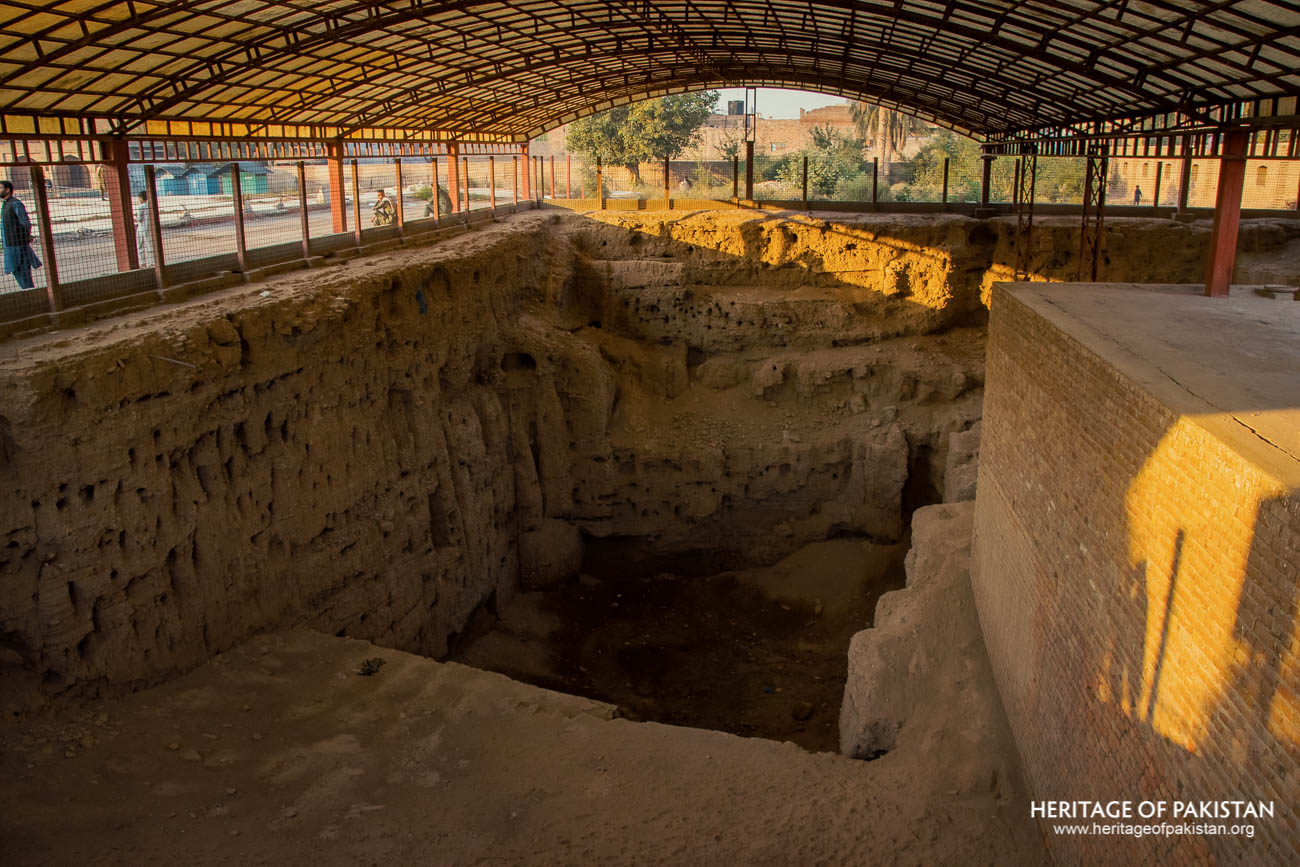
Archaeological Excavation Site at Gor Khatri, Peshawar
Gor Khatri is a significant archaeological complex located within the old city area of Peshawar. Accessible via Chowk Yadgar and situated near the historic Sethi Muhalla, the complex sits atop an ancient cultural mound and marks one of the highest spots in the city. The site reflects multiple layers of Peshawar’s historical, cultural, and religious past, encapsulating a continuum of civilizations that once occupied the region.
The name “Gor Khatri” or “Gor Khutree” literally means “Warrior’s Grave.” The earliest recorded account of the site comes from Emperor Babur, who visited the area and mentioned it in his memoirs, Baburnama. According to I.H. Nadeem, Babur found a large quantity of hair at the temple located here, suggesting that Hindus visited the site to perform Shraddha, or funeral offerings in honor of their ancestors. Another interpretation holds that the site once served as a monastic retreat where Buddhist monks or jogis cut their hair as part of their spiritual initiation. Emperor Akbar and Jahangir also described the location as a gathering place for jogis and a site of Hindu pilgrimage.
The site gained further architectural significance during the Mughal period. In 1641, Jahan Ara Begum, daughter of Emperor Shah Jahan, transformed Gor Khatri into a serai, a caravan inn for travelers, particularly those arriving from Central Asia. The serai, named Jahanabad, featured a large Char Bagh (four-part garden) with cells constructed around it to house visitors. Jahan Ara also commissioned the construction of a mosque and a hammam at the site, reinforcing its function as a well-facilitated resting station. While many original cells were replaced in later years, this serai was among several built during the Mughal, Durrani, and Sikh eras, including Sarai Mahabbat, Sarai Chonkidar, and Sarai Suleman. Of these, the Gor Khatri serai is the largest and still survives. These caravanserais not only served travelers but also facilitated trade and cultural exchange.
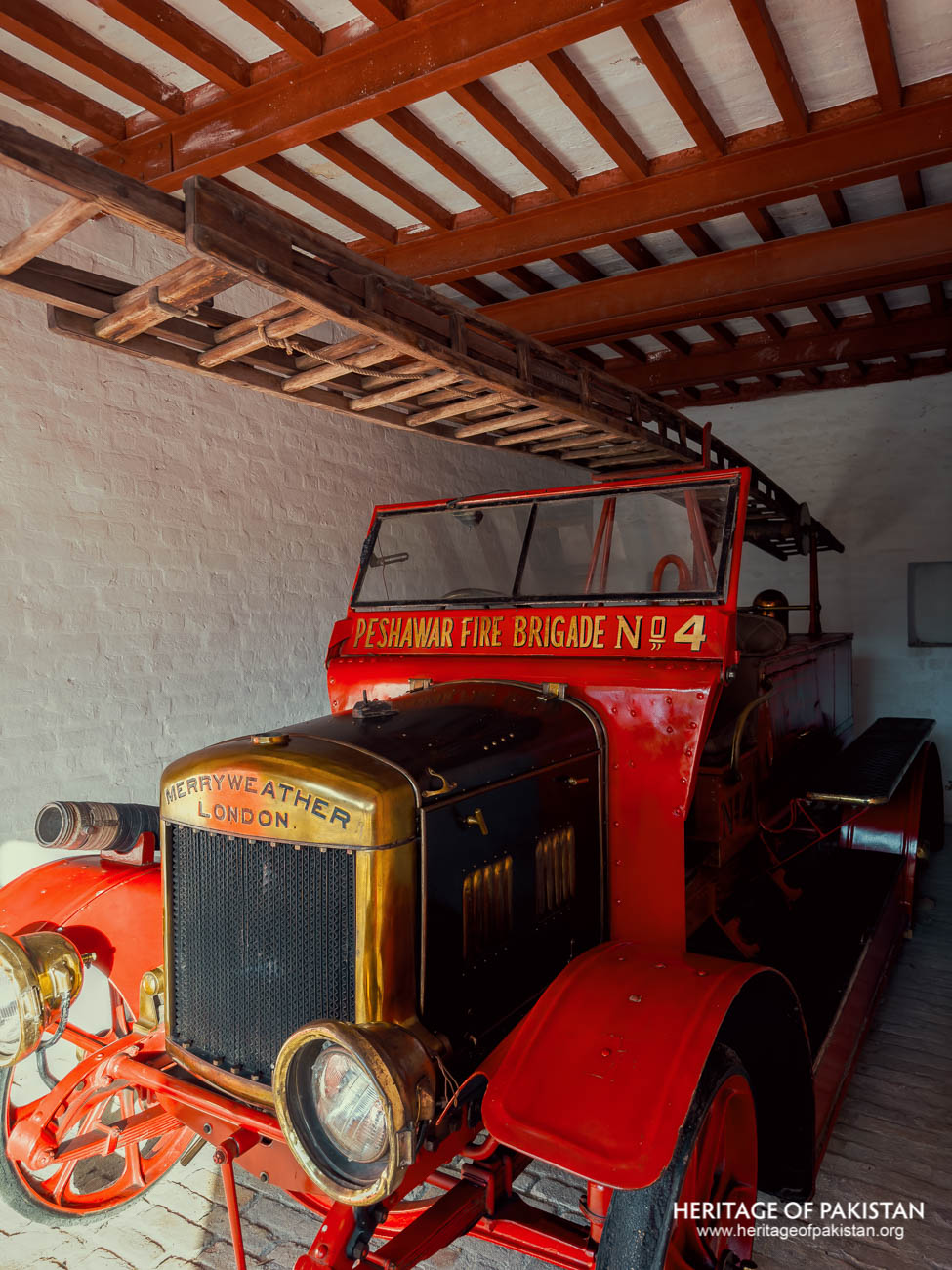 Fire engine from British Era at Gor Khatri
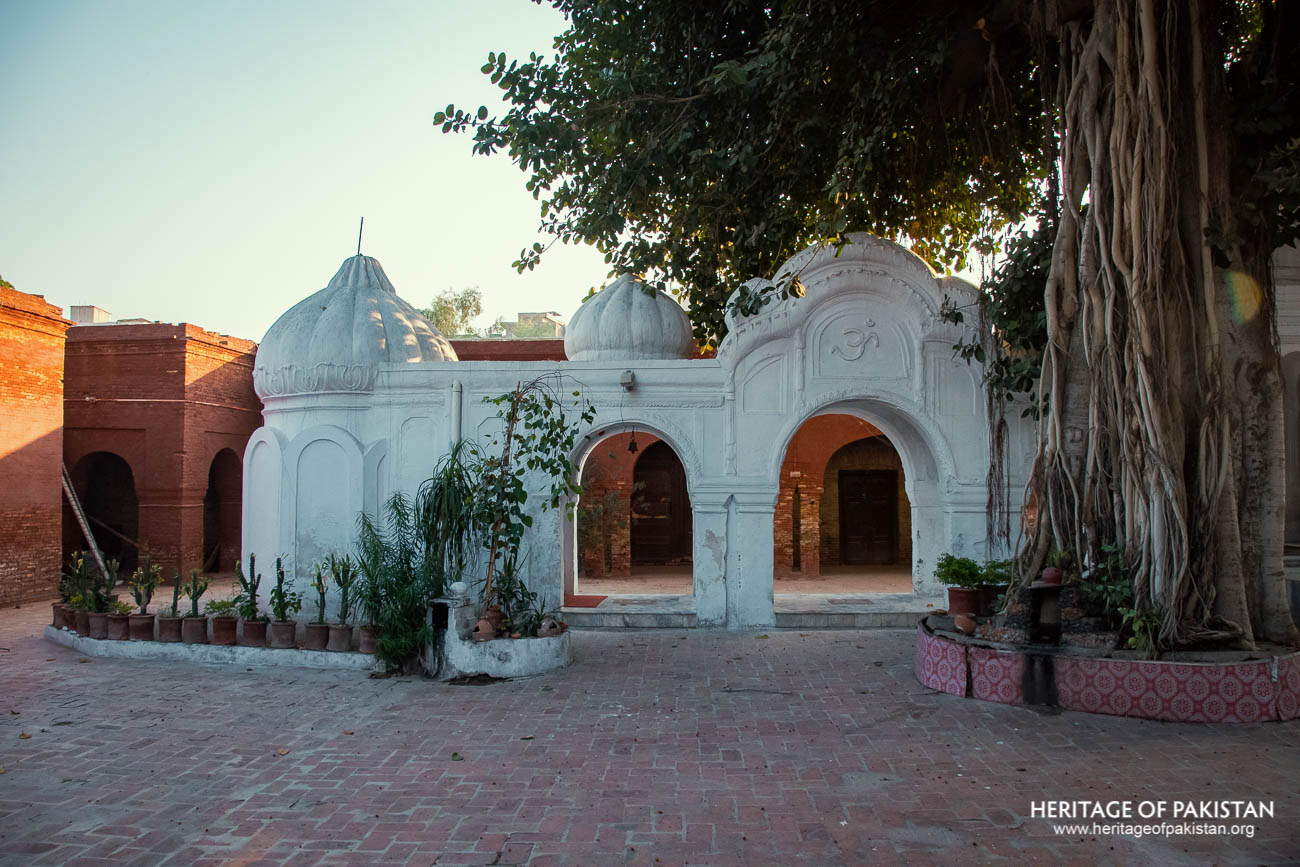
Gorakhtnath Temple at Gor Khatri Complex
A local legend identifies Gor Khatri as the famed “tower of Buddha’s bowl,” believed to have housed the sacred begging bowl of Lord Gautama Buddha. The location served as a Buddhist pilgrimage site before being taken over by Hindus in the post-Buddhist period, from the 5th century CE onwards. The Shiva temple within the complex was later constructed in honor of the Hindu saint Gorakhnath, who is said to have migrated from Kashmir to Sheikhupura and eventually settled in Peshawar. During Sikh rule, the earlier Shahi Mosque built by Jahan Ara was demolished and replaced by this temple between 1834 and 1849. Frescoes within the temple remain visible to this day.
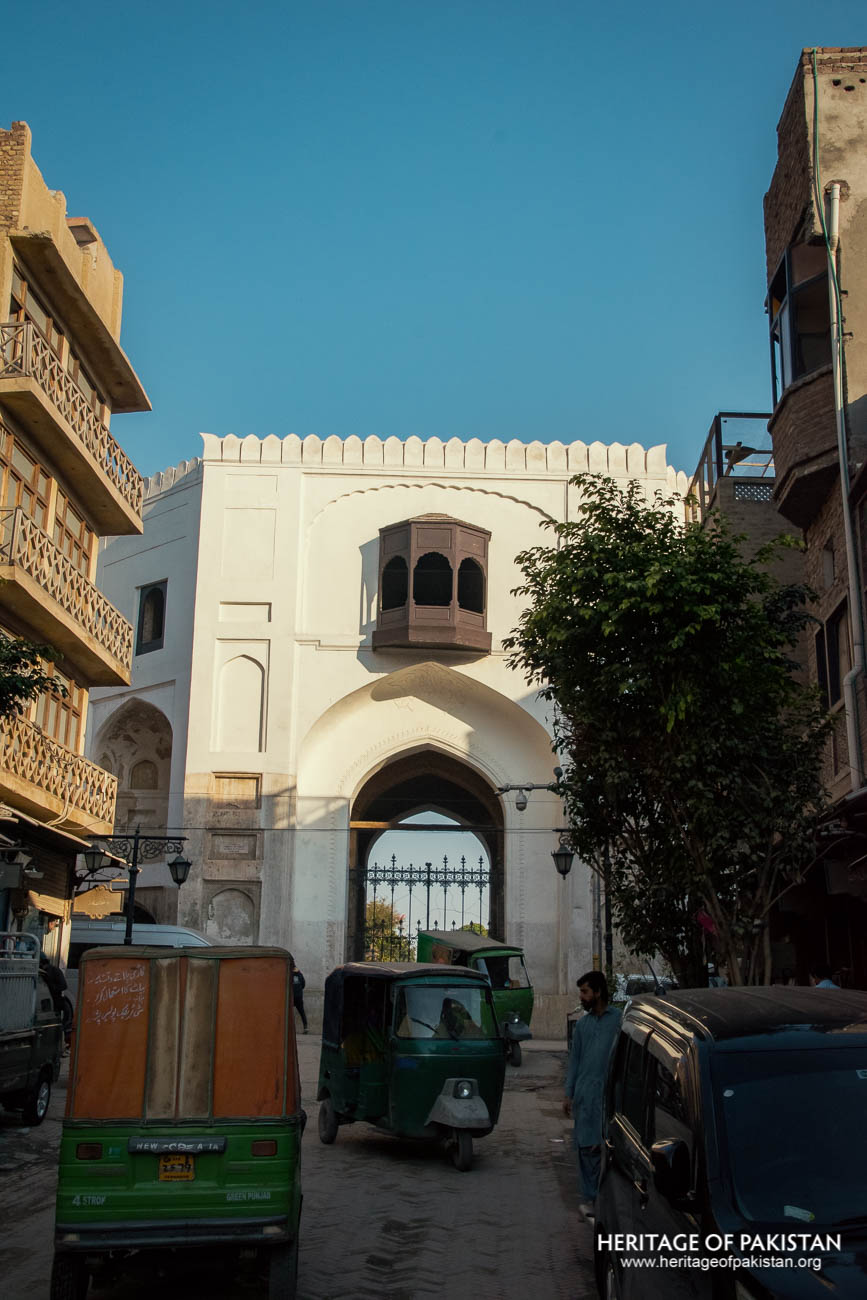
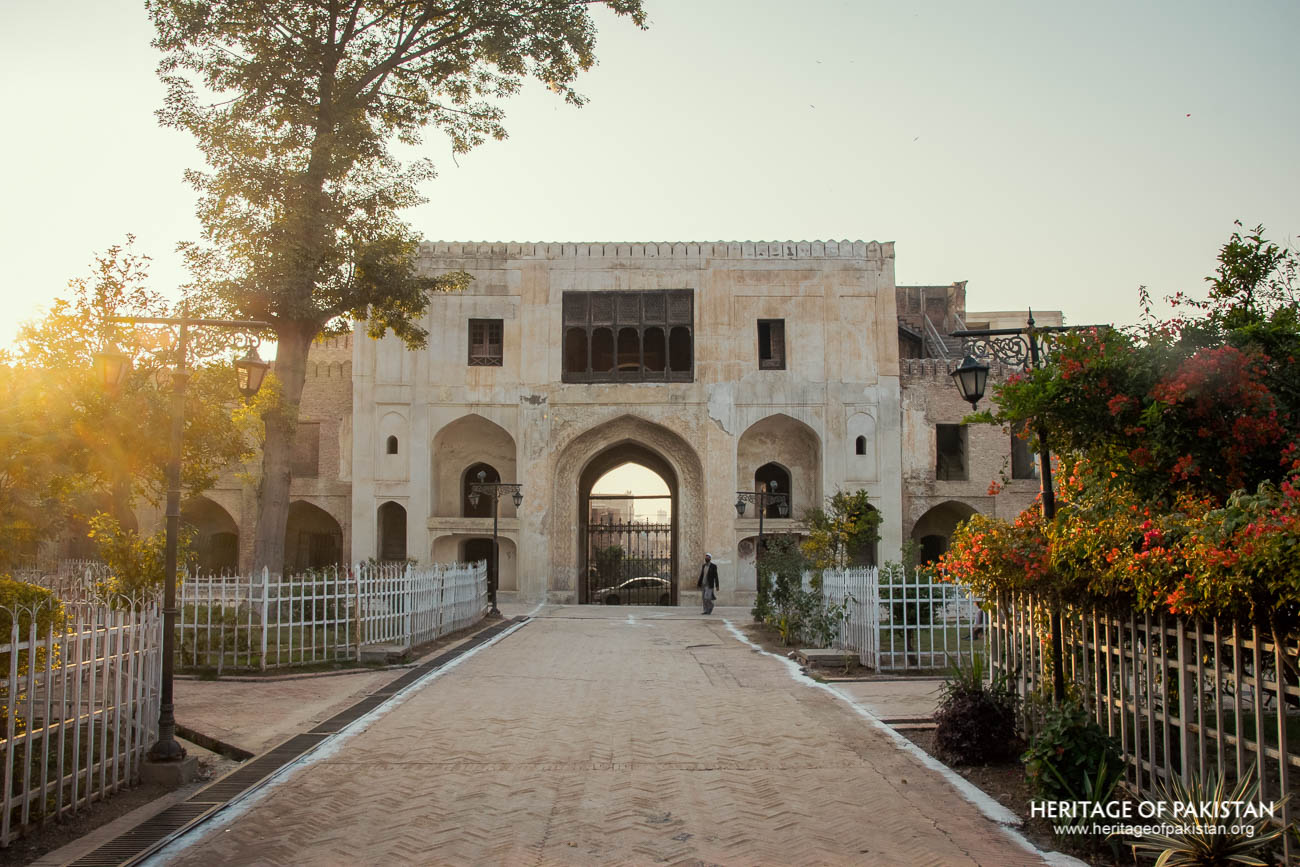
In 1818, the Sikhs occupied Peshawar and after a period of conflict, fully consolidated their control by 1838. During the Sikh period, sections of the serai were damaged. The Sikhs established the temple of Gorakhnath at the site and also used the location for administrative purposes. From 1838 to 1842, Gor Khatri served as the headquarters and residence of the Sikh Governor General Paolo Avitabile. A commemorative plaque at the site marks his tenure. Avitabile constructed a pavilion over the western gateway, from where he would hear public petitions.
Under British colonial administration, the function of Gor Khatri shifted again. The site became the headquarters of the City Police and Fire Brigade. Fire engines manufactured by Merryweather London in 1919 and 1921 were stationed there and still remain on display. One of these vehicles is marked with the label “1912 British-era Municipal Committee Peshawar Fire Brigade.” These engines are considered among the oldest surviving examples of their kind and have been restored by the Department of Archaeology and Museums, Government of Khyber Pakhtunkhwa.
Archaeological interest in Gor Khatri developed over time, with notable excavations conducted to understand the historical stratigraphy of Peshawar. In the 1990s, Professor F.A. Durrani of the University of Peshawar led the first formal excavations, continuing into 2000. This was followed by further work in 2002 by Professor Ishan Ali. Their research revealed that Peshawar is among the oldest continuously inhabited urban centers in the Indian subcontinent. Excavations unearthed multiple cultural layers, the oldest of which date back to the Achaemenian Period. Layers above that correspond to the Mauryan era, particularly the reign of Emperor Ashoka and his successors.
A significant number of coins were recovered from the site, including those from the Indo-Greek period, dating back to the era of Demetrius (circa 200 BCE). Other artifacts found include terracotta female figurines known as "Baroque Ladies" from the Scytho-Parthian period, masonry walls, stone sculpture fragments, oil lamps, pitchers, vases, jars, and figurines of both humans and animals. Coins and objects from the Hindu Shahi period were also found, which, according to I.H. Nadeem, underline Peshawar’s importance under Hindu Shahi rule.
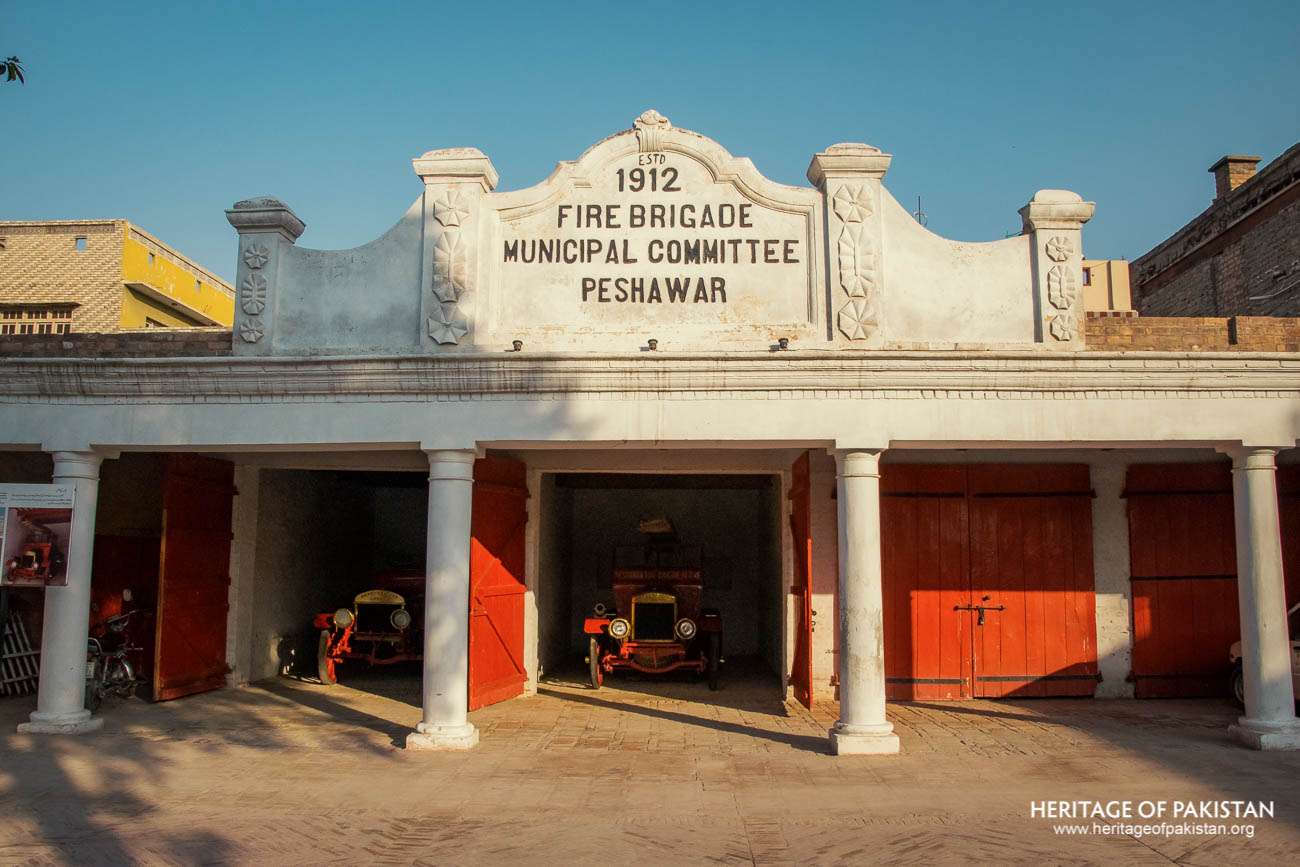
1912 Fire Brigade Station at Gor Khatri Complex
The complex continues to be a site of cultural preservation. In 2006, the Directorate of Archaeology and Museums, Government of Khyber Pakhtunkhwa, established the City Museum at Gor Khatri. The museum displays a collection of excavated materials from the site and serves as an educational resource for understanding the historical evolution of the city.
Ahmad Hasan Dani suggested that the site may have been the location of the famous Buddha's begging bowl mentioned by the Chinese pilgrim Hiuen Tsang during his visit to Peshawar in the 7th century AD. This scholarly view aligns with the broader narrative of the site’s layered spiritual and political history. Today, Gor Khatri is officially protected under the Antiquities Act of 1975 and stands as a living archive of Peshawar’s deep-rooted historical and cultural past. The old serai’s cells have now been reinforced with aluminum doorways and assigned to craftsmen to produce and sell traditional artefacts, continuing a legacy of cultural continuity within its historic walls.
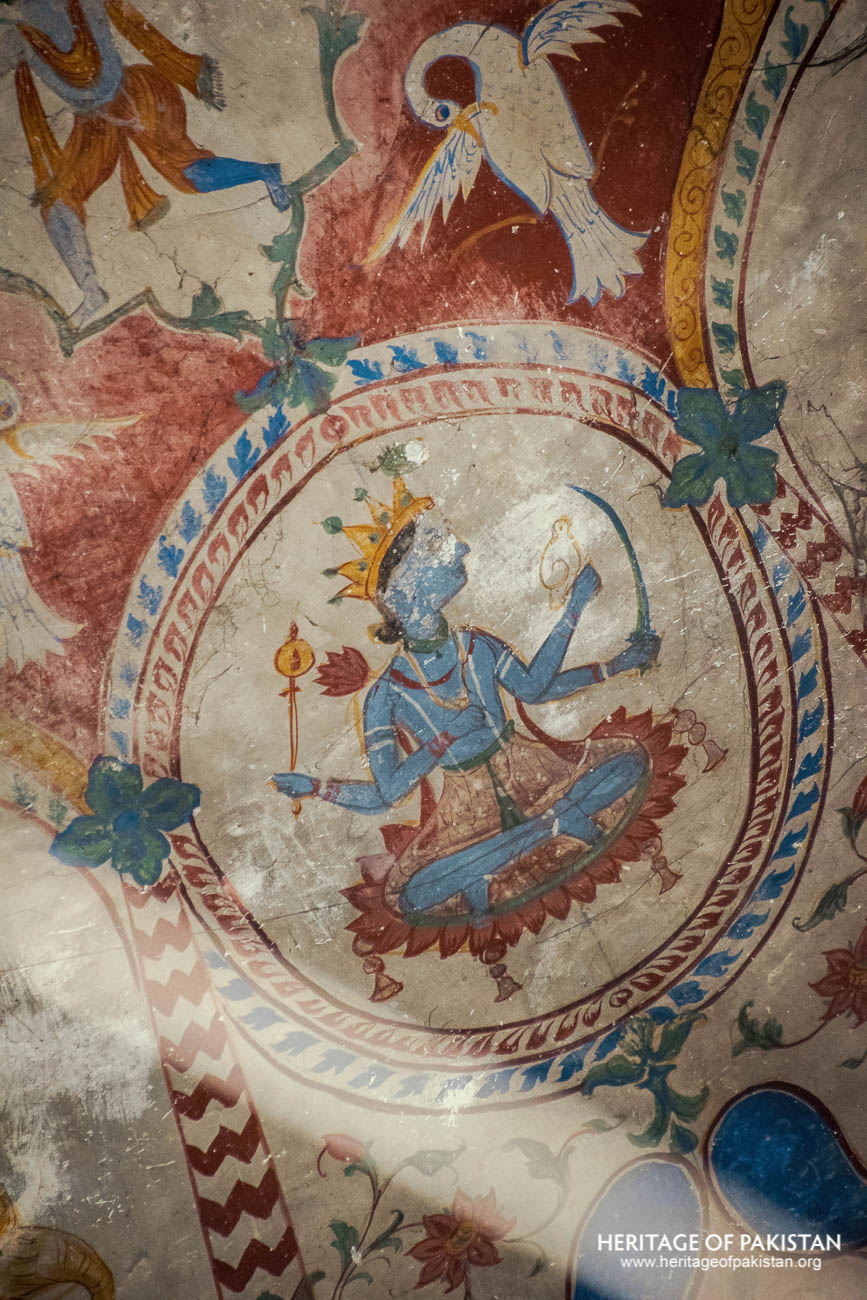
Frescoes at Gorakhnath Temple at Gor Khatri
Gandhara art and architecture, developed between the 1st century BC and the 7th century AD, present a compelling record of the region’s cultural and historical complexity. This style emerged primarily under the rule of the Kushan dynasty and reflects a distinctive fusion of indigenous and foreign elements. Taxila, as a major urban and religious center of the Gandhara region, has yielded a wealth of archaeological evidence that illustrates this artistic evolution, particularly in relation to Buddhist traditions.
The Gandhara School of art is generally credited with the creation of the first human-like representations of the Buddha. Prior to this, Buddhist art typically avoided anthropomorphic depictions, instead using symbols such as footprints, trees, and stupas to represent the Buddha. The Gandhara School marked a significant departure from this approach. The principal aim of Gandhara art was to commemorate the life of the Buddha, his teachings, and the path of Buddhism. This focus is evident in the numerous narrative reliefs and statues recovered from the region, which portray key episodes from the Buddha’s life.
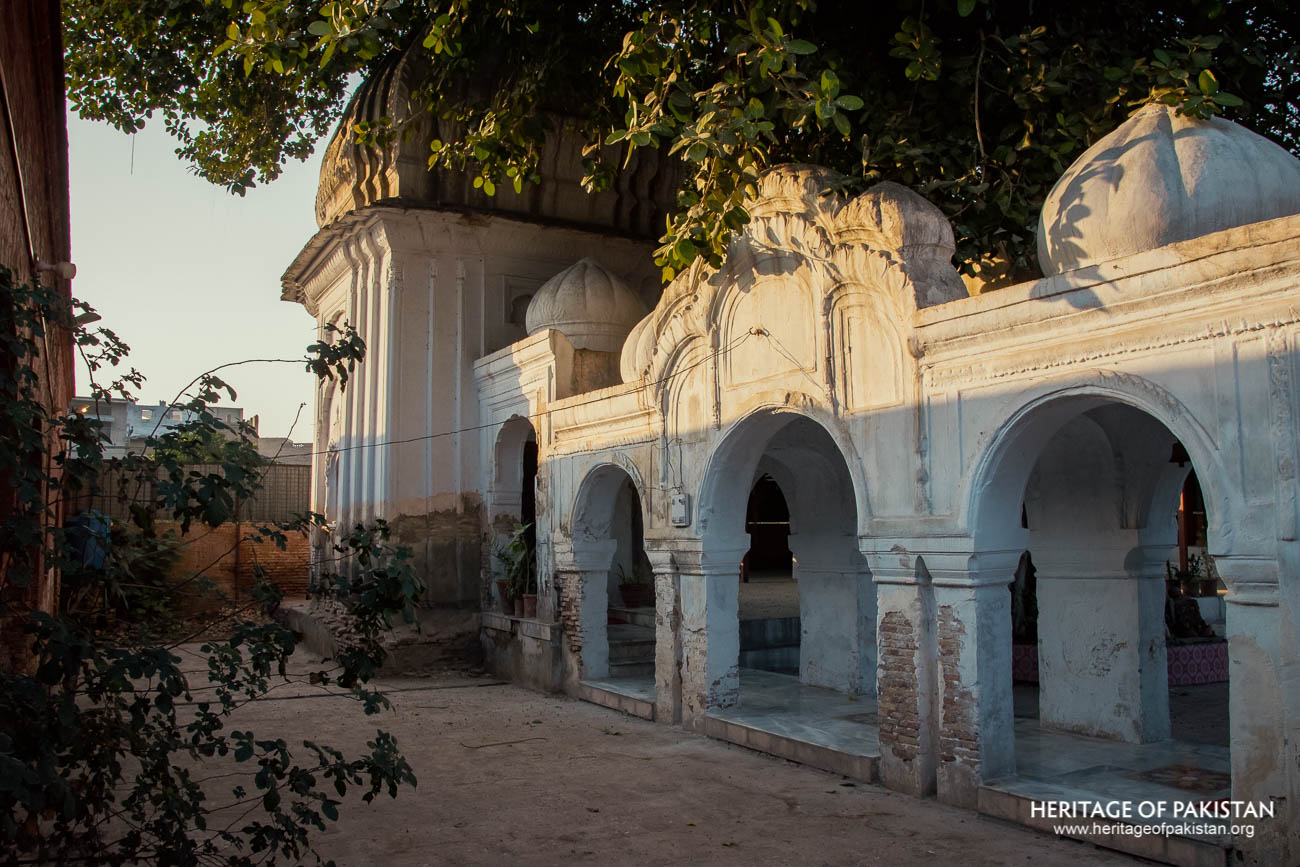
Gorakhnath Temple at Gor Khatri complex
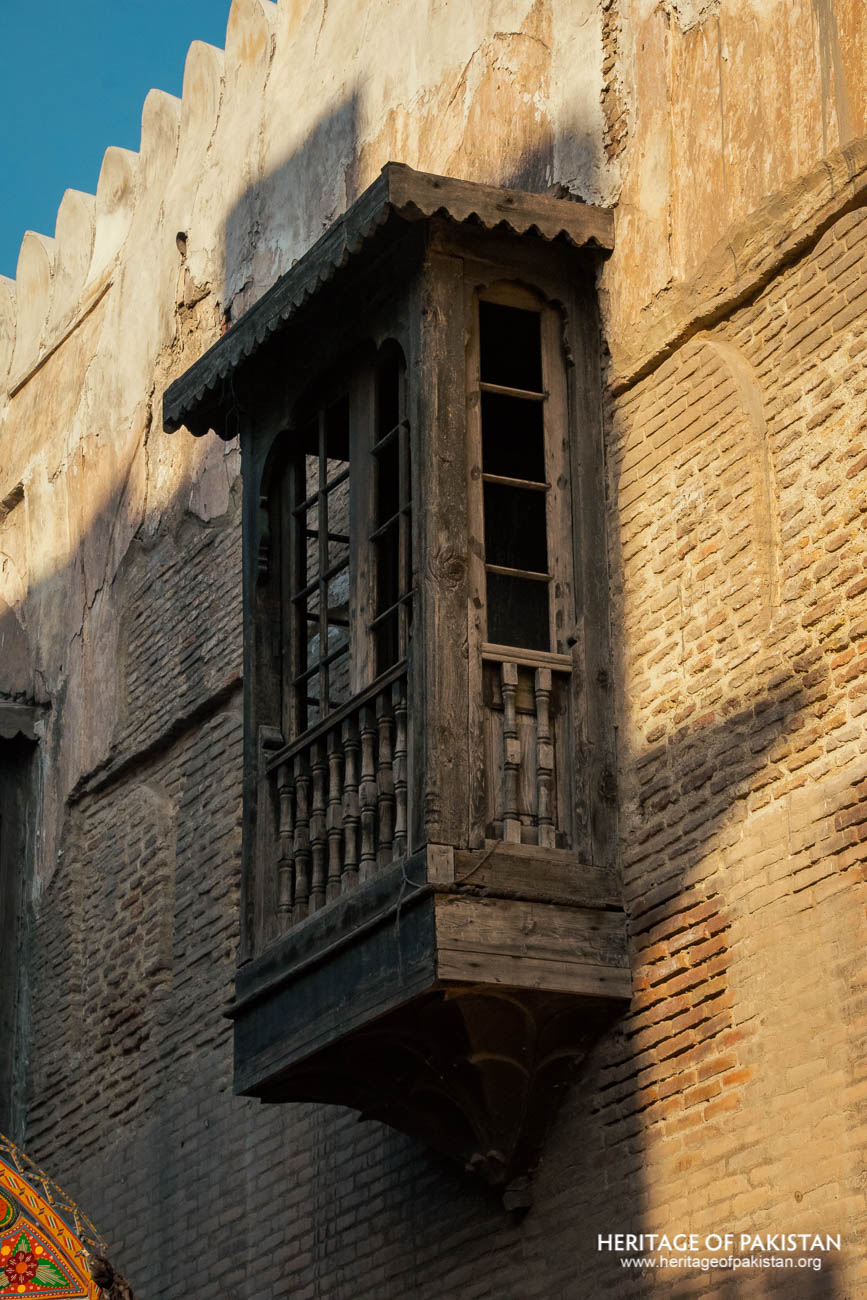
Jharoka on Gate on Gor Khatri Complex
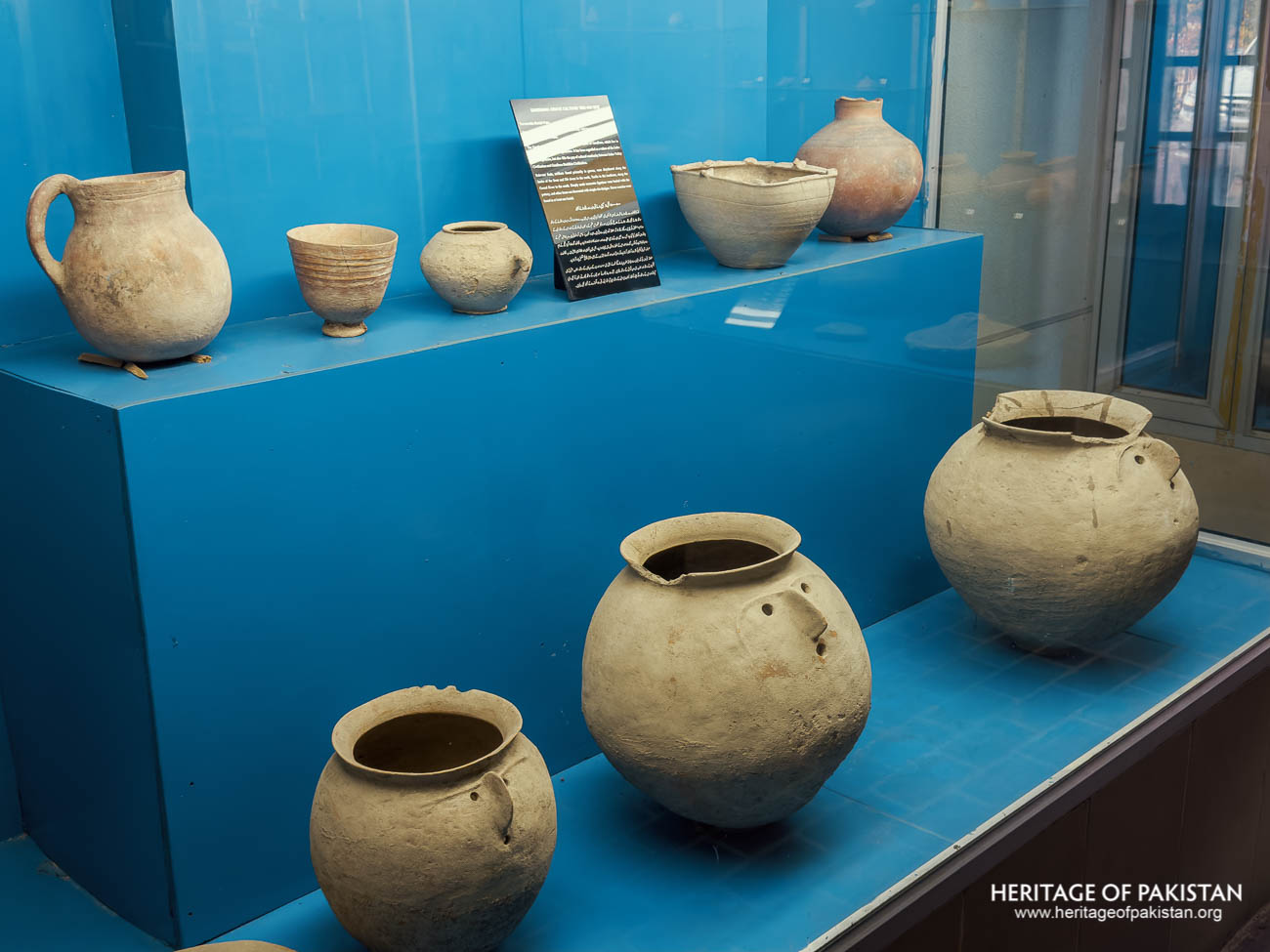
Gor Khatri Museum at the Complex
The style of Gandhara art was shaped by a broad range of influences, reflecting the diverse social and cultural fabric of the time. It was an amalgamation of Greek, Scythian, Parthian, Kushan, Hun, Turk, and indigenous South Asian elements. Hellenistic architecture and sculpture had been introduced earlier during the reign of the Saka-Parthian dynasties, and Roman artistic forms also left a notable impact. Many excavated temples and sculptural fragments from the city of Sirkap provide tangible evidence of these classical influences. Persian artistic traditions likewise contributed to the visual vocabulary of Gandhara art, merging with local aesthetic practices.
This cross-cultural synthesis is particularly apparent in the architectural features and visual motifs found in Gandhara Buddhist sites. Gandhara architecture, like its artistic counterpart, demonstrates the integration of foreign forms with local construction methods and design sensibilities. The result is a distinctive architectural tradition that accommodates both the ritual needs of Buddhism and the stylistic preferences derived from diverse cultural contacts.
A number of significant archaeological sites in Taxila highlight the richness of Gandhara’s artistic and architectural heritage. These include multiple Buddhist monasteries, stupas, and temples that have been systematically excavated and studied. Each site contributes to the broader understanding of how Gandhara art and architecture served not only religious functions but also as expressions of the region’s layered cultural identity.
All Photographs by Syed Noor Hussain and Sania Azhar.
All Rights Reserved. Photos may be used for Non-Commercial, Educational, Artistic, Research, Non-Profit & Academic purposes.
Commercial uses require licensing agreement.

Syed Noor Hussain
July 23, 2025 at 4:07 amBest