
Did You Know?
The inner sanctum of the temple houses a large linga and contains original religious frescoes on its ceiling
34°00'29.8"N 71°34'51.0"E
The inner sanctum of the temple houses a large linga and contains original religious frescoes on its ceiling
The Best Time to Visit Punjab Province is Year long as it has bearable Cold winters and Hot Summers. However, Summers can get really Hot and precautions are recommended during Daytime visits.

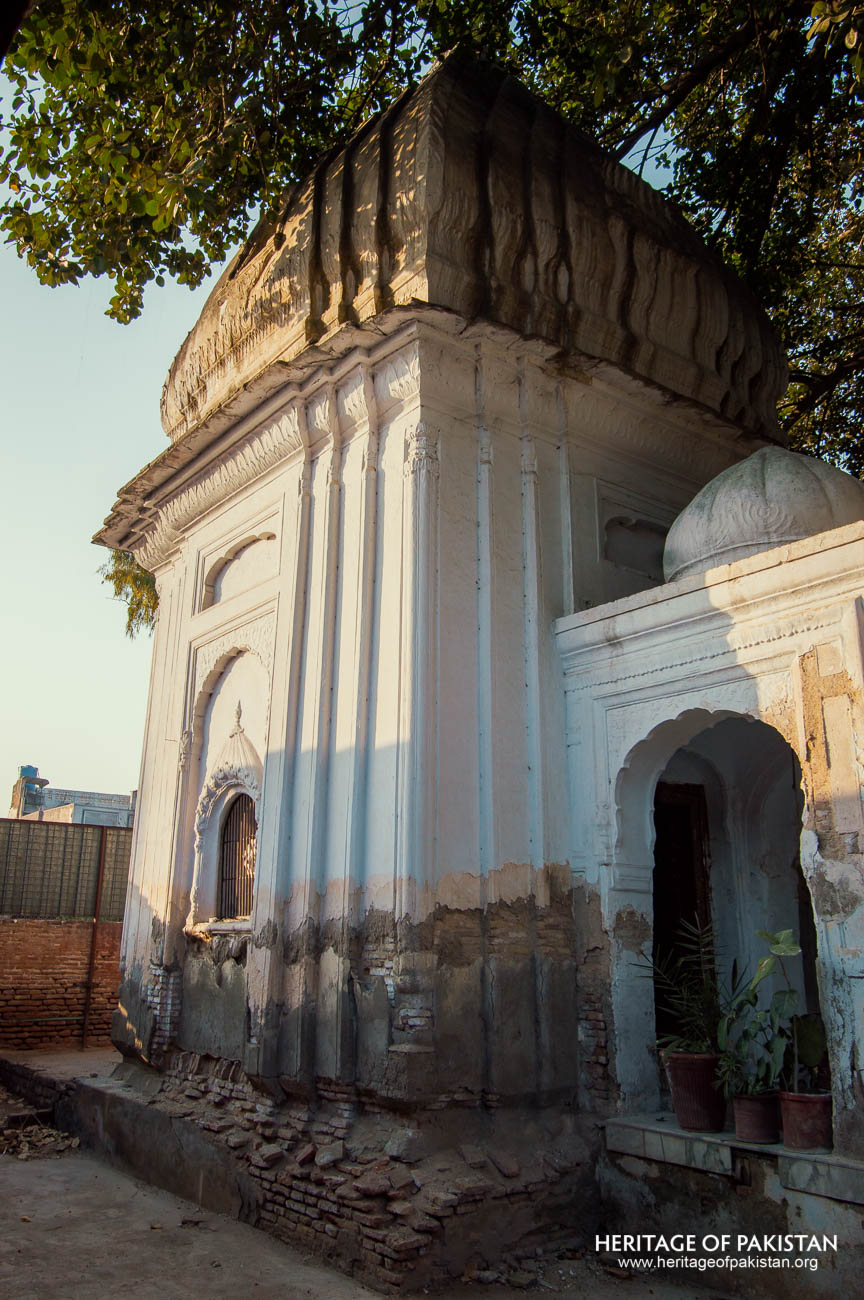
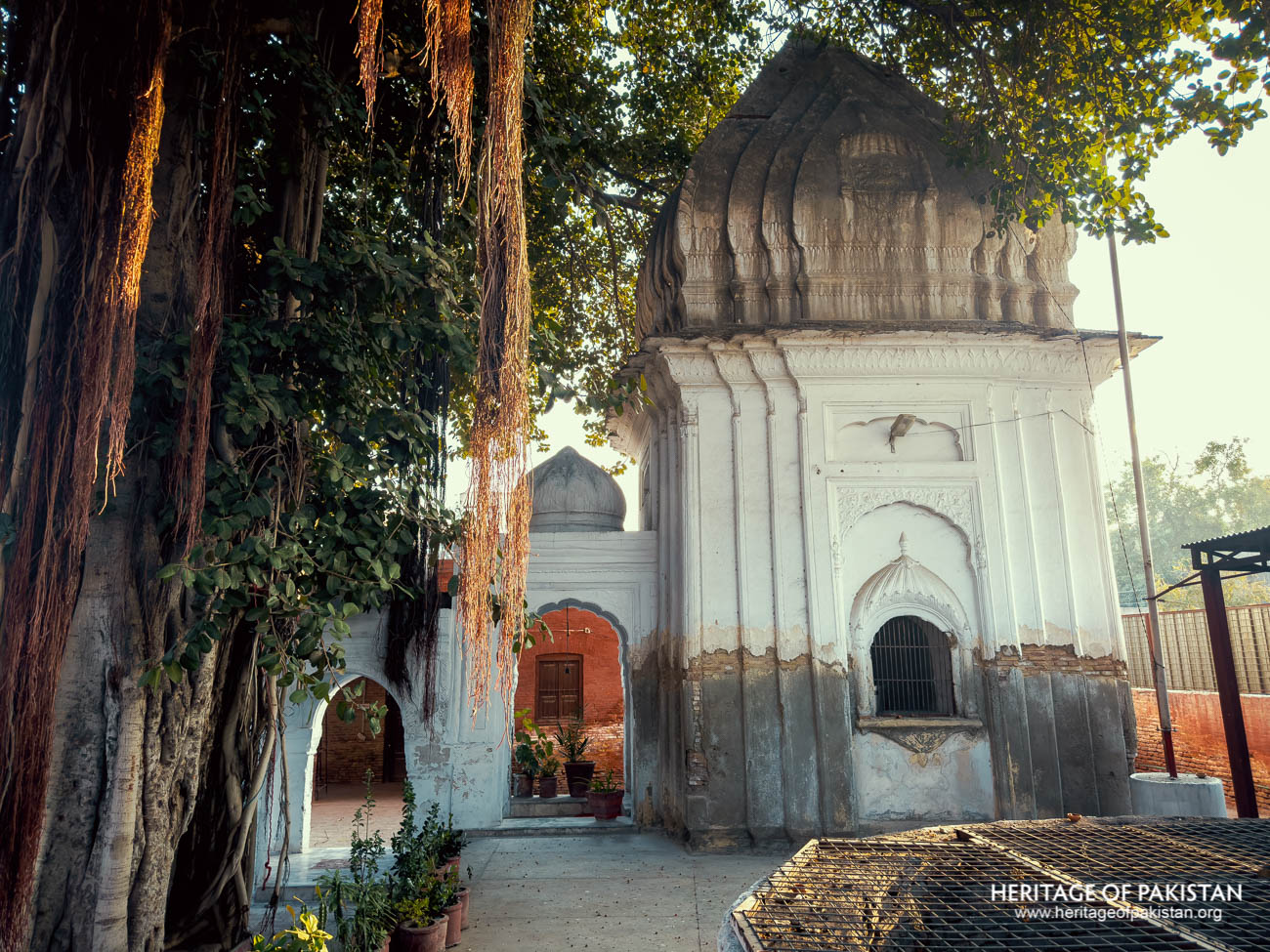
The Gorakhnath Temple is situated within the Gor Khatri Archaeological Complex in the old city of Peshawar. This site has held religious significance long before the establishment of the Mughal-era serai. Historical references indicate that the location was already considered sacred when Emperor Babur arrived in India. Babur, in his memoirs, noted the presence of cut hair at the site—evidence of Hindu or yogi pilgrims performing rituals. This suggests that the spiritual importance of the location predates its conversion into a Mughal caravanserai.
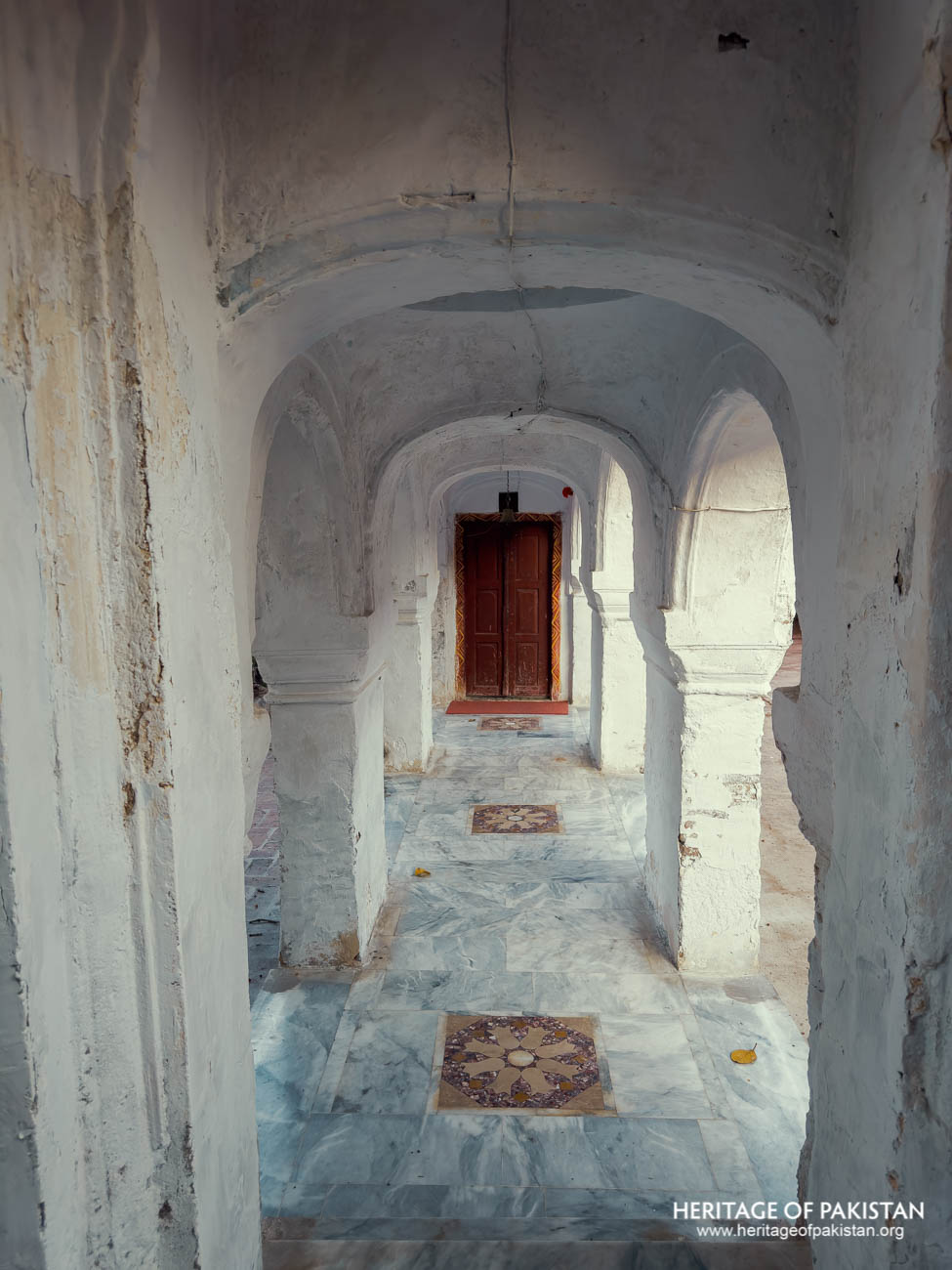
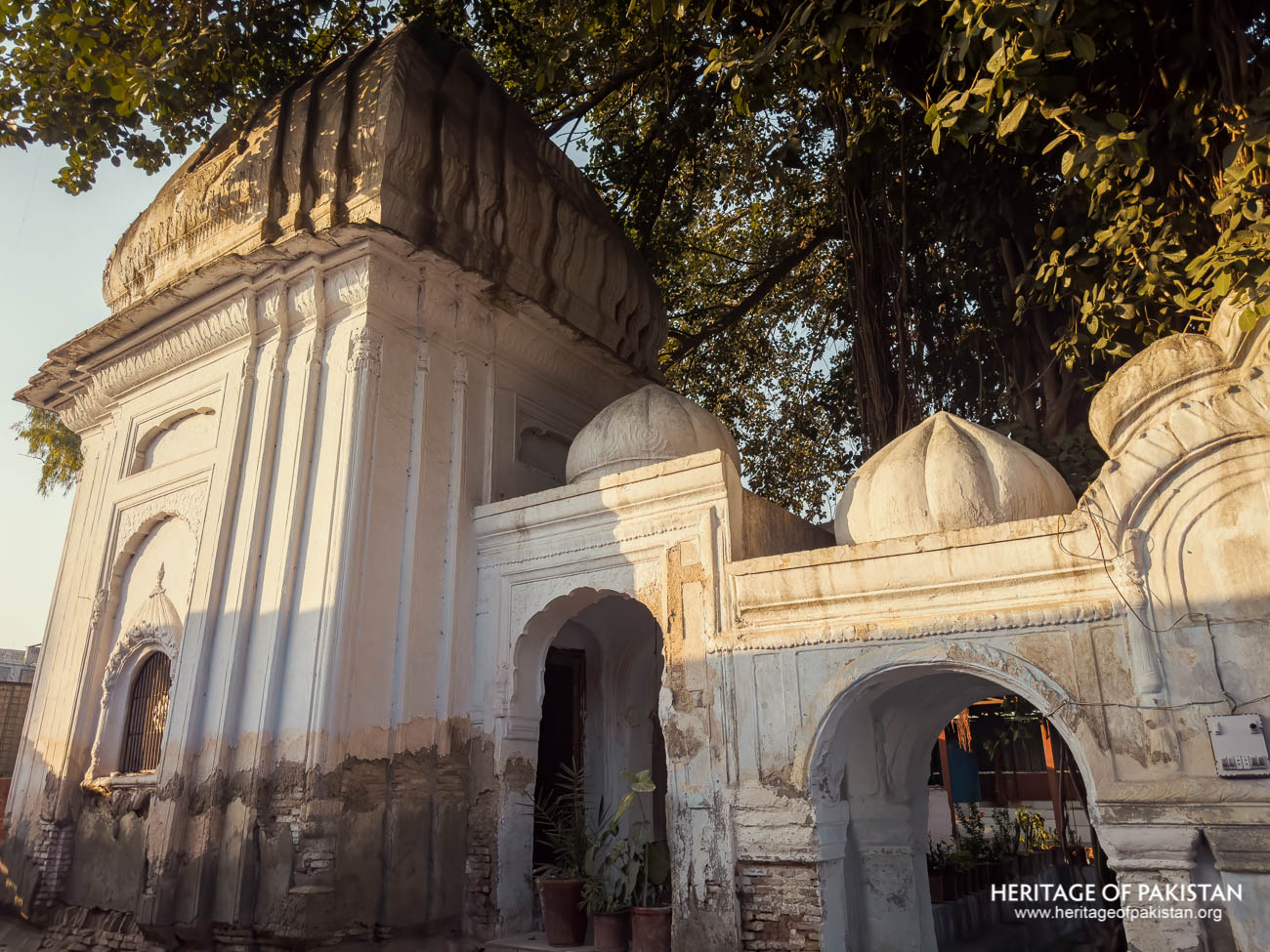
According to Ahmad Hassan Dani, a Shahi Mosque was constructed at the site in 1641 during the Mughal period, as part of the development of the serai. Following the Sikh occupation of Peshawar, this mosque was demolished and replaced by a temple dedicated to Gorakhnath, constructed between 1834 and 1849. Dani describes the temple as “a tall spired structure with a covered passage leading to subsidiary Nandi shrine.” This temple now stands as a significant remnant of the Sikh period's architectural intervention in the complex.
The temple was dedicated to Guru Gorakhnath, a prominent figure in the Nath monastic tradition within Hinduism. Considered a Mahayogi, or great yogi, Gorakhnath was one of the two main disciples of Matsyendranath and held a vast following. His adherents, known as yogis, gorakhnathi, darshani, or kanphata, were identified by their torn earlobes. Some accounts state that Gorakhnath came from Kashmir to Sheikhupura and eventually settled in Peshawar. The temple may have been established in his memory, celebrating his role as founder of the Kanphata order of yogis or jogis.
The complex itself served as a sanctuary dedicated to Lord Shiva, and the temple’s association with Gorakhnath aligns with the syncretic practices often found in Nath tradition. Hindu frescoes from the temple still survive and remain visible, offering a glimpse into its religious and artistic heritage.
The preservation of the Gorakhnath Temple is currently being overseen by the Directorate of Archaeology and Museums, Government of Khyber Pakhtunkhwa, ensuring the continuity of this historically layered sacred space within the broader Gor Khatri complex.
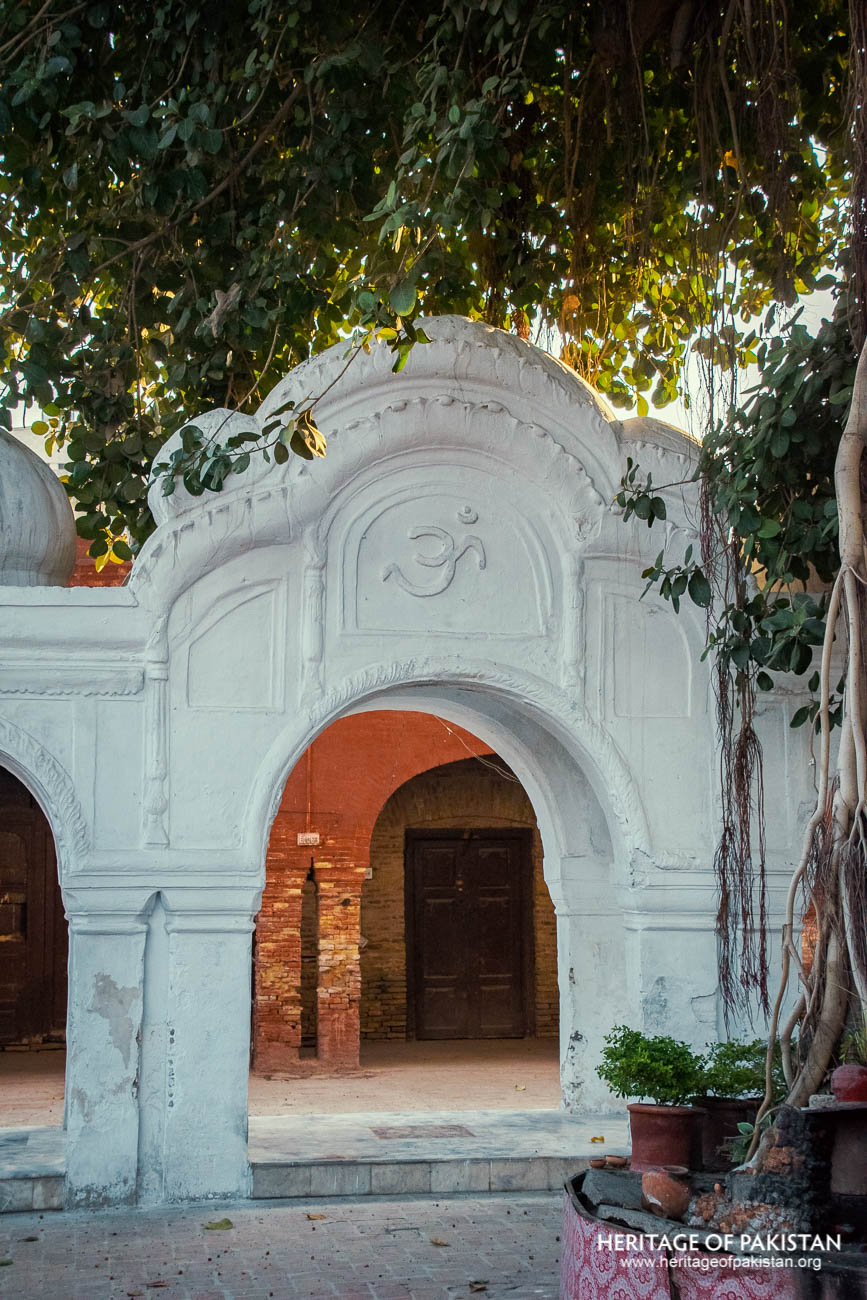
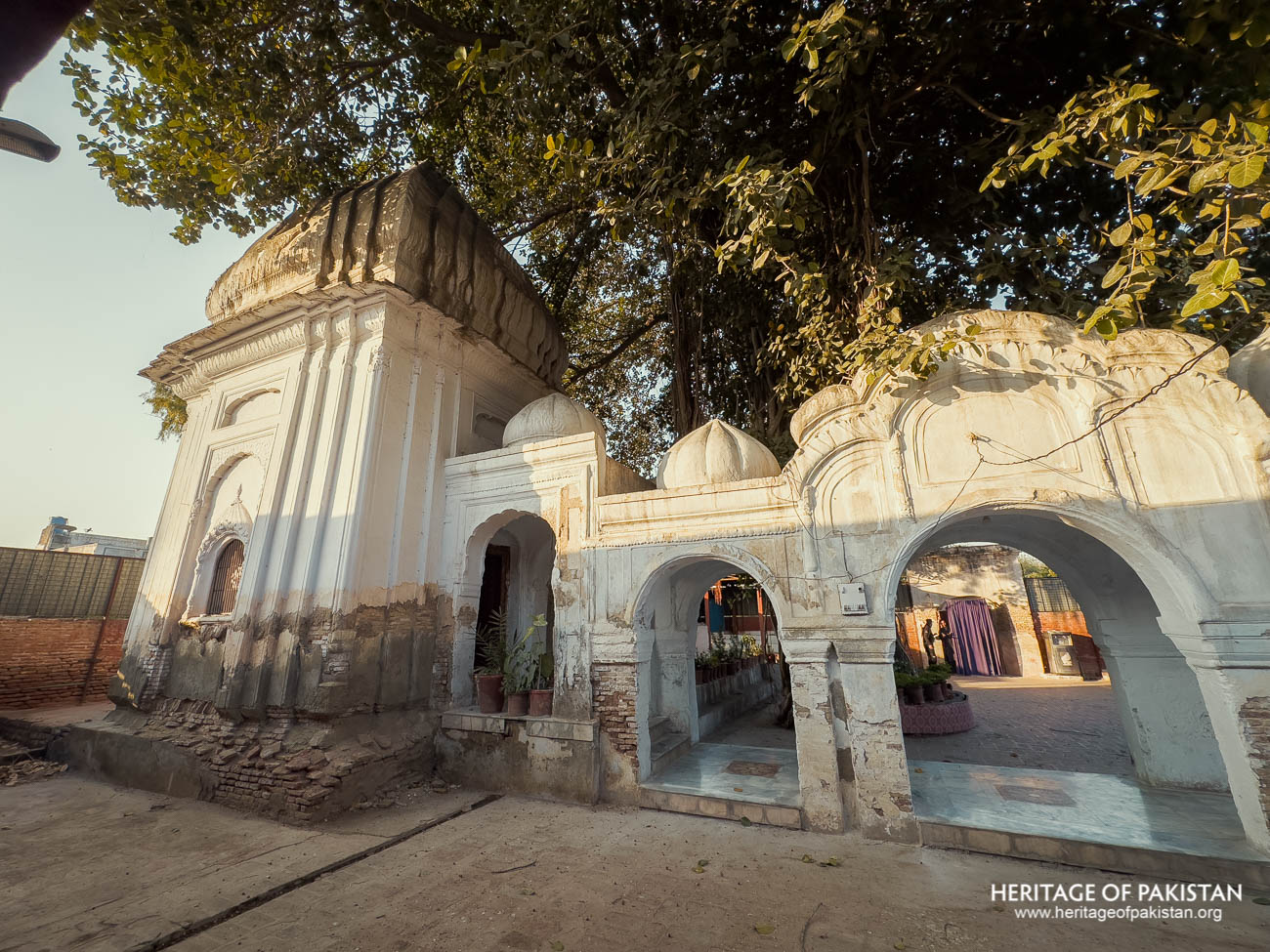
The Gorakhnath Temple is situated in the southwestern quadrant of the Gor Khatri complex in Peshawar. The temple forms part of a compound that includes a central courtyard surrounded by a few rooms. A large and aged banyan tree still stands within this courtyard, providing shade and contributing to the historic character of the site. Access to the main shrine is through an arched pathway that leads directly into the temple structure. The temple compound exhibits a synthesis of Hindu and Sikh architectural elements, visible in both its layout and detailing.
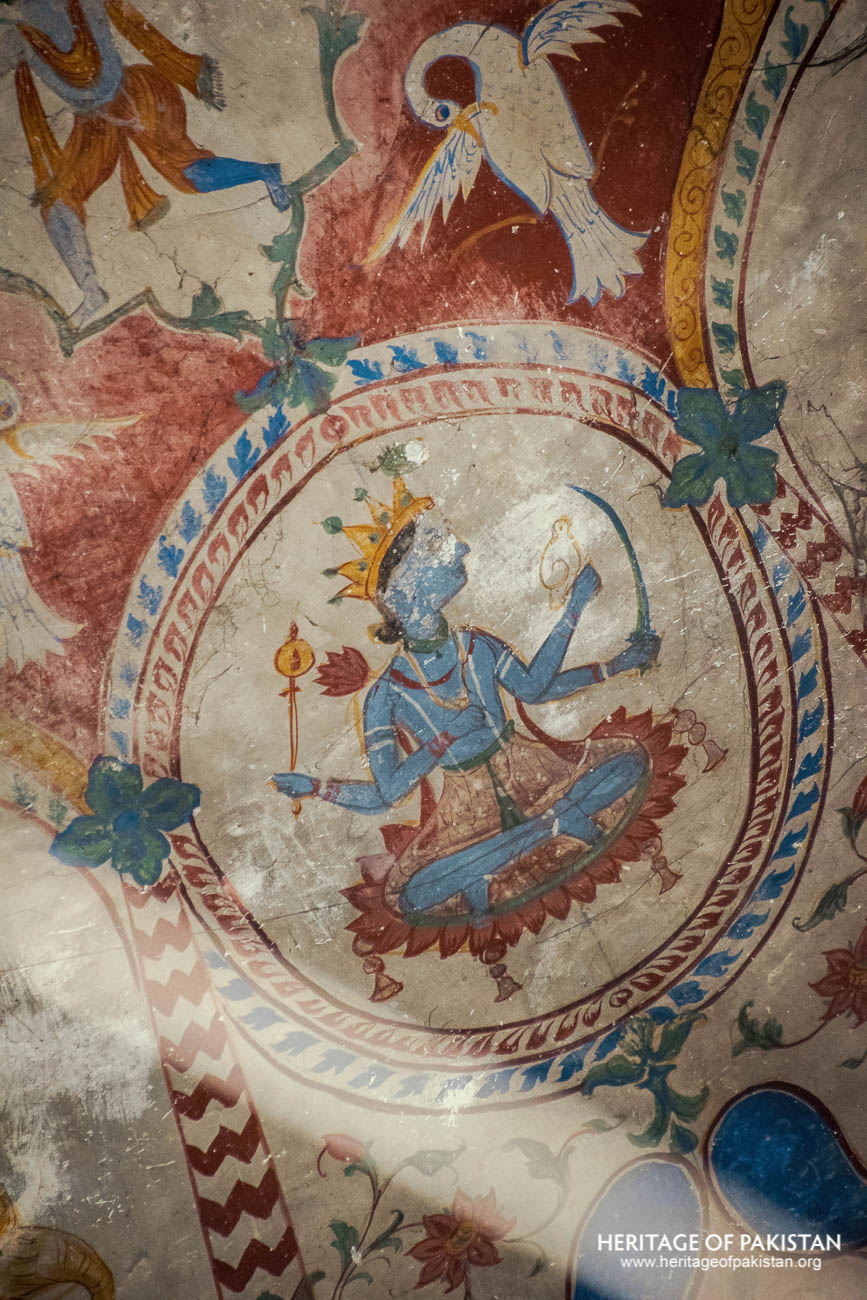
The main temple enclosure measures approximately 27.50 meters east–west and 28.80 meters north–south, while the inner courtyard walls have an average height of 1.38 meters. The temple is constructed using bricks locally known as 'Waziri', a material commonly used in historic buildings of the region. The innermost sanctum, or garbhagriha, is square in plan and houses a large linga at its center, signifying its dedication to Lord Shiva. The chamber itself measures 1.50 meters by 1.30 meters with a height of 2.35 meters and transitions into an octagonal interior form. The ceiling of the garbhagriha is adorned with religious frescoes, adding iconographic richness to the sacred space.
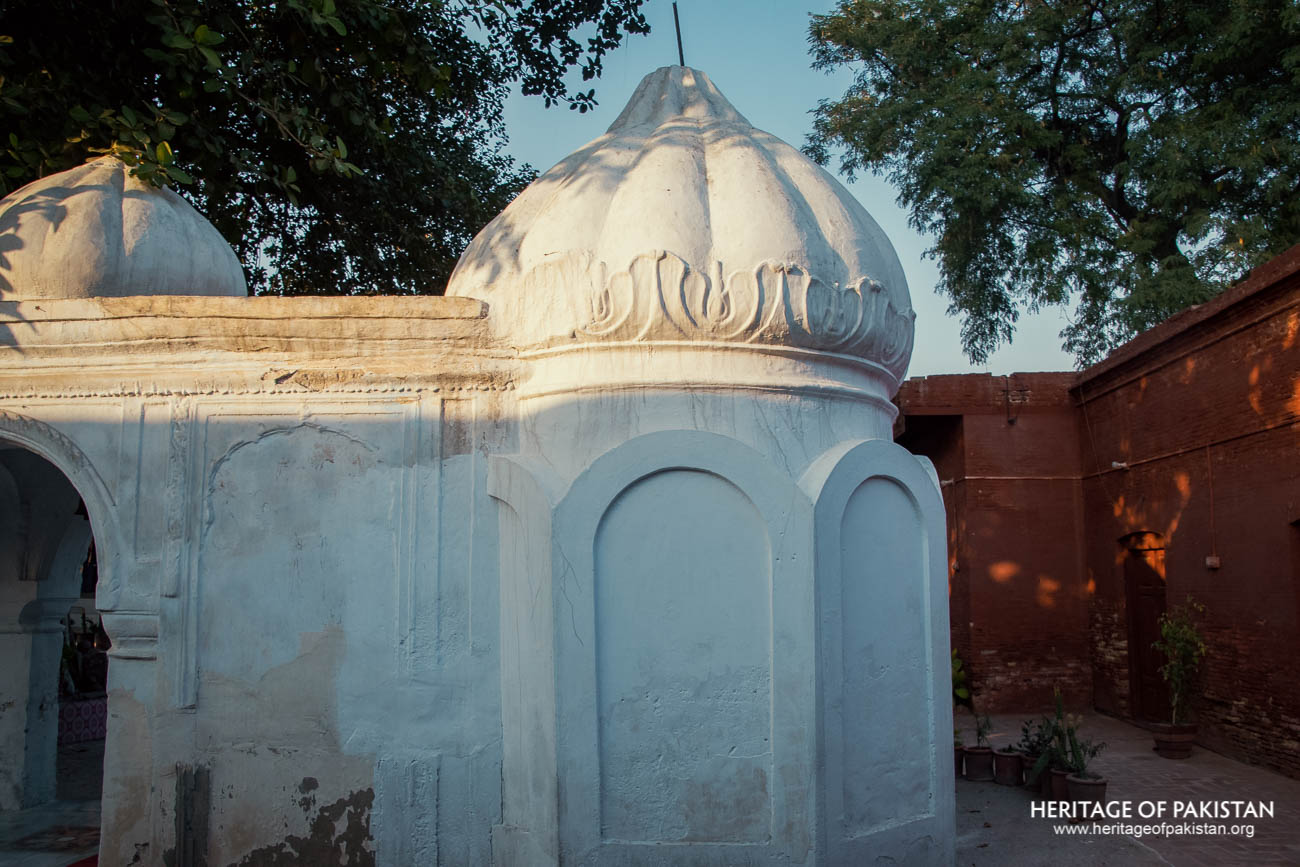
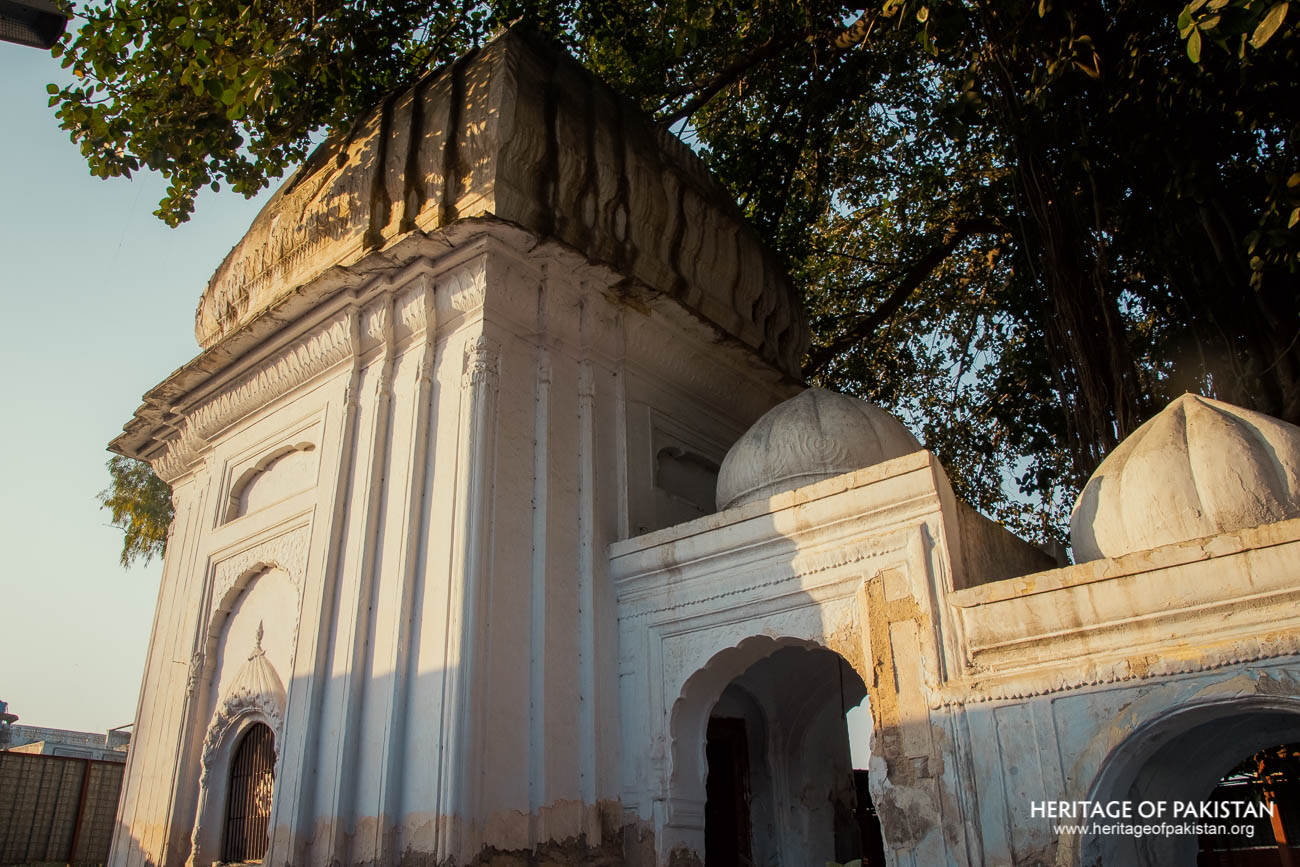
Leading into the garbhagriha is a frontal arcade that is likely to have functioned as the mandap, traditionally used for conducting religious rituals. This arched corridor is directly aligned on the axis with the sanctum and forms an essential transitional element in the temple’s spatial sequence. The arcade features semi-circular arches resting on square columns, with subtle European stylistic influence. The domes above this passage are fluted and rest on lotus-shaped bases—an architectural motif typically associated with Sikh religious structures.
The temple's shikhara, or spire, rises above the sanctum and is fluted, following the square plan of the base chamber. Its outer walls are decorated with niches and shallow recesses that enhance its vertical expression. Adjacent to the eastern end of the arcade lies a smaller, octagonal shrine. This secondary shrine features a ribbed dome also set on a lotus base, further echoing the Sikh stylistic vocabulary that characterizes parts of the complex.
The architectural composition of the Gorakhnath Temple reflects a confluence of religious traditions, materials, and regional styles, embedded within the broader historical landscape of Gor Khatri.
All Photographs by Syed Noor Hussain and Sania Azhar.
All Rights Reserved. Photos may be used for Non-Commercial, Educational, Artistic, Research, Non-Profit & Academic purposes.
Commercial uses require licensing agreement.

Syed Noor Hussain
July 23, 2025 at 4:07 amBest