
Protected Under
Antiquities Act 1975
34°19'20.2"N 72°04'10.0"E
Antiquities Act 1975
Sculptures from Jamal Garhi now reside in museums across Pakistan, India, and the UK, including the British Museum.
The Best Time to Visit mountain regions of Khyberpakhtunkhwa is Summers. Preferably from April to September. Winters are Extremely Cold and Snowfall blocks most of access. Hence Winters are not recommended.

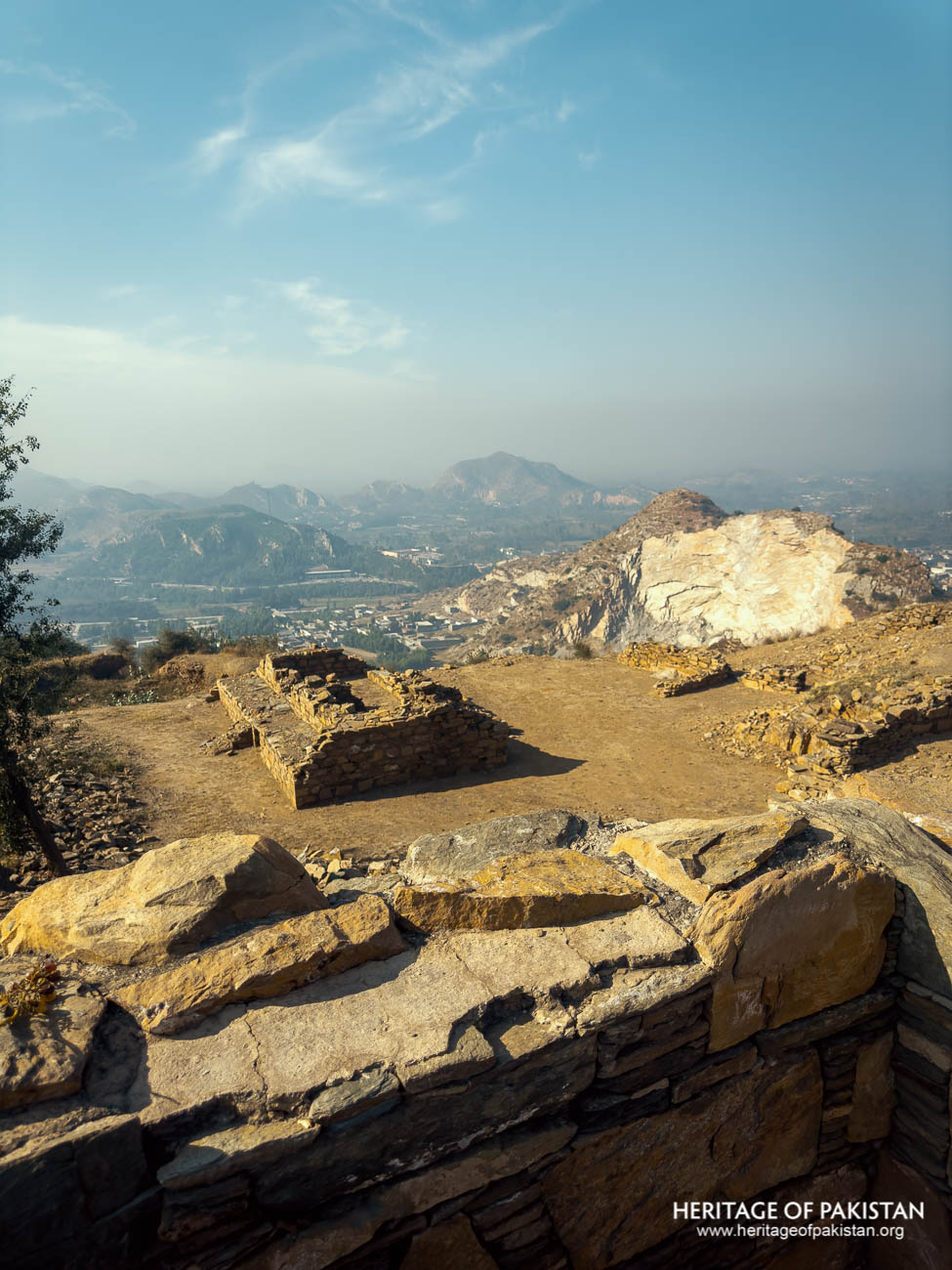
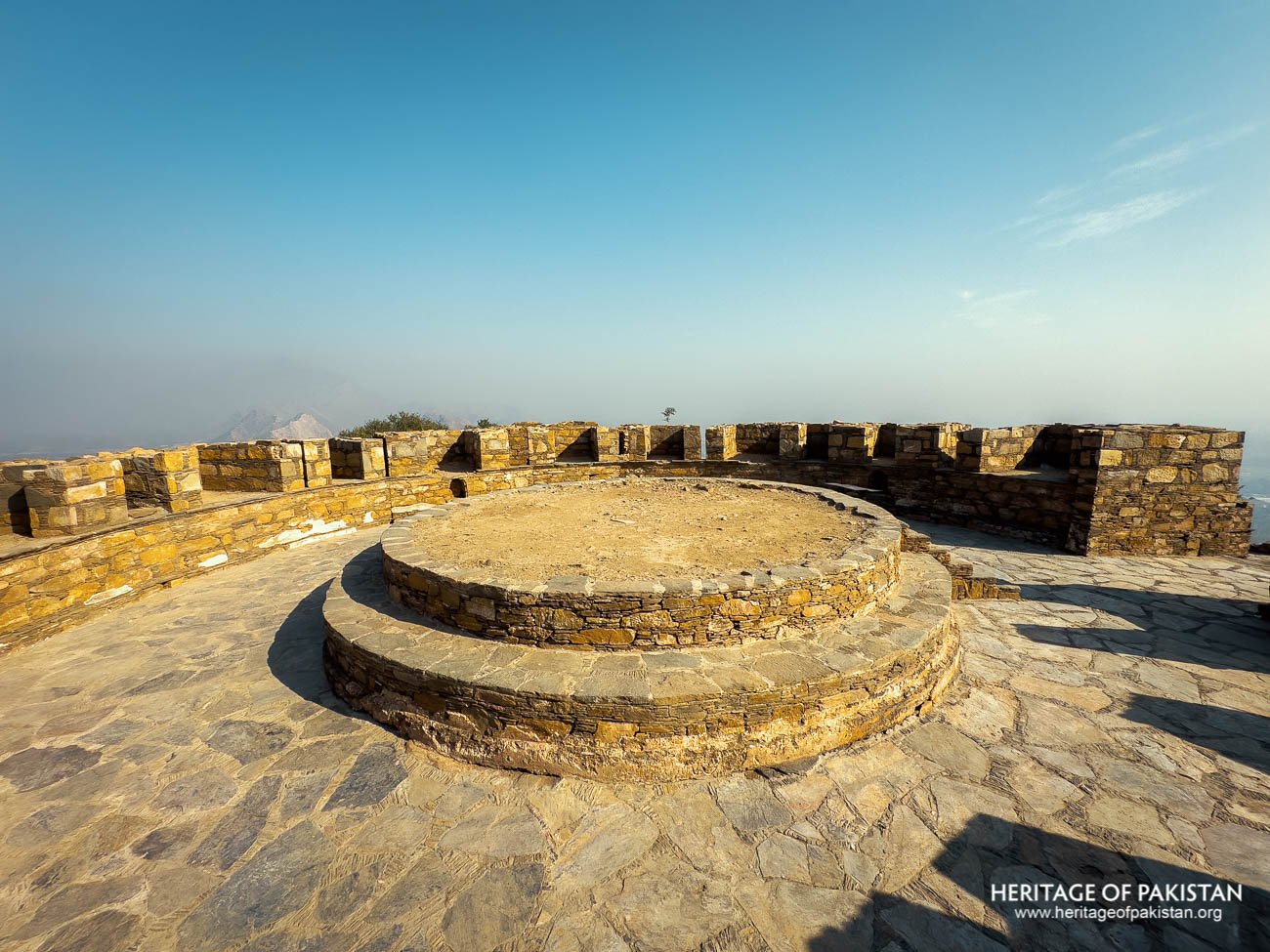
Jamal Garhi is a Buddhist monastery situated in the town of Jamal Garhi, approximately 18 kilometers from the city of Mardan in the Khyber Pakhtunkhwa province of Pakistan. Positioned atop a mountain, the site offers an expansive view of the surrounding landscape. Historically, it holds significant importance as a religious and cultural center during the Kushan period, spanning roughly from the 1st to the 5th century AD.
The monastery functioned continuously through this period, as evidenced by archaeological findings such as coins attributed to various Kushan kings, notably Kanishka I and Vasudeva I. These artifacts suggest a flourishing religious community at Jamal Garhi until its probable destruction in the 5th century AD, coinciding with the invasions of the White Huns—a fate shared by many other Gandharan sites.
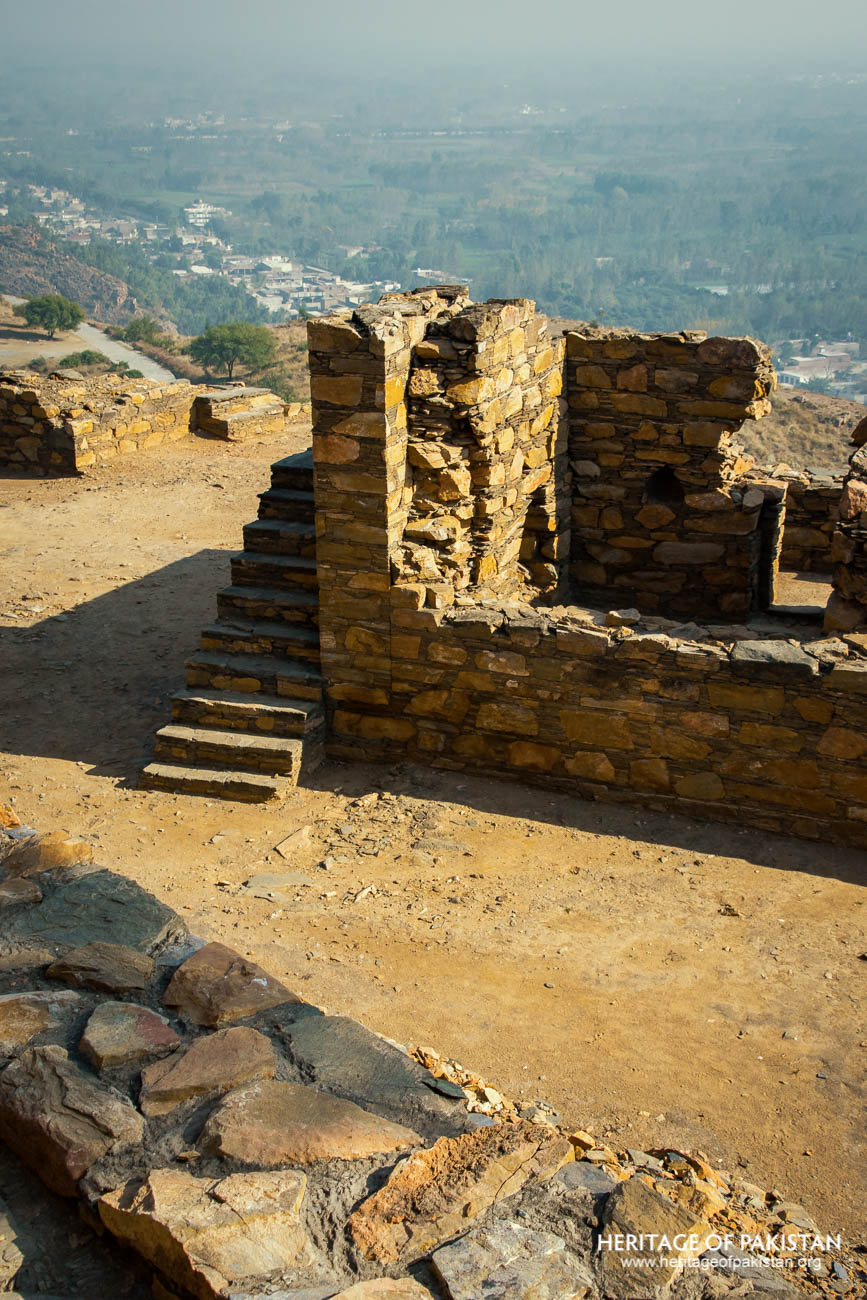
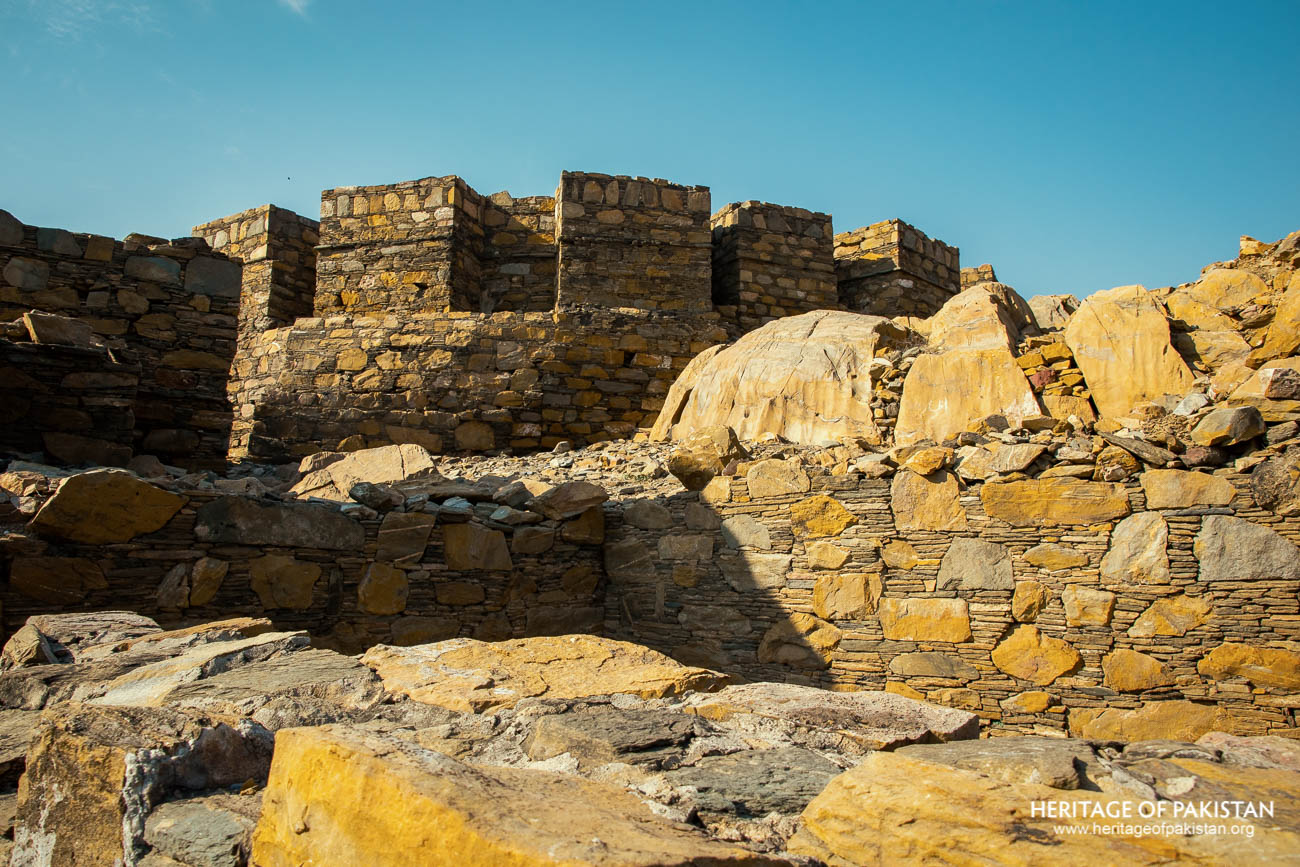
The ruins of Jamal Garhi were first brought to academic attention by Sir Alexander Cunningham, Director of the Archaeological Survey of India, who discovered the site in 1848. A more formal survey followed in 1852, conducted by Lieutenant Stokes of the Horse Artillery and Lieutenant Lumsden of the Guide Corps, both British officers stationed in the region. In 1873, Cunningham returned to conduct excavations, focusing particularly on the main stupa area. That same year, Lieutenant A. Crompton carried out further excavations of the surrounding monastery, its halls, and courtyards.
The archaeological site spans an area of approximately 190 meters by 165 meters. A wide range of artifacts has been unearthed at Jamal Garhi over the course of multiple excavations. Notable discoveries include coins, inscriptions, parts of Greek-style columns, and a considerable number of sculptures and reliefs depicting Buddhist narratives. Particularly significant are the Jataka story reliefs, such as those illustrating the Visvamtara Jataka, the Syama Jataka, the Miracle of Sarasvati, and The Dream of Queen Maya. Other interesting sculptural finds include depictions of Atlas and a female guard.
The distribution of these artifacts spans multiple institutions and countries. Many items are now housed in museums across South Asia and the United Kingdom. These include the Peshawar Museum and the Lahore Museum in Pakistan; the Government Museum and Art Gallery in Chandigarh, the Indian Museum in Kolkata, and the State Museum in Lucknow, India; as well as the British Museum and the Victoria and Albert Museum in the United Kingdom.
Further archaeological work at the site was undertaken between 1920 and 1923 by the Archaeological Survey of India under the leadership of Harold Hargreaves. The continued excavation efforts have contributed to a more comprehensive understanding of the site's historical and cultural significance within the broader context of the Gandharan Buddhist tradition.
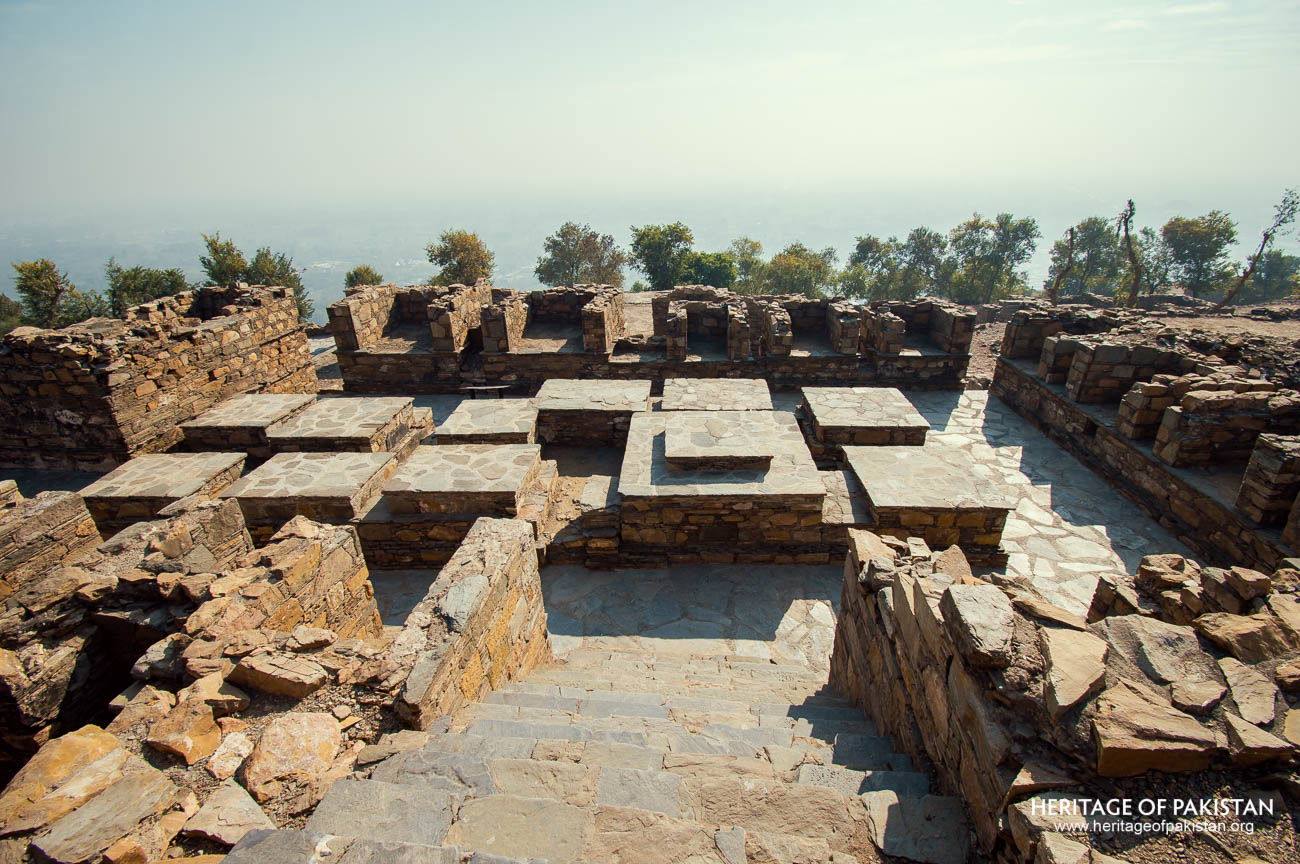
The Buddhist archaeological site of Jamal Garhi is composed of two principal sections: the stupa area and the monastic complex. This historic site, located in the Mardan district, represents a significant example of Gandharan Buddhist architecture and planning. The stupa area itself is arranged in a stepped configuration, consisting of three levels or courts. At the highest point stands the main stupa, followed by two courts of votive stupas known as the Upper Stupa Court and the Lower Stupa Court. The monastic section, located separately, comprises various scattered structures including living quarters and communal facilities.
The main stupa occupies the highest point on the site and is situated within a circular courtyard. The courtyard is encircled by fifteen chapels positioned along its perimeter. The stupa is circular in plan and includes a double pradakshina patha (circumambulation path), a characteristic ritual feature in Buddhism involving clockwise movement around a sacred structure or object, also referred to as Parikrama. The main stupa measures approximately 22 feet in diameter. Access to its courtyard is gained via a flight of steps, as it lies at a slightly elevated level compared to the adjoining architectural features. The base of the stupa remains intact and circular, while the upper section has been destroyed. Notably, when Sir Alexander Cunningham excavated the site in 1873, the drum or base of the stupa still retained painted stucco sculptures.
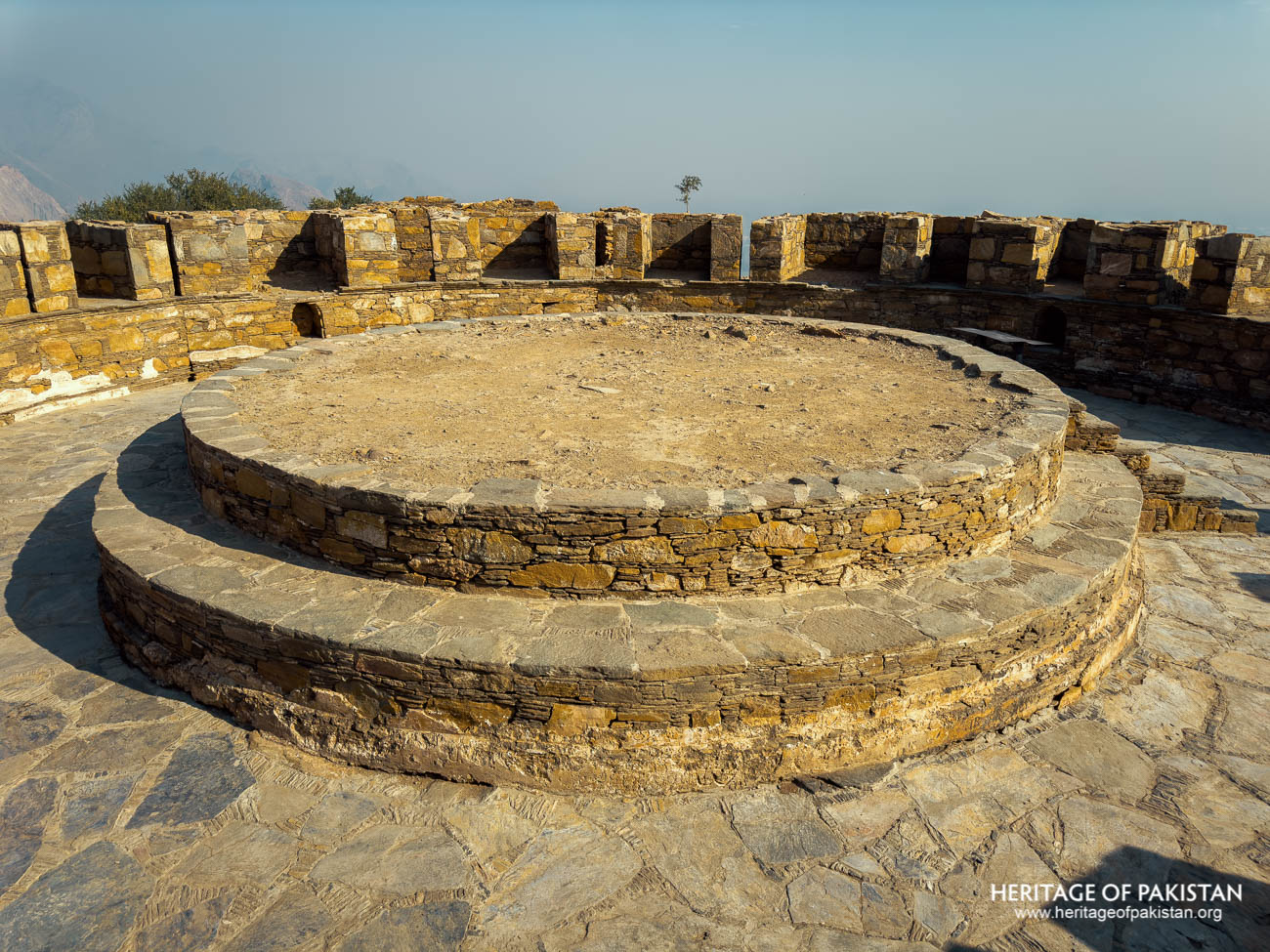
Stucco, as employed at the site, is a construction and sculpting material composed of aggregates, a binder such as lime or gypsum, and water. Its utility in Buddhist art stems from its adaptability for both decorative finishes and detailed sculpture work, often resembling marble in appearance. The architectural plan of the main stupa bears similarity to notable examples such as Dharmarajika in Taxila and Butkara I in Swat, reflecting standard features of stupa design in the region during the Gandharan period.
Directly south of the main stupa courtyard lies the Upper Votive Stupa Court. This court is rectangular in shape and approximately 30 by 70 feet in dimensions. Within this space, thirteen votive stupas are arranged, surrounded by twenty chapels placed along its perimeter. Further south, the Lower Stupa Court is located, which is smaller in size and houses eight votive stupas. Chapels line three sides of the perimeter of this court, indicating a continued religious and ceremonial use.
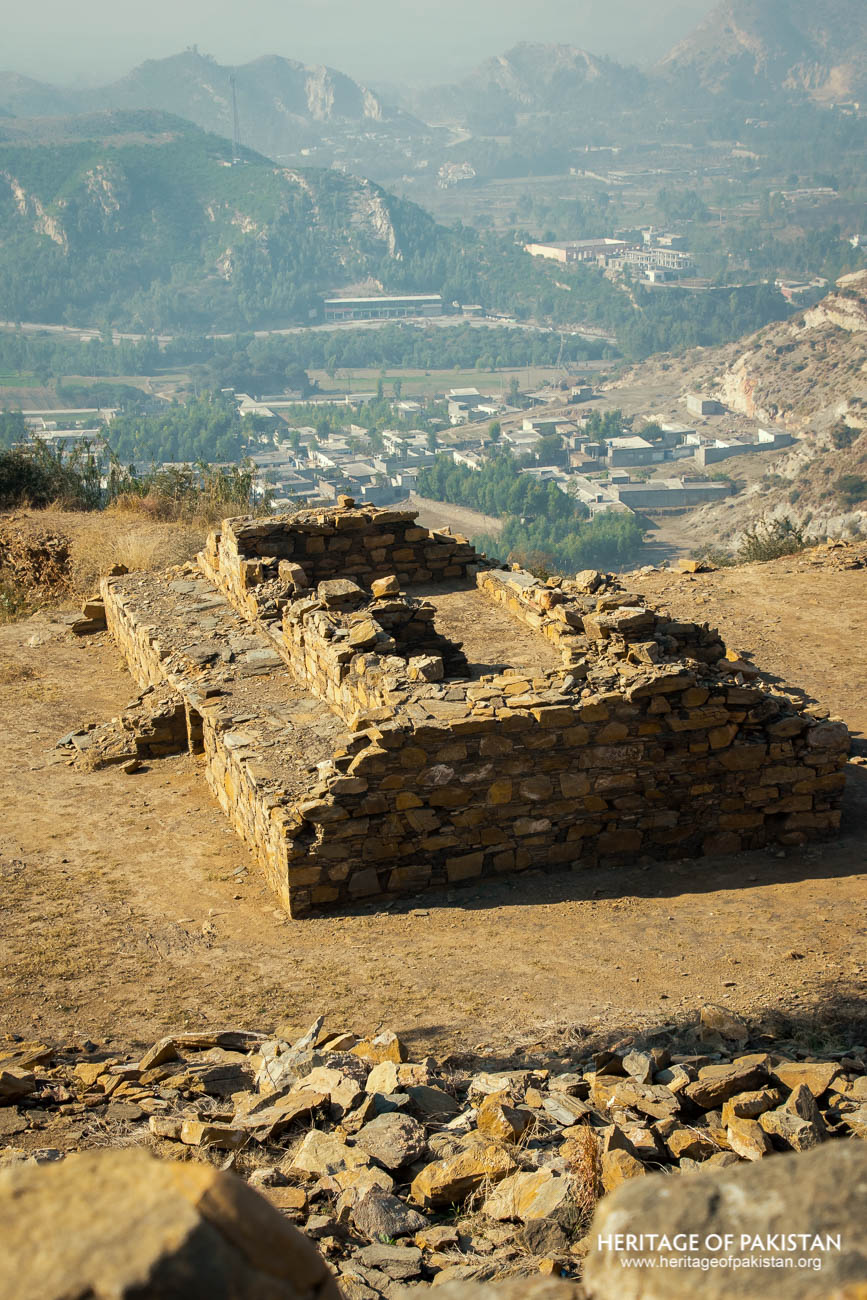
The monastic component of Jamal Garhi does not follow a strictly planned or cohesive layout. Structures interpreted as monastic quarters are dispersed throughout the site. In her thesis, Amina Tariq identified buildings numbered 5, 7, and 10 through 14 as monastic quarters. Additional structural remnants suggest the presence of a main hall, a kitchen, a storage room, and a refectory or dining hall, likely used for communal meals and gatherings.
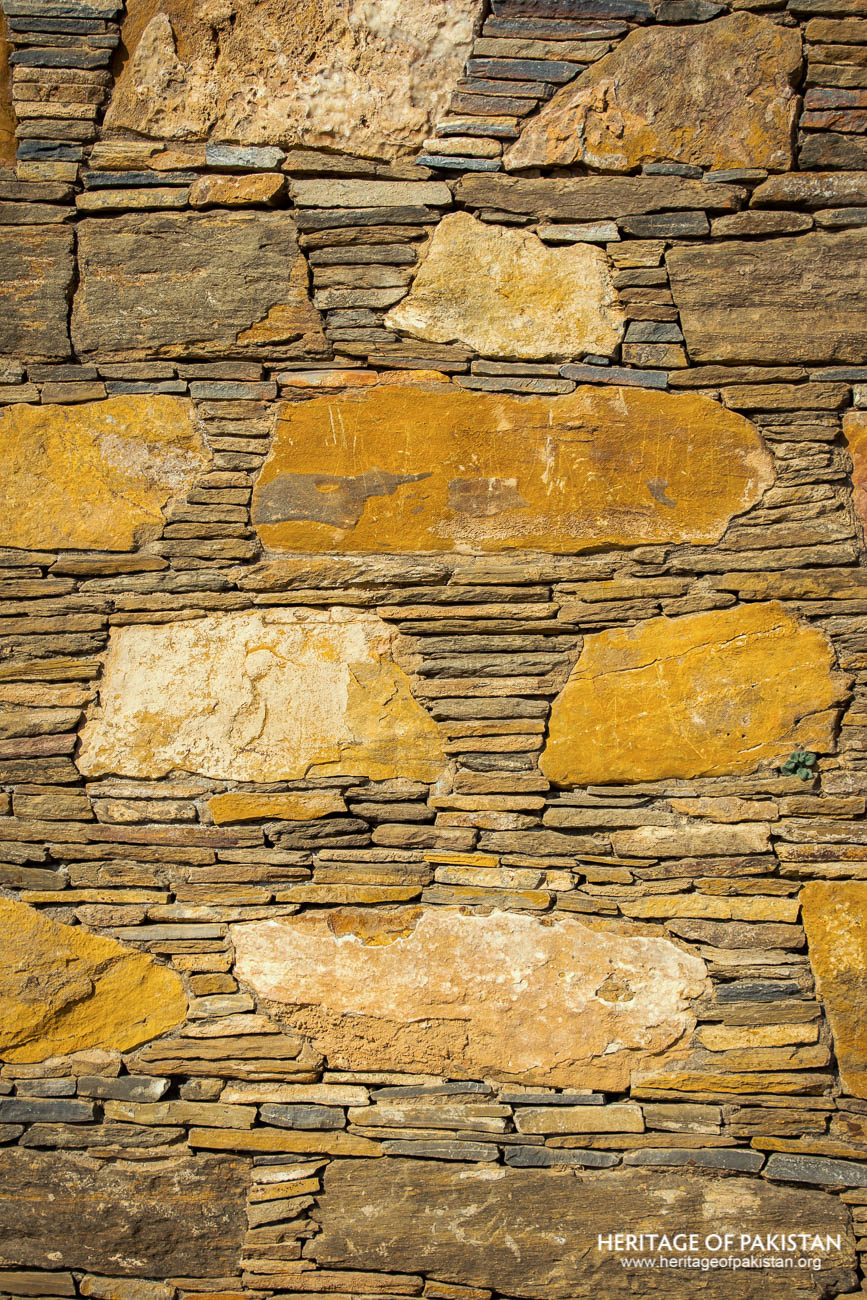
The construction techniques evident across the site can be divided into two primary types. The majority of the buildings employ diaper masonry, a technique characterized by the decorative arrangement of bricks or stones, often in diamond or lozenge patterns. However, the earliest structures at Jamal Garhi appear to have been constructed using rubble masonry, indicative of an earlier phase of construction and architectural development.
Excavations at the site have yielded a significant number of sculptural and artistic artifacts. Most of these sculptures were uncovered from the two stupa courts located directly south of the main stupa. The majority of these pieces were carved from schist, a metamorphic rock favored in Gandharan art for its layered composition and capacity for fine carving. Schist was commonly used in Buddhist sculptural works due to its durability and capacity to retain intricate details, making it a preferred medium in the region’s artistic tradition.
In totality, the architectural planning, construction methods, and recovered artifacts at Jamal Garhi contribute substantially to the understanding of Buddhist monastic and ritual life in the Gandharan region, offering insights into both religious practices and artistic expressions prevalent from the 1st to the 5th century AD.
All Photographs by Syed Noor Hussain and Sania Azhar.
All Rights Reserved. Photos may be used for Non-Commercial, Educational, Artistic, Research, Non-Profit & Academic purposes.
Commercial uses require licensing agreement.

Syed Noor Hussain
July 23, 2025 at 4:06 amBest