
Did You Know?
Lady Garden’s pine trees were imported from Lebanon by the British
34°08'59.8"N 73°12'55.4"E
Lady Garden’s pine trees were imported from Lebanon by the British
The Best Time to Visit mountain regions of Khyberpakhtunkhwa is Summers. Preferably from April to September. Winters are Extremely Cold and Snowfall blocks most of access. Hence Winters are not recommended.

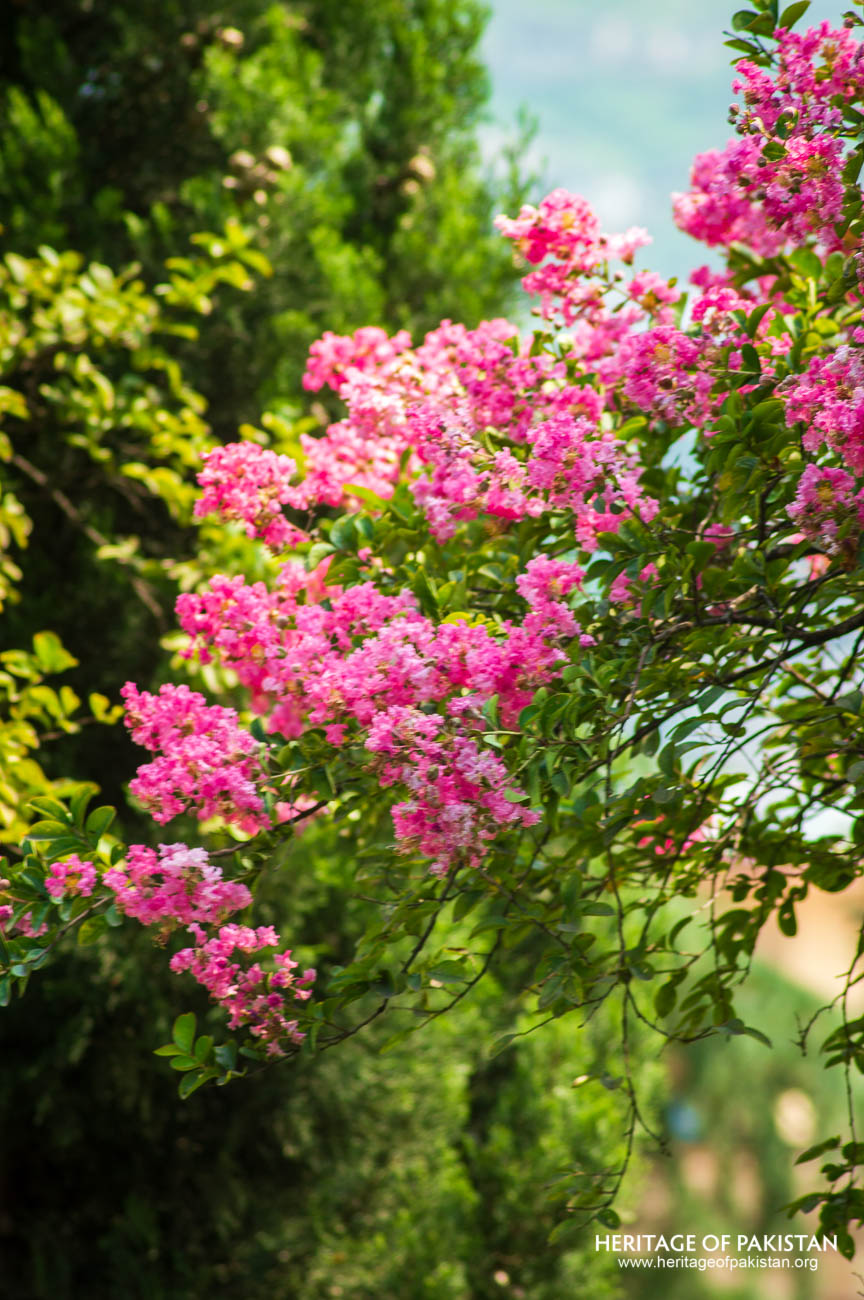
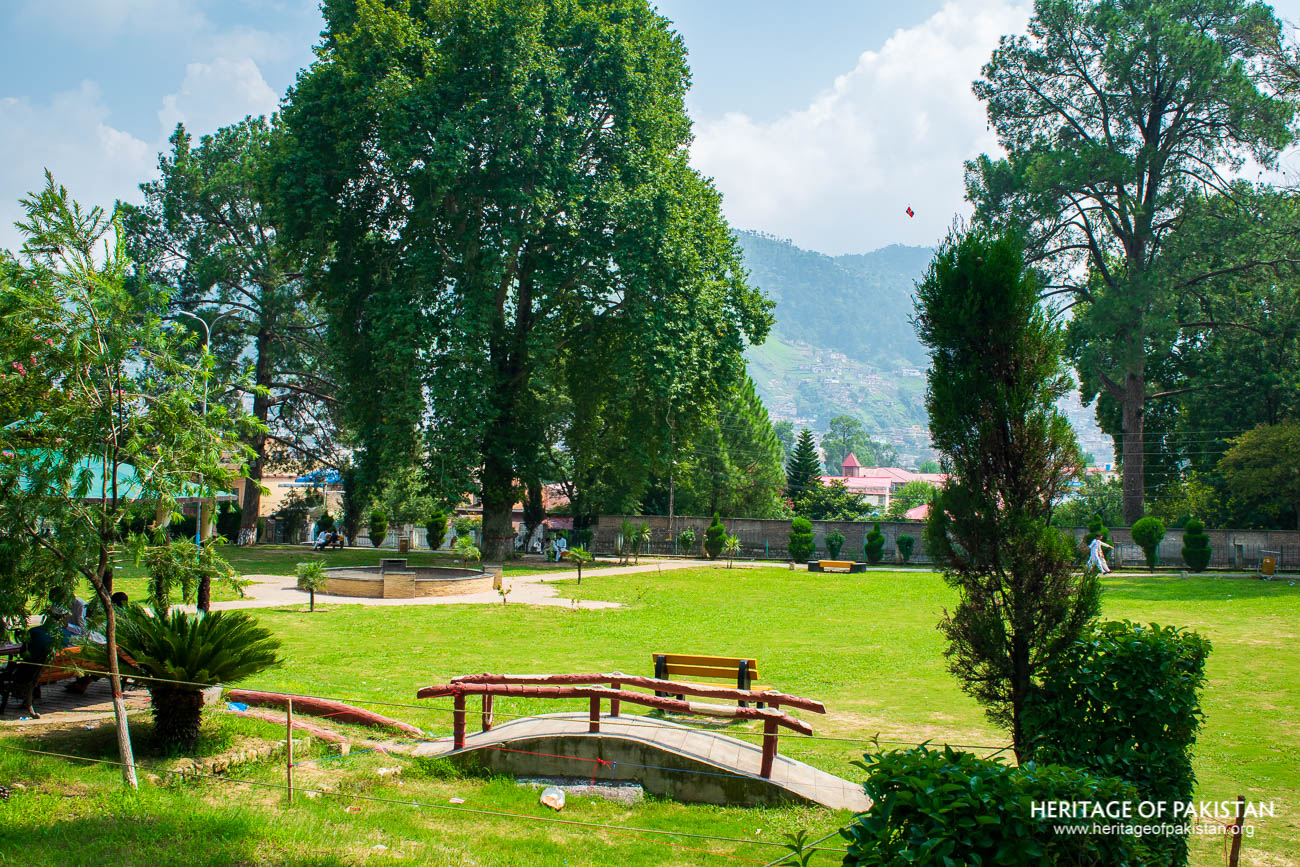
The Lady Garden in Abbottabad is a colonial-era park established in 1853 by Major James Abbott, the first Deputy Commissioner of the Hazara District following its annexation by the British Empire in 1849. Located to the east of St. Luke’s Church, the garden was specifically designed for the recreational needs of the families of British Army officers stationed in the cantonment. Only British women and children were permitted to enter the Lady Garden, while the local population was excluded and allocated a separate space known as the “Company Garden.” This exclusive division reflected the broader social hierarchies and segregation practices of the British colonial administration.
The Lady Garden featured several amenities intended for the leisure and cultural enrichment of British families. Among these were a sitting area, a gym, a dedicated playground for children, and a reading room, the latter of which was established in 1930 for the women of British officers. A variety of trees and flowers were planted in the garden, some of which were imported from England and other regions. Notably, the pine trees that line parts of the garden were brought from Lebanon by the British, enhancing both its aesthetic appeal and botanical diversity.
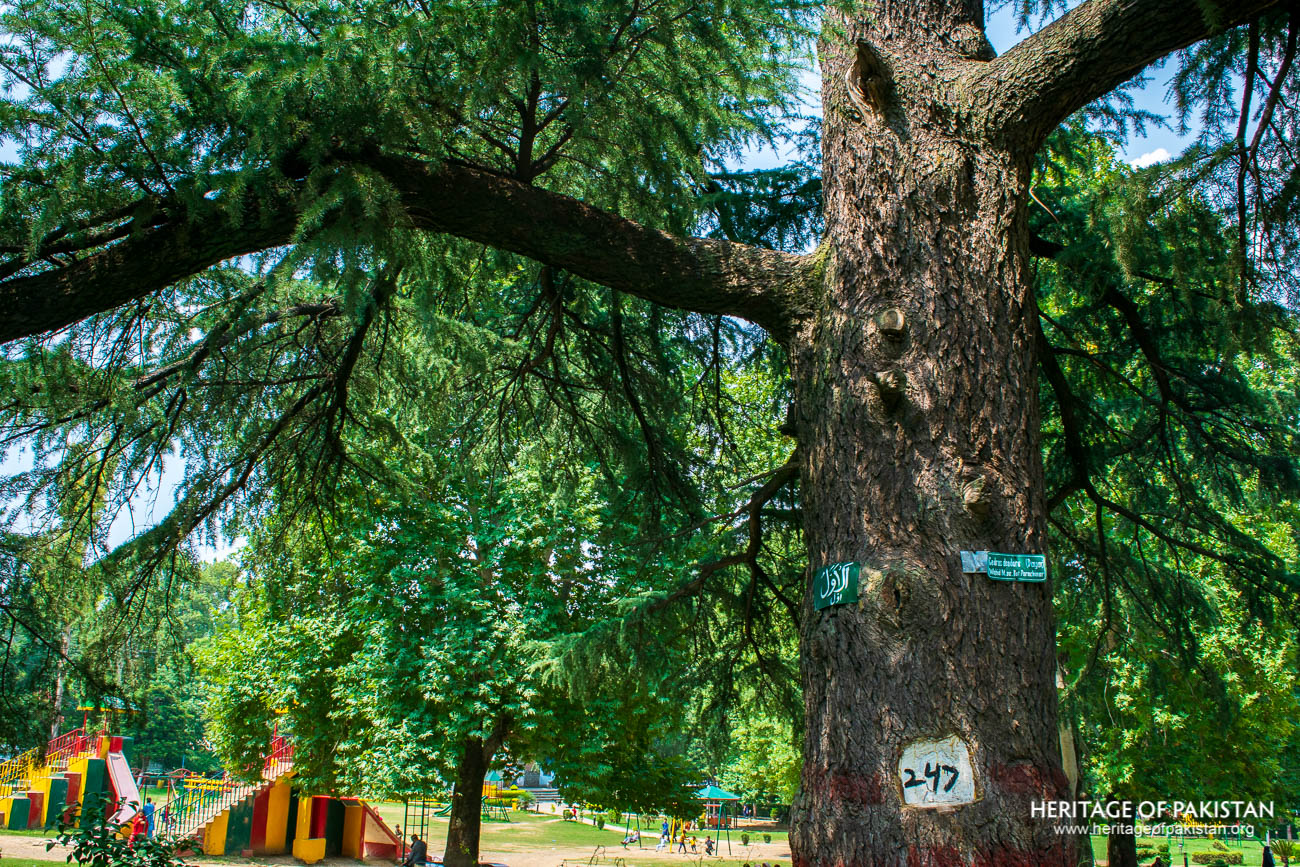
Following the creation of Pakistan in 1947, the Lady Garden was opened to the local population. It was reorganized into two distinct sections—one designated for families and children, and the other for general public use. Despite these changes, the garden has retained many of its colonial features and continues to serve as a public recreational space in Abbottabad.
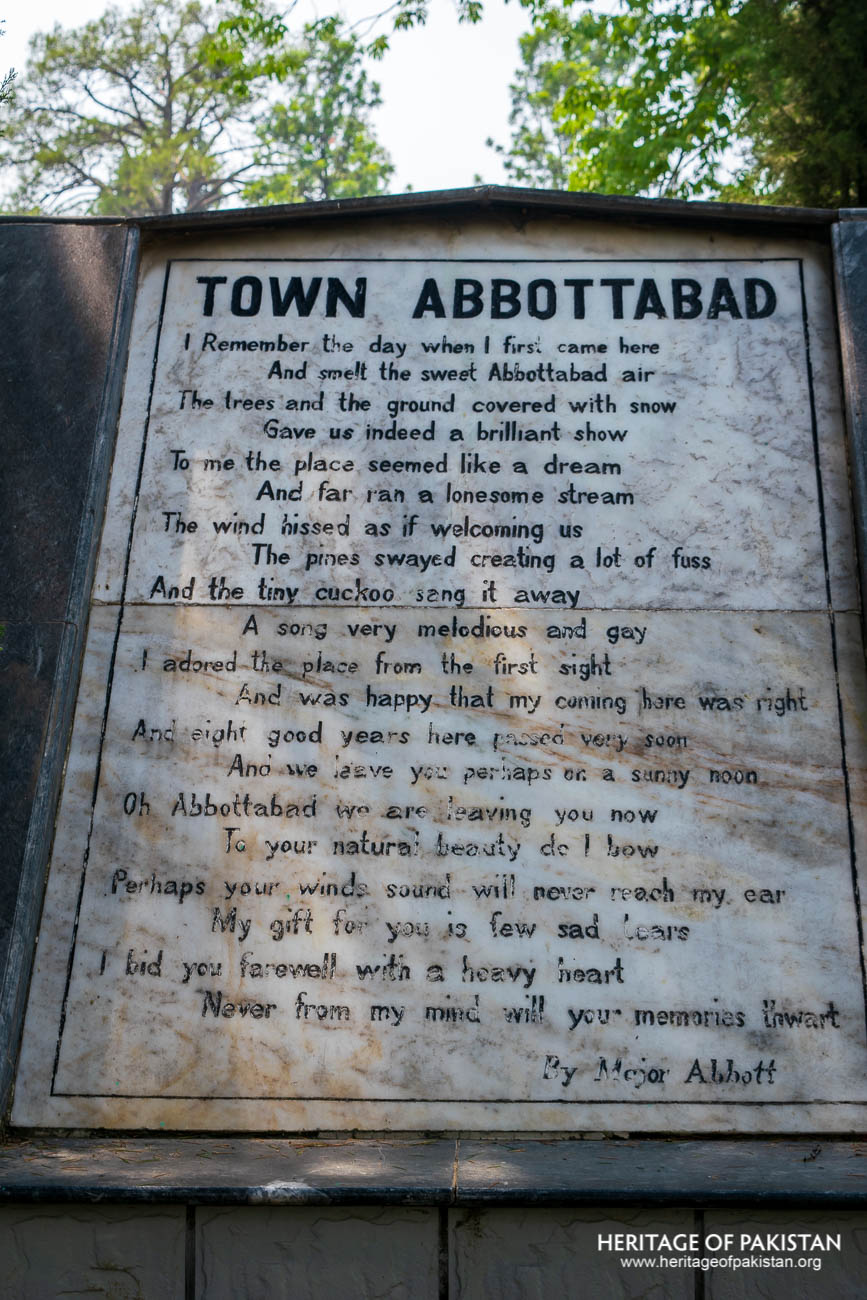
A notable feature of the Lady Garden is a commemorative stone plaque inscribed with the famous farewell poem written by Major James Abbott, who developed a deep personal attachment to the city he helped found. The poem is carved beneath a majestic cedar tree and serves as a lasting tribute to the man after whom the city is named.
Major James Abbott served as the Deputy Commissioner of Hazara from March 1849 to April 1853, and he selected the site of Abbottabad as the new headquarters for the district after defeating the Sikhs and moving the administrative center from Haripur. In 1853, the British garrison was formally established, and the town was named in his honor. According to the Gazetteer of the Hazara District 1883–84, Abbottabad had by then become a small but established settlement with a population of 1,371, eventually forming one of the tehsils of the Hazara District. The Lady Garden, with its historical significance and evolving public function, continues to reflect the layered legacy of colonial urban planning in the region.
All Photographs by Syed Noor Hussain and Sania Azhar.
All Rights Reserved. Photos may be used for Non-Commercial, Educational, Artistic, Research, Non-Profit & Academic purposes.
Commercial uses require licensing agreement.

syed noor
July 26, 2025 at 12:16 pmf