
Did You Know?
Peshawar is one of the oldest inhabited cities of Pakistan leading all the way back to 5th century BCE
34°00'39.3"N 71°34'30.0"E
Peshawar is one of the oldest inhabited cities of Pakistan leading all the way back to 5th century BCE
The Best Time to Visit mountain regions of Khyberpakhtunkhwa is Summers. Preferably from April to September. Winters are Extremely Cold and Snowfall blocks most of access. Hence Winters are not recommended.

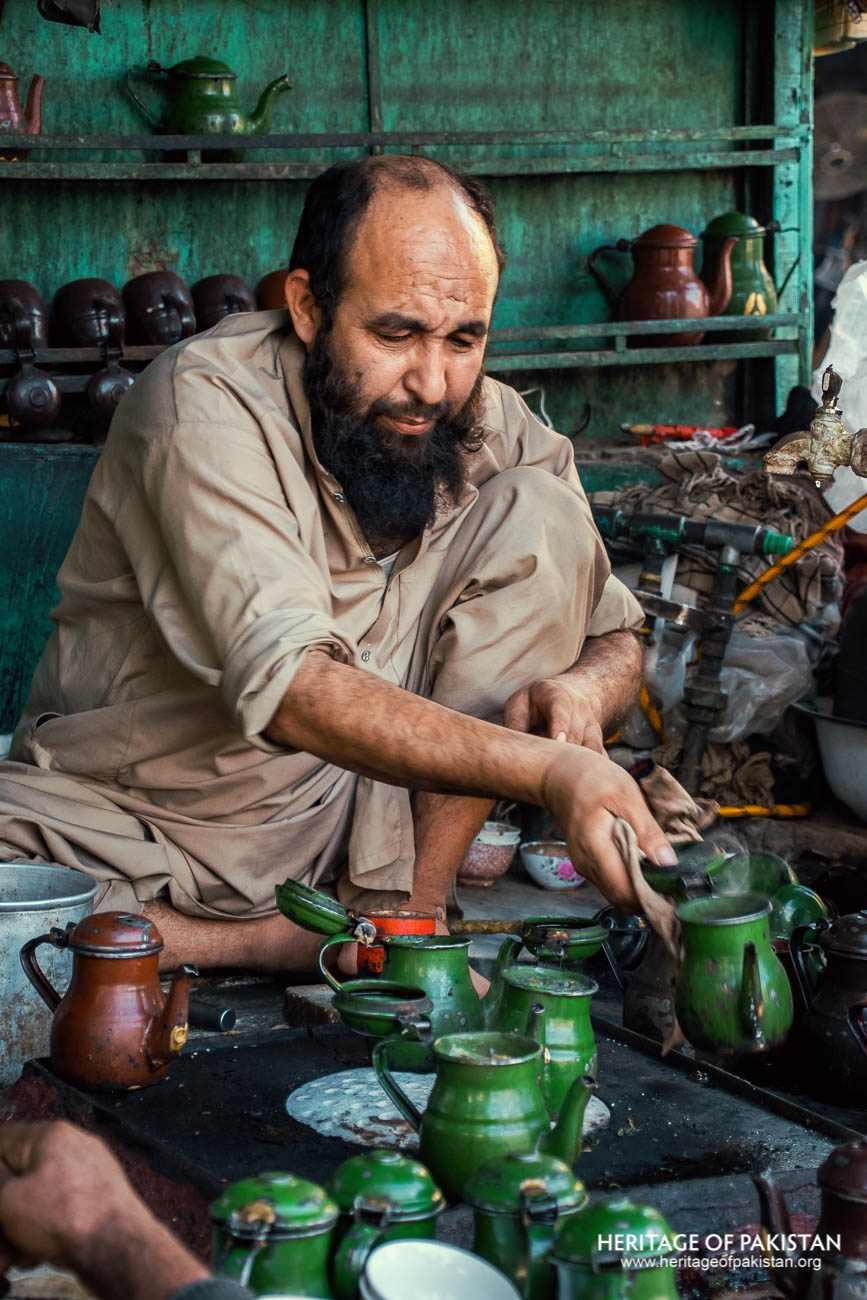

Walled City of Peshawar, Khyber Pakhtunkhwa
Peshawar, the capital of Khyber Pakhtunkhwa province, is one of the most ancient cities of Pakistan. Strategically located at the mouth of the historic Khyber Pass, it has for centuries served as the gateway to the Indo-Subcontinent for successive waves of invaders, armies, and civilizations entering from the West. The city is nestled in a valley encircled by hills on three sides and has long been regarded as a cultural and historical crossroads. Known historically as the 'City of Gardens', most of its gardens have regrettably disappeared over time.
Excavations and archaeological research have revealed that the region surrounding Peshawar has seen successive cultural layers, with the earliest traces dating back to the Achaemenid Empire in the 6th century BCE. At that time, the area was incorporated into a Persian satrapy. Following the expedition of Alexander the Great and his death, the region came under the control of the Seleucid Empire in 312 BCE. In 303 BCE, Seleucus ceded the Peshawar and Kabul valleys to the Mauryan Empire under Chandragupta. The 2nd century BCE witnessed the annexation of the Peshawar valley by the Graeco-Bactrian King Eucratides.
The establishment of Peshawar as an urban center is attributed to the Kushan period, particularly under Emperor Kanishka in the 1st century AD. According to I.H. Nadiem, although the region had seen various ruling dynasties, the city of Peshawar itself was formally founded during the Kushan era. Kanishka designated Peshawar as his winter capital, while his summer capital remained in Kapisa, north of Kabul. During this time, the city was a prominent center of the Gandharan Buddhist civilization.
Chinese pilgrims such as Hieun Tsang and Fa-Hian provide valuable descriptions of the city during this period. Hieun Tsang, who visited in the 7th century AD, described a sacred Pipal tree under which four Buddhas were believed to have meditated, with statues of the Buddhas placed under it. This site is possibly linked to the present-day Pipal Mandi. He also mentioned numerous stupas and a Kanishka Vihara, identified later as the site of Shahji Dheri. Excavations at Shahji Dheri in 1907 uncovered a stupa and the famed Kanishka casket, which is now housed in the Peshawar Museum. Fa-Hian, who traveled in the 5th century AD, also noted that Buddhism remained the dominant religion in the region and referenced a famous Begging Bowl of the Buddha.
 Buddhist Relief in Peshawar Museum, Khyber Pakhtunkhwa
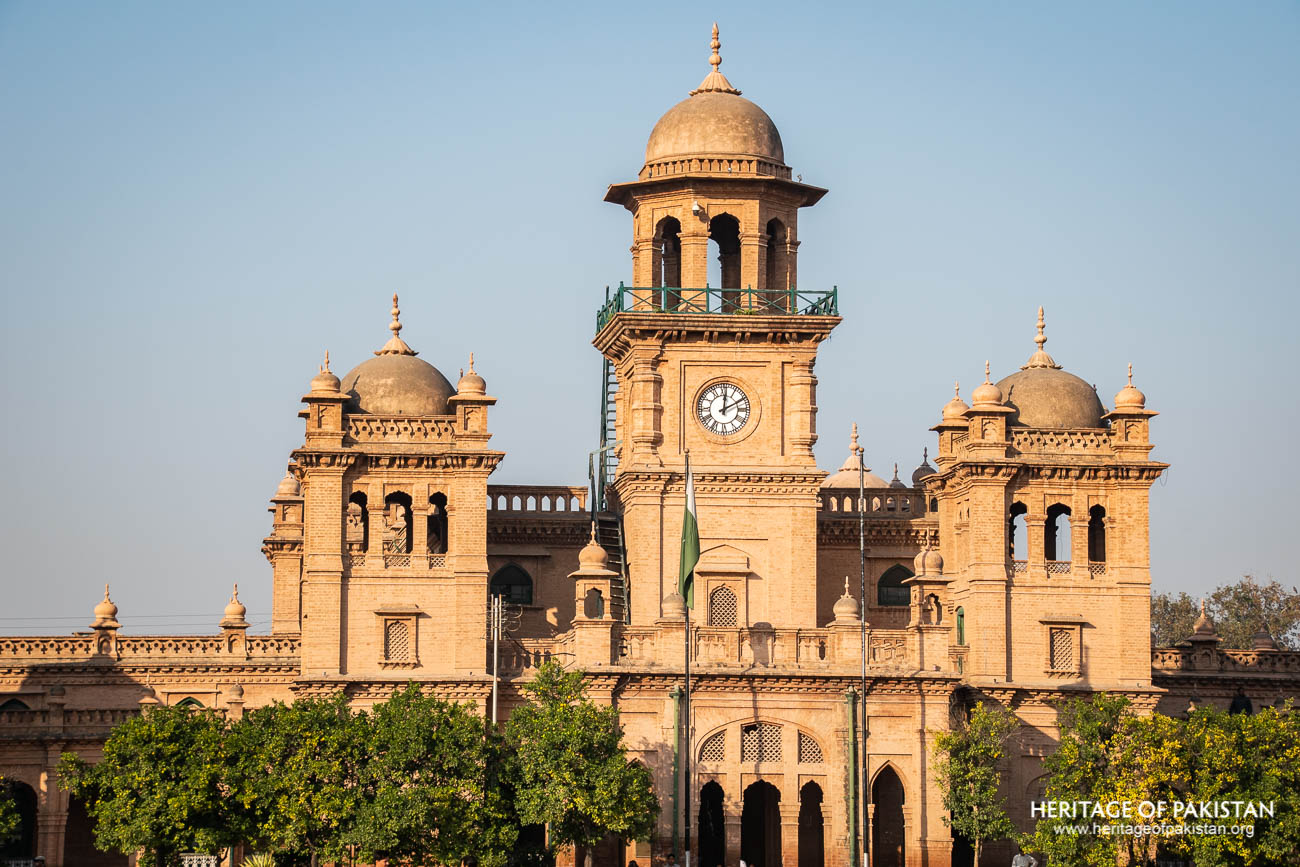
Islamia College Peshawar was one of the earliest Educational institutions during British Era
In the 5th century AD, the Gandhara region, including Peshawar, was overrun by the White Huns, leading to the destruction of many Buddhist sites.
This was followed by the rule of the Hindu Shahis, the last of whom, Raja Jaipal, was defeated by Mahmud of Ghazni. The Ghaznavid rule was later supplanted by the Ghurids in 1181 AD. In 1221, Mongol forces under Genghis Khan established nominal control over the area.
The region remained contested, and following the invasion of Babar in 1526 and his victory at the Battle of Panipat, Peshawar came under the control of the newly founded Mughal Empire. The Mughals maintained control over the region until the decline of their empire after the death of Aurangzeb in 1707.
During the Mughal era, the city gained prominence and underwent administrative and cultural development. The name ‘Peshawar’ has various historical forms. Abul Fazl, court historian of Akbar, lists several variants: 'Parshapur', 'Parashawar', 'Pishawar', and 'Peshawar'. Some scholars suggest that the name 'Peshawar' was standardized by Akbar and derived from Persian—'Pesh' (first) and 'Awar' (to come)—implying a frontier city encountered first when entering the Subcontinent via the Khyber Pass. An even earlier mention of the city appears in a Kharoshthi inscription dated to 119 AD, found at Ara near Attock, where it is referred to as ‘Poshapura’.
In 1738, Peshawar came under the control of Nader Shah of the Durrani Empire. His successor, Ahmad Shah Abdali, consolidated Durrani rule in the region. However, their control eventually weakened. During the early 19th century, the Sikh Empire under Maharaja Ranjit Singh expanded into the region. In 1818, the Sikhs took control of the Peshawar valley, and in 1834, General Paolo Avitabile was appointed governor. On 17 October 1836, the Sikhs established the Jamrud Fort at the mouth of the Khyber Pass, garrisoned with approximately 800 infantry to secure the area against incursions.
When the Sikhs lost to the British, Peshawar was annexed by the British Empire in 1849. Under colonial rule, Peshawar underwent significant urban development. The British established a garrison cantonment northwest of the walled city and introduced several public buildings and institutions, including the Peshawar Museum, Islamia College, Edwardes College, and the Cunningham Clock Tower. The North-West Frontier Province (NWFP) was carved out of Punjab in 1901 as a Chief Commissioner's Province and was granted full provincial status in 1932. Peshawar became its provincial headquarters.
The Walled City of Peshawar, originally encircled by a mud wall constructed under Sikh rule, was later reinforced with burnt bricks by the British. It was accessed through sixteen gates, many of which were rebuilt over time. Yakka Tut Gate was reconstructed in 1944, Ganj Gate in 1909, Sard Chah Gate in 1903, and Kohati Gate in 1941. Several gates featured watchtowers for defense. A devastating fire in June 1898 severely damaged large parts of the Walled City, including the historic Mahabat Khan Mosque.
Old Peshawar was known for its vibrant markets and craft bazaars. These included metal workshops, leatherworking stalls, and traditional tea markets. Brass utensil makers and other artisans still work in the city. Qissa Khwani Bazaar—translated as the “Bazaar of Storytellers”—remains iconic, once frequented by poets and travelers who gathered in its qahwa khanas (tea houses) to exchange stories. A few of these traditional tea houses still operate today. The area also remains famous for local garments such as waistcoats, Chitrali caps, and woolen shawls.
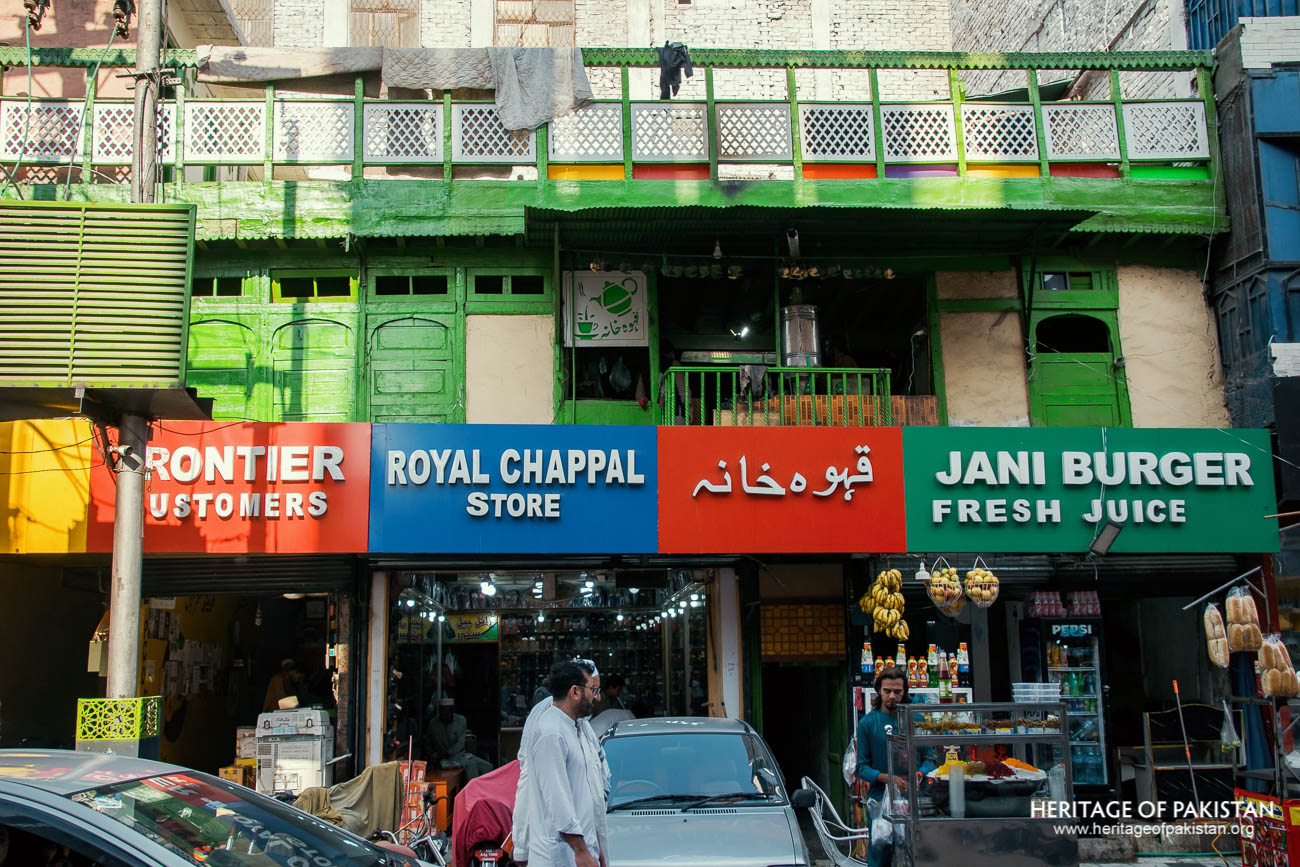
The famous Qissa Khwani Bazar in Old Peshawar
The Namak Mandi in old Peshawar is renowned for its eateries and is a focal point of the city’s celebrated cuisine. Dishes such as chapli kebab, Kabuli pulao, and lamb karahi are staples of the Peshawari culinary tradition and attract food enthusiasts from across the country and beyond.
The city has also produced numerous notable personalities. Among them are Indian film icons born in old Peshawar, such as Dilip Kumar (Yusuf Khan), Prithviraj Kapoor, and the broader Kapoor family. Their ancestral homes in old Peshawar can still be visited. Shah Rukh Khan’s father also hailed from the city. On the Pakistani side, famous figures include Bacha Khan—the founder of the non-violent Khudai Khidmatgar movement—Patras Bukhari, and world-renowned squash champions Jahangir Khan and Jansher Khan.
The local population primarily speaks Hindko, Pashto, and Urdu. Despite the transformations over time, Peshawar continues to be a city layered with history—its foundations embedded in the ancient, its bazaars resonating with stories, and its streets still echoing the footsteps of empires and civilizations long past.
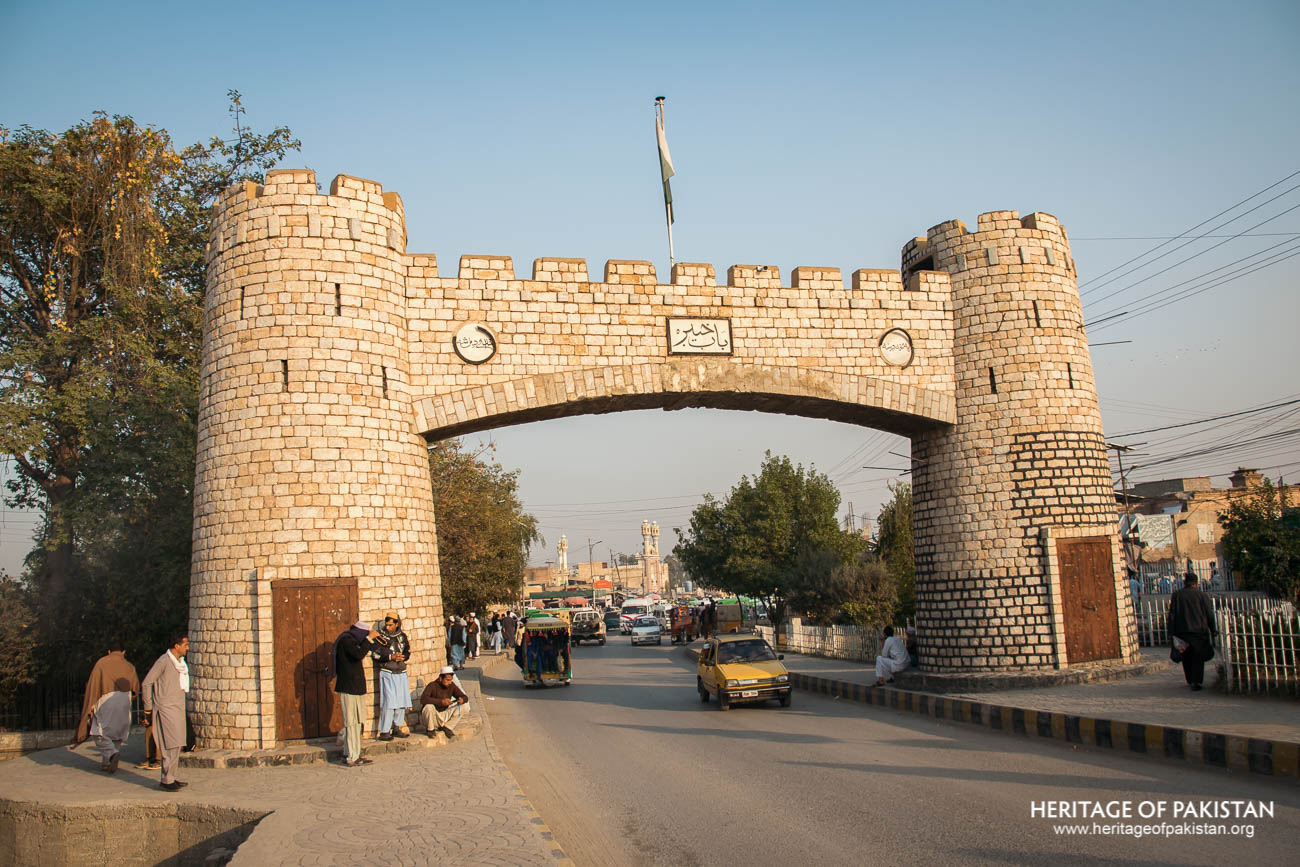
Bab-e-Khyber at Jamrud near Peshawar leading to the Khyber Pass
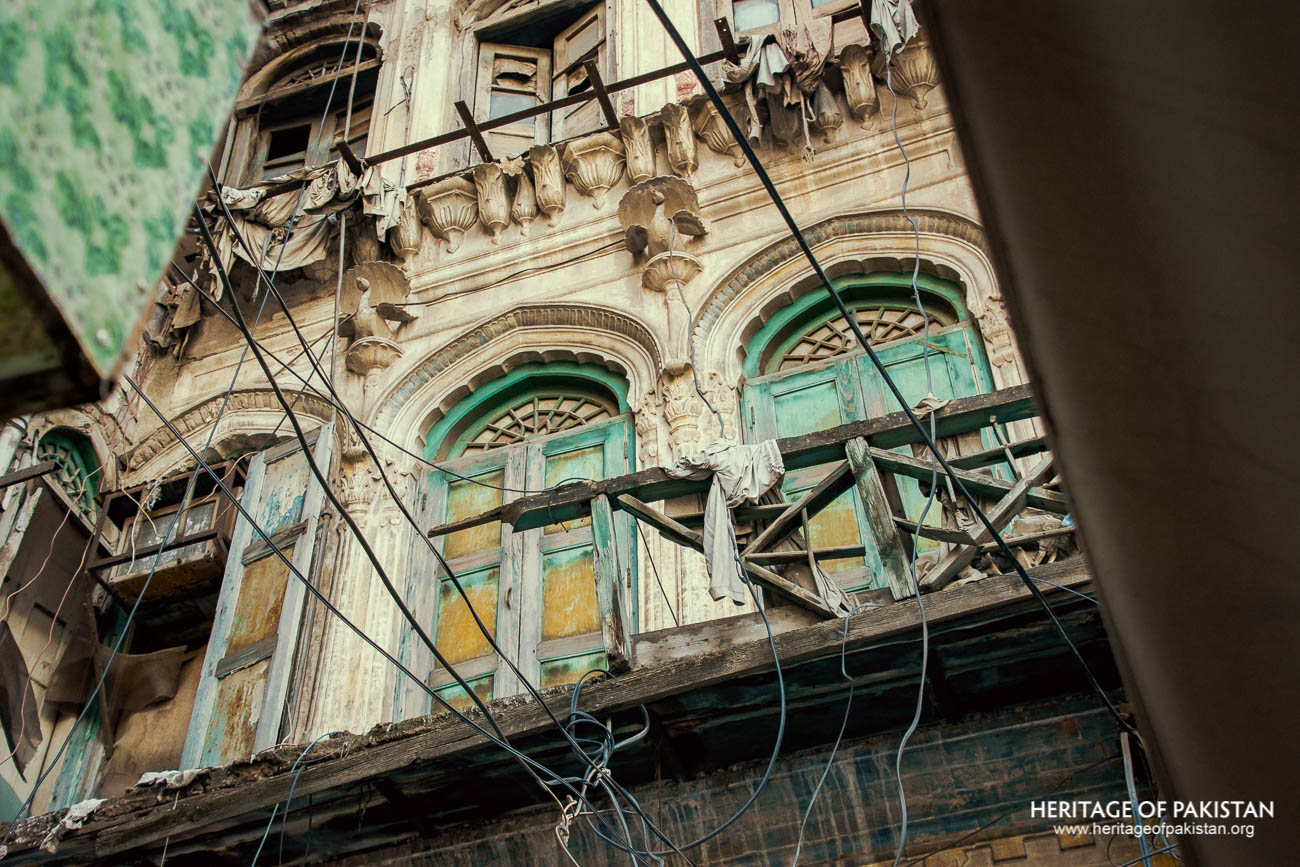
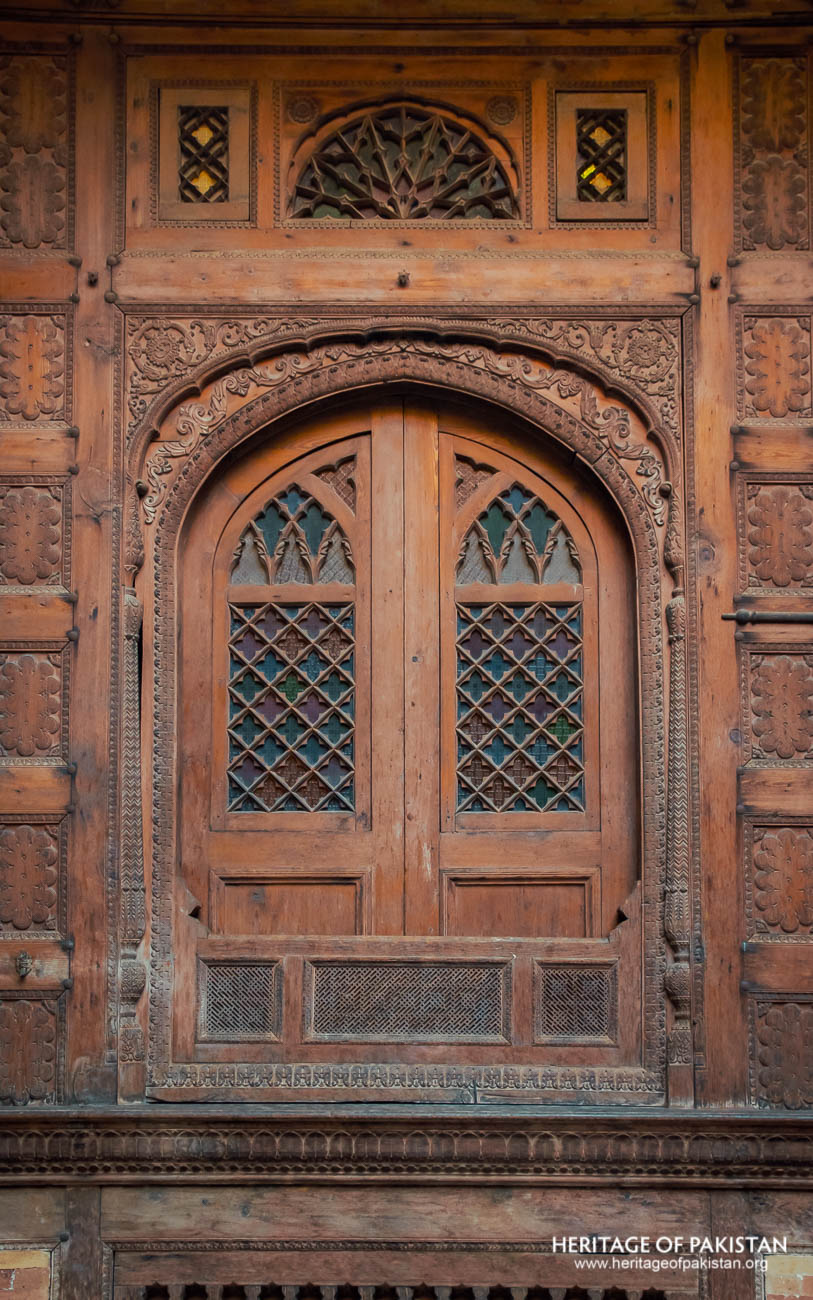
Woodwork in Sethi House, Old Peshawar
The old city of Peshawar was originally confined within the fortified perimeter of the Walled City. Enclosed by defensive walls, the city was accessible through sixteen gates, several of which have since been reconstructed. Though the urban fabric has expanded significantly beyond these historical confines, the original outline of the Walled City still remains traceable. A road now roughly follows the old circumference, preserving the memory of its once compact boundaries.
Adjacent to the Walled City lies one of Peshawar’s most prominent and historically significant landmarks—Bala Hisar Fort. Positioned on a raised hillock and visible from considerable distance, the fort stands as a defining symbol of the city’s historic landscape. It played important roles during different ruling periods. It was strengthened by the Mughal emperor Babur, gained strategic prominence during the Sikh era, and underwent further renovations under British colonial administration. Its commanding position and long-standing presence mark it as one of Peshawar’s most iconic monuments.
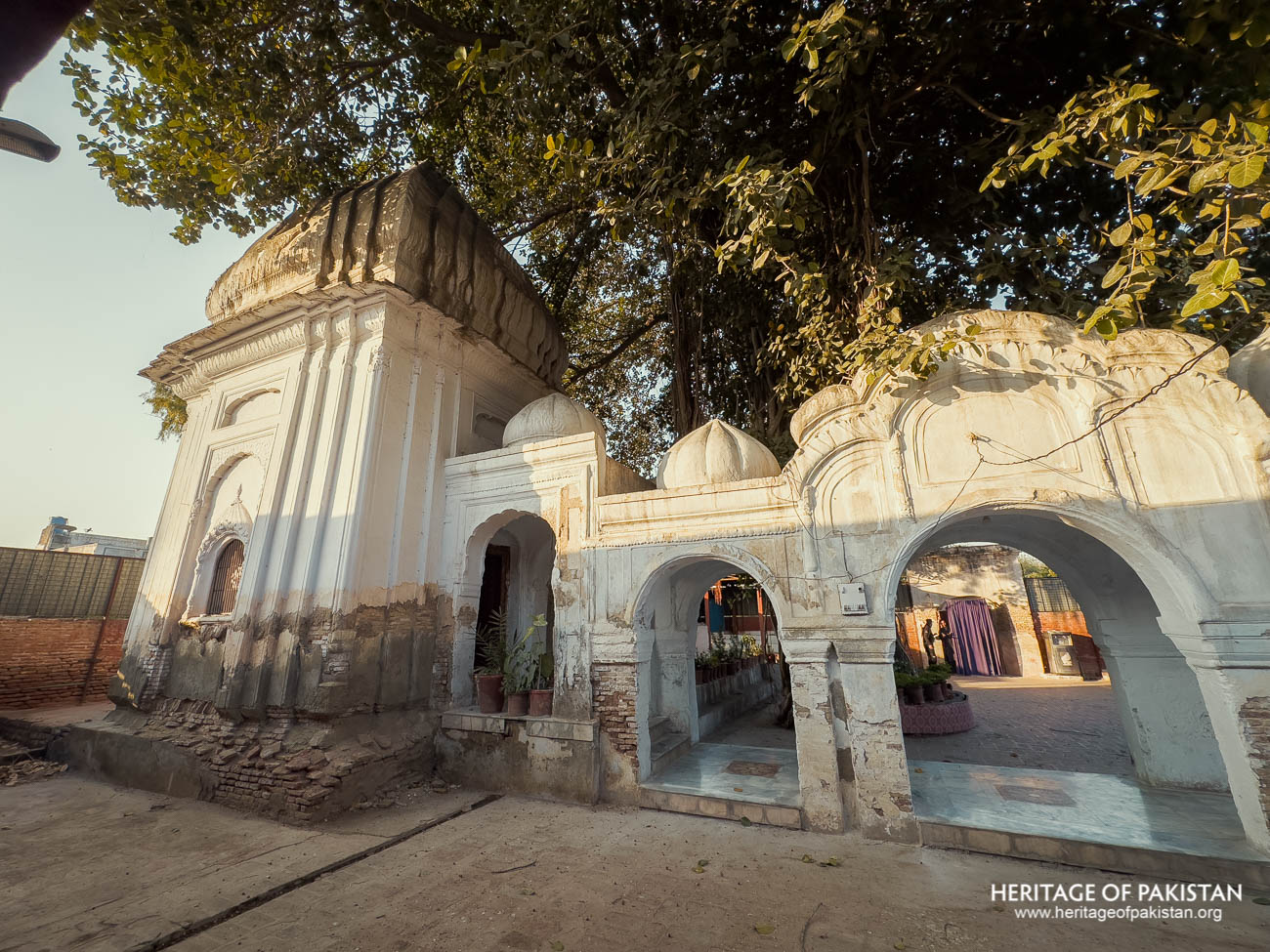
Gorakhnath Temple at Gor Khatri, Old Peshawar
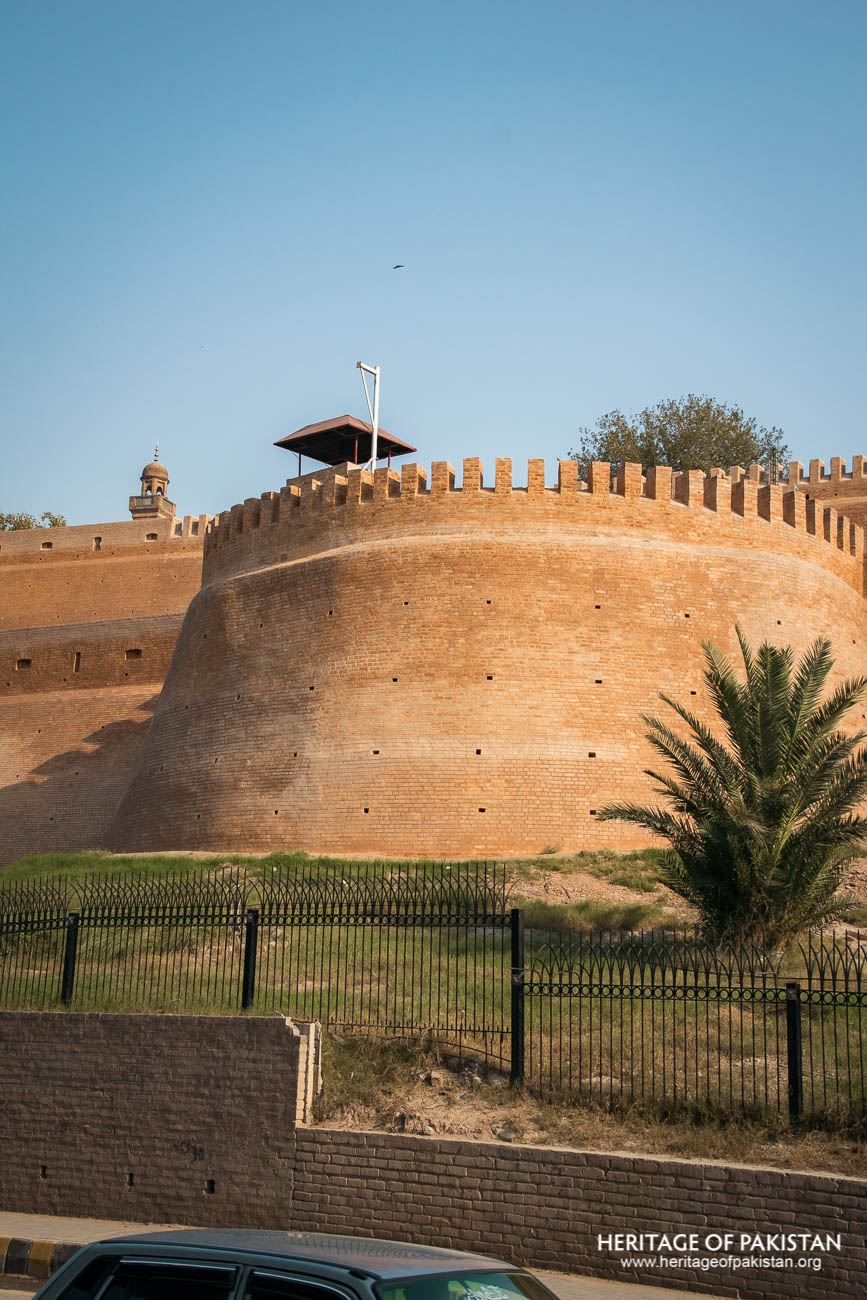
Balahisar Fort, Peshawar
Peshawar has also been historically known as the 'City of Gardens'. The city once featured a number of formal gardens, reflecting the aesthetic sensibilities of its past rulers and elites. In front of Bala Hisar Fort once stood a large Char Bagh—a quadrilateral garden divided into four sections in the Persian style. Today, only a small portion of that garden remains. Another significant green space was Ali Mardan’s Garden, which similarly survives only in partial fragments, bearing quiet testimony to the city's vanishing horticultural heritage.
Among the city’s rich architectural heritage, Sethi Muhalla stands out as a unique example of 19th-century residential architecture. Built by the wealthy Sethi trading family, the neighborhood comprises a group of havelis noted for their intricate wooden facades, elaborate carvings, and blend of Central Asian, Persian, and South Asian design elements. These residences reflect the cultural sophistication and cosmopolitan connections of their builders, and are today considered significant examples of urban domestic architecture.
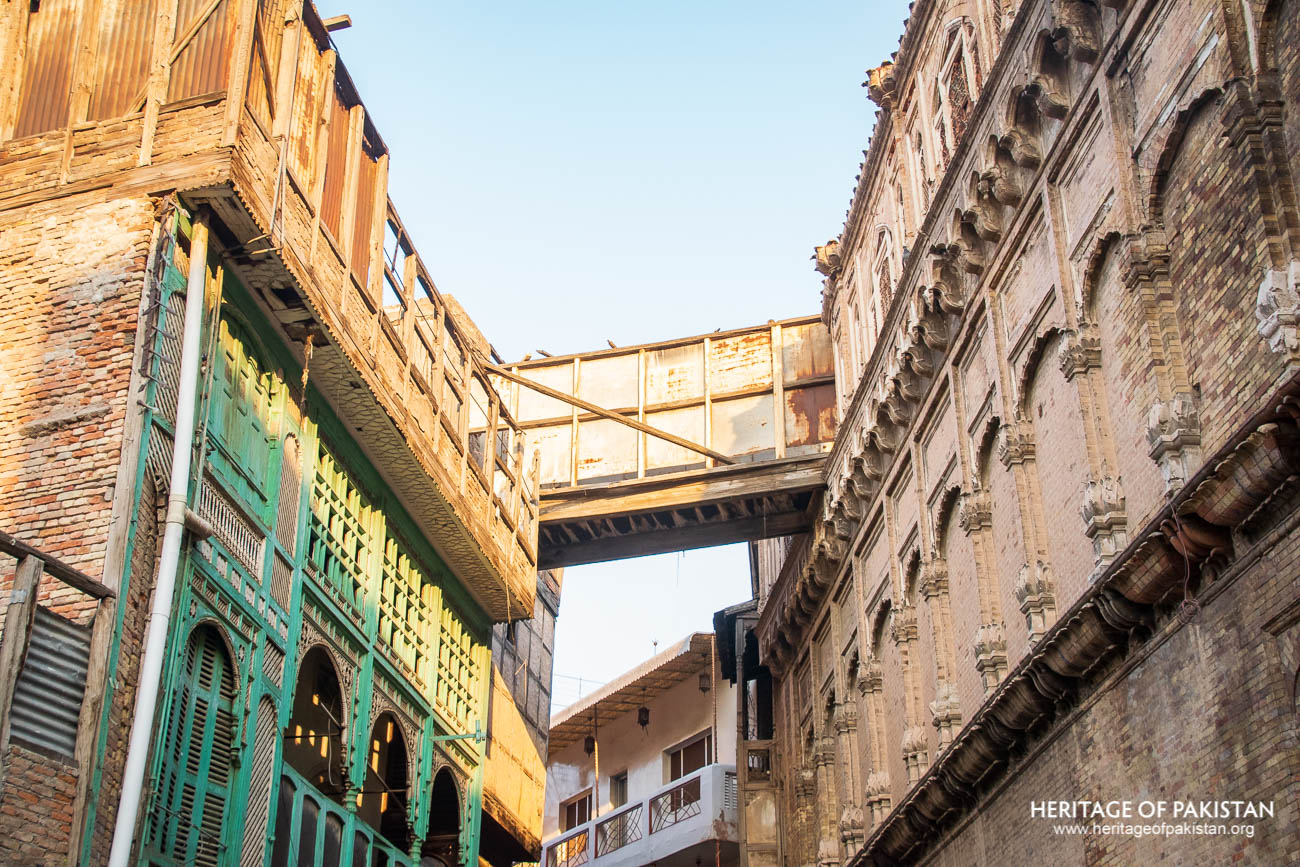
Beyond Sethi Muhalla and Bala Hisar, Peshawar is home to numerous other historic and architectural landmarks. Gor Khatri, an archaeological complex revealing layers of the city's past; Qissa Khwani Bazaar, the fabled “Bazaar of Storytellers”; and institutions like Islamia College—all contribute to the city's enduring architectural and cultural legacy. These sites together represent the layered urban and historical identity of Peshawar, a city shaped through centuries of political change, cultural exchange, and architectural innovation
All Photographs by Syed Noor Hussain and Sania Azhar.
All Rights Reserved. Photos may be freely used for Non-Commercial, Educational, Artistic, Research, Non-Profit & Academic purposes.
Commercial uses require licensing agreement.

Syed Noor Hussain
July 23, 2025 at 4:05 amBest