
Did You Know?
The Shah Nasim room on the second floor features painted designs and cut glass fixed into the walls
34°00'33.6"N 71°34'43.9"E
The Shah Nasim room on the second floor features painted designs and cut glass fixed into the walls
The Best Time to Visit mountain regions of Khyberpakhtunkhwa is Summers. Preferably from April to September. Winters are Extremely Cold and Snowfall blocks most of access. Hence Winters are not recommended.

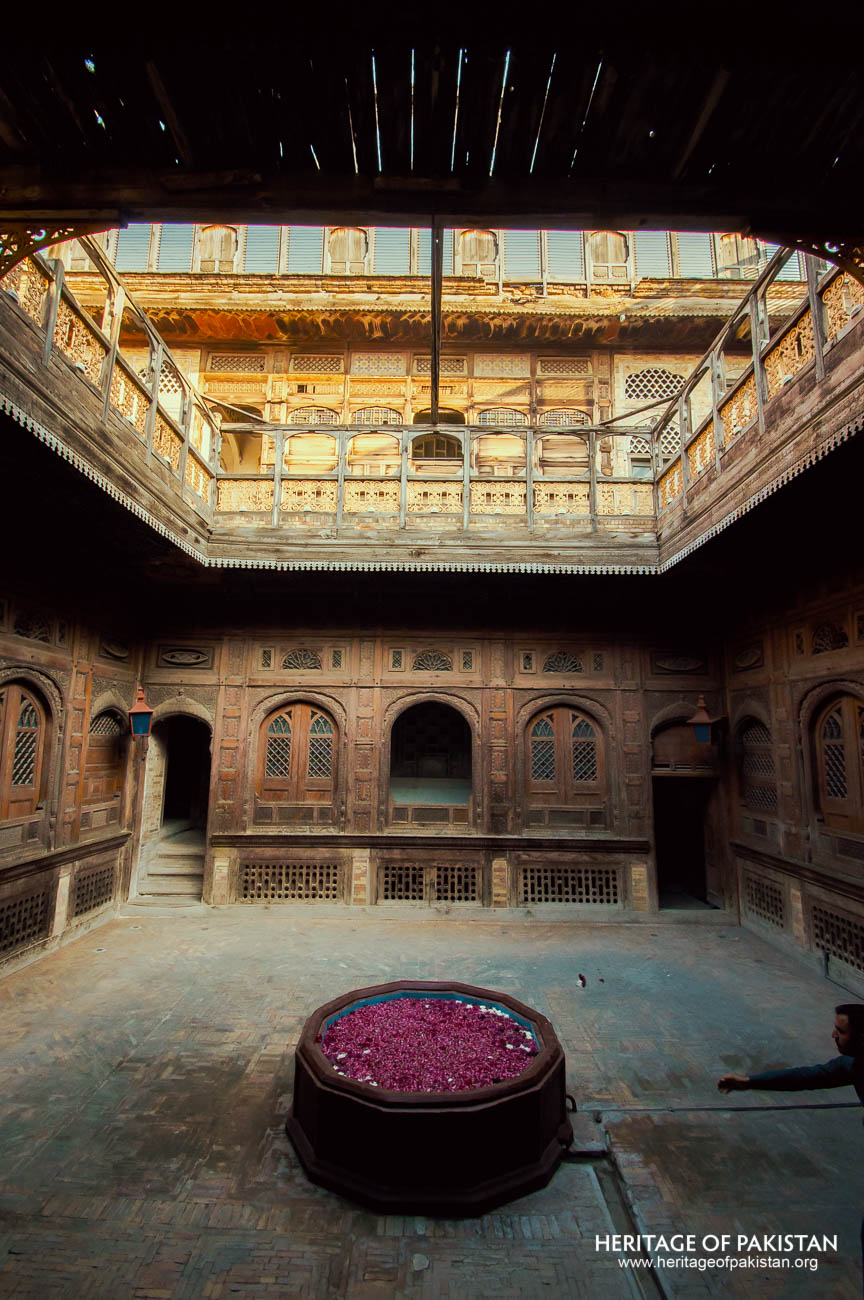
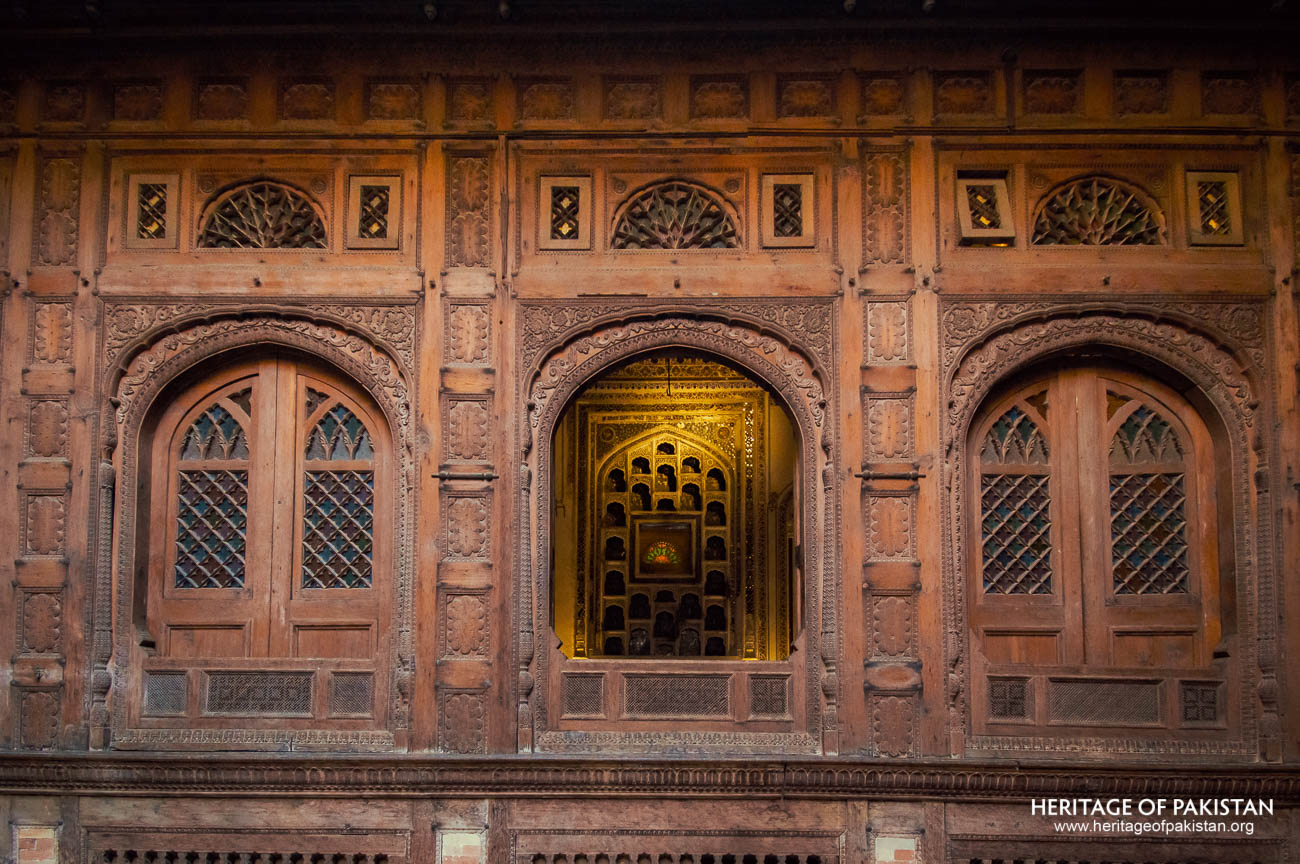
The Sethi Muhalla is located within the Walled City of Peshawar near Bazaar-e-Kalan. It lies on the eastern side of Chowk Yadgar and Cunningham Clock Tower, with the Gor Khatri archaeological complex situated further east. The muhalla is situated along Bazar Kalan Road and forms part of the Cultural Heritage Trail of Peshawar. It comprises a cluster of elaborately built houses and a mosque belonging to the Sethi family, a prominent mercantile community of the city.
The Sethis were a wealthy business class whose trade extended across the Indo-Subcontinent, Afghanistan, and Central Asia. Originating from Chamkani about six generations ago, the Sethi family established a commercial base in Peshawar and developed extensive trade networks that reached into India, Iran, Central Asia, Russia, and China. Using Peshawar as their operational center, they set up trade offices in several cities across these regions. According to Ahmad Hassan Dani, the Sethi family also issued hundis—traditional credit instruments—for financial transactions in Afghanistan, particularly for British employees. The name “Sethi” is derived from the Sanskrit word Sreshthin, historically referring to the head of a merchant class. The community's success was reflected in the construction of their residential architecture, which continues to stand as a testament to their affluence and cultural influence.
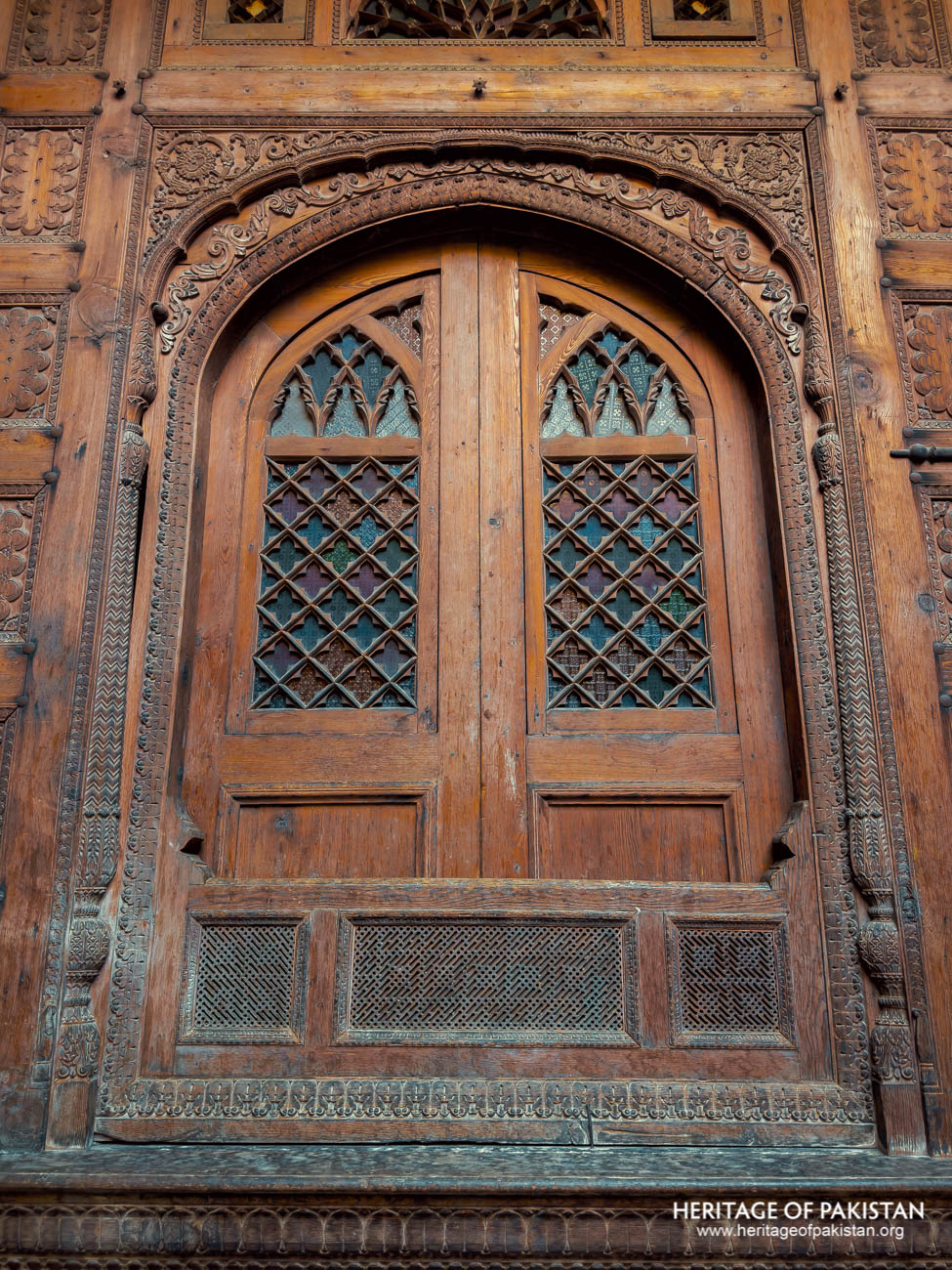
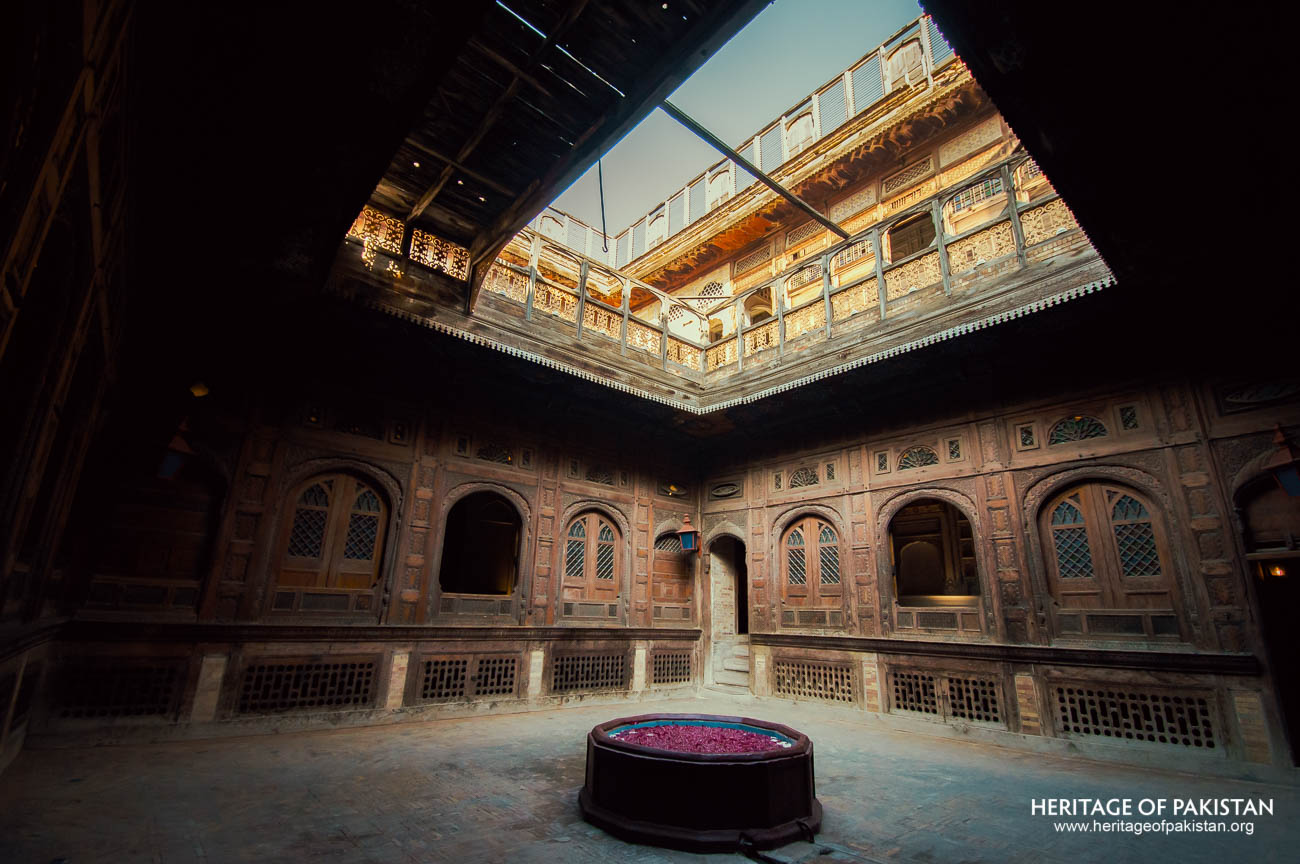
Between 1800 and 1910, the Sethi family constructed approximately twelve havelis in the muhalla, ranging from modest residences to grand architectural complexes. These include the Muhammad Akram House, Karam Buksh Sethi Haveli, Fateh Gul Sethi Haveli, Ahmad Gul Sethi Haveli, Elahi Buksh Sethi Haveli, Haji Saeed Ahmed Sethi Haveli, Karim Buksh Sethi Haveli, Abdur Rahim Sethi Haveli, the Haveli of Fateh Gul’s Grandson, Abdur Karim Sethi Haveli, Fateh Gul Family Haveli, and Abdul Jalil Sethi Haveli. A small bridge in the muhalla connects two of these havelis, indicating architectural continuity across properties.
The earliest surviving haveli is the Karam Buksh Sethi Haveli, constructed in 1808, followed by the Fateh Gul Haveli in 1818. These served dual purposes as family residences and commercial offices. The second phase of construction, spanning the 1820s to 1840s, saw the establishment of the Ahmad Gul Sethi Haveli and Elahi Buksh Sethi Haveli. The third phase, from 1880 to 1900, included the construction of the Karim Buksh Sethi and Abdur Rahim Sethi havelis. Among these, the haveli built by Karim Buksh Sethi in 1898 stands out as the most iconic. It was the largest residential complex in the muhalla—and in the city at the time—comprising three distinct sections: a zenana khana (women’s quarters), a daftar khana (office), and a mehman khana (guest area). The zenana portion was later separated and converted into an independent haveli in 1930 by Allah Buksh Sethi.
Architecturally, the Sethi havelis are distinguished by their elaborate woodwork and stylistic synthesis of Bukhara, Kashmiri, Persian, and Indo-Subcontinental influences. These structures incorporate finely detailed carvings, ventilated courtyards, and a spatial layout conducive to both family life and commercial activity. The mosque within Sethi Muhalla was also constructed by Karim Buksh Sethi, reinforcing his central role in shaping the built environment of the neighbourhood.
The Sethi House, one of the preserved havelis, currently serves as a heritage site and museum managed by the Directorate of Archaeology and Museums, Government of Khyber Pakhtunkhwa. Samra Khan has conducted detailed research on the architectural and historical significance of Sethi Muhalla and its havelis, contributing to its recognition as one of the most culturally rich quarters of historic Peshawar.
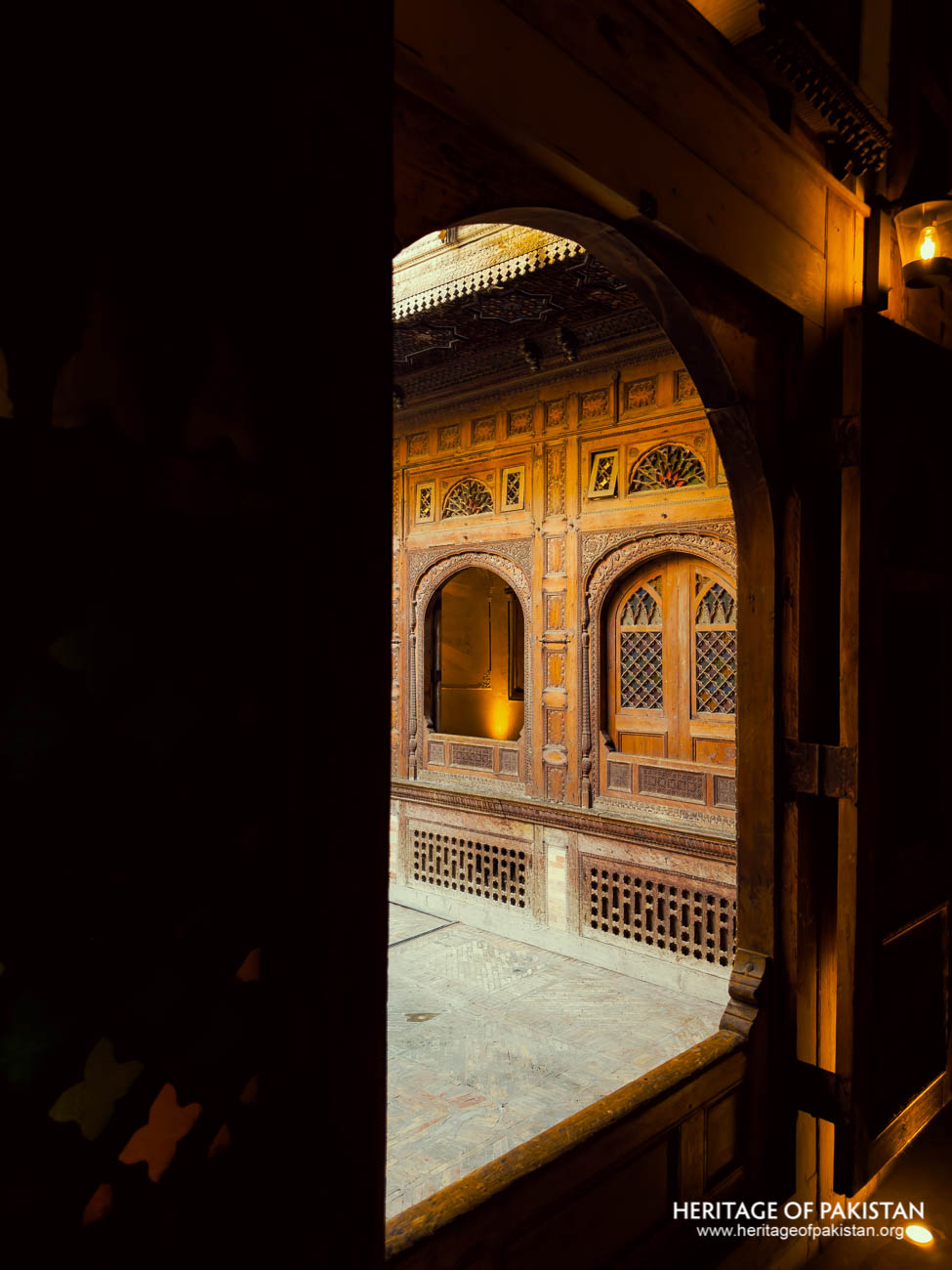
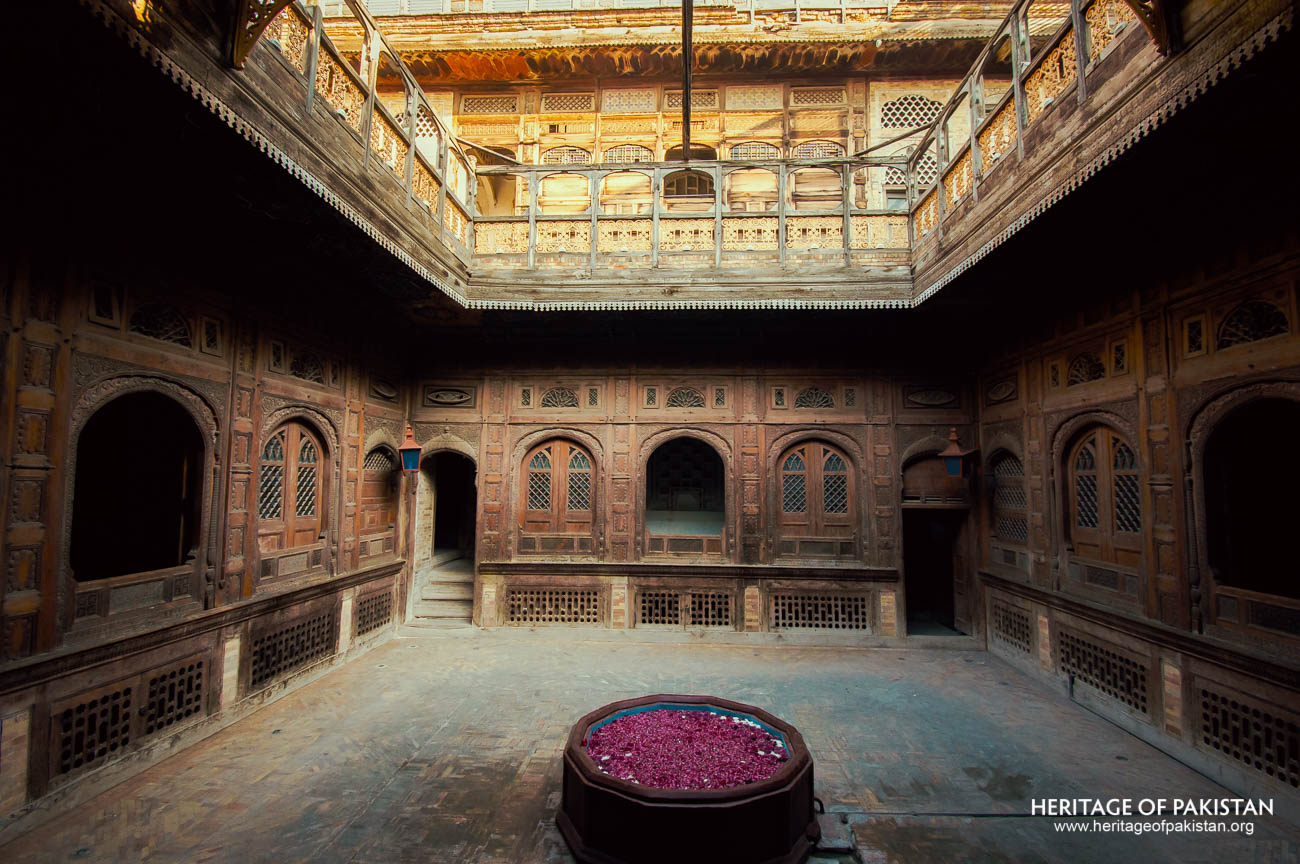
The Sethi House, also known as the Karim Buksh Sethi Haveli, is a representative example of traditional haveli architecture in the Indian Subcontinent. Located in Peshawar’s historic Sethi Muhalla, the house reflects a regional typology of residential construction in which rooms and halls are arranged around a central courtyard. Such havelis were typically built by individuals of wealth and influence, and their scale and embellishment often signified social stature.
The design of the house incorporates techniques and aesthetic influences from a wide geographical range. Its spatial arrangement is reminiscent of older residential structures in Baghdad, while its decorative vocabulary reflects strong stylistic elements from Samarkand, Bukhara, Kashmir, Persia, and parts of India. The Sethi houses, including this haveli, are particularly renowned for their intricate woodwork, highly embellished doors, and carved wooden balconies.
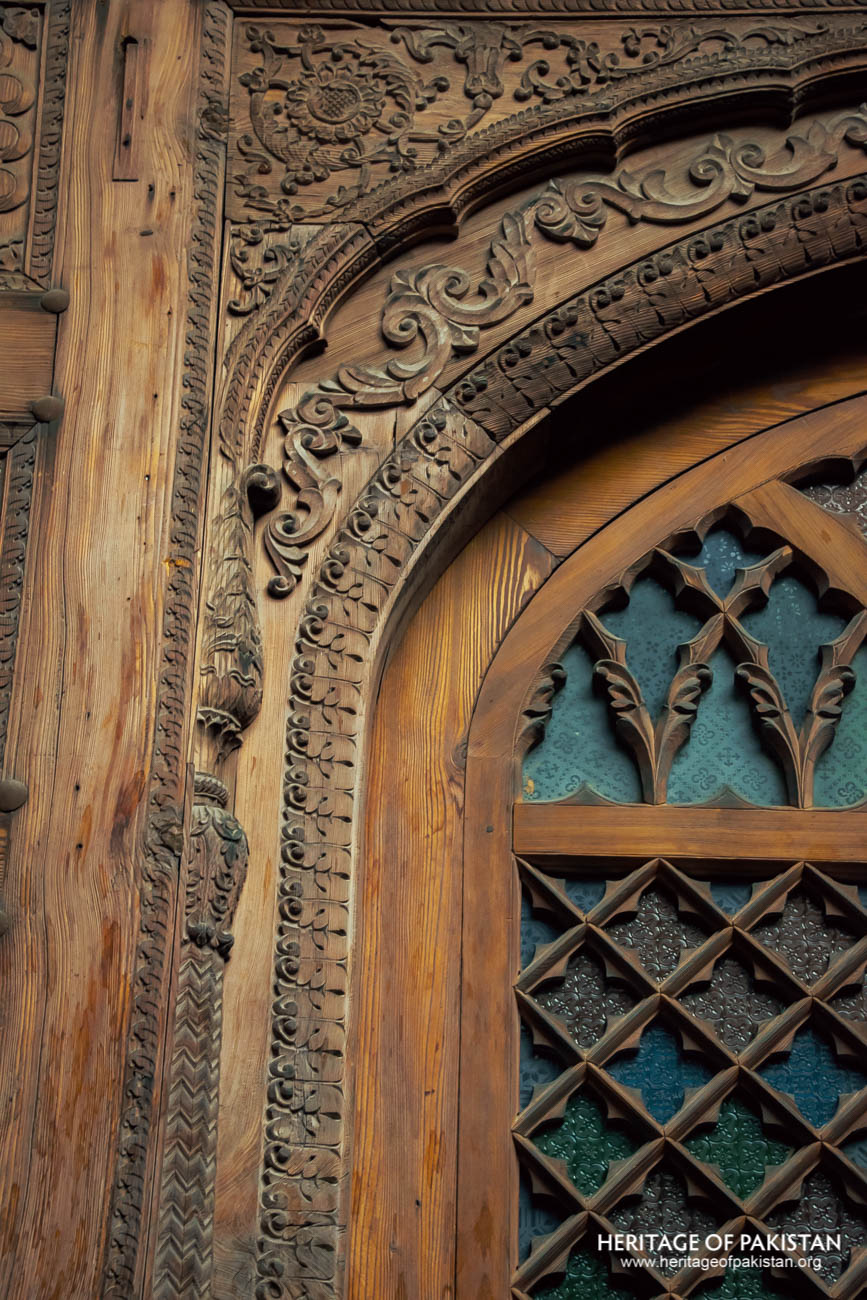
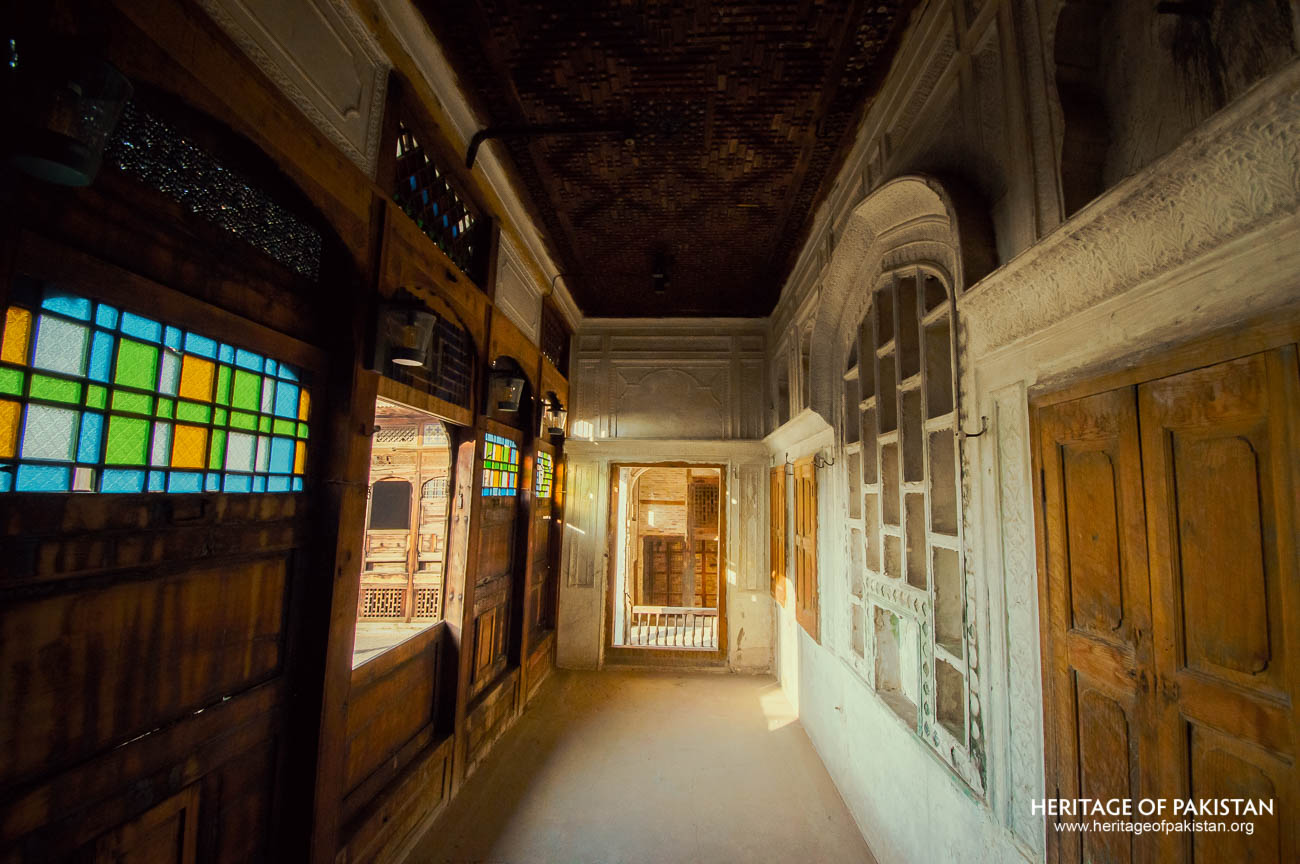
The structure features a main central courtyard paved with brick-on-edge, measuring approximately 32 by 30 feet, with a water fountain placed at its center. In some references, the courtyard is mentioned as being 40 by 40 feet. The layout includes an upper story designed to take advantage of the summer breeze and multiple underground rooms—locally referred to as takhanas—which provided shelter from the heat. The southern section of the house is more intricately developed and includes a two-tiered arrangement with takhanas below and two-storeyed balakhanas above, complete with a dalan (hall).
Rooms are aligned along the north, east, and west sides of the courtyard, each with decorated ceilings, deeply recessed niches, and highly carved wooden doors. The second storey includes a prominent room known as the Shah Nasim, adorned with painted designs and walls inlaid with cut glass. The ceilings throughout the house are treated with khatam-band (parquet) work, and chini-khanas—recessed decorative shelves—are used to display fine porcelain and glassware, often imported from Russia and Bukhara. Other decorative techniques used within the house include aina-kari (mirror mosaic), naqqashi (ornamental painting), and wooden lattice screens.
Construction materials such as small Kashmiri bricks known as Waziri were employed, continuing the tradition of Mughal-era architecture. Additional structural features include connecting wooden bridges on rooftops, which linked multiple havelis within the muhalla and allowed private movement, particularly for women. One such architectural element is the iconic Sethi Muhalla Bridge, also referred to as Chatti Gali—a covered passage designed specifically for facilitating female movement between residences in seclusion.
The Karim Buksh Sethi Haveli stands today as a rare and intact example of late 19th-century urban residential design that blends commercial utility with aesthetic refinement. It serves not only as a testament to the wealth and cultural connections of the Sethi family but also as an architectural link between Central Asian design sensibilities and indigenous subcontinental traditions.

Syed Noor Hussain
July 23, 2025 at 4:06 amBest