
Did You Know?
The term "Sethi" derives from the Sanskrit word Sreshthin, meaning head of a merchant class
34°00'31.7"N 71°34'40.9"E
The term "Sethi" derives from the Sanskrit word Sreshthin, meaning head of a merchant class
The Best Time to Visit mountain regions of Khyberpakhtunkhwa is Summers. Preferably from April to September. Winters are Extremely Cold and Snowfall blocks most of access. Hence Winters are not recommended.

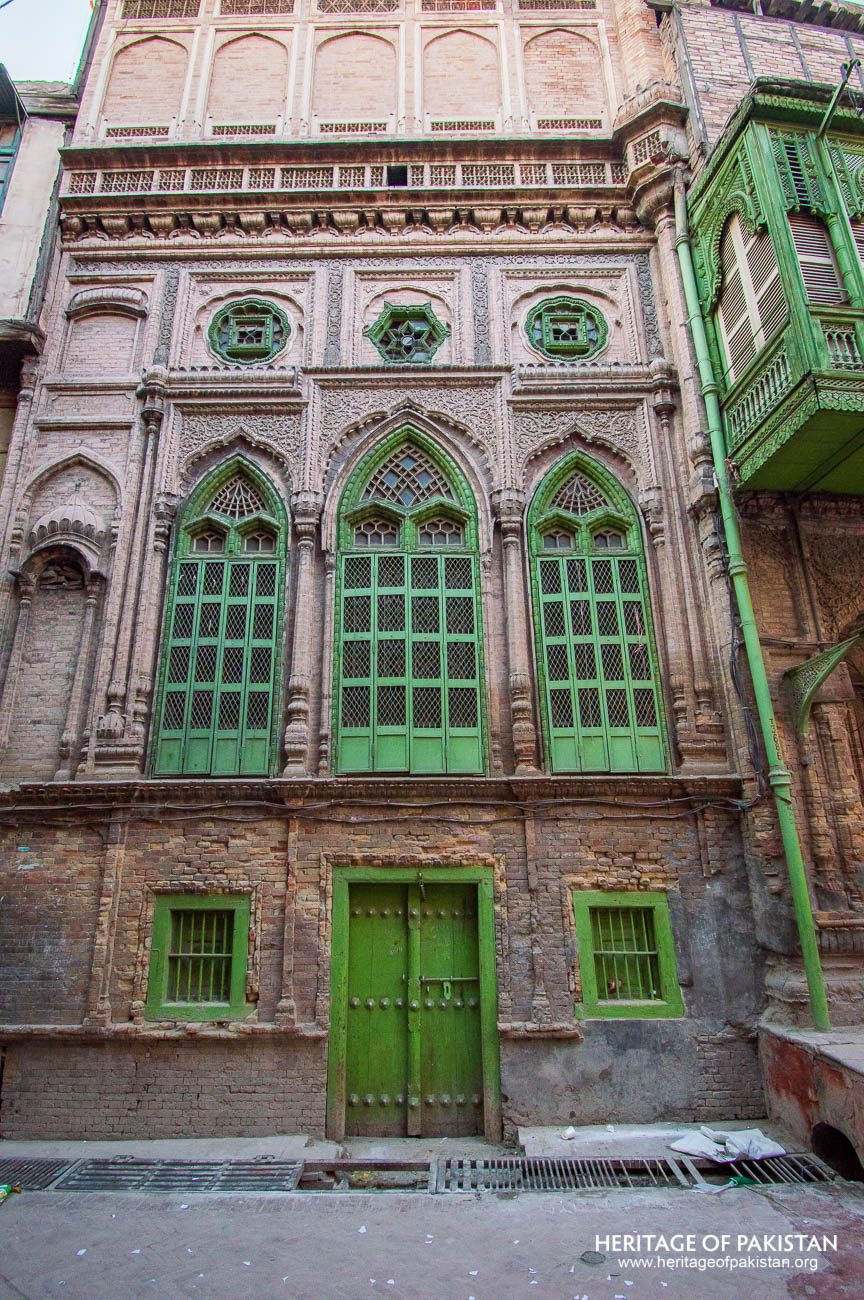
Sethi Muhalla is located within the Walled City of Peshawar, along Bazar-e-Kalan Road. It lies between two significant landmarks: Cunningham Clock Tower to the west and the Gor Khatri archaeological complex to the east, forming part of the Cultural Heritage Trail. The muhalla consists of a cluster of historic houses and a mosque belonging to the Sethi family, a prominent merchant community of Peshawar. These houses, constructed primarily in the 18th and 19th centuries, reflect the wealth, taste, and transregional connections of the Sethi family.
The Sethi family migrated from Chamkani approximately six generations ago and quickly established themselves as a major business community in Peshawar. The name “Sethi” is derived from the Sanskrit word Sreshthin, historically denoting the head of a business class. Using Peshawar as their trading base, the Sethis built an expansive commercial network that connected the Indian Subcontinent with Afghanistan, Iran, Central Asia, Russia, and China. They conducted international trade and maintained offices in cities across these regions. According to Ahmad Hassan Dani, the Sethi family also issued hundis for financial exchange in Afghanistan, particularly for British employees. Their success in trade is reflected in the grandeur and scale of the havelis they constructed in their neighbourhood.
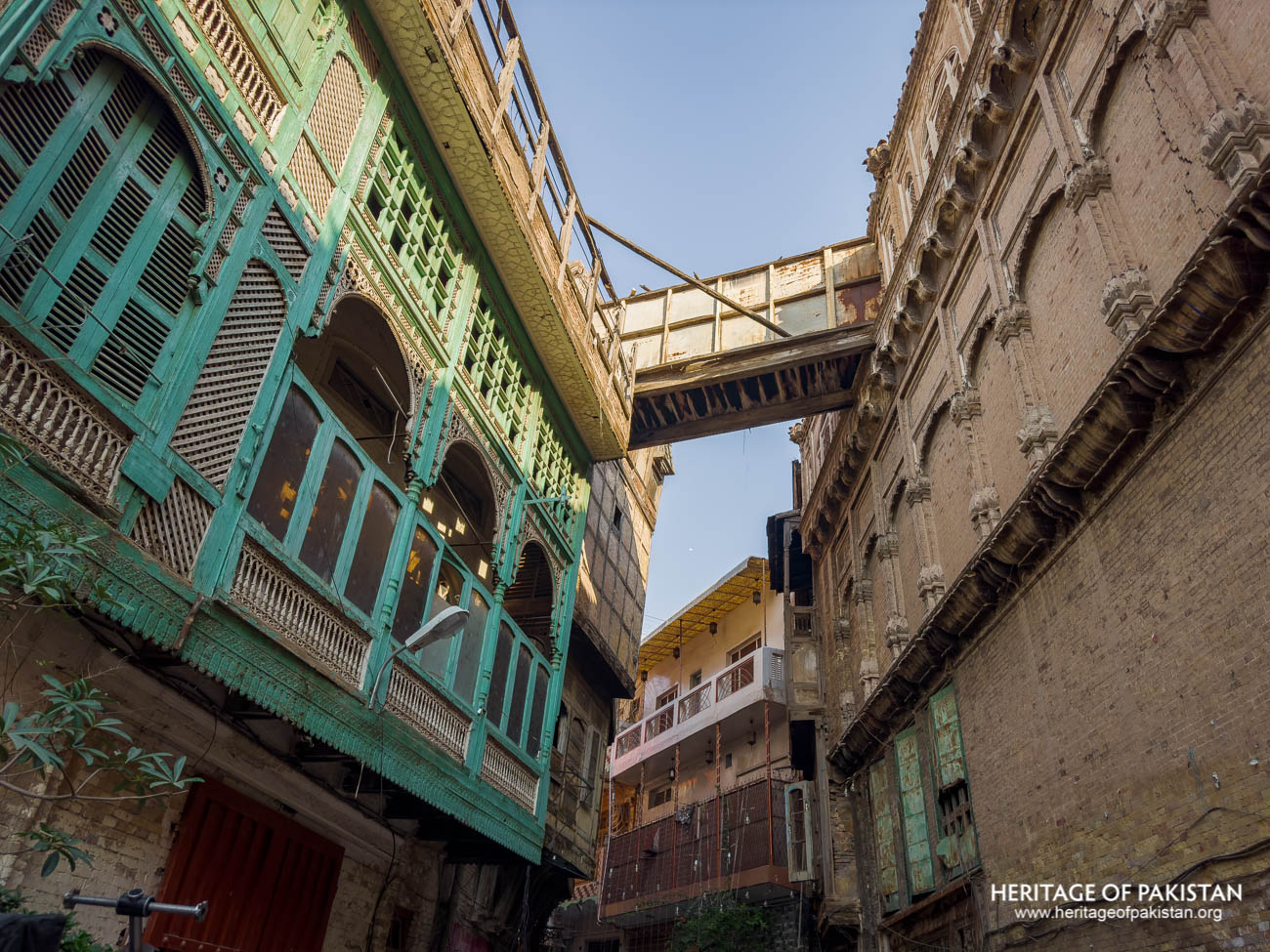
From 1800 to 1910, the Sethis built around twelve havelis in the muhalla, ranging from smaller residences to large, architecturally sophisticated complexes. These include Muhammad Akram House, Karam Buksh Sethi Haveli, Fateh Gul Sethi Haveli, Ahmad Gul Sethi Haveli, Elahi Buksh Sethi Haveli, Haji Saeed Ahmed Sethi Haveli, Karim Buksh Sethi Haveli, Abdur Rahim Sethi Haveli, the Haveli of Fateh Gul’s Grandson, Abdur Karim Sethi Haveli, Fateh Gul Family Haveli, and the Abdul Jalil Sethi Haveli. A covered bridge within the muhalla connects two of these residences, providing discreet passage between buildings and reflecting a common architectural feature of elite urban households.
The earliest surviving haveli is the Karam Buksh Sethi Haveli, built in 1808, followed by the Fateh Gul Sethi Haveli, constructed in 1818. These structures functioned as both residential homes and spaces for commercial dealings. The second major phase of construction took place during the 1820s to 1840s, with the development of the Ahmad Gul and Elahi Buksh Sethi havelis. A third phase occurred between 1880 and 1900, during which the Karim Buksh Sethi and Abdur Rahim Sethi havelis were constructed.
Among these, the most iconic is the Karim Buksh Sethi Haveli, built in 1898. It was the largest haveli in the muhalla, and possibly the city at the time. It was composed of three distinct functional areas: a zenana-khana (women’s quarters), a daftar-khana (office space), and a mehman-khana (guest area). The house originally featured separate courtyards for men and women, with the zenana eventually converted into an independent haveli by Allah Buksh Sethi in 1930. The Abdul Jalil Sethi Haveli, constructed between 1902 and 1908, was the last major residence to be built in the muhalla. It faced Bazar-e-Kalan and had rear connections to adjoining family havelis inside the Sethi kucha.
The Sethi Muhalla is also home to a mosque constructed by Karim Buksh Sethi, which served as the religious center for the family and community. The havelis themselves are celebrated for their intricate woodwork, elaborate carvings, and architectural fusion of Central Asian, Persian, Kashmiri, and Indo-Subcontinental styles. One of the finest examples in the muhalla was constructed by Haji Ahmad Gul, and all structures collectively reflect the prosperity, cultural depth, and international ties of the Sethi family.
Today, the Sethi House functions as a museum and heritage site. It is managed by the Directorate of Archaeology and Museums, Government of Khyber Pakhtunkhwa. Samra Khan has conducted detailed research and documentation on the architectural and historical significance of the Sethi Muhalla, ensuring that the legacy of this merchant neighborhood remains preserved for future generations.
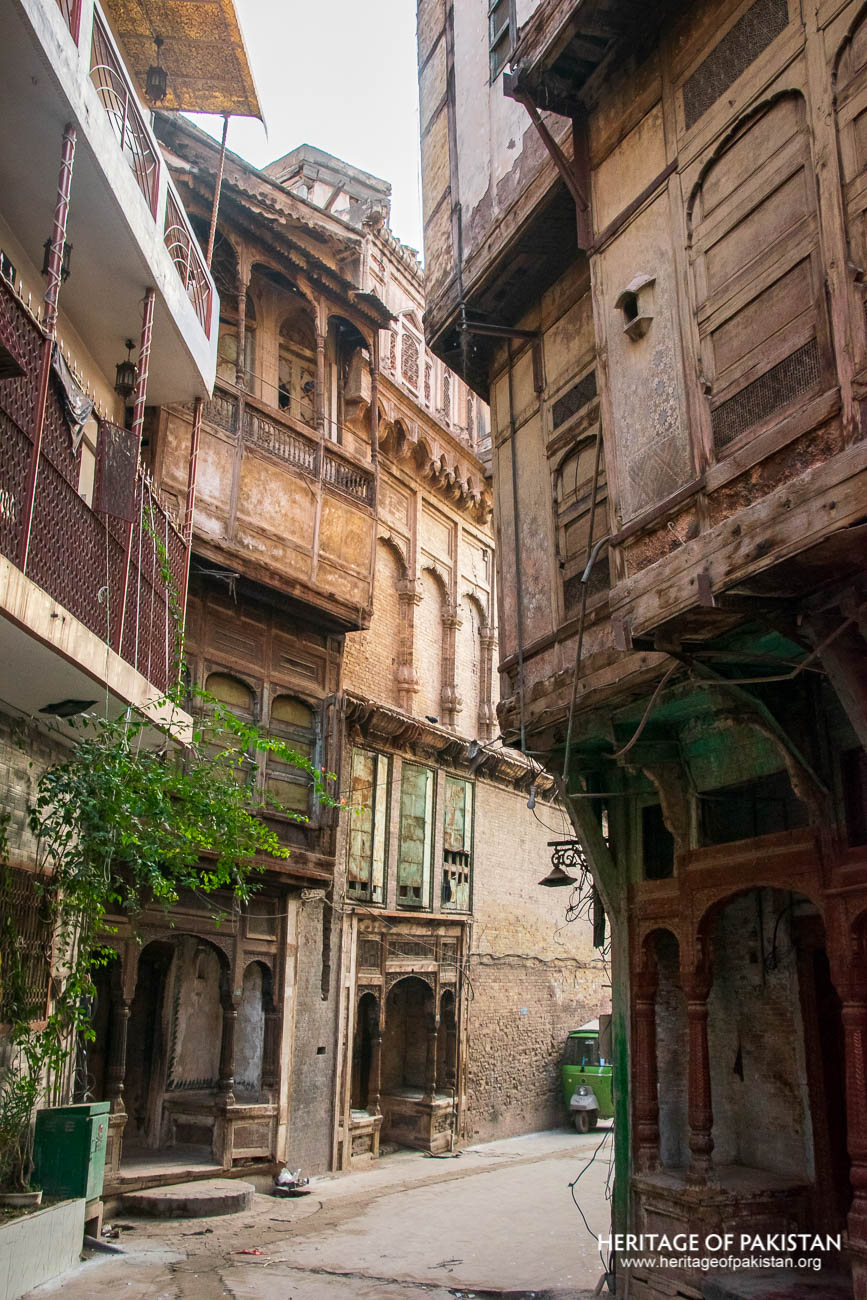
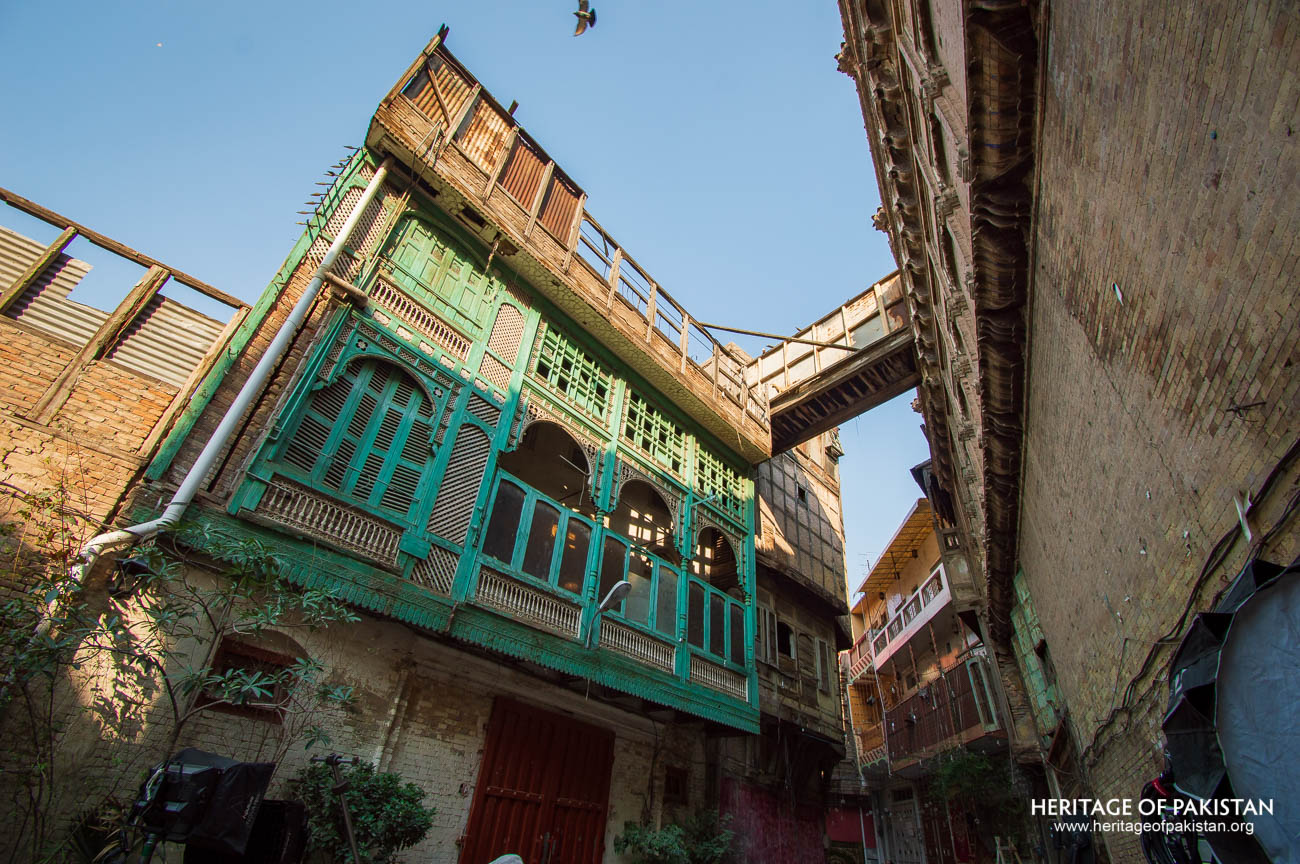
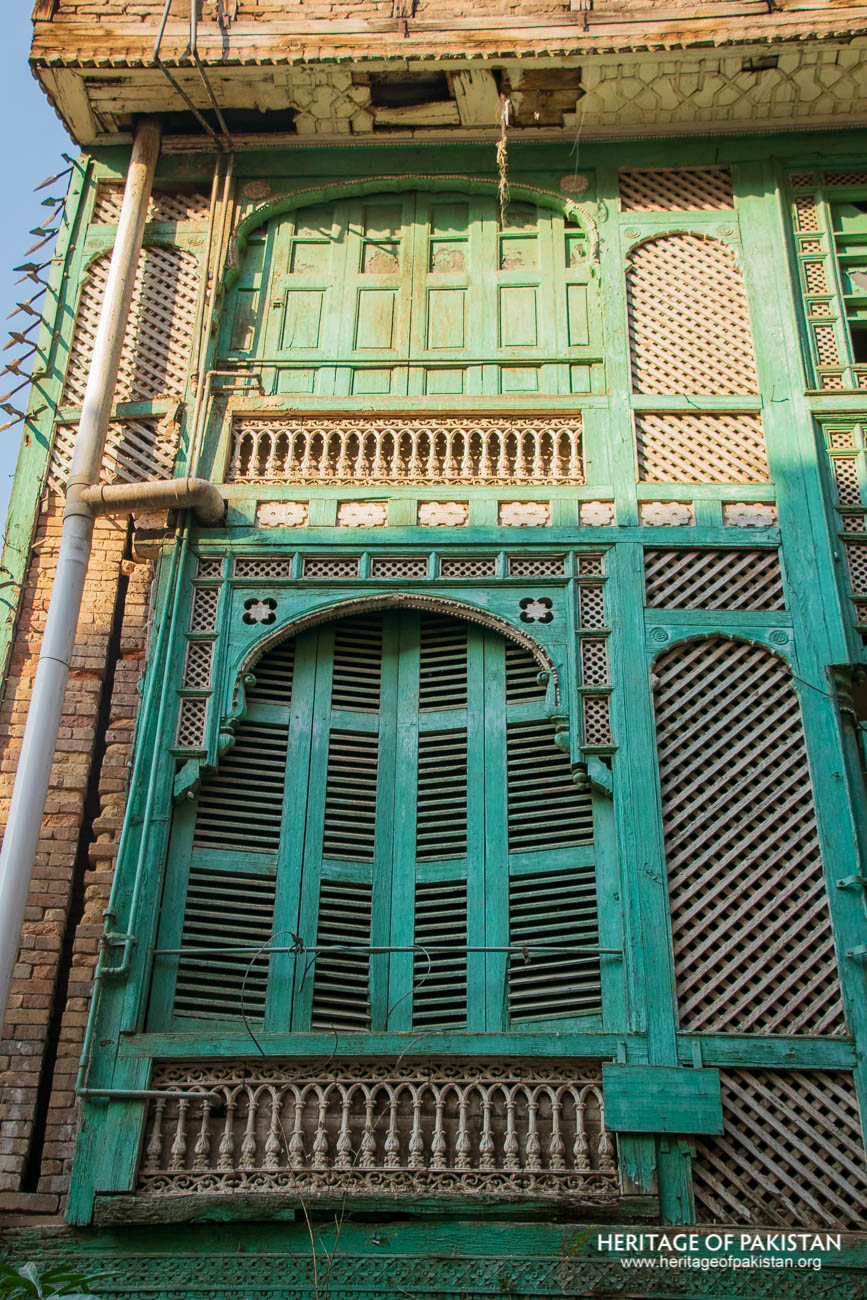
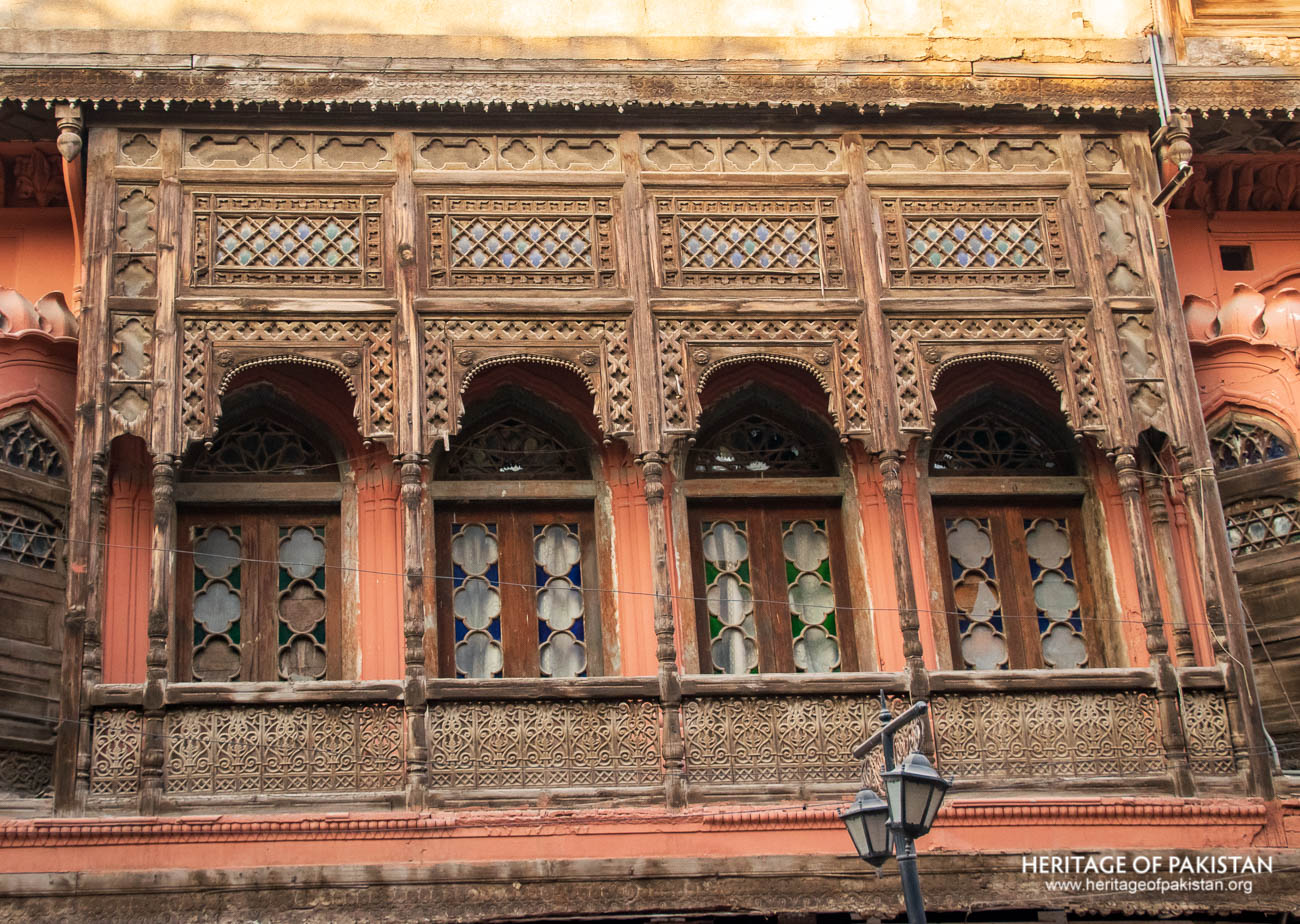
The Sethi houses are widely recognized for their intricate woodwork and elaborate decorative schemes, which exemplify the refined craftsmanship of their time. Architecturally, these residences present a remarkable fusion of stylistic influences drawn from Central Asia, particularly Bukhara, as well as from Kashmir, Persia, and the broader Indo-Subcontinent. This eclectic blend of regional styles is evident not only in their form but also in the techniques and materials used throughout their construction.
A notable feature of the Sethi havelis is the system of wooden bridges that connect the rooftops of adjacent structures, allowing private movement—especially for women—between different sections of the muhalla. The primary construction material employed in these buildings is small Kashmiri bricks known as Waziri, a type commonly found in Mughal-period architecture. In addition to their structural ingenuity, the Sethi houses incorporate a variety of decorative techniques, including aina kari or mirror mosaic work, intricately carved wooden doors, wooden lattice screens, and finely crafted wooden ceilings. Together, these elements demonstrate the aesthetic sensibilities and cosmopolitan connections of Peshawar’s Sethi merchant community.
All Photographs by Syed Noor Hussain and Sania Azhar.
All Rights Reserved. Photos may be used for Non-Commercial, Educational, Artistic, Research, Non-Profit & Academic purposes.
Commercial uses require licensing agreement.

Syed Noor Hussain
July 23, 2025 at 4:07 amBest