
Did You Know?
The church was built using unusual materials like lentils, jute, and egg white mixed with stone masonry
34°08'59.8"N 73°12'50.1"E
The church was built using unusual materials like lentils, jute, and egg white mixed with stone masonry
The Best Time to Visit mountain regions of Khyberpakhtunkhwa is Summers. Preferably from April to September. Winters are Extremely Cold and Snowfall blocks most of access. Hence Winters are not recommended.

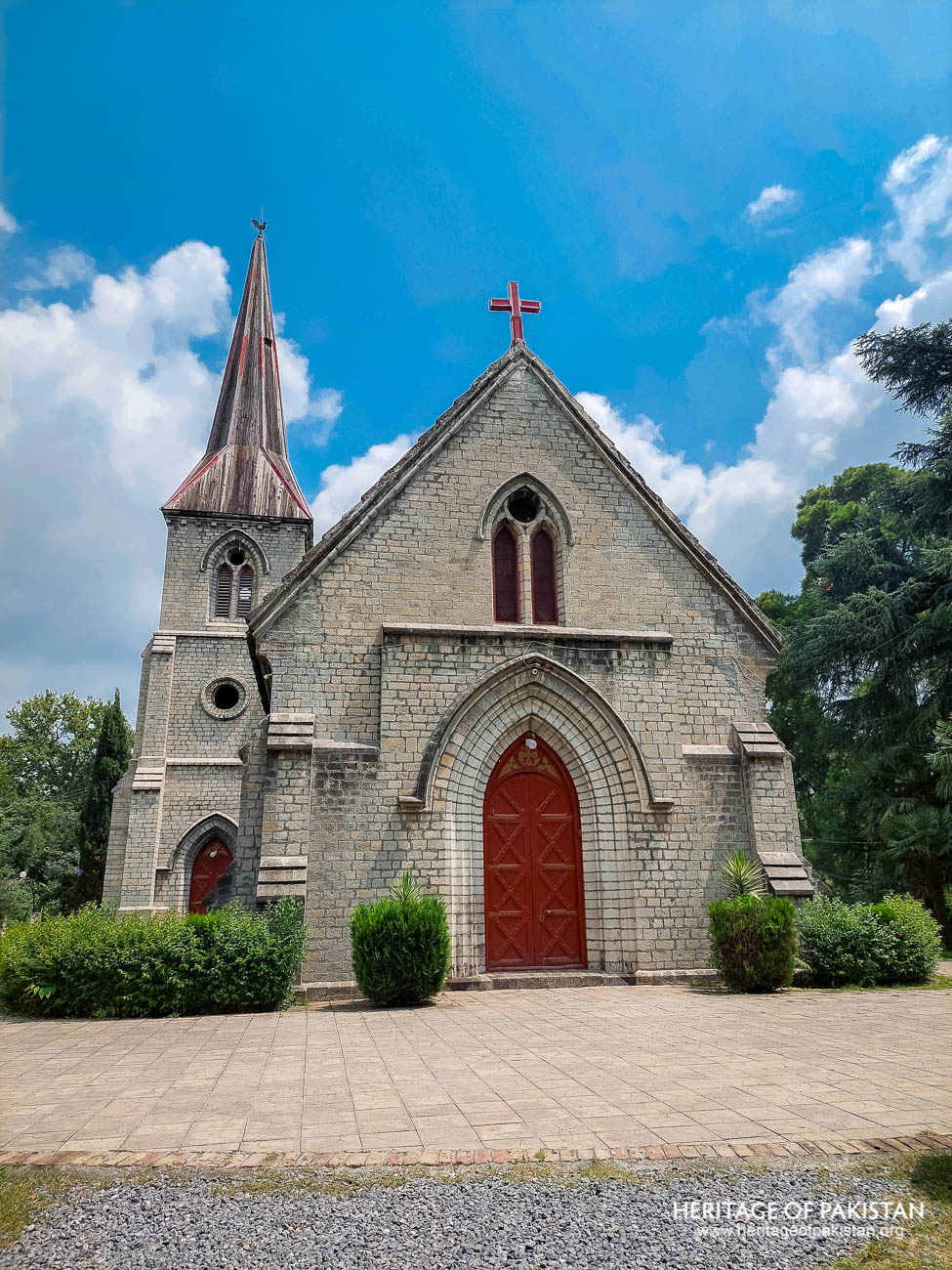
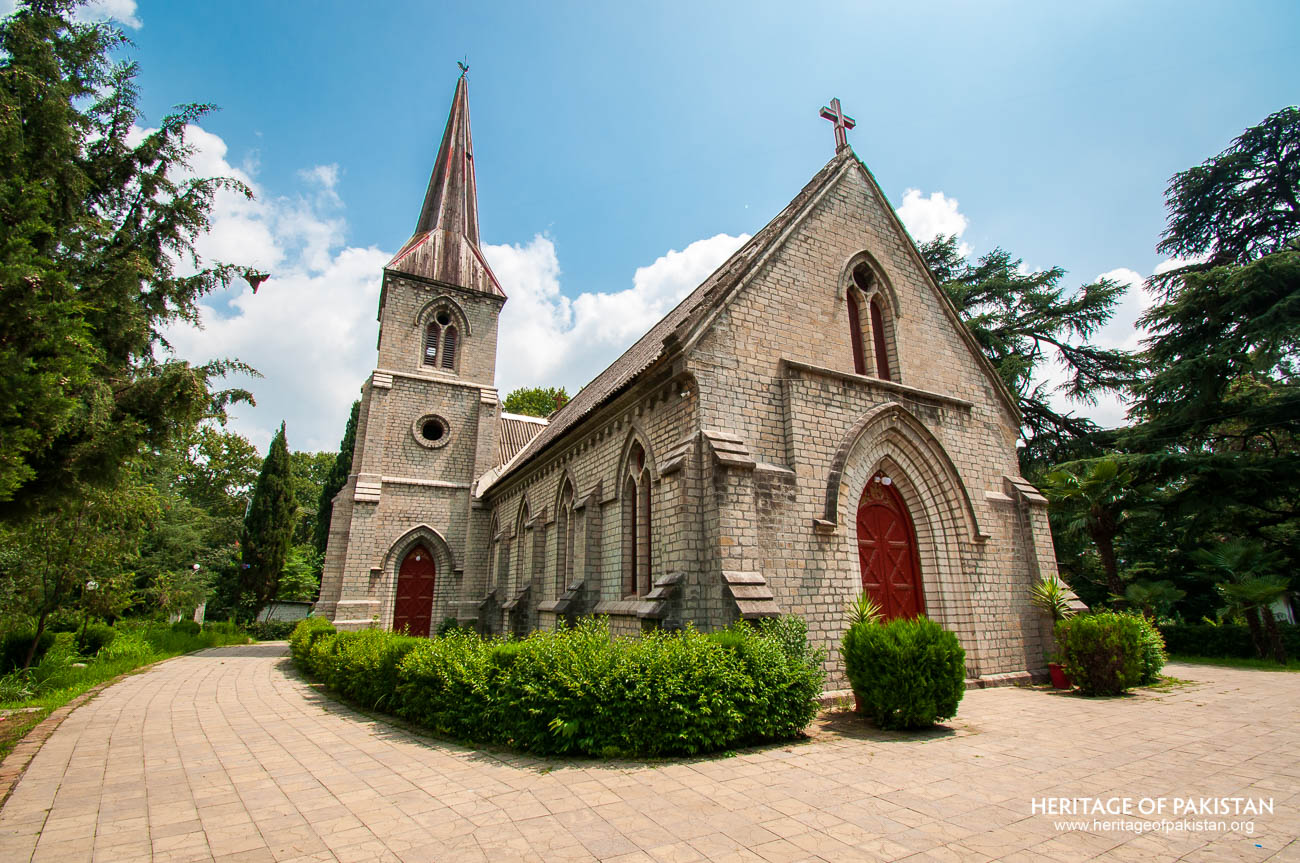
St. Luke’s Church is a colonial-era Anglican church located in Abbottabad, in the Khyber Pakhtunkhwa province of Pakistan. It was named after St. Luke, one of the companions of Jesus Christ. The church was established in 1864 to serve the spiritual and social needs of British military officers and their families stationed in the cantonment town. When the British arrived in Abbottabad, there was a growing requirement for a place of worship, congregation, and marriage ceremonies for the Christian members of the military. This necessity led to the founding of the church in the heart of the city.
The construction of the church took six years to complete. It served as the military church for the British garrison in Abbottabad, which had been formally established in 1853. Major James Abbott, who played a pivotal role in the development of the city and served as the first Deputy Commissioner of Hazara District after its annexation by the British in 1849, was instrumental in the region's early administration. Following the relocation of the Hazara district’s headquarters from the Sikh capital of Haripur, the new cantonment town was named after him, becoming known as Abbottabad.
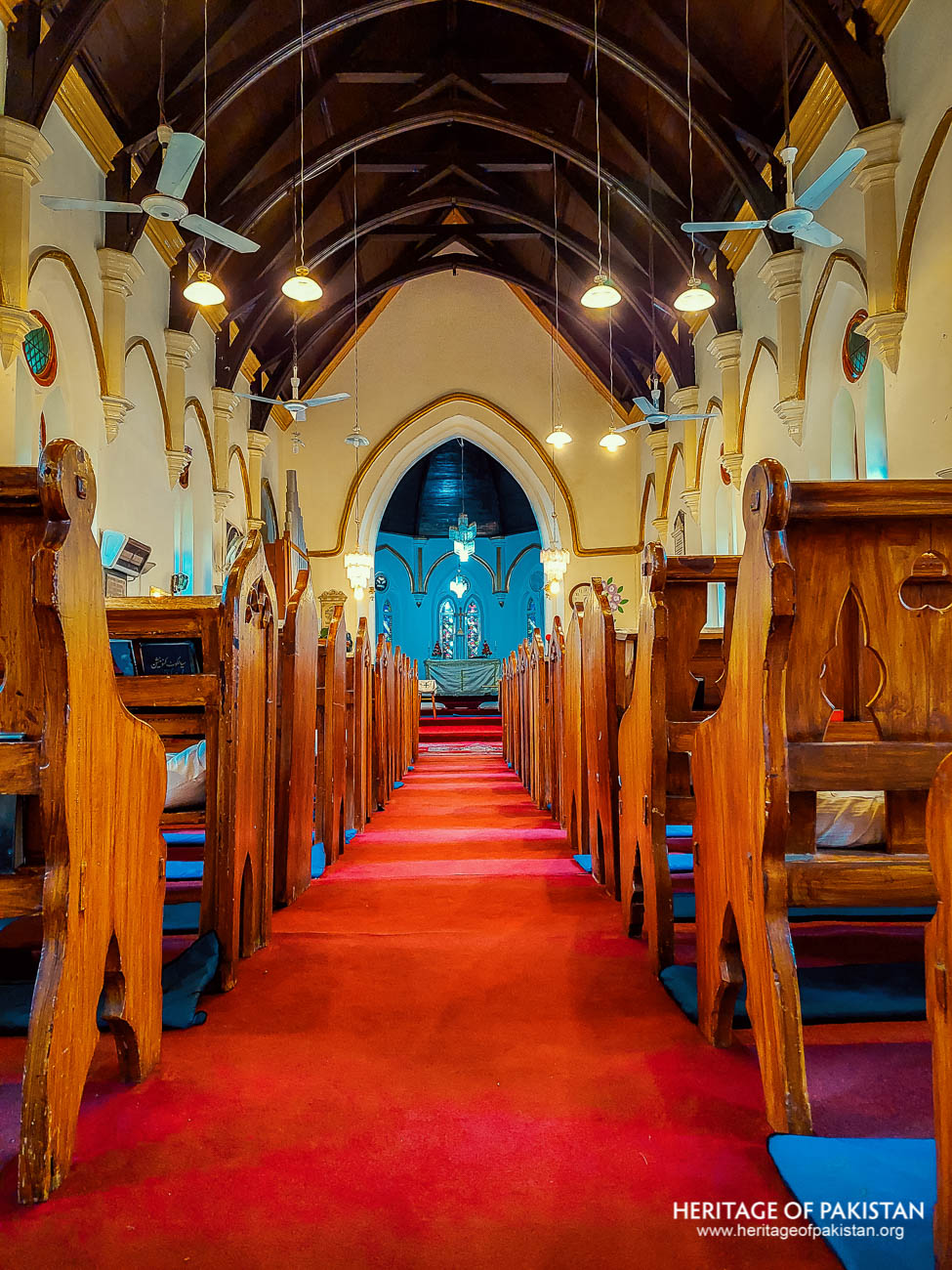
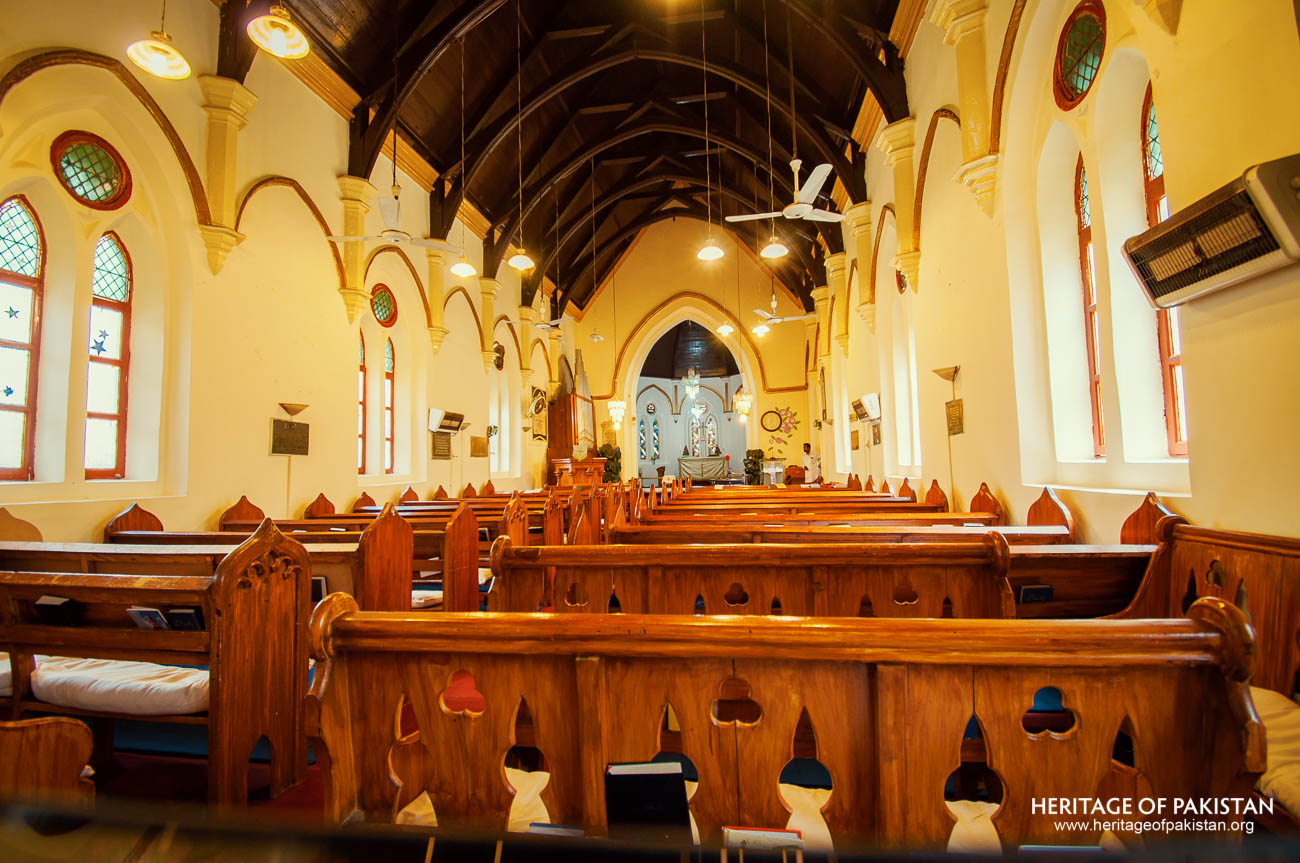
St. Luke’s Church retains several elements of its colonial heritage. Its main gate is known as Queen Victoria Gate, and it is believed that the property on which the church was built was gifted by Queen Victoria herself. Two other gates are also associated with the church complex: the Lady Garden Gate and the Club Gate. The Bishop of Calcutta was the first bishop associated with St. Luke’s Church, and his ceremonial chair is still preserved within the church premises. Today, the church falls under the jurisdiction of the Peshawar Diocese of the Church of Pakistan.
In its early years, the church complex included a number of auxiliary structures, reflecting the integrated religious and community life of its congregation. Among these was the Vicarage, which served as the residence of the priest. There was also a Sunday school designed to provide religious education to young Christian children, along with a guest room and servant quarters to support the church’s operations. The Sunday school played a significant role in the instruction of the youth, forming an essential part of the church’s educational efforts.
Additionally, a British-era pipe organ, once used to play religious hymns during church services, remains a part of the church’s historical collection. The Lady Garden, located directly in front of the church across the road, was originally part of the church grounds. However, it was later separated due to the construction of a road, dividing the garden from the main church area. Together, these features underscore the architectural, historical, and religious significance of St. Luke’s Church in the colonial legacy of Abbottabad.
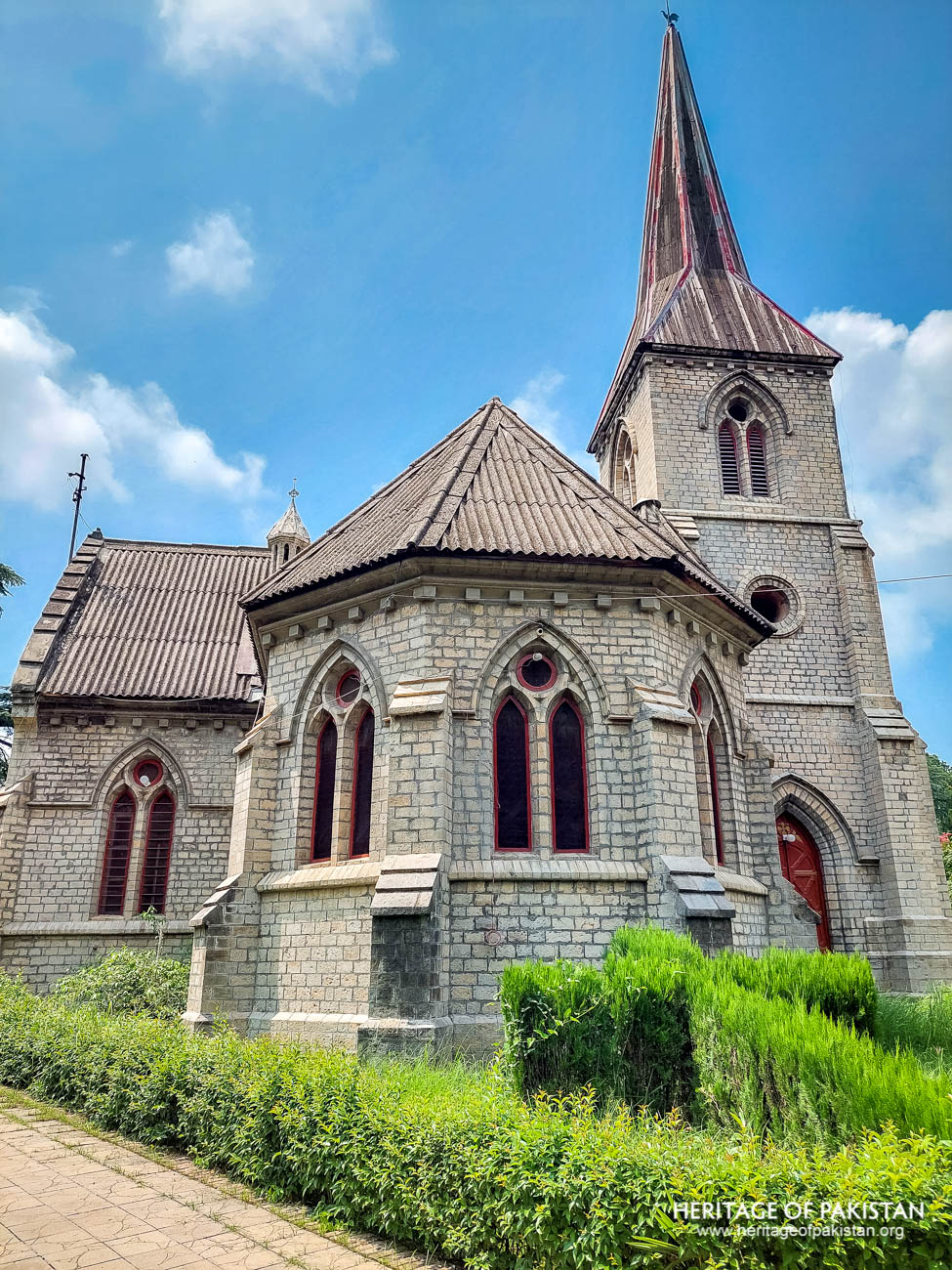
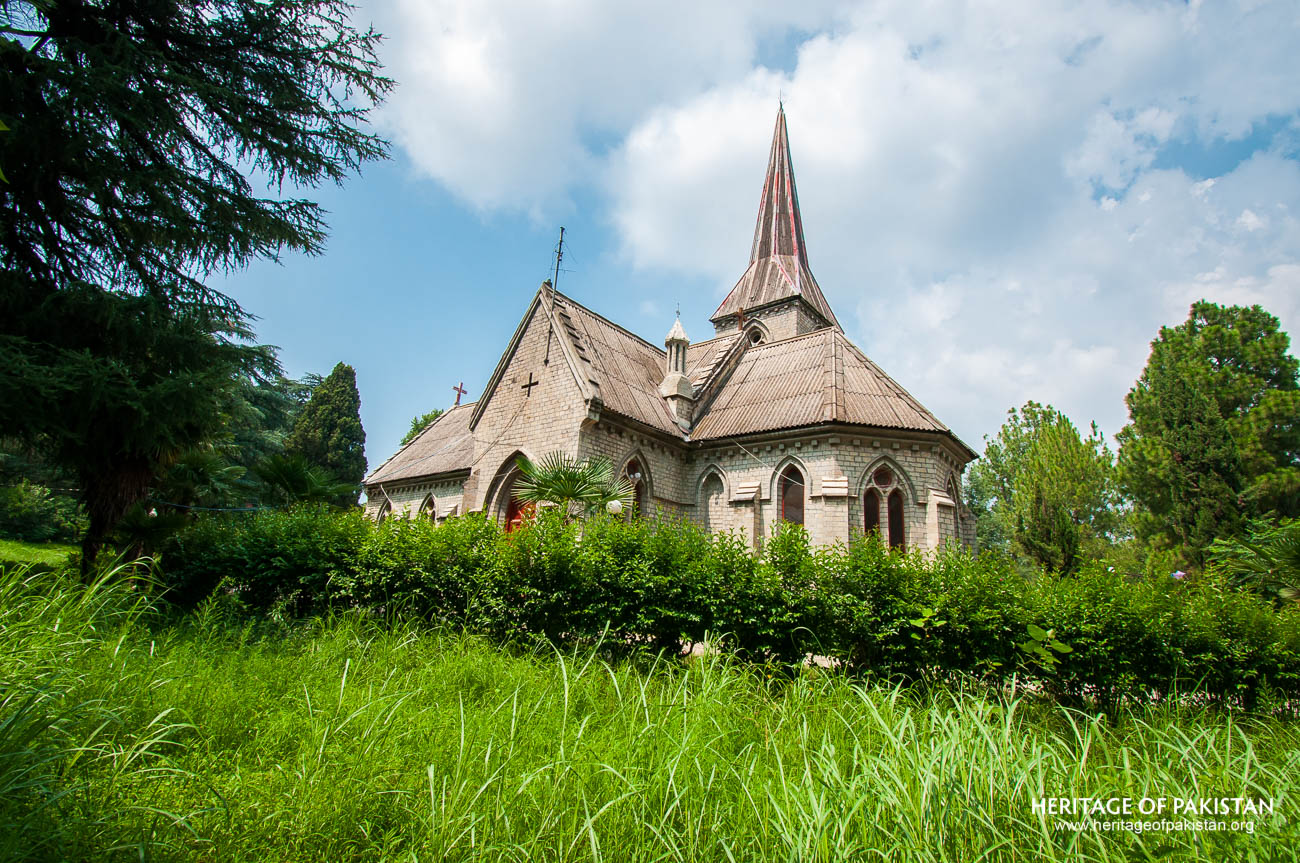
St. Luke’s Church in Abbottabad is an exemplary structure rooted in the Gothic Revival architectural tradition. This mid-19th-century style was a deliberate revival of medieval Gothic forms, often seen in European cathedrals, and is especially associated with ecclesiastical buildings. The church follows a cruciform layout, a typical configuration for Anglican churches, and is constructed using ashlar-dressed grey stone masonry, likely sourced locally. The stones are laid in regular courses, contributing to the building’s solid and formal appearance. The overall site spans 39 kanals and is situated within a well-maintained garden, reflecting the English churchyard tradition, complete with paved walkways, trimmed hedges, and shade-providing trees.
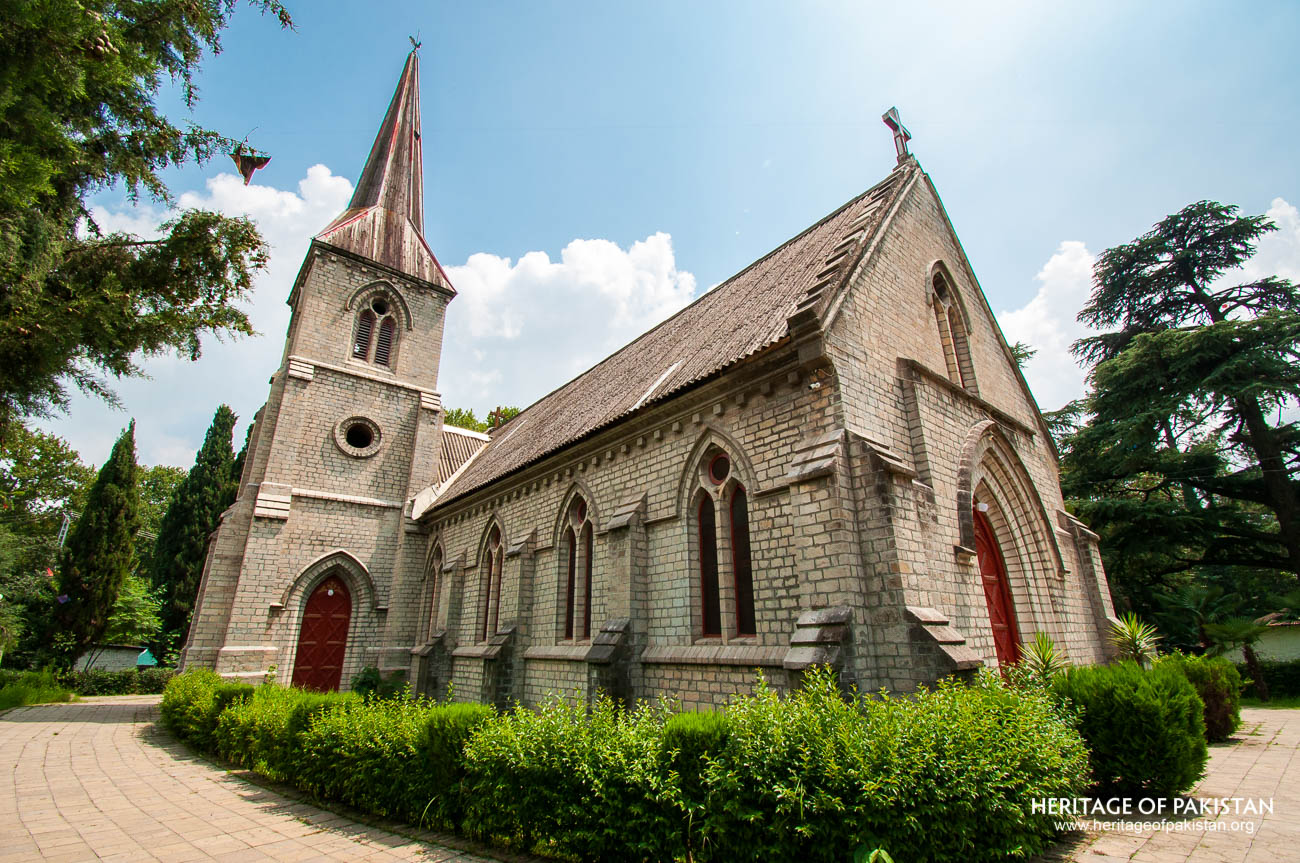
The primary architectural features of St. Luke’s Church are in keeping with Gothic Revival sensibilities. The entrance is defined by a deeply recessed pointed arch doorway, fitted with a red-painted wooden door and surrounded by concentric archivolts—mouldings that encircle the face of the arch just above the opening. The windows are pointed and vertical in shape, a defining hallmark of Gothic architecture. These include lancet windows painted in red timber tracery, many with louvered shutters. Buttresses are spaced at regular intervals along the exterior, serving both as structural reinforcements and vertical visual elements. A steeply pitched gable roof, originally designed to shed snow and rain efficiently, further underscores the building’s functional and stylistic coherence.
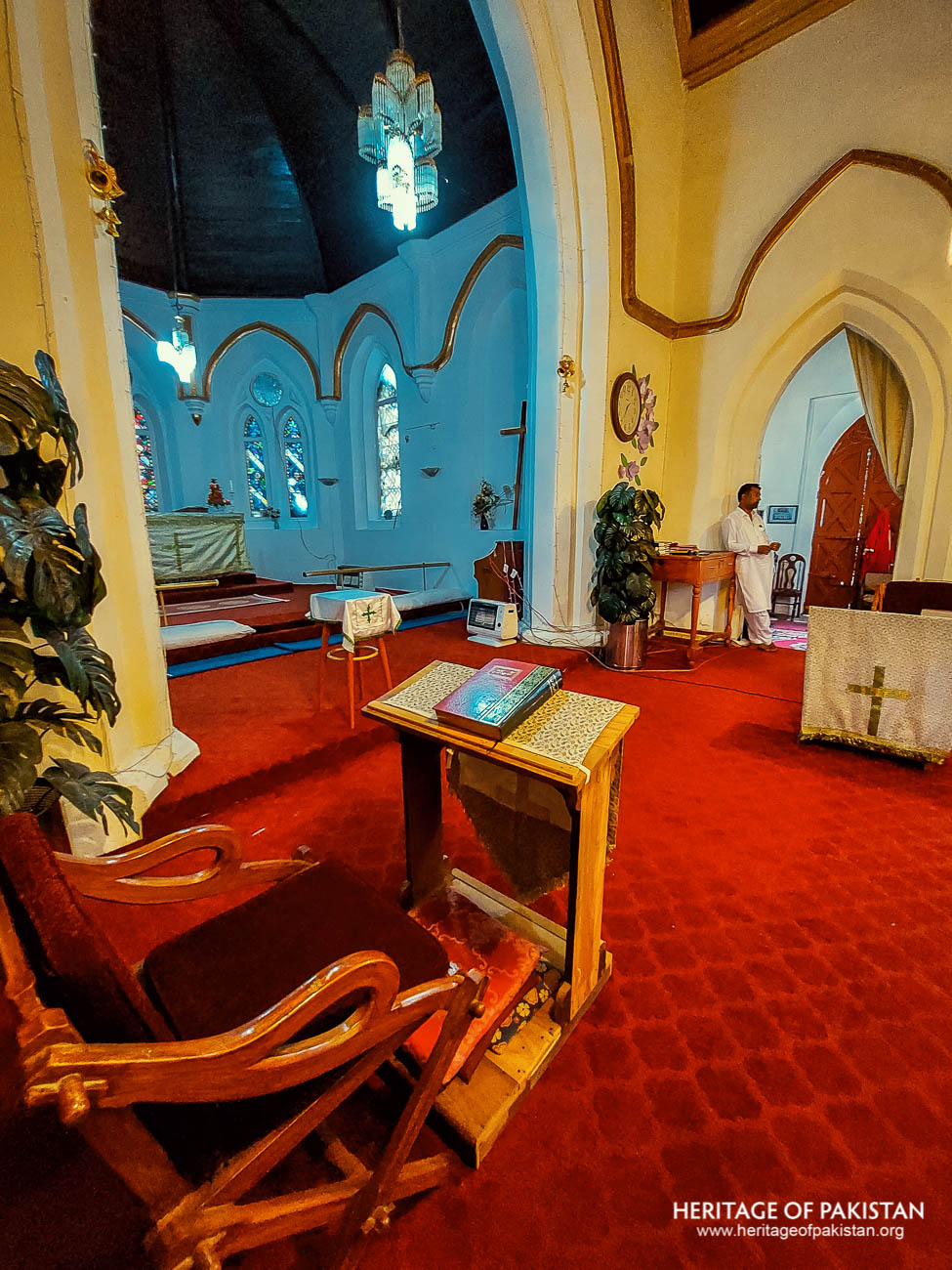
A central tower with a spire rises from the eastern façade, functioning as both a bell tower and a dominant visual anchor. The belfry windows on the tower are tall and slender, paired in twin lancets beneath a single arch. The apse, located at the eastern end, is polygonal and prominently projects from the building. Internally, it houses the altar and features the vaulted or domed ceiling commonly found in church architecture. The chancel is raised slightly above the nave and is demarcated by a low communion rail. The altar sits within the apse and is illuminated by stained-glass lancet windows that depict Christian iconography in vibrant hues of red, blue, and green.
The nave, which forms the central part of the church and accommodates the congregation, is long and narrow. It is roofed with an open timber hammer-beam structure painted in dark brown. The walls are decorated with blind Gothic arcading—non-structural, ornamental arches intended to maintain the rhythm of the design. The nave is furnished with traditional wooden pews. A British-era organ remains intact within the church, and various memorabilia of British army officers are displayed on inscribed plaques mounted along the interior walls.
Supporting structures were also constructed as part of the church complex. These include the Vicarage to the north of the church, which served as the residence for priests. Other facilities comprised a Sunday school dedicated to the education of young Christian children, a guest room, and servant quarters. Materials used in the construction were not limited to stone; the British also employed lentils, jute, and egg white, a practice noted for its binding properties in mortar during that period.
For water supply, a British-era well remains preserved in the church lawn. In front of St. Luke’s Church, across the road, lies the Lady Garden, which was originally part of the church property but became separated due to later road construction. Together, the church and its associated spaces offer a comprehensive view of ecclesiastical, architectural, and social life during the colonial period in Abbottabad.
All Photographs by Syed Noor Hussain and Sania Azhar.
All Rights Reserved. Photos may be used for Non-Commercial, Educational, Artistic, Research, Non-Profit & Academic purposes.
Commercial uses require licensing agreement.

syed noor
July 26, 2025 at 12:16 pmbf