
Protected Under
UNESCO World Heritage Site (since 1980)
34°17'11.0"N 71°56'49.3"E

On the UNESCO World Heritage Site List
UNESCO World Heritage Site (since 1980)
An underground section at Takht Bahi features dark meditation cells with corbelled arches likely used by monks
The Best Time to Visit mountain regions of Khyberpakhtunkhwa is Summers. Preferably from April to September. Winters are Extremely Cold and Snowfall blocks most of access. Hence Winters are not recommended.

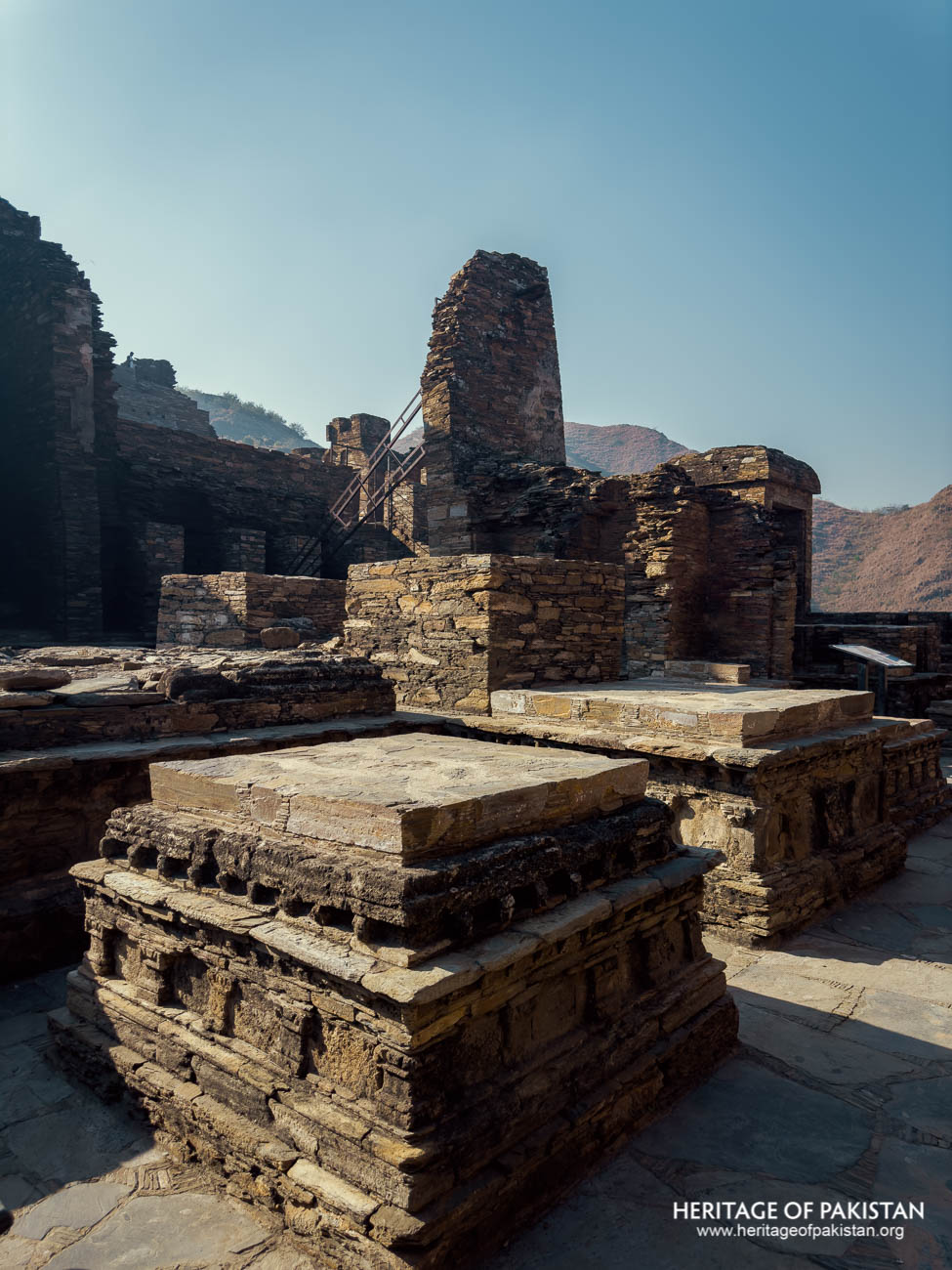
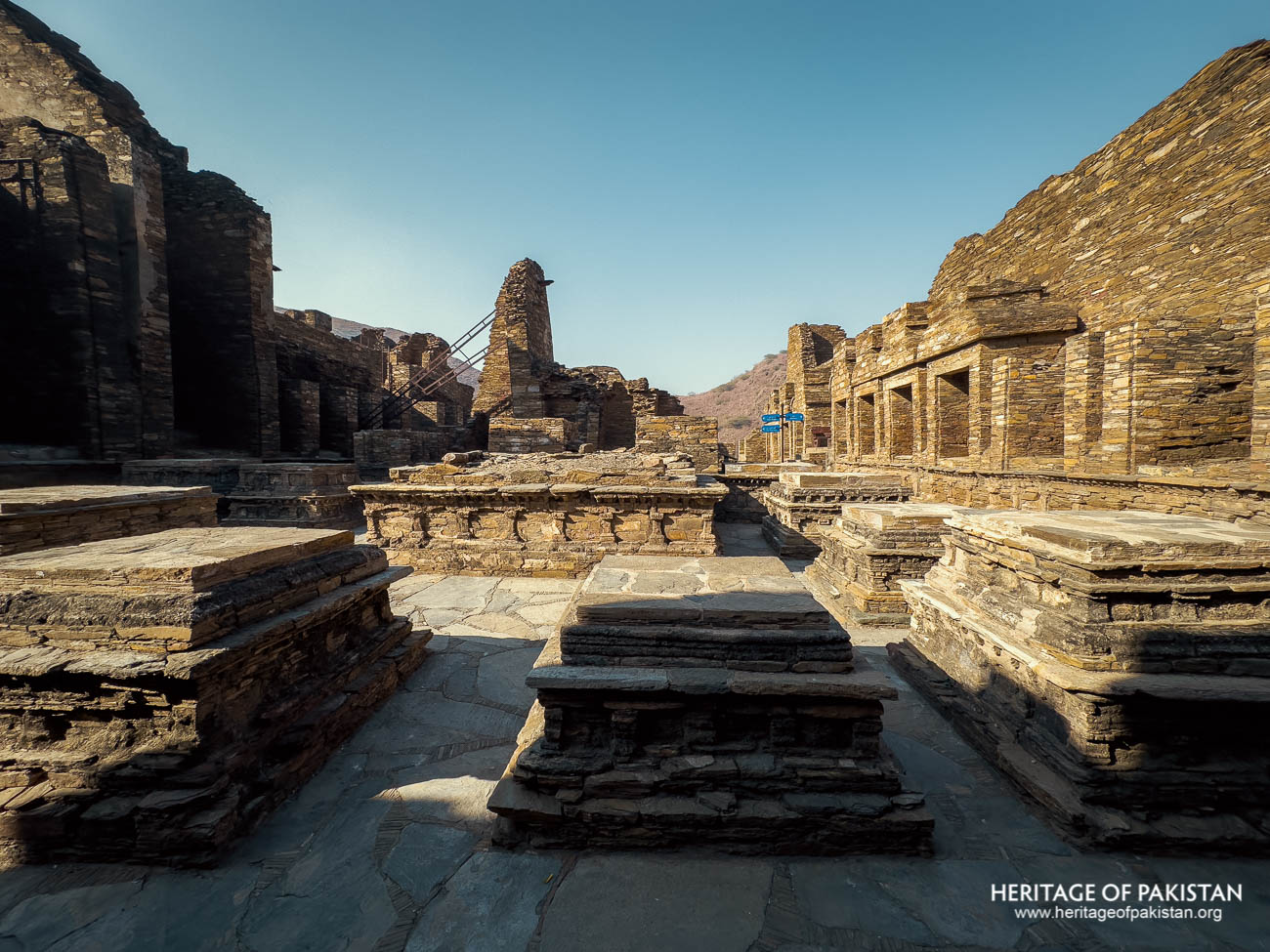
Takht-e-Bahi is a Buddhist monastery located in Tehsil Takht-e-Bahi of District Mardan, Khyber Pakhtunkhwa. It is positioned atop a high hill and spans a large area, making it one of the most prominent Buddhist heritage sites in Pakistan. The monastery complex is regarded as one of the most complete and best-preserved examples of Buddhist religious architecture in the region. Due to its remote and elevated location, the site was discovered and excavated in a relatively intact condition, unlike many other similar sites that suffered greater damage over time. It is officially recognized as a UNESCO World Heritage Site.
The Buddhist ruins of Takht-i-Bahi—translated as the “Throne of Origins”—were founded in the early 1st century A.D. and are situated on a series of hilltops ranging in height from 36.6 to 152.4 meters. These heights are typical of Buddhist monastic sites and were likely chosen for their seclusion and spiritual symbolism. The entire complex extends over approximately 33 hectares. The name "Takht-e-Bahi" is believed to derive from a water spring found on the mountain, with “Takht” meaning throne or elevated platform and “Bahi” referring to a water spring or auspicious water.
In 1977, archaeologist I.H. Nadiem excavated a piece of Kharoshthi inscription at the site and deciphered it. The inscription reads: “Udakabhadre Dharma Vadha havi (viha) re Bha Khuna Sibena Iphano-putrena iha,” which translates as “Here in Udakabhadra (auspicious water) at the Dharma-Vadha (the great religious) monastery (was established) by the bhiku Siva, son of Iphano.” This inscription not only confirms the meaning of the site’s name but also provides evidence of its early monastic establishment. Another inscription discovered at the site, belonging to the Parthian ruler Gondophares and dated to 45 A.D., is generally taken as the starting point for the construction of the monastery.
While its initial phase is linked to the Indo-Parthian period, the major expansion and development of the monastic quarters are attributed to the Kushan era, particularly during the 1st and 2nd centuries A.D. The monastery continued to function during the subsequent Little Kushan period and remained active until the 5th century A.D. It is believed to have remained in use, in some form, until the 7th century A.D., making it a site of enduring religious significance. The monastery comprises an assemblage of buildings that reflect its historical and architectural richness.
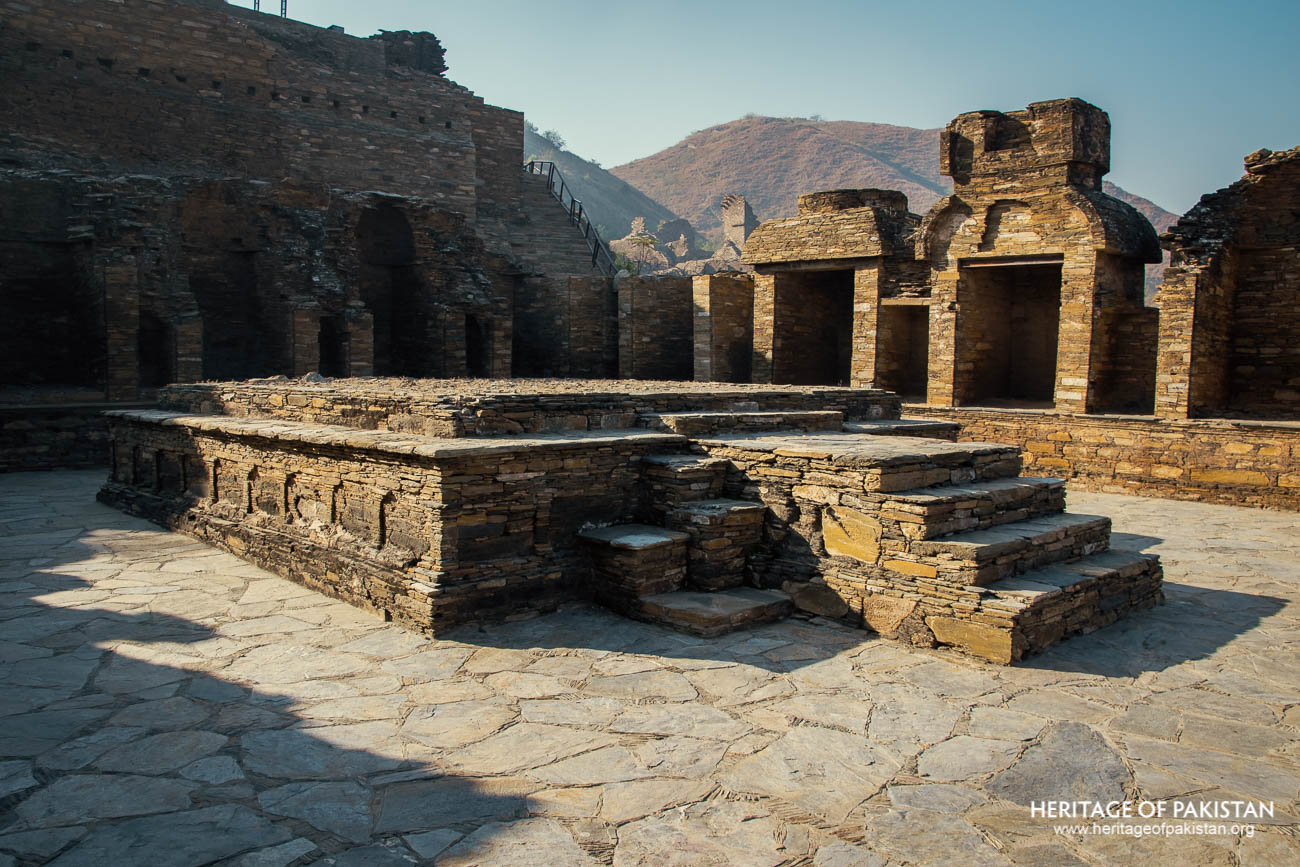
Takht-e-Bahi was first mentioned in 1836 by General Court, who referred to it as an “ancient castle.” Alexander Cunningham visited the site in 1848, marking it as an important place of archaeological interest. Many of the excavated sculptures and reliefs from Takht-e-Bahi are now housed in the Peshawar Museum, offering valuable insights into Gandharan Buddhist art. It is also likely that the site faced destruction during the invasions of the White Huns in the 5th century A.D., when an estimated 1,600 Buddhist sites were damaged across the region.
In addition to Takht-e-Bahi, the nearby archaeological remains of Sahr-i-Bahlol were also inscribed on the UNESCO World Heritage Site list in 1980. Located about five kilometers away in a fertile plain, Sahr-i-Bahlol is the site of an ancient fortified town from the Kushan period. The town was built on an elongated mound up to nine meters high and enclosed by portions of defensive walls in the “diaper” masonry style, characteristic of the first two or three centuries A.D. The area of Sahr-i-Bahlol spans 9.7 hectares. However, much of the site has suffered degradation over time due to encroachment and neglect.
The Department of Archaeology and Museums, Khyber Pakhtunkhwa, has taken substantial steps to manage and preserve the Takht-e-Bahi complex. The path leading up to the monastery has been paved with stone, and information boards have been installed throughout the site to guide visitors and inform them about its historical and cultural significance.
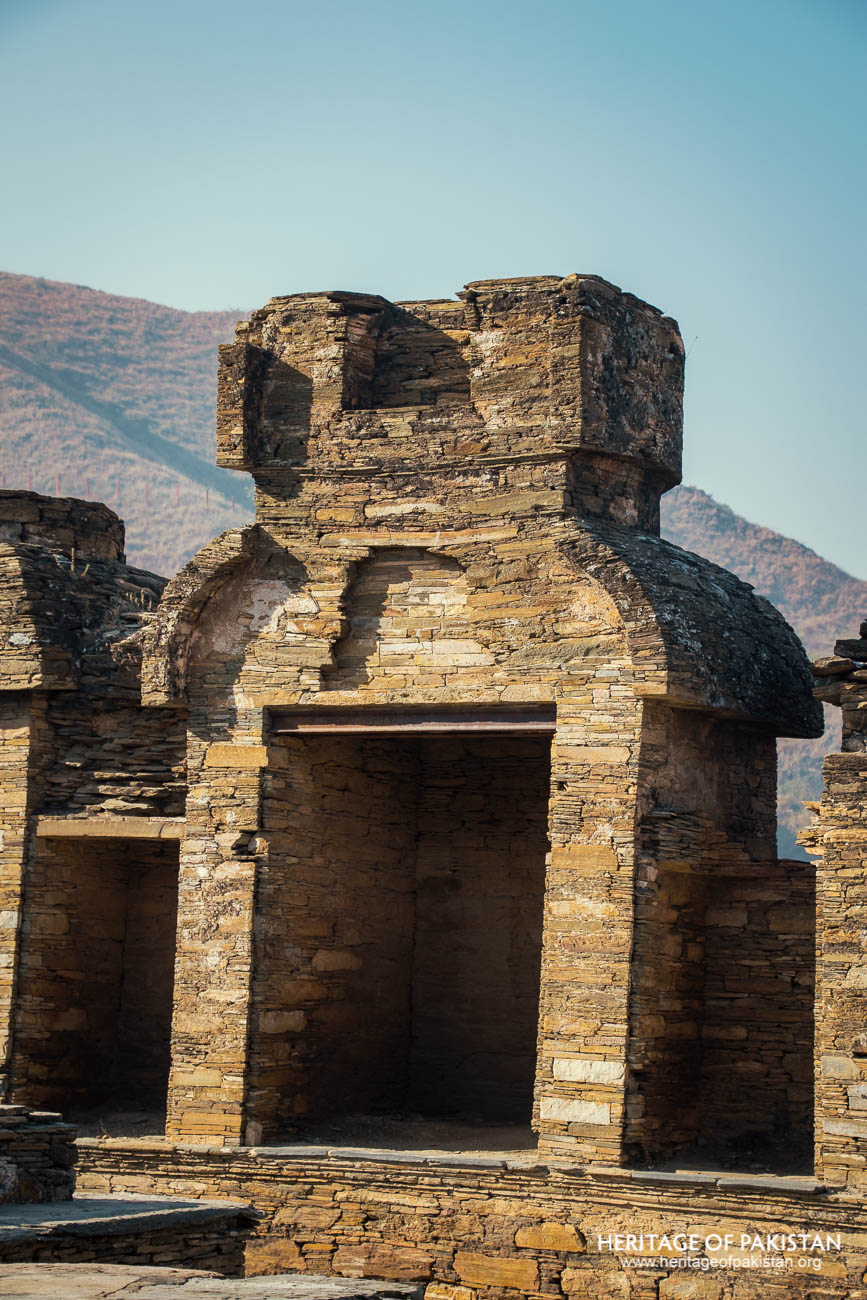
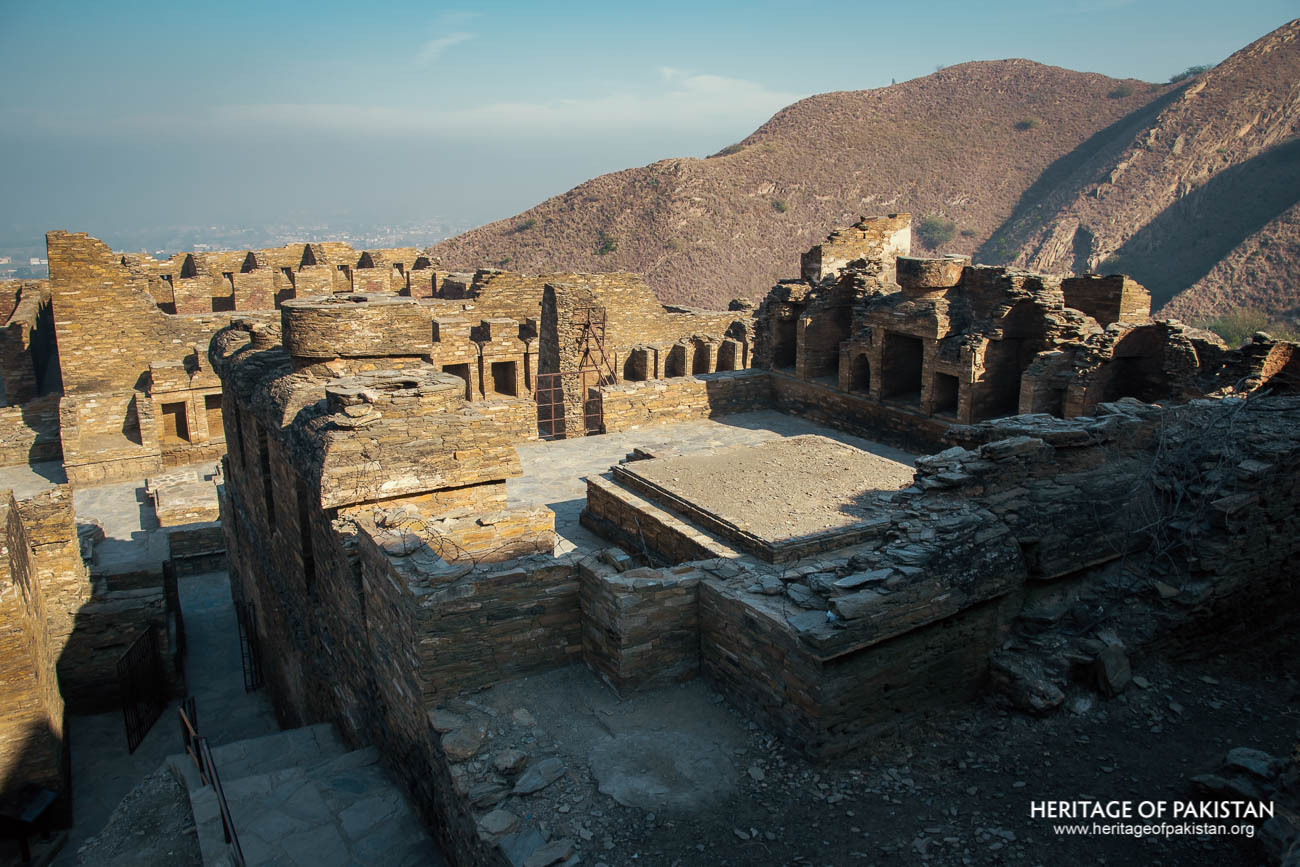
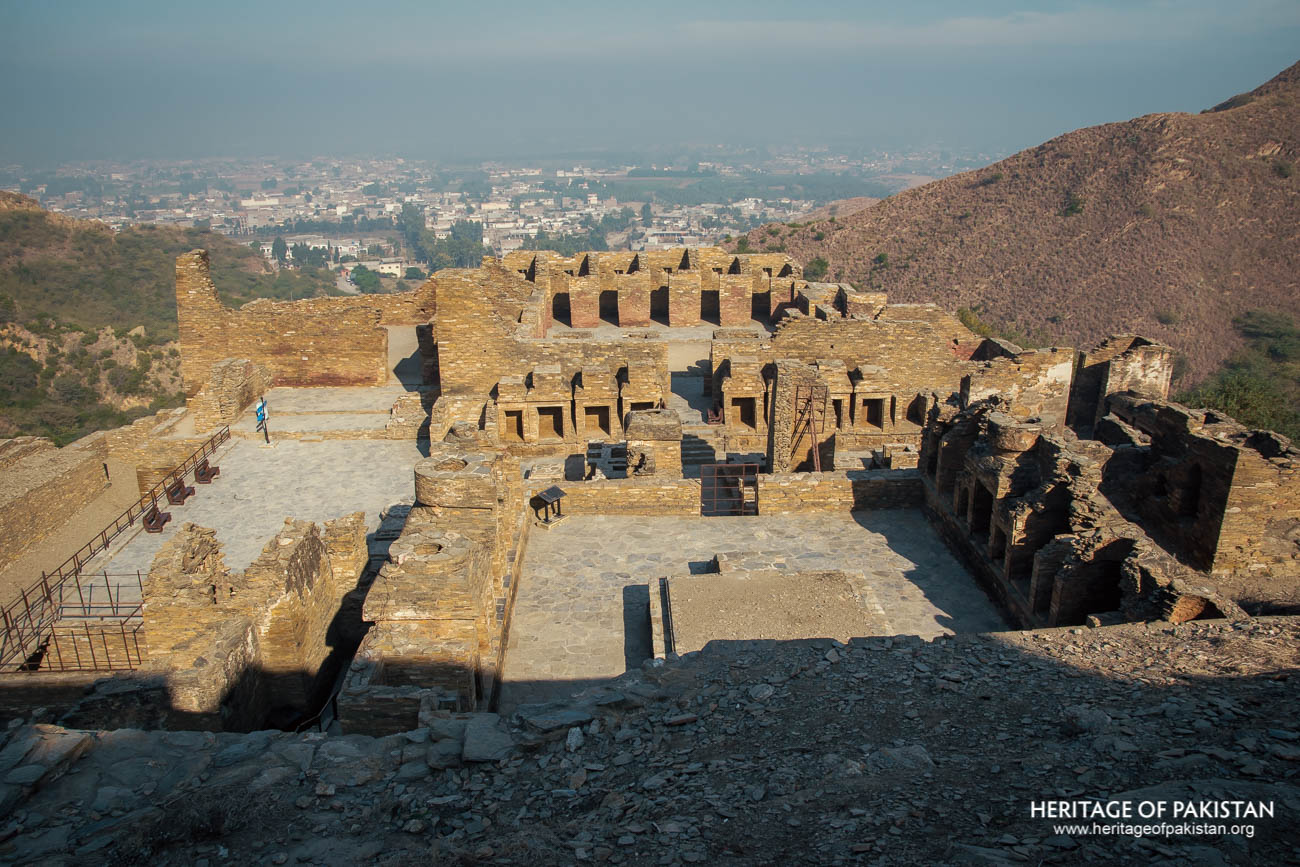
Takht-e-Bahi is a well-preserved Buddhist monastic complex located on a high hill in Tehsil Takht-e-Bahi of District Mardan, Khyber Pakhtunkhwa. The site covers an area of approximately 33 hectares and is accessed by a ten-minute uphill trek. The complex is divided into two main groups of structures, each containing distinct architectural and functional components of the monastery. Group I includes the Court of Many Stupas, the Main Stupa Court, the Monastery, the Conference Hall, the Lower Level Chambers, and the Court of Three Stupas. Group II comprises a covered staircase, a courtyard, and certain secular buildings. The entire complex is constructed using dressed and semi-dressed local stone blocks, set in lime and mud mortar, and built in Gandharan “diaper” masonry style.
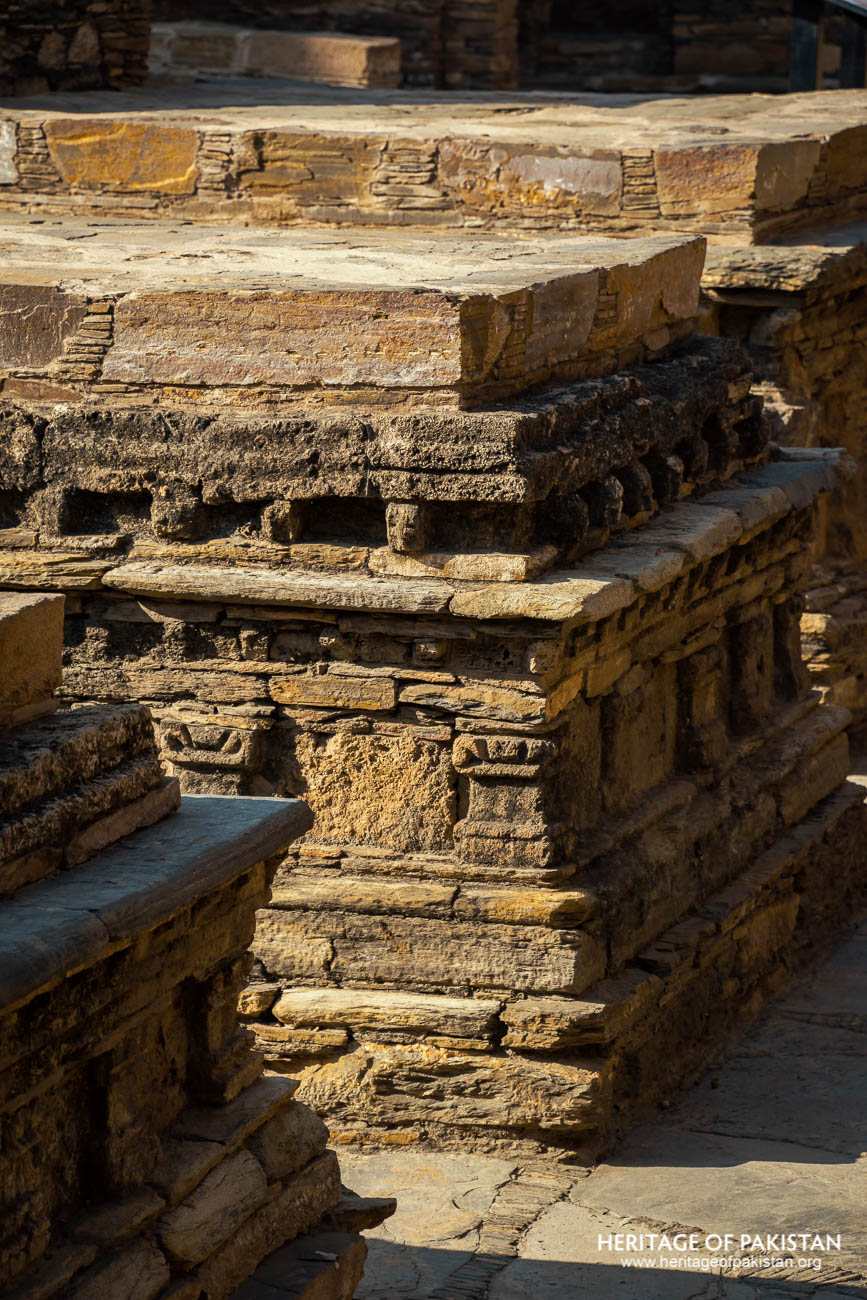
The Court of Many Stupas forms the main entry point for visitors today. It is a large courtyard containing approximately thirty-five votive stupas, which are smaller commemorative structures built as acts of devotion, or to honor individuals or events. These stupas are predominantly square in shape, although circular and octagonal examples are also found within the court. Most of them were originally adorned with friezes and had decorative divisions marked by Indo-Corinthian columns, indicating Greek architectural influence. Cube-shaped niches with tapering domes are visible along the perimeter of this court, adding to the architectural richness. Corinthian pillars are also seen at the base of several votive stupas.
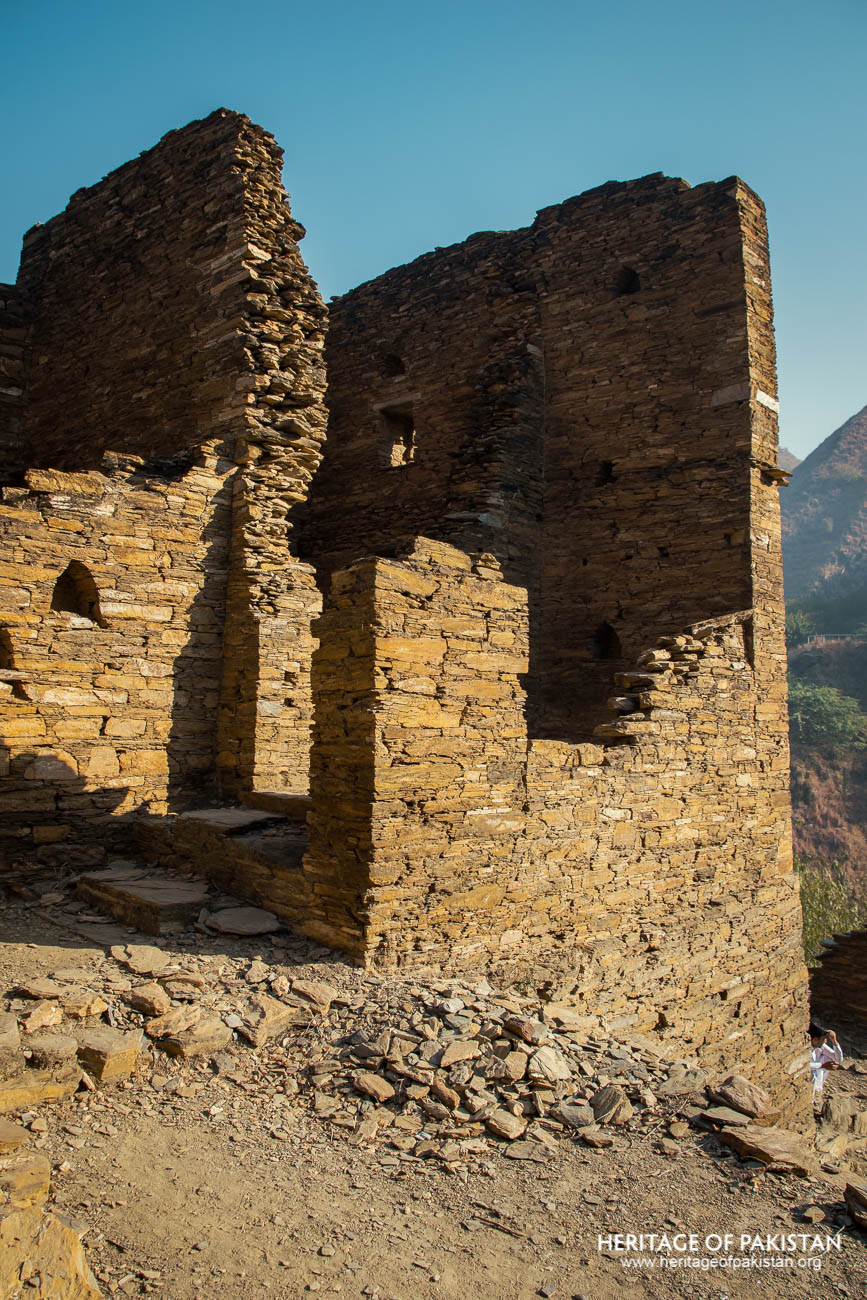
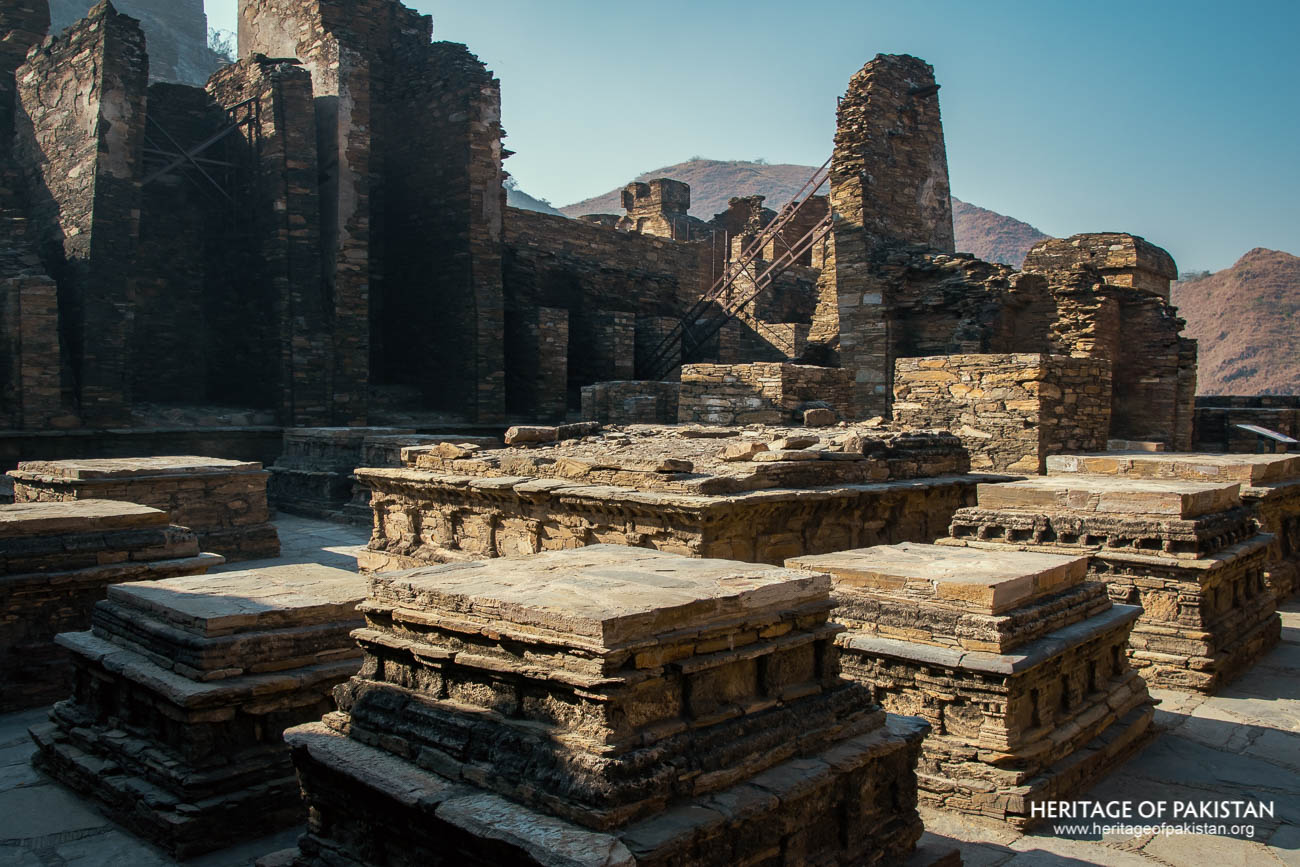
To the south of the Court of Many Stupas lies the Main Stupa Court. Oblong in shape, this courtyard measures approximately 56 feet by 45 feet. The main stupa itself stands on a square base, although its upper section has been destroyed. Surrounding the stupa are rows of chapels or niches, which feature corbelled domes, a common architectural element in the region.
North of the Court of Many Stupas is the Monastery, which lies on a higher level and is accessible via a flight of five steps. This section is among the largest within the complex and consists of a central quadrangular courtyard surrounded by monastic living cells. The courtyard, measuring 62 feet square on the inside, has fifteen cells arranged along three of its sides. Each cell was designed to house a single monk, suggesting a structured monastic lifestyle. Archaeological evidence indicates that the monastery had an upper storey, accessed through a narrow staircase, although only the remains of the ground floor have been preserved. The overall structure may have accommodated approximately thirty monks. A bathroom has also been found in this section, along with traces of domestic arrangements, indicating the residential function of the monastery. The central courtyard likely doubled as an assembly hall for the monks.
Adjacent to the monastery on the western side is a large conference hall. This hall has walls rising to a height of around thirty feet and served as a venue for general gatherings of the monastic community. The placement and size of this hall suggest its importance in the daily functioning of the monastic order.
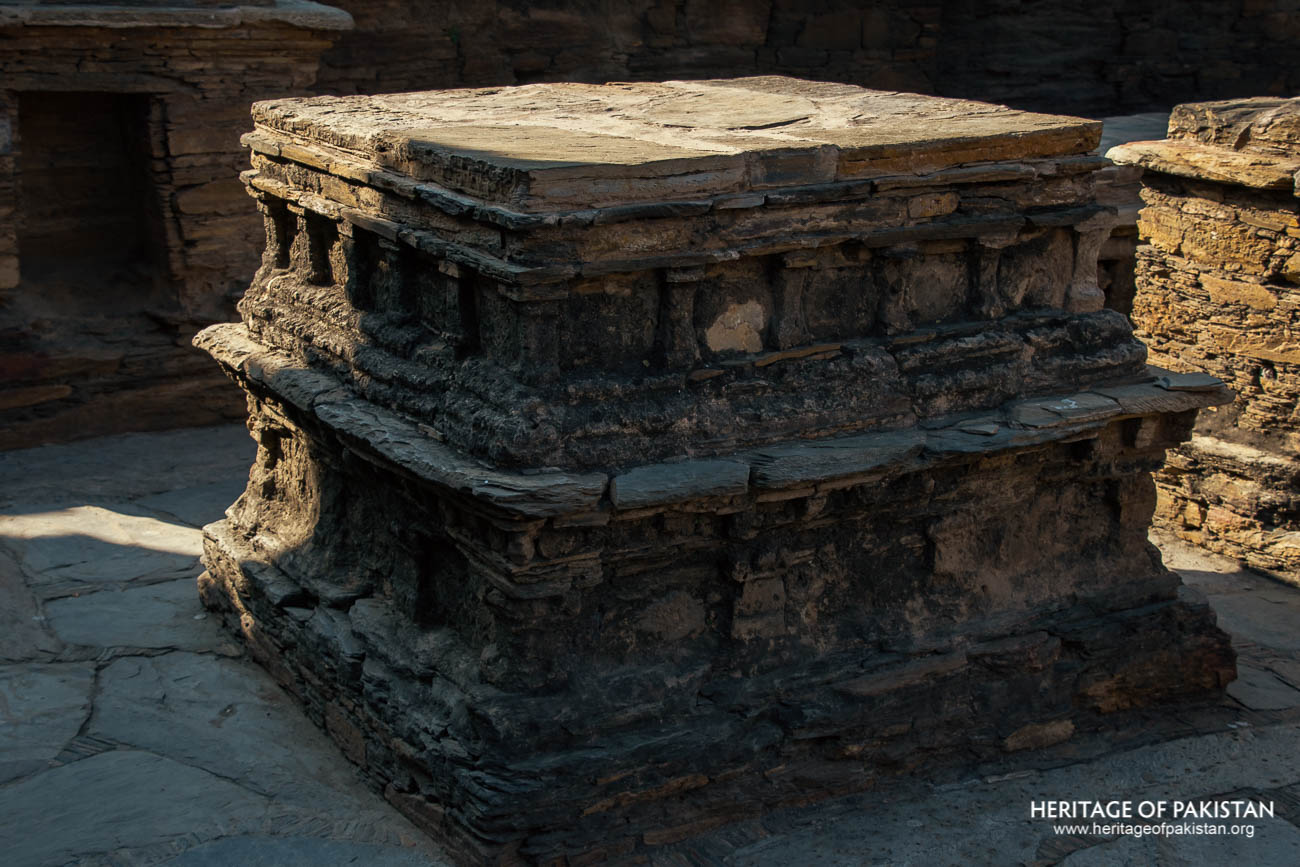
Another stupa complex has also been discovered within the site. This includes a central main stupa flanked by smaller votive stupas. Excavations at this location have yielded several sculptural fragments, including heads and feet of Buddha statues.
A unique feature of the site is an ‘underground’ section of the monastery. This part comprises two corridors lined with small dark cells on both sides. The cells are accessed through corbelled arches and feature small openings constructed in the same corbelled style. These enclosed spaces may have been used for deep meditation or for storing food grains, reflecting the practical and spiritual dimensions of the monastic complex.
Together, these architectural and archaeological features make Takht-e-Bahi an exemplary model of Gandharan Buddhist architecture, reflecting both religious devotion and thoughtful planning in monastic life.
All Photographs by Syed Noor Hussain and Sania Azhar.
All Rights Reserved. Photos may be used for Non-Commercial, Educational, Artistic, Research, Non-Profit & Academic purposes.
Commercial uses require licensing agreement.

Syed Noor Hussain
July 23, 2025 at 4:05 amBest