
Protected Under
Antiquities Act 1975
33°44'38.9"N 72°49'10.2"E

On the UNESCO World Heritage Site List
Antiquities Act 1975
Alexander the Great stayed in Bhir Mound in 326 BCE, where he was received by King Ambhi with gifts and honors, and it was at this very site that he planned his famous battle against Raja Porus
The Best Time to Visit Punjab Province is Year long as it has bearable Cold winters and Hot Summers. However, Summers can get really Hot and precautions are recommended during Daytime visits.

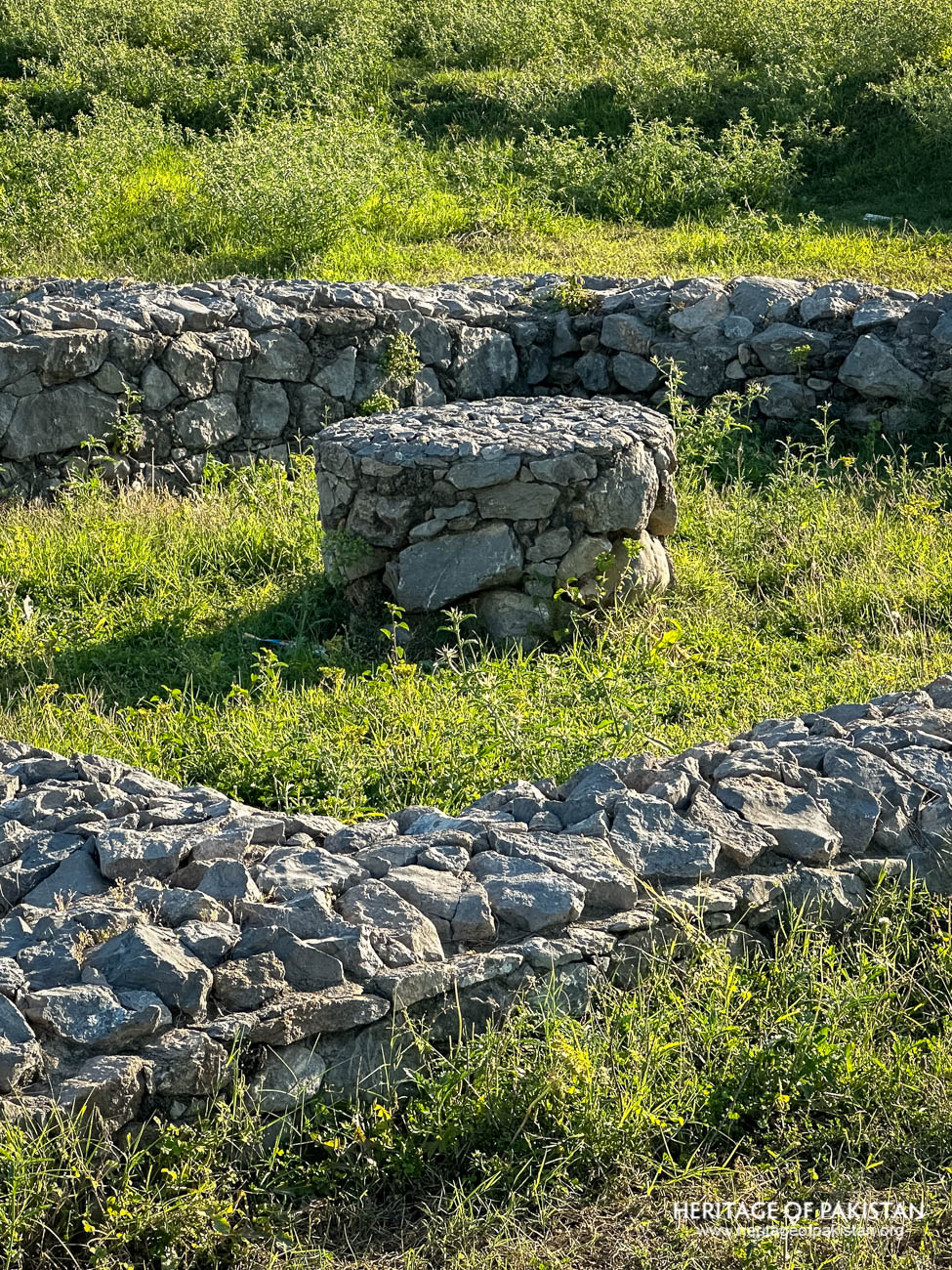
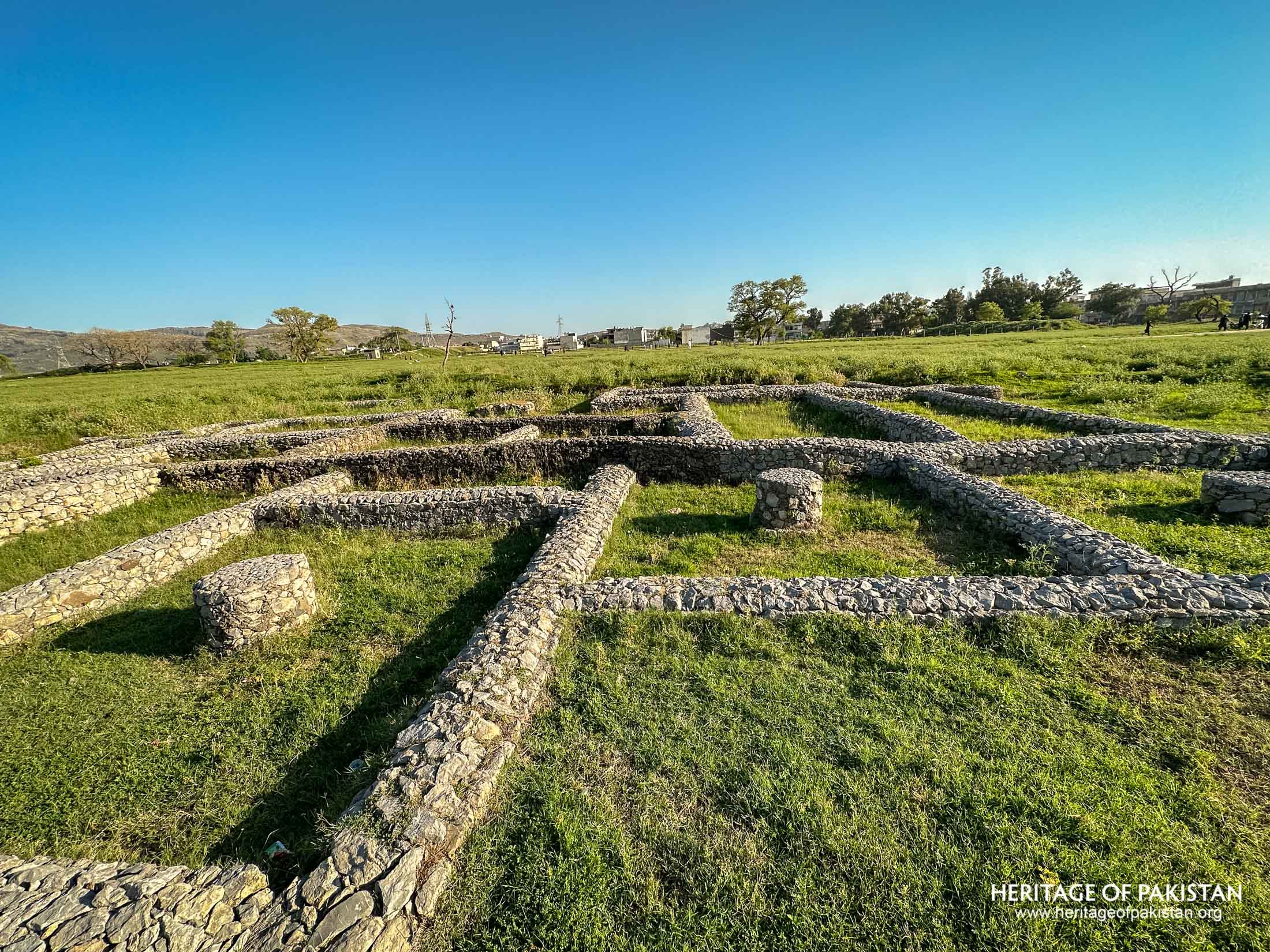
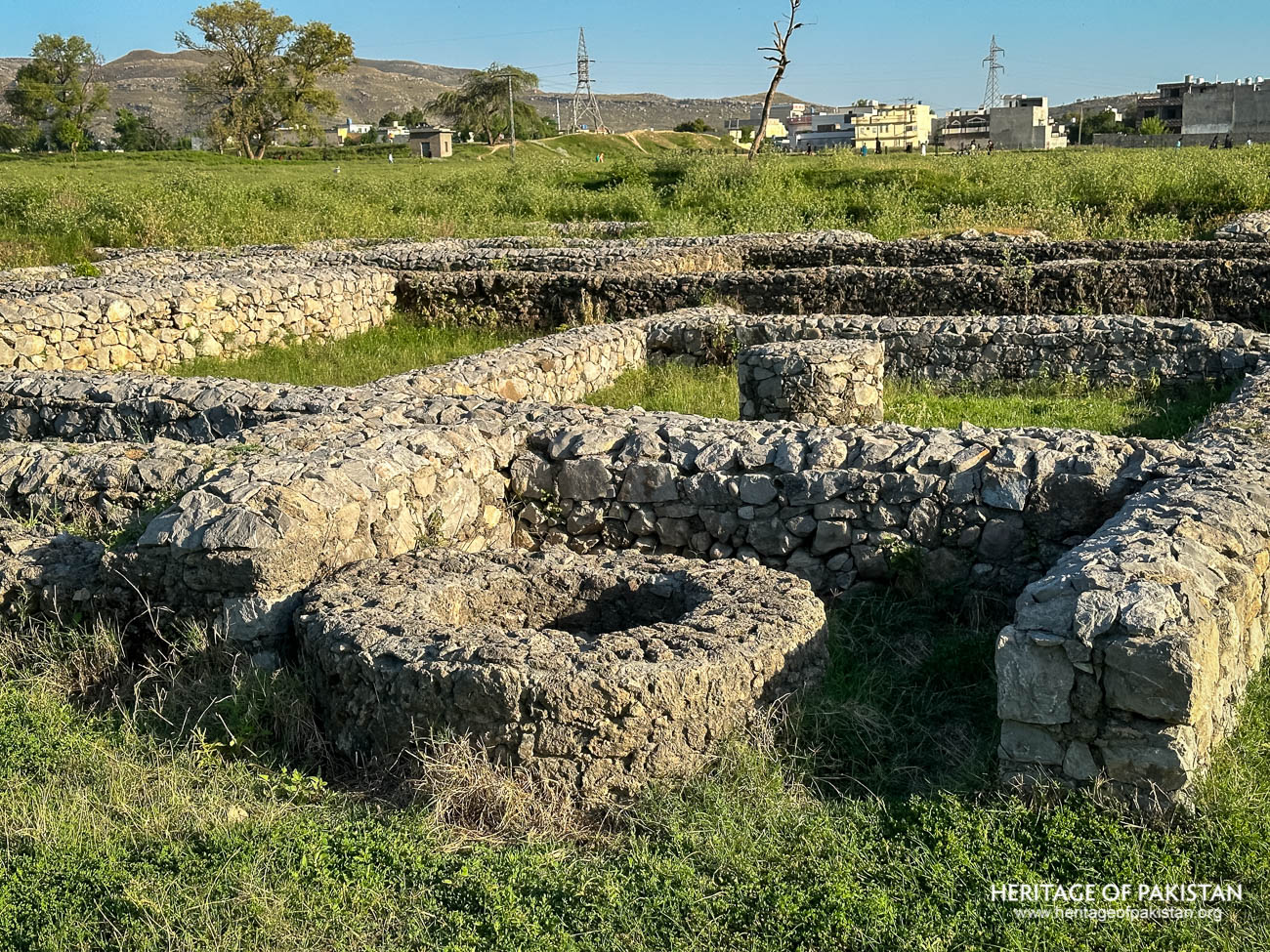
Remains of Bhir Mound, Taxila
Bhir Mound represents the earliest known urban settlement in the Taxila Valley, with archaeological evidence indicating its establishment as a city by the Achaemenids in the 6th century BCE. The site functioned as a city continuously from the 6th century BCE to the 2nd century BCE. It was the first city excavated in the region and one of the three major ancient cities discovered at Taxila. The Achaemenian emperor Darius I conquered Gandhara in the 6th century BCE and is credited with establishing Taxila as a provincial capital, most likely at the location now known as Bhir Mound.
Following the decline of Achaemenid authority, Taxila became an independent entity under a local ruler, King Ambhi, after the fall of Darius III in 331 BCE. Ambhi ruled a kingdom located between the Indus and Jhelum rivers, with its capital at Taxila, then situated at Bhir Mound. In February 326 BCE, during his campaign in India, Alexander the Great arrived at Bhir Mound. King Ambhi welcomed him with gifts and acknowledged his sovereignty. Alexander spent several days in the city, initially engaging in celebratory rituals, including sacrifices to Greek gods and gymnastic events, and later focusing on military planning. It was during this stay that Alexander received envoys, organized his army, and planned his battle with Raja Porus.
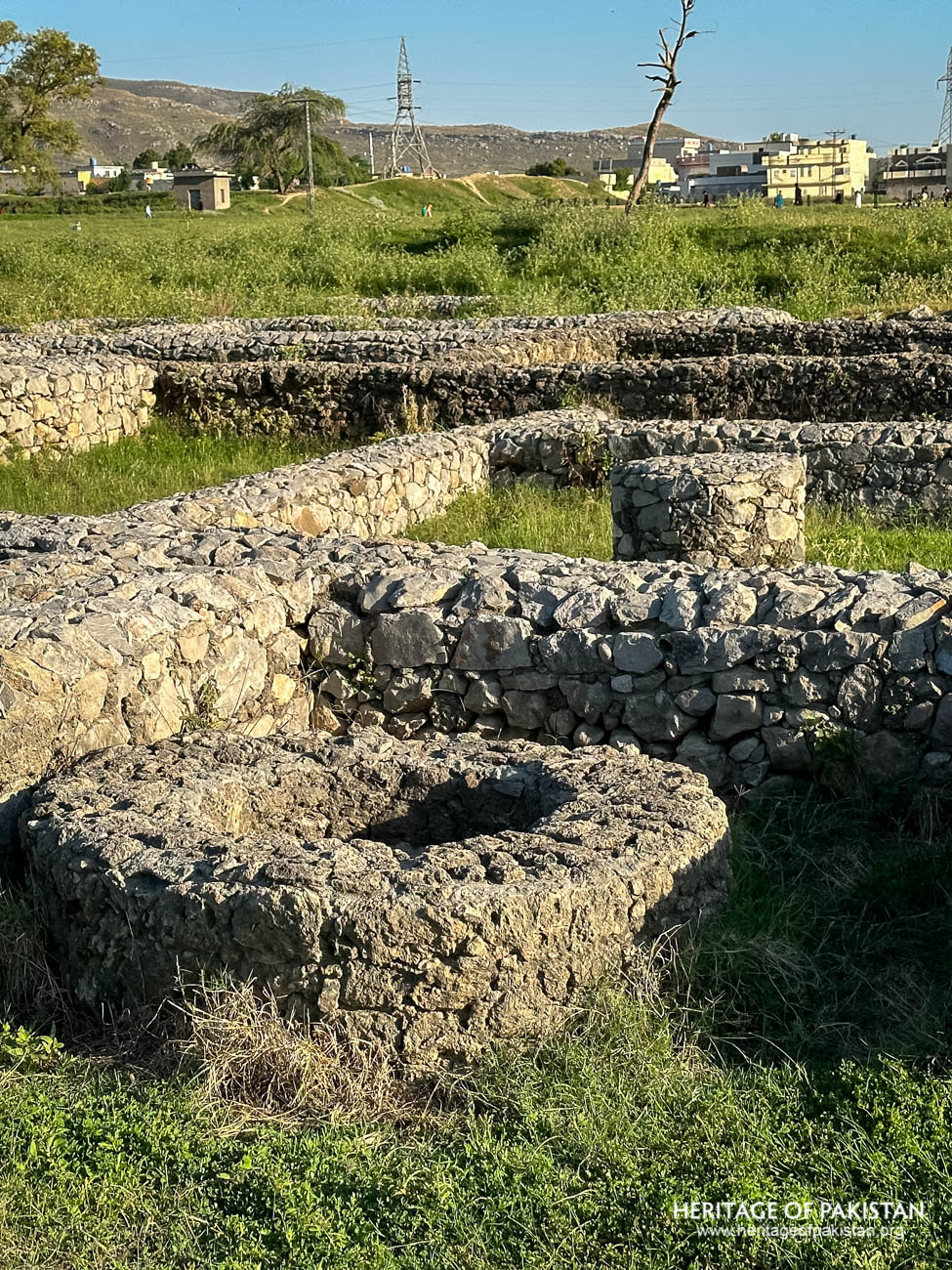 Remains of Bhir Mound, Taxila
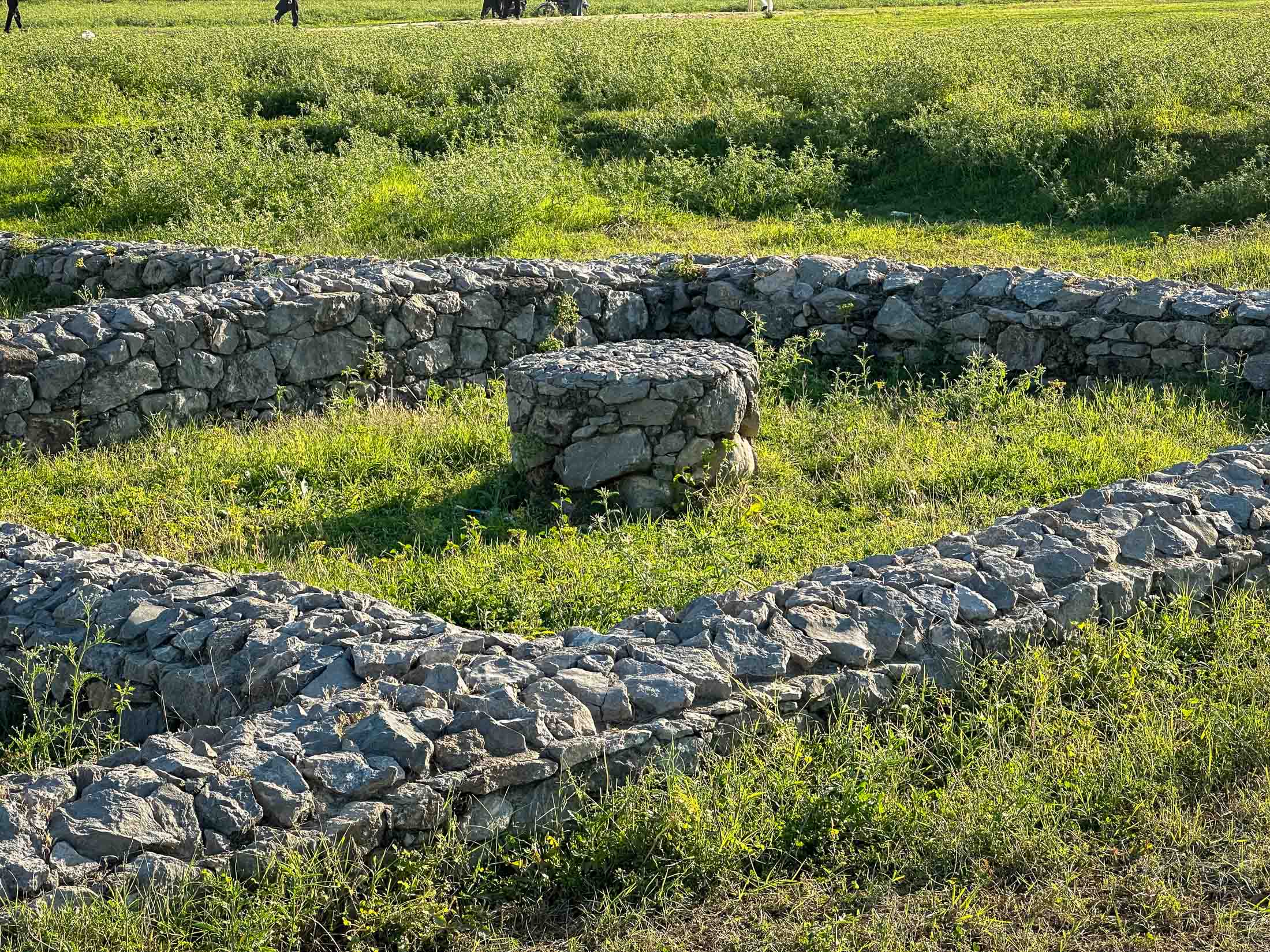
Ruins of Bhir Mound, Taxila
After Alexander’s death, Macedonian satraps governed the region, and the Macedonian satrapy at Bhir Mound survived until 317 BCE. Eventually, Chandragupta Maurya rebelled, drove out the Greeks, and established the Mauryan Empire, installing his own governor at Bhir Mound. Under Mauryan rule, Taxila again served as a provincial capital. Chandragupta’s grandson, Ashoka, is credited with introducing Buddhism in the region and is believed to have constructed the first stupa, the Dharmarajika, near Bhir Mound. Remains from the Mauryan period have been uncovered at the site, indicating continued occupation and urban development. The main streets were laid out in a north-south direction, with smaller lanes running east-west.
The disintegration of the Mauryan Empire led to a new phase in Bhir Mound's history. In the 2nd century BCE, the Bactrian Greeks overran the city. At the time of their arrival, Bhir Mound was a prosperous city, as described by Greek writers. The city experienced destruction and reconstruction multiple times during this era. Eventually, the Bactrian Greeks moved the capital to a newly established city located two kilometers northeast, named Sirkap, marking the end of Bhir Mound as the administrative center. King Menander of the Indo-Greeks is associated with the founding of Sirkap. Consequently, Bhir Mound was abandoned when Sirkap was constructed.
Archaeological excavations at Bhir Mound were conducted by Sir John Marshall between 1918 and 1934. These excavations revealed a stratified cultural sequence through four main occupation layers. The lowest layer corresponds to the Achaemenid occupation from the 6th century BCE. Above it lies the layer associated with the Macedonian satraps appointed after Alexander’s conquest, who maintained the general layout of the earlier city while introducing their architectural styles. A building identified by Marshall as a pillared hall was excavated at the site. Initially interpreted by him as a temple, later archaeologists proposed it to be the palace of the Macedonian General (Satrap), Philip, son of Machatas. The third layer represents the Mauryan period, and the topmost layer reflects the brief Bactrian Greek occupation, specifically under King Demetrius and his successors.
Numerous artefacts from various periods have been unearthed at the site. These include Greek black kraters, bowls, and two coins—one of Alexander and the other of Philip Arrhidaeus—dating to the Greek occupation. Pottery decorated with silhouetted figures, showing clear Hellenistic influence, has also been recovered. These artefacts illustrate the cultural transitions and external influences experienced by the city over several centuries.
The city plan revealed during excavations indicates a haphazard layout, with irregularly planned houses and narrow streets. Despite the lack of systematic urban planning, Bhir Mound represents an important cultural sequence, with four successive settlements illustrating the development from the 6th century BCE to the 1st century BCE. The site, which predated Greek arrival and continued until the Greek capital shift to Sirkap in the early 2nd century BCE, holds a significant place in South Asian archaeological and historical scholarship.
Bhir Mound has been declared a protected site under the Antiquities Act of 1975 and was inscribed as a UNESCO World Heritage Site in 1980. Its layered historical and cultural context makes it a critical resource for understanding the urban, political, and cultural transformations of the ancient Gandhara region.
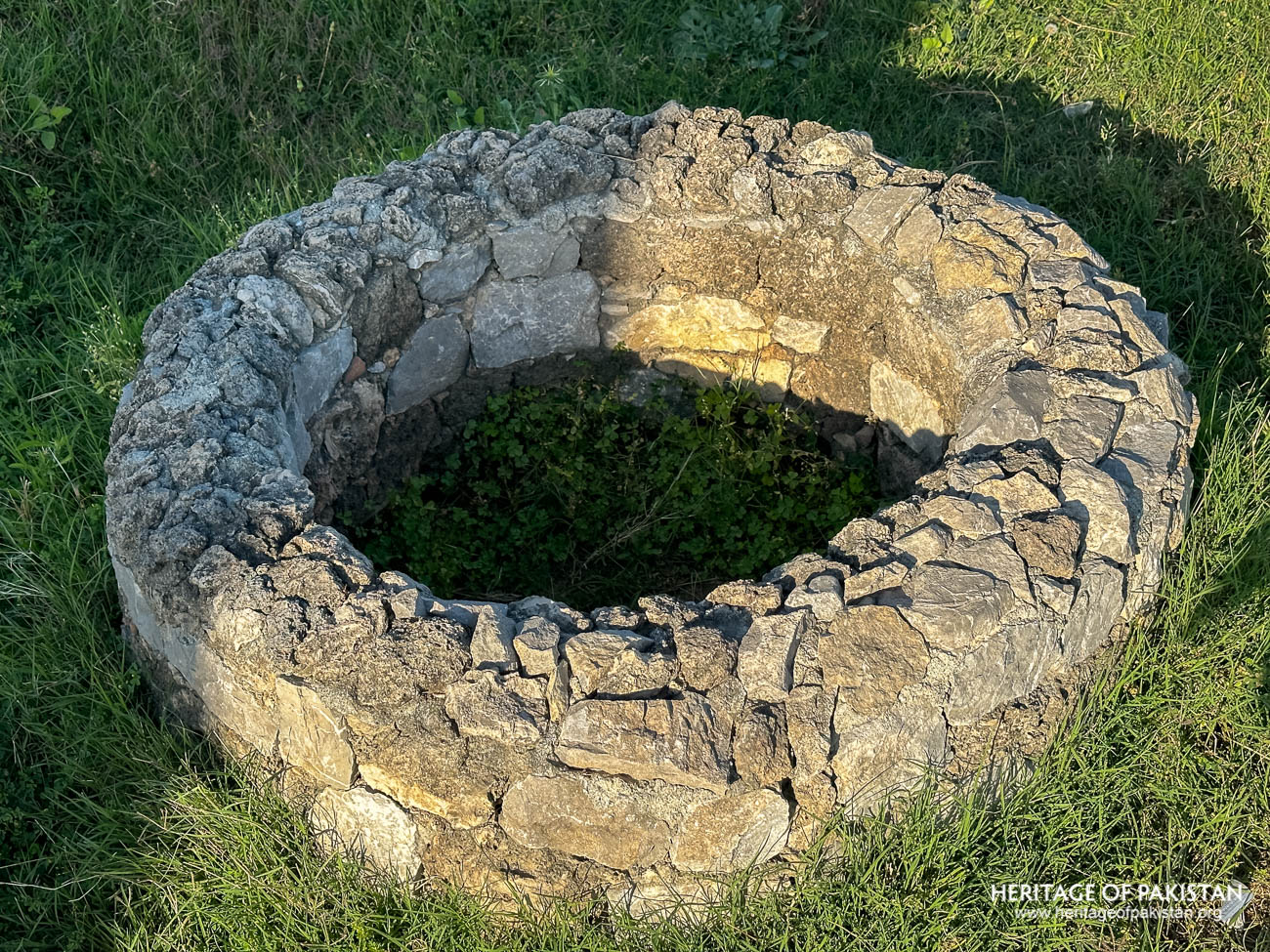
Ruins of Bhir Mound, Taxila
All Photographs by Syed Noor Hussain and Sania Azhar.
All Rights Reserved. Photos may be used for Non-Commercial, Educational, Artistic, Research, Non-Profit & Academic purposes.
Commercial uses require licensing agreement.

Syed Noor Hussain
July 23, 2025 at 4:04 amBest