
Protected Under
Antiquities Act 1975
33°45'40.2"N 72°51'38.5"E

On the UNESCO World Heritage Site List
Antiquities Act 1975
An interesting fact about Mohra Moradu is that a fully preserved smaller stupa was discovered inside one of the monastery’s cells, complete with its chatras (umbrellas) lying nearby in perfect condition
The Best Time to Visit Punjab Province is Year long as it has bearable Cold winters and Hot Summers. However, Summers can get really Hot and precautions are recommended during Daytime visits.


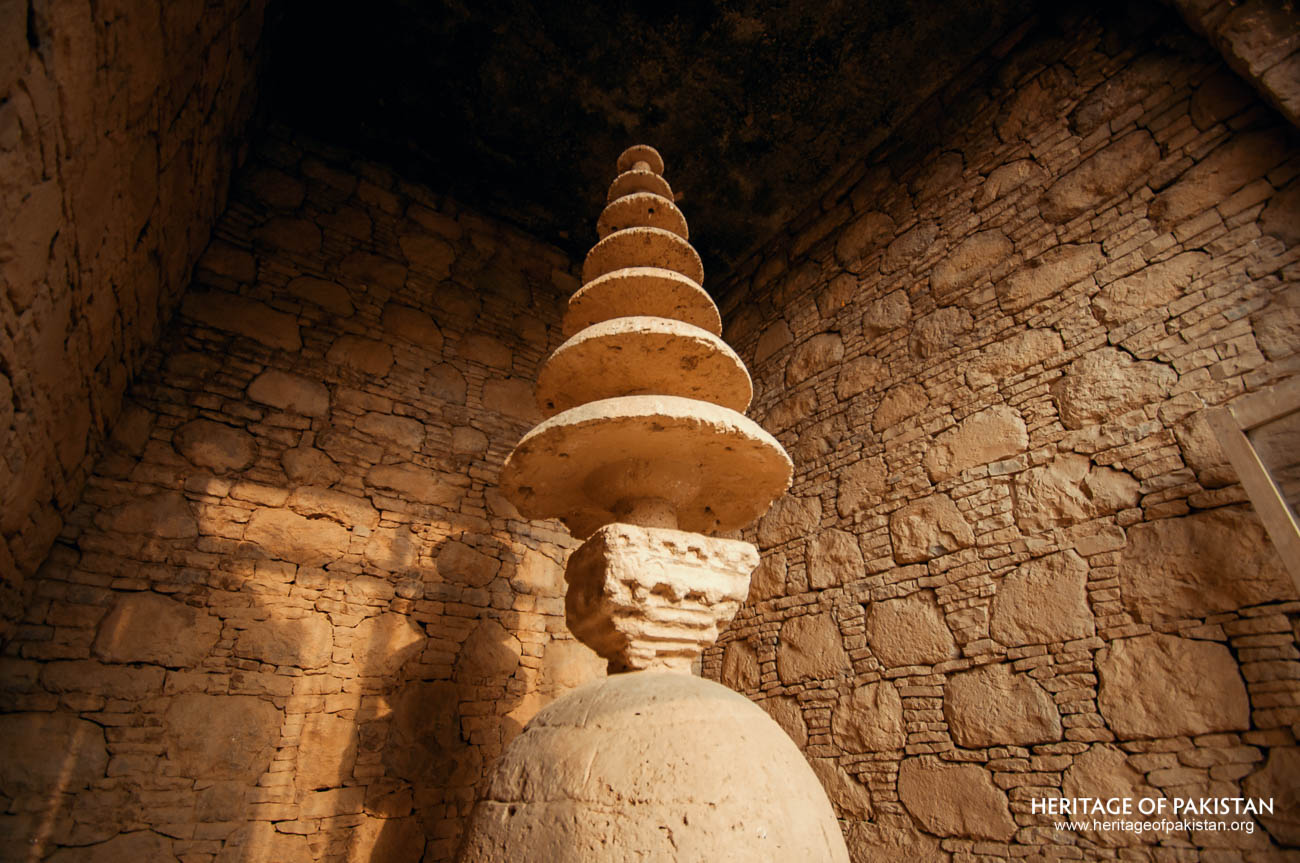
Excavated Stupa at Mohra Moradu, Taxila, Punjab
Mohra Moradu is an ancient Buddhist monastic complex situated near a village of the same name, approximately five kilometers from the ruins of Sirkap in the Taxila valley. The site comprises a large stupa, a smaller votive stupa, and a monastery constructed for monastic residence and religious practice. It is regarded as one of the most well-preserved archaeological sites in the region. The monastery, attributed to the 2nd century AD, reflects the Buddhist architectural and spiritual traditions of its time.
Located in a secluded area surrounded on all sides by hills, the Mohra Moradu complex remained hidden from plain view. This natural seclusion played a significant role in the preservation of the site. Unlike many other sites in the Taxila region that suffered extensive damage over time, Mohra Moradu was found in a remarkably better condition when it was excavated. After the destruction caused by the White Huns in the 5th century AD, massive rocks from the adjacent hills collapsed onto the site, effectively burying it. The debris offered an inadvertent layer of protection, preserving much of the structure beneath. Only the dome, which remained partially exposed above the debris, was looted by treasure hunters and thieves in search of relics.
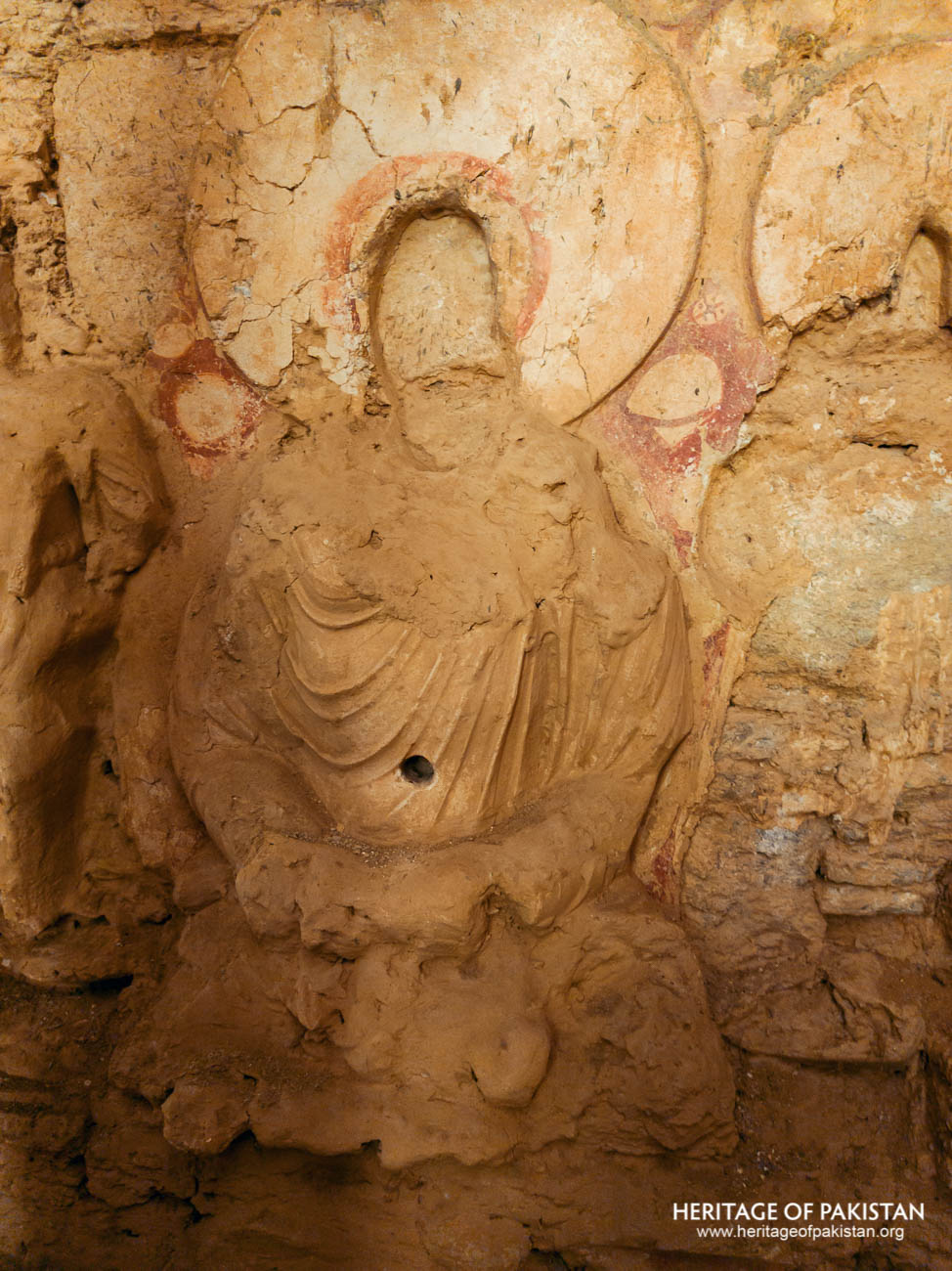 Sculpture of Buddha at Mohra Moradu, Taxila
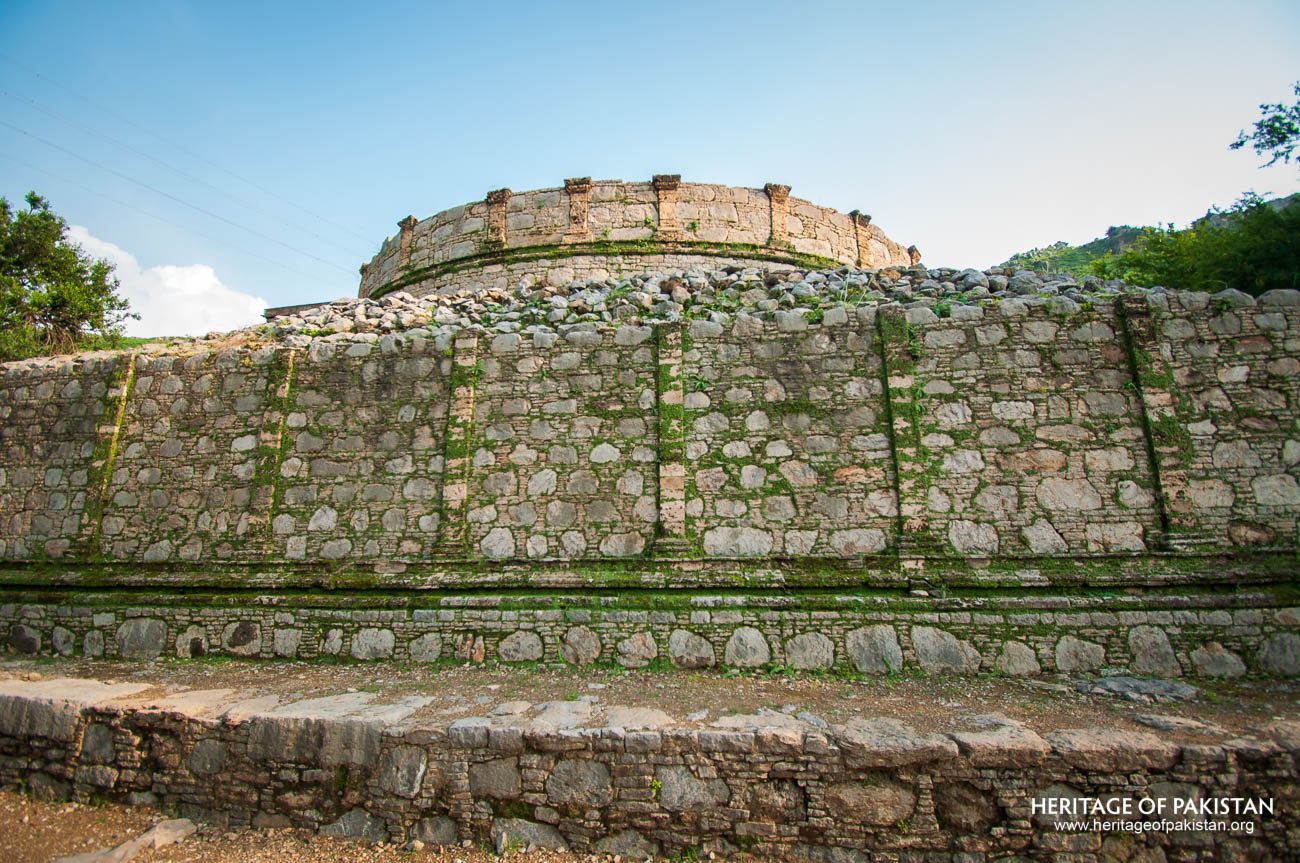
Main Stupa at Mohra Moradu, Taxila, Punjab
The architectural features of the monastery provide important chronological markers. The original construction, characterized by large diaper masonry, is dated to the 2nd century AD. Later modifications, constructed in semi-ashlar masonry, indicate continued use and expansion of the site into the 4th and 5th centuries AD. This timeline is further corroborated by the discovery of coins issued by Kushan kings Huvishka and Vasudeva, who reigned from approximately 169 to 230 AD.
The layout and design of the Mohra Moradu complex reflect typical characteristics of Buddhist ‘Sangharamas’, or monastic settlements. These were often established in quiet and remote locations, yet close enough to towns or cities to allow monks to beg for alms—a deliberate lifestyle choice rooted in renunciation and simplicity.
Among the notable features of the site is a fully preserved smaller stupa found within one of the monastery's cells. This structure, standing at 12 feet high and circular in plan, has a plinth divided into five sections adorned with intricate relief work. It represents a fine example of the round drum stupa form, a significant architectural type in Buddhist tradition.
Numerous stucco sculptures were also uncovered during the excavation of the site. These include well-preserved figures of the Buddha in various mudras and postures. These artifacts, now housed in the Taxila Museum, offer valuable insight into the religious art and iconography of the period.
Mohra Moradu thus stands as a testament to the architectural, cultural, and religious practices of early Buddhist communities in the Gandhara region. Its remarkable state of preservation and the richness of its finds make it a site of considerable archaeological and historical significance.
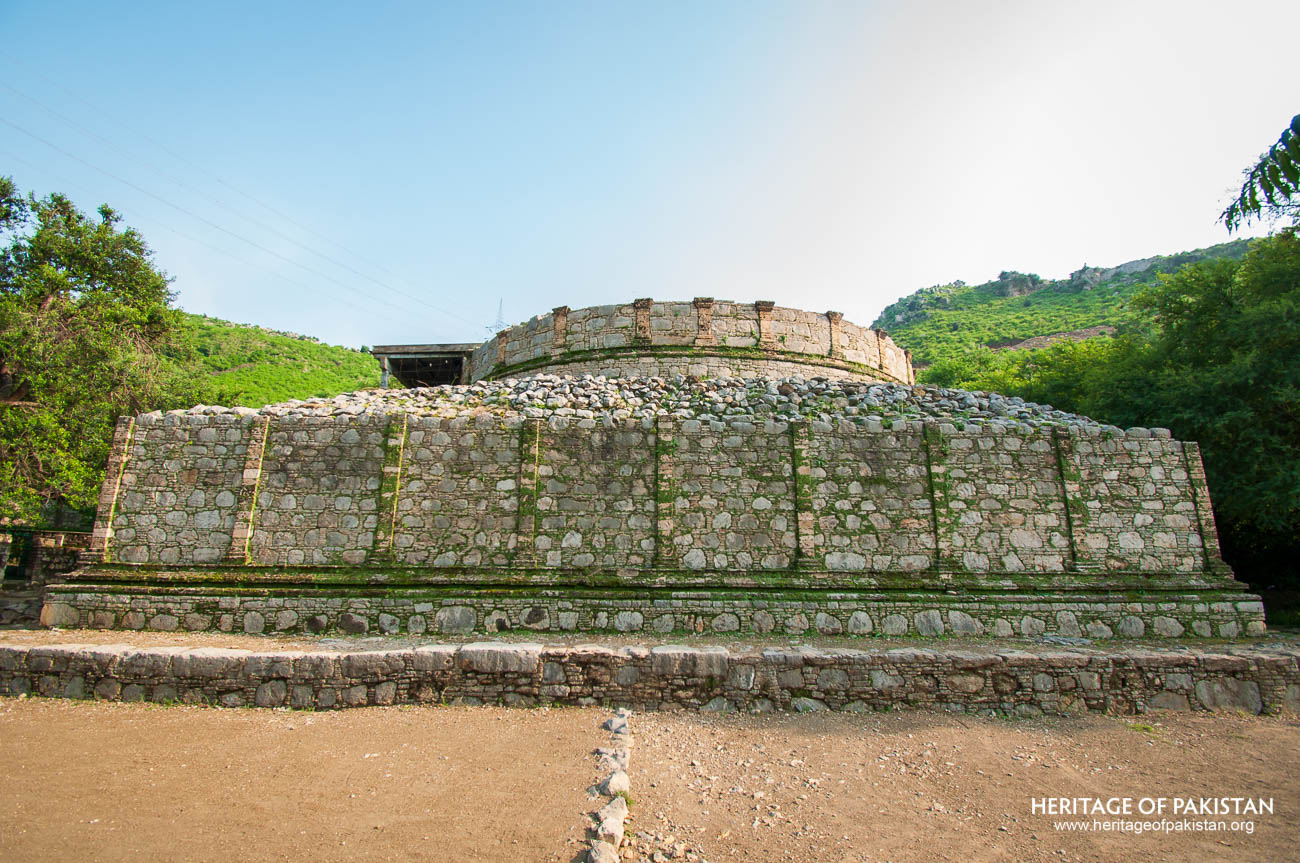
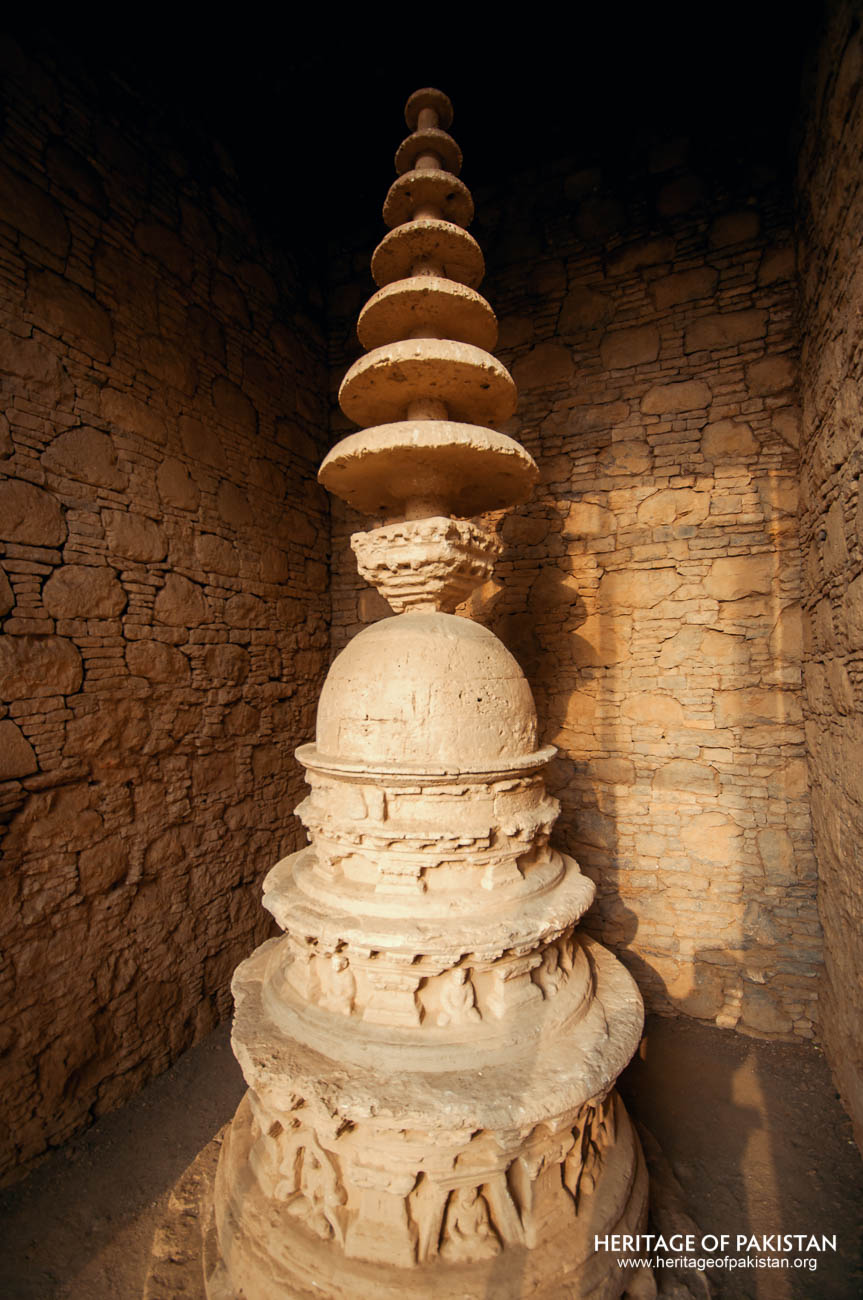
Fully intact Stupa excavated at Mohra Murado, Taxila
The Mohra Moradu complex, located near the village of the same name in the Taxila valley, represents a significant archaeological site comprising both religious and residential structures from the early centuries of the Common Era. Notable for its preservation and structural arrangement, the complex includes stupas and a monastery that reflect the architectural and cultural practices of a historical Buddhist settlement.
The site is laid out with the stupa section located on the eastern side of the complex and the monastery situated on the western side. There are two stupas within the complex: one larger, serving as the main stupa, and one smaller. The main stupa is constructed on a square platform base, and its surface up to the drum was once extensively adorned with stucco sculptures. These sculptural decorations depicted groups of figures representing Buddhas and Bodhisattvas, indicating the site's religious significance and artistic elaboration.
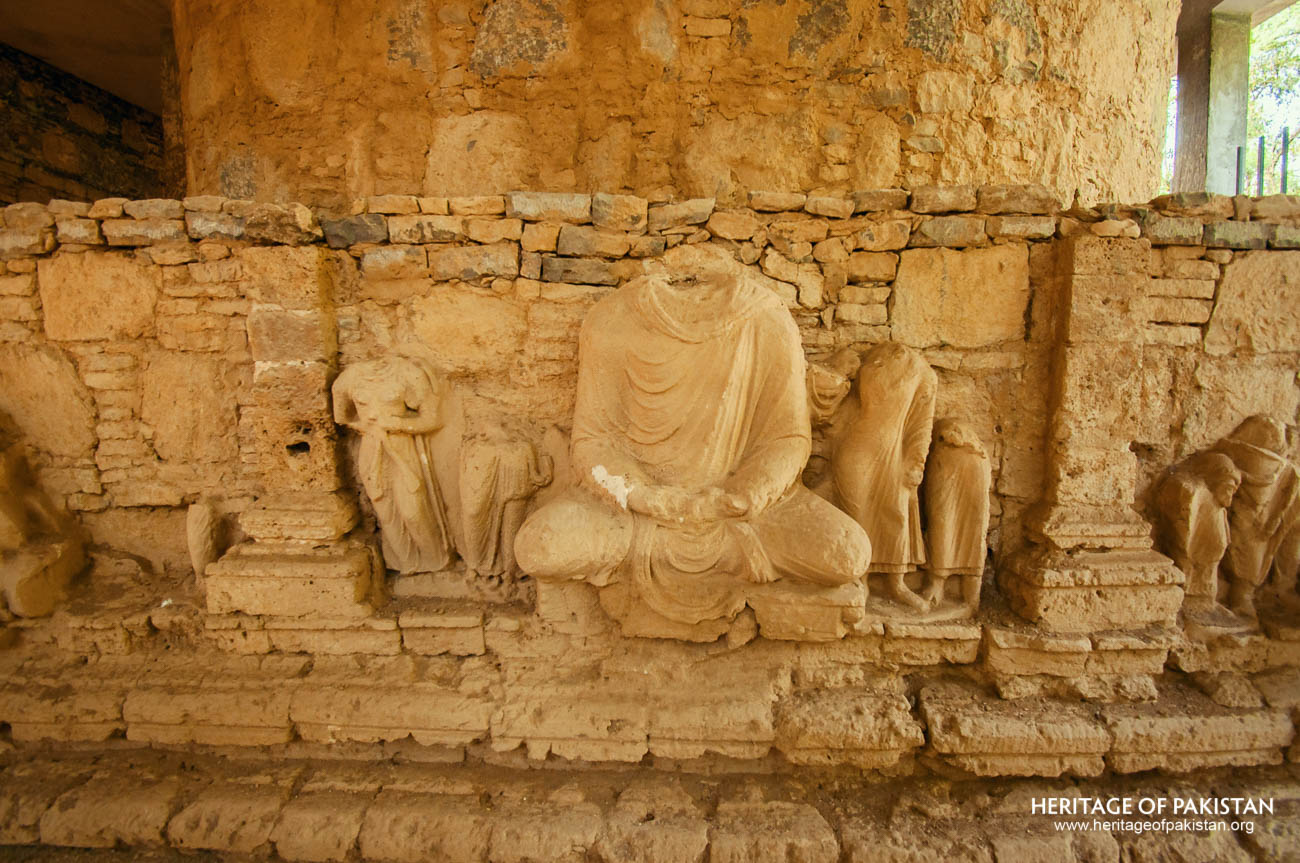
Relief Sculptures on a Votive Stupa at Mohra Moradu, Taxila
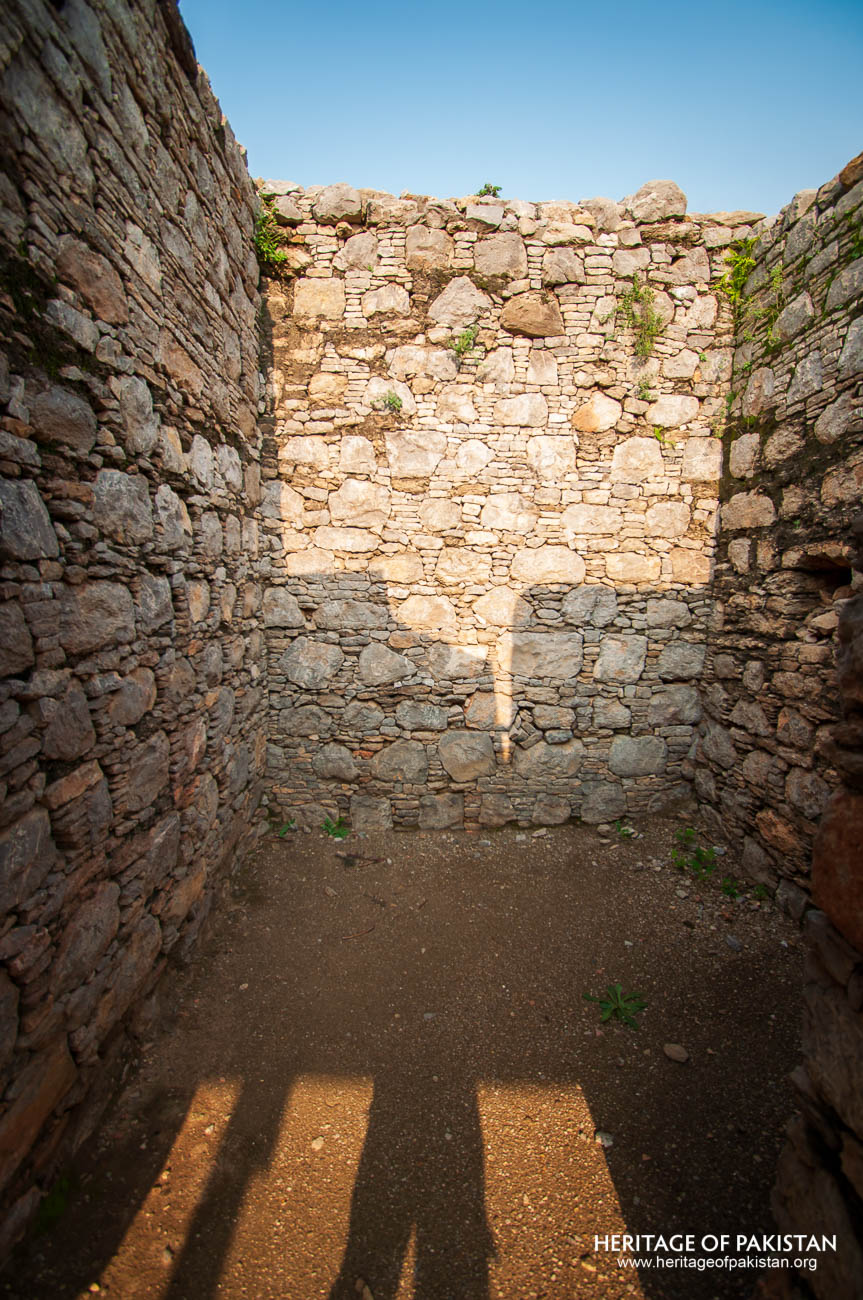
A cell in Monastery at Mohra Moradu, Taxila
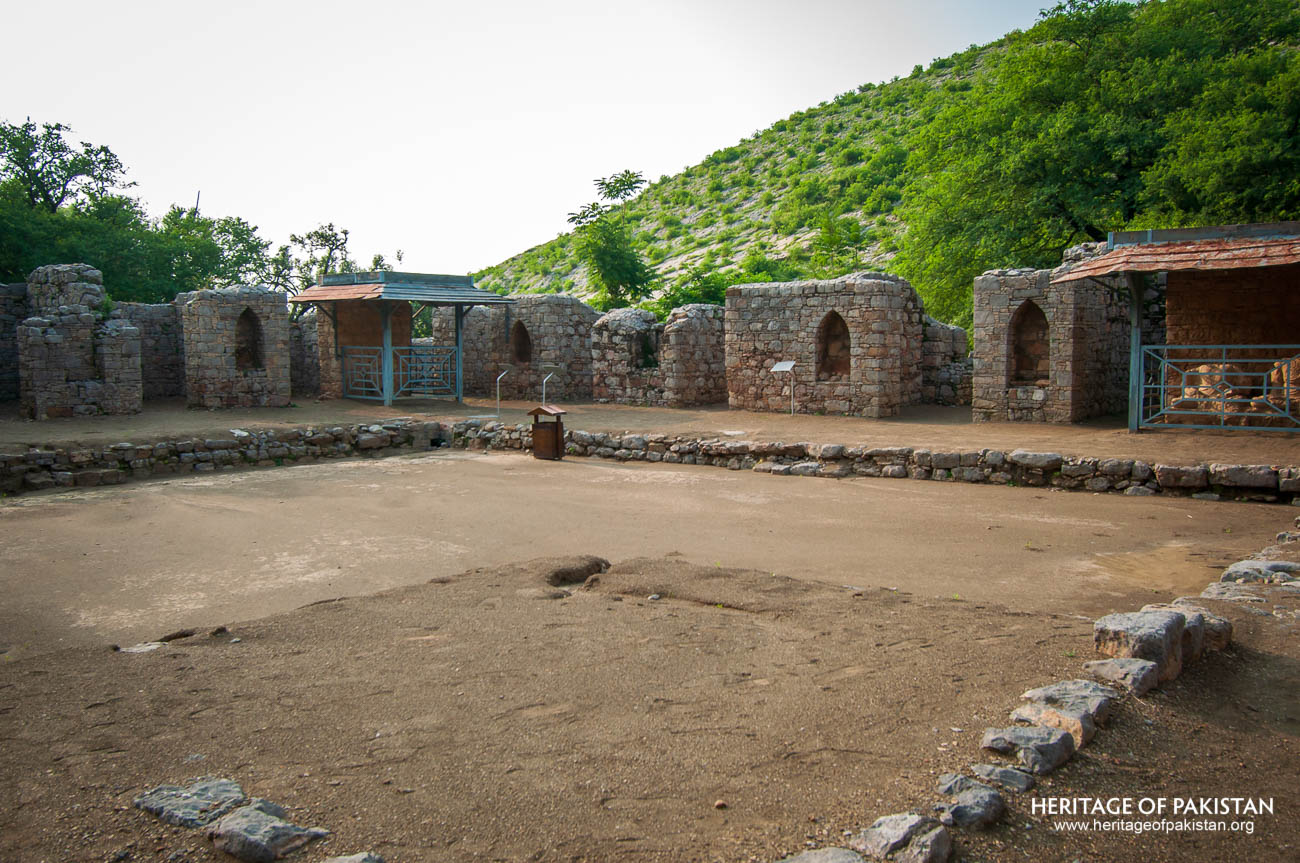
Buddhist Monastery at Mohra Murado, Taxila
The monastery lies to the west of the stupas and is designed as a quadrangular structure enclosed by cells on all four sides. The central courtyard contains 27 monastic cells, which were used by monks for residence and practice. The middle of this courtyard features a square depression, interpreted as a space for communal gatherings or assembly. According to Ihsan H. Nadeem, the presence of stone slabs surrounding this depression suggests that a veranda supported by wooden columns might have existed, providing shade to the ground-floor cells.
The monastery included two storeys, with access to the upper floor facilitated by a staircase discovered in one of the cells. The upper storey was measured to be 3.5 meters high. Within the courtyard, large statues of the Buddha were set on pedestals, and niches were decorated with stucco figures, reflecting the artistic sensibilities of the time. The cells themselves were simple in form, coated internally with plaster, and intended for austere living. A bathroom facility was identified in the southeastern corner of the monastery, indicating the presence of basic amenities.
On the eastern side of the monastic courtyard is a group of ancillary buildings. These include a hall of assembly, a dining hall, a kitchen, a store room, and a latrine, which together supported the daily needs and communal life of the monastic inhabitants.
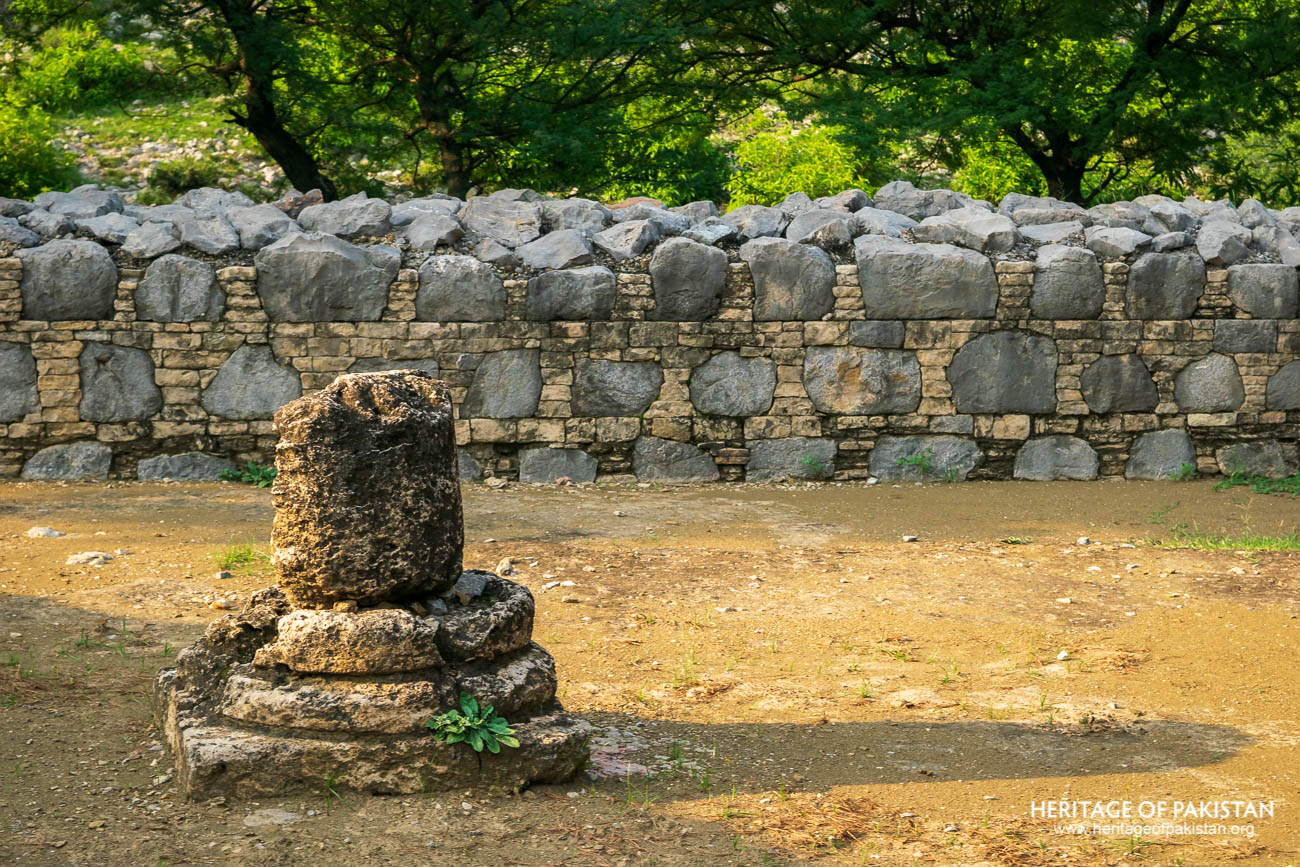
A notable discovery within the monastery was a smaller stupa found in one of the eastern cells. This stupa, in a remarkable state of preservation, had its chatras or umbrellas lying nearby in perfect condition. The stupa's core was constructed from limestone, locally referred to as kanjure, and its mouldings and external decorations were fashioned in stucco. Traces of pigmentation—crimson, blue, and yellow—were observed, suggesting that the stupa was once vividly painted. Restoration efforts have since secured this structure, with a metal gate installed at its entrance to protect it from theft or damage. The site attendant opens it for visitors upon request.
The architectural composition and structural layout of the Mohra Moradu complex reveal a thoughtfully designed religious establishment, reflecting both spiritual purpose and functional design. Its preservation allows for continued study and public appreciation of an important chapter in the Buddhist heritage of the region
All Photographs by Syed Noor Hussain and Sania Azhar.
All Rights Reserved. Photos may be used for Non-Commercial, Educational, Artistic, Research, Non-Profit & Academic purposes.
Commercial uses require licensing agreement.

Syed Noor Hussain
July 23, 2025 at 4:04 amBest