
Did You Know?
Governor Paolo Avitabile once used the mosque’s minarets as gallows during the Sikh period.
34°00'38.6"N 71°34'24.9"E
Governor Paolo Avitabile once used the mosque’s minarets as gallows during the Sikh period.
The Best Time to Visit mountain regions of Khyberpakhtunkhwa is Summers. Preferably from April to September. Winters are Extremely Cold and Snowfall blocks most of access. Hence Winters are not recommended.

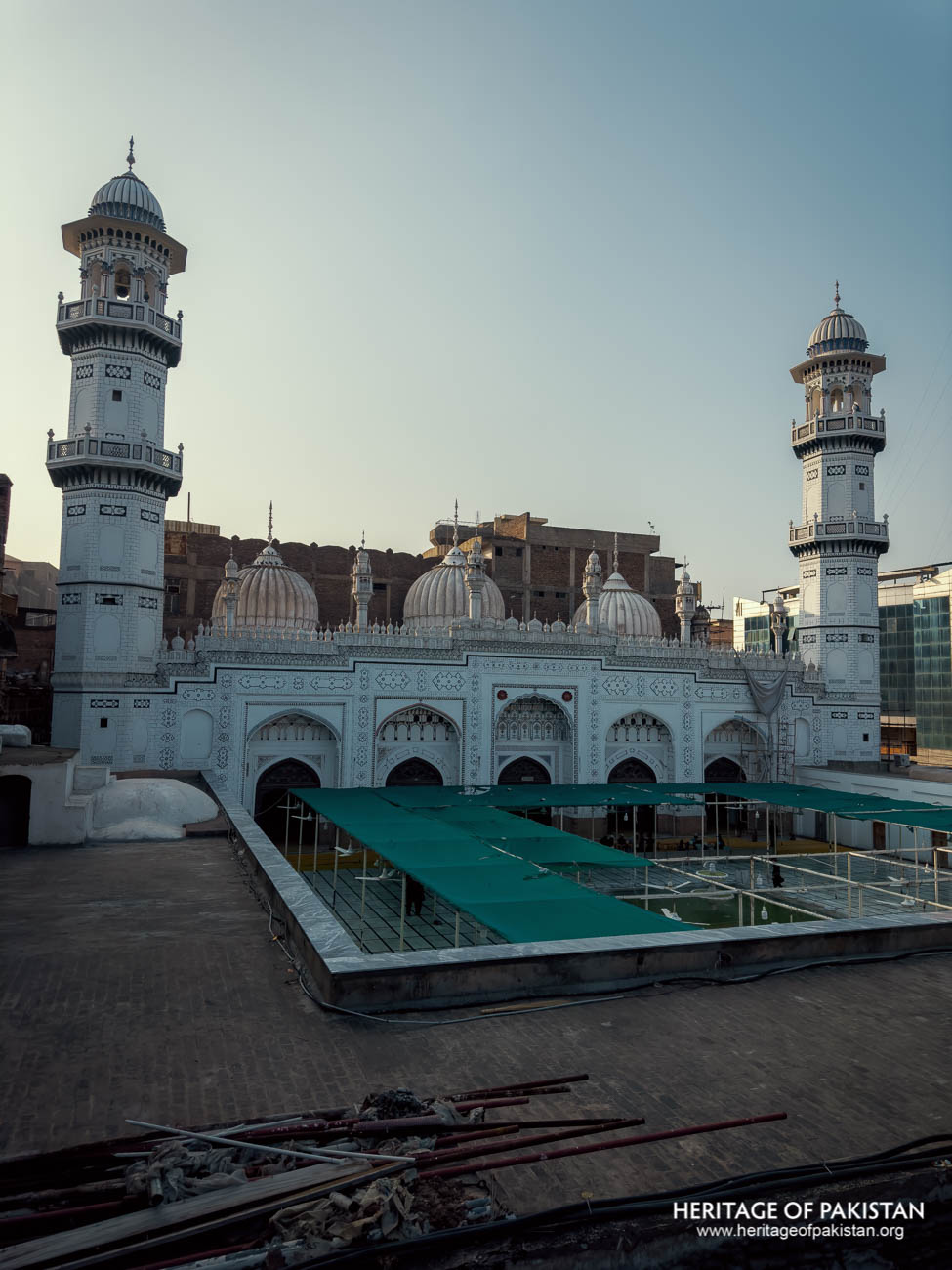
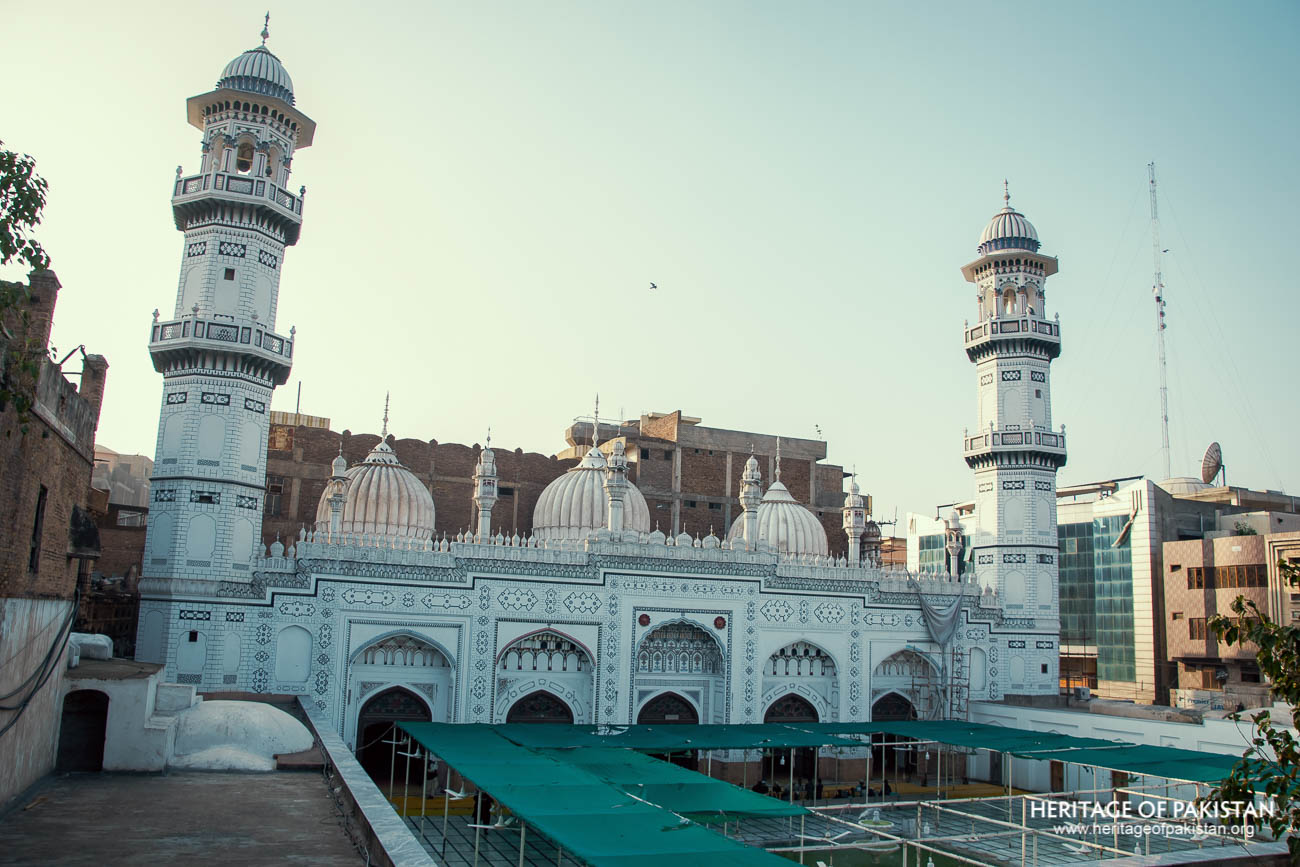
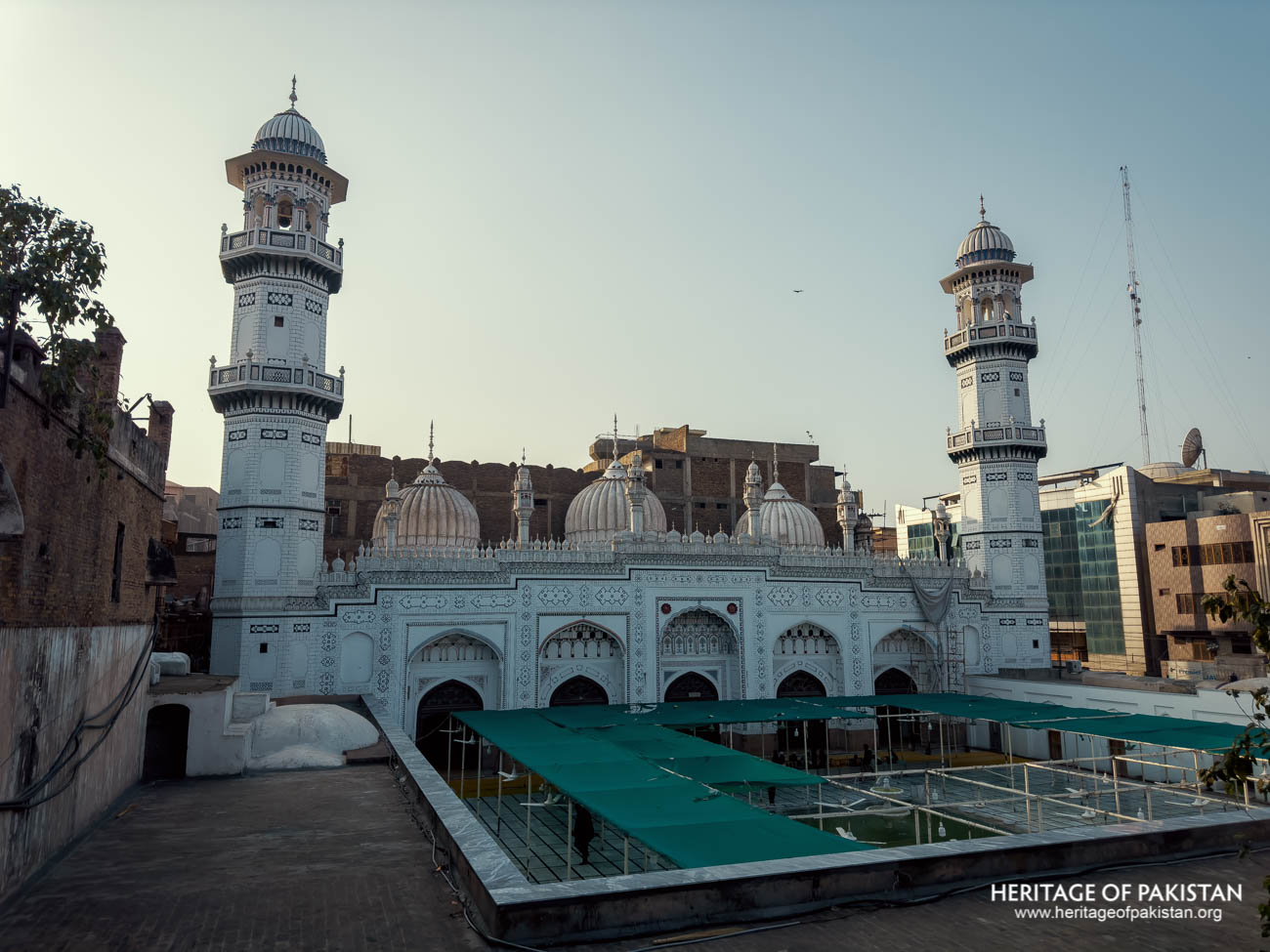
Mahabat Khan Mosque is a celebrated Mughal‑period monument situated in the Old Walled City of Peshawar, Khyber Pakhtunkhwa, Pakistan, a short walk south‑west of Chowk Yadgar along the city’s present‑day heritage trail. The structure forms a key stop for visitors exploring Ander Sheher, with other prominent landmarks—Cunningham’s Clock‑tower, Sethi Muhalla, and the Gor Khatri archaeological complex—lying within comfortable walking distance. Built in distinctive late‑Mughal style, the mosque is named for Mahabat Khan, a governor who served the Peshawar region during the reign of Emperor Shah Jahan and was later reappointed under Emperor Aurangzeb Alamgir. Its elevated white domes and twin minarets still dominate the bazaar skyline, and its spacious courtyard continues to accommodate daily worshippers.
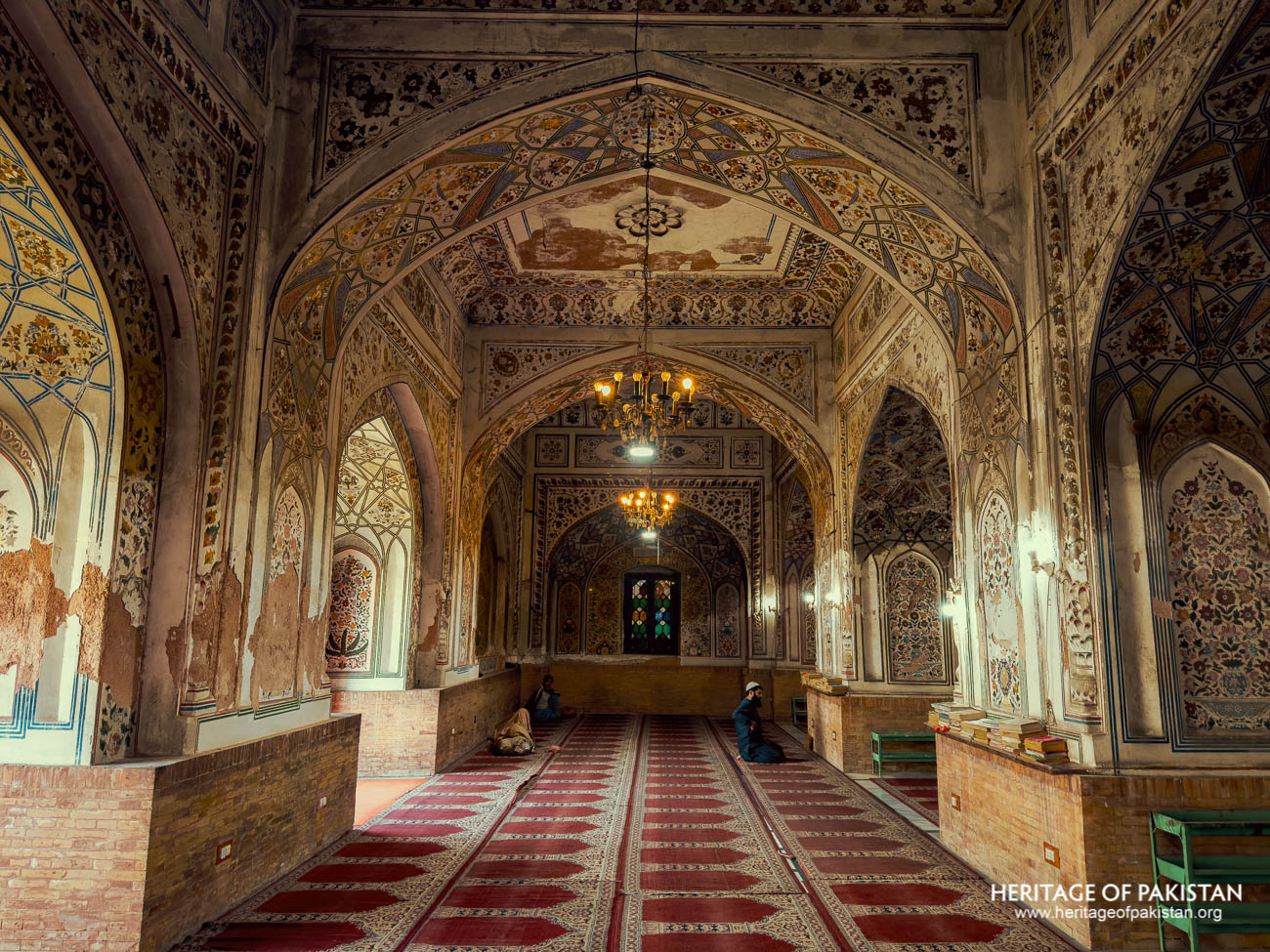
Scholar I. H. Nadeem notes that two historical figures bore the title “Mahabat Khan.” One, Zaman Khan, earned distinction during the reign of Emperor Jahangir; the other, a later Mahabat Khan, achieved prominence under Shah Jahan. A stylistic analysis of the mosque’s decorative vocabulary—particularly the layout of its prayer hall, the design of its domes, and the treatment of its façades—supports Nadeem’s conclusion that the building dates from the later years of Shah Jahan’s rule, thereby associating it with the second Mahabat Khan. Documentary references confirm that this governor was twice posted to Peshawar: first in the closing years of Shah Jahan’s reign and again during Aurangzeb Alamgir’s tenure. The enduring nickname of the mosque thus commemorates a provincial administrator whose patronage secured an architectural masterpiece for the frontier city.
Over subsequent centuries the mosque witnessed episodes of conflict and renewal. During the Sikh period the Italian‑born governor Paolo Avitabile reputedly used the mosque’s lofty minarets as gallows, an episode that underscored both his harsh administration and the building’s strategic visibility. Calamity struck again when a fire swept through Andar Sheher Bazaar in 1895; contemporary reports record that “the persistent efforts of the faithful prevented the mosque from being destroyed,” yet three years later, in 1898, another blaze inflicted extensive damage. In the wake of this destruction the British authorities authorised a programme of restoration that faithfully reconstructed the domes, minarets, and interior frescoes, thereby preserving the mosque’s Mughal character.
Today Mahabat Khan Mosque retains the graceful proportions of its seventeenth‑century origin: a broad courtyard leading to a seven‑arched façade, flanked by soaring minarets whose balconies once served both ceremonial and punitive roles. Within, richly painted ceilings and stucco‑carved mihrabs recall the sophistication of late‑Mughal decorative art. The mosque’s survival—through Sikh appropriation, colonial restoration, and the pressures of modern urban growth—reflects enduring communal attachment to one of Peshawar’s finest architectural legacies. As part of the Walled City heritage trail it continues to attract worshippers, scholars, and visitors who seek to experience firsthand a monument that encapsulates the layered political and cultural history of the frontier metropolis.
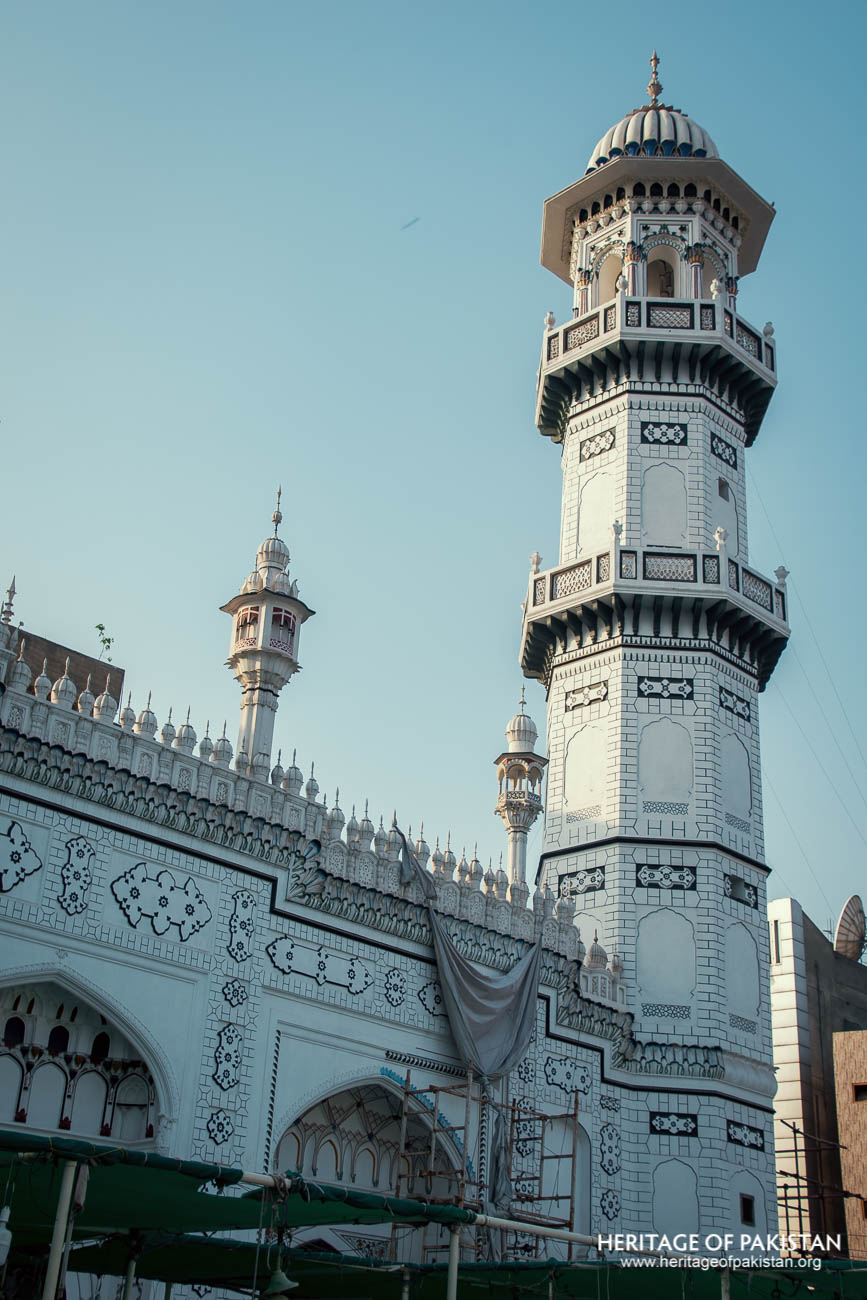
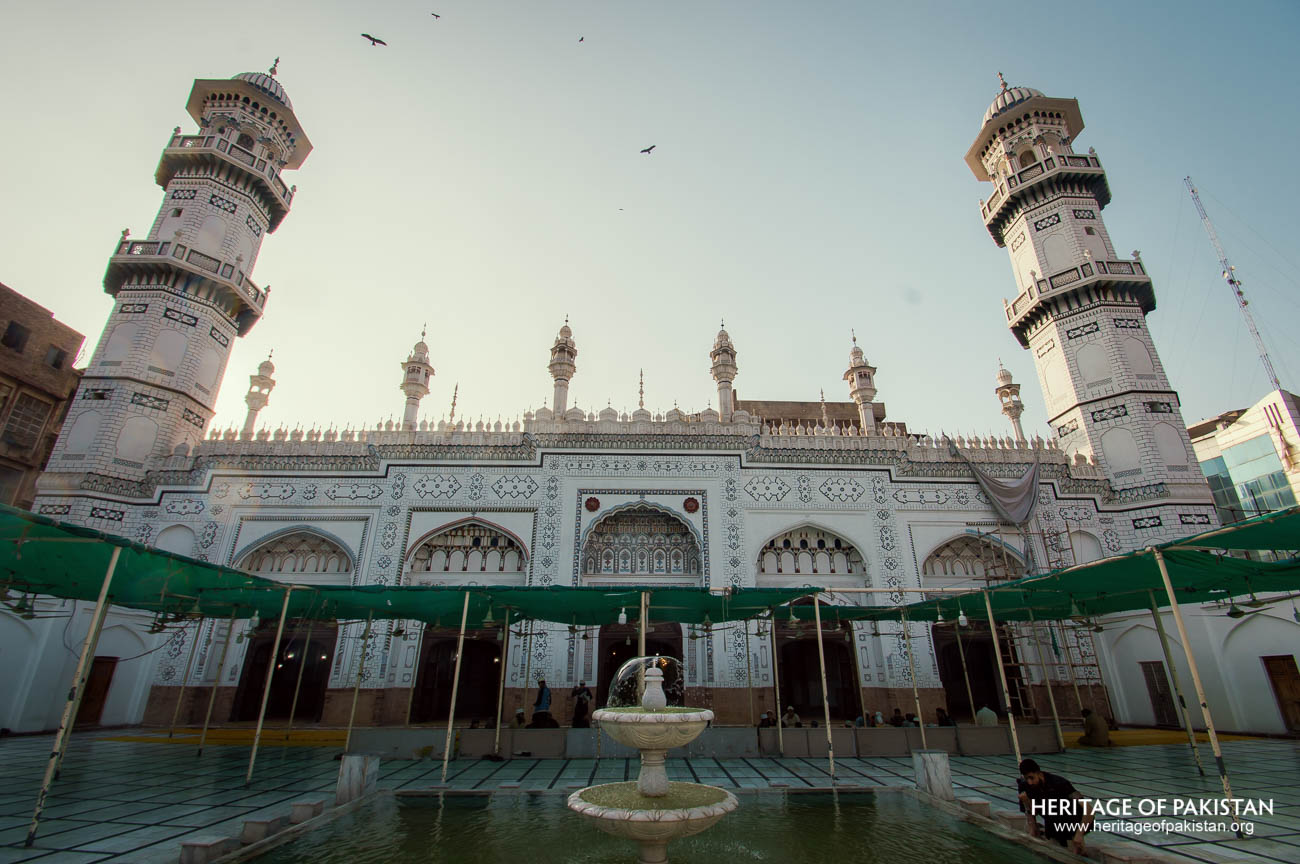
Mahabat Khan Mosque stands on a deliberately raised terrace and follows a plan that measures approximately 56 by 50 metres—equivalent to 185 by 163 feet—giving the complex a balanced but compact footprint when compared with later imperial mosques such as Lahore’s Badshahi Mosque. Entry is gained by three elevated approaches situated on the east, south and north sides; each staircase rises to the platform and is aligned with an arched portal that leads directly into an open central courtyard. At the heart of this courtyard sits a square ablution tank, while single rows of hujras, or low cellular chambers, run continuously along the northern, eastern and southern edges, providing both accommodation and a dignified architectural frame.
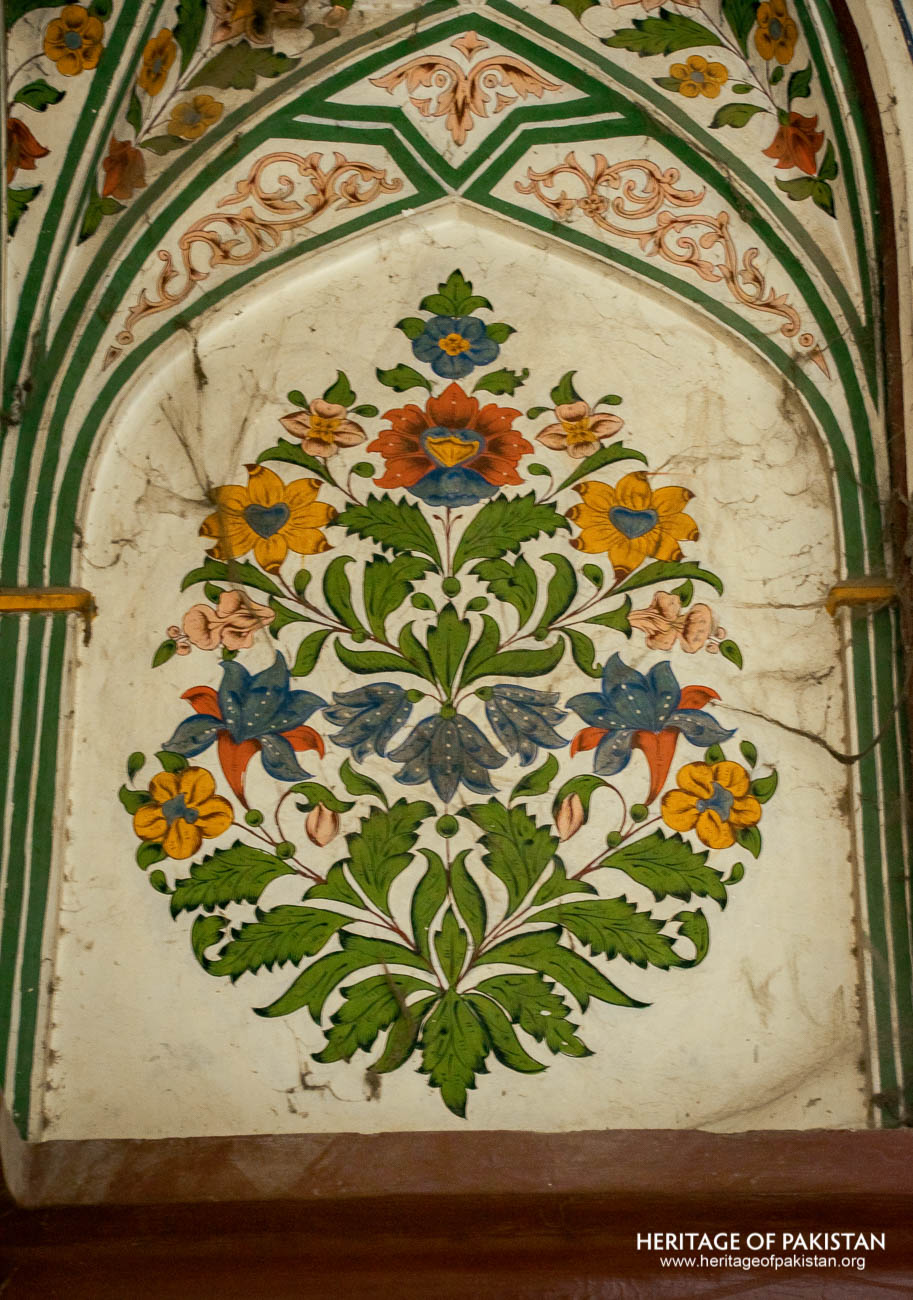
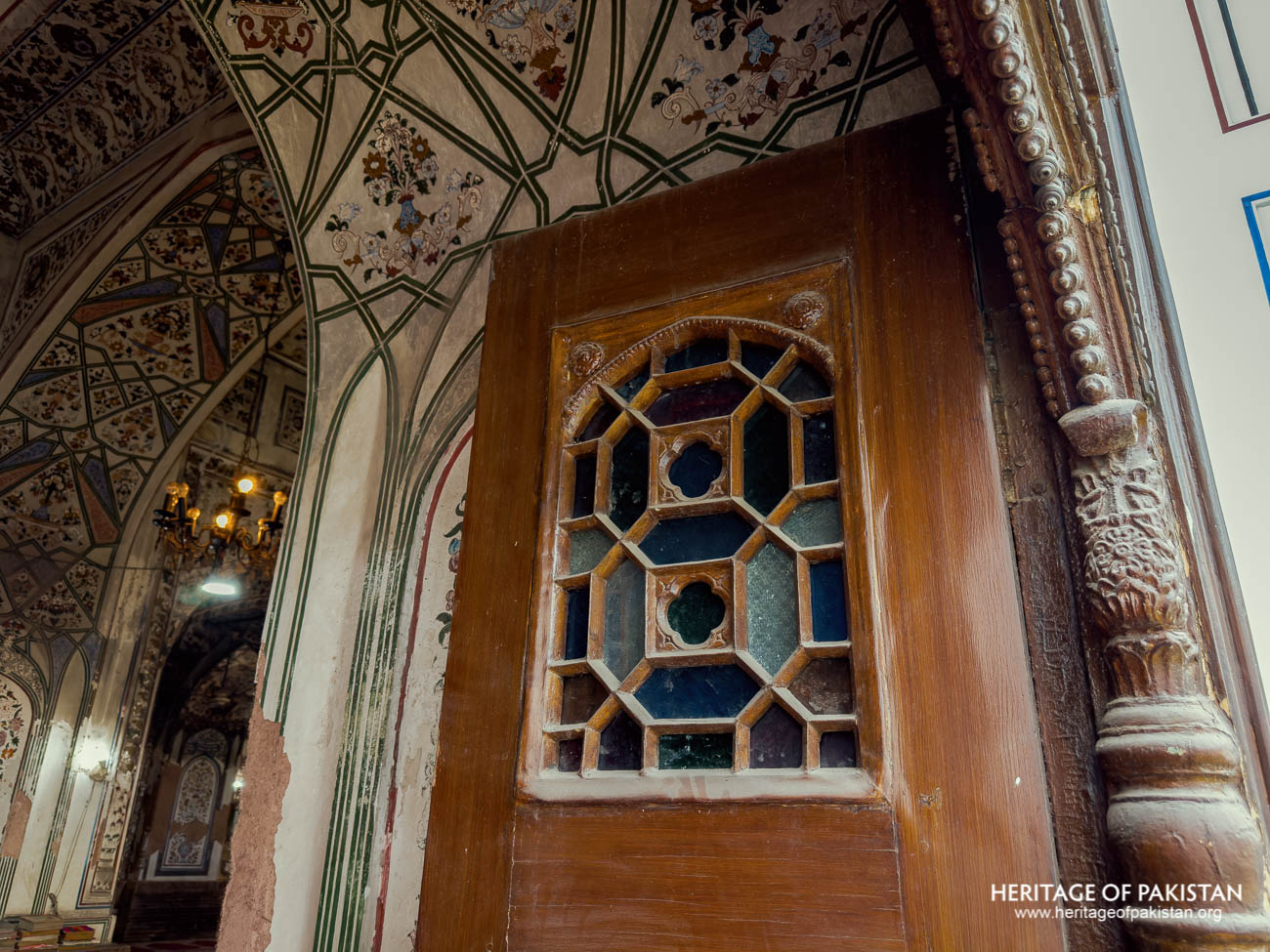
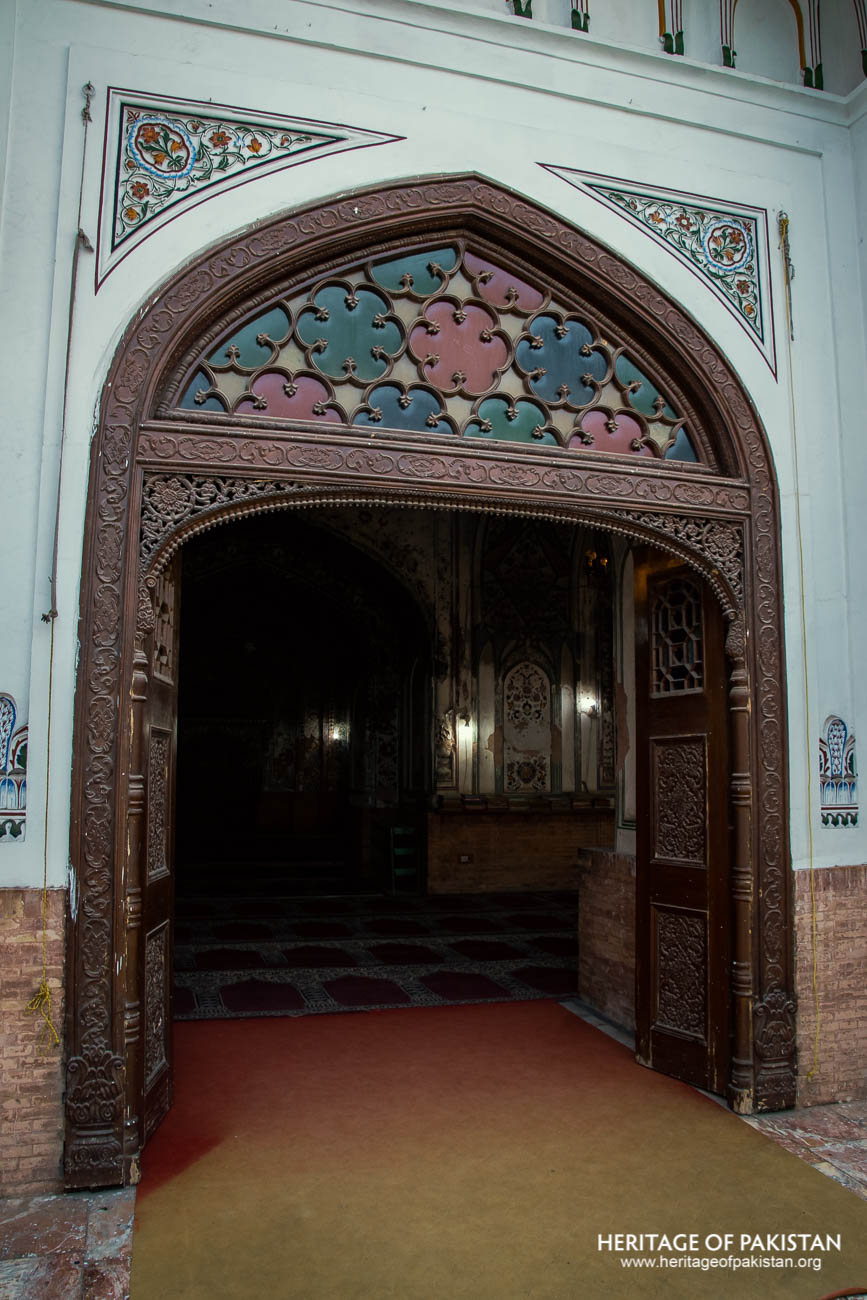
The entire western side of the courtyard is occupied by a single, elongated prayer hall—a distinguishing feature, for unlike the segmented arrangement at Badshahi, this uninterrupted façade stretches the full length of the terrace. The hall is crowned by three fluted domes that rise above the roofline, their profiles accentuated by a pair of lofty minarets positioned at the outer corners. Inside, the surfaces are lavishly embellished with twentieth‑century restorations of earlier decorative schemes: delicate frescoes, finely modelled muqarnas, and extensive stuccowork merge with arabesque scrolls, Islamic geometric patterns and polychrome motifs. Intricately carved timber doors anchor each bay, and the lunette sections above their arches are inlaid with coloured‑glass mosaics that refract daylight into kaleidoscopic hues across the interior.
Although its scale is modest in comparison to Badshahi Mosque, Mahabat Khan’s cohesive layout, refined proportions and sumptuous ornamentation underscore its architectural distinction. Subsequent alterations have respected the original Mughal vocabulary, ensuring that the fluted domes, cusped arches and latticed parapets remain intact while the twentieth‑century conservation work revitalises their visual impact. Taken together, these elements explain why connoisseurs regard Mahabat Khan Mosque as one of Pakistan’s most impressive historic sanctuaries—a masterful synthesis of structural clarity and decorative splendour maintained through successive periods of change.
All Photographs by Syed Noor Hussain and Sania Azhar.
All Rights Reserved. Photos may be used for Non-Commercial, Educational, Artistic, Research, Non-Profit & Academic purposes.
Commercial uses require licensing agreement.

Syed Noor Hussain
July 23, 2025 at 4:06 amBest